Vietnam Introduces PFAS Ban and Disclosure Rules for Industrial Seals
Author
Date Published
Reading Time

On October 1, 2026, Vietnam’s Ministry of Industry and Trade (MOIT) will enforce new restrictions on per- and polyfluoroalkyl substances (PFAS) in industrial sealing products—including rubber O-rings, fluoroelastomer gaskets, and PTFE packing—impacting manufacturers, exporters, and importers in the bearings and seals sector. This regulatory shift signals growing regional alignment with global chemical safety trends and requires immediate attention from supply chain stakeholders across Asia, particularly Chinese producers supplying the Vietnamese market.
Event Overview
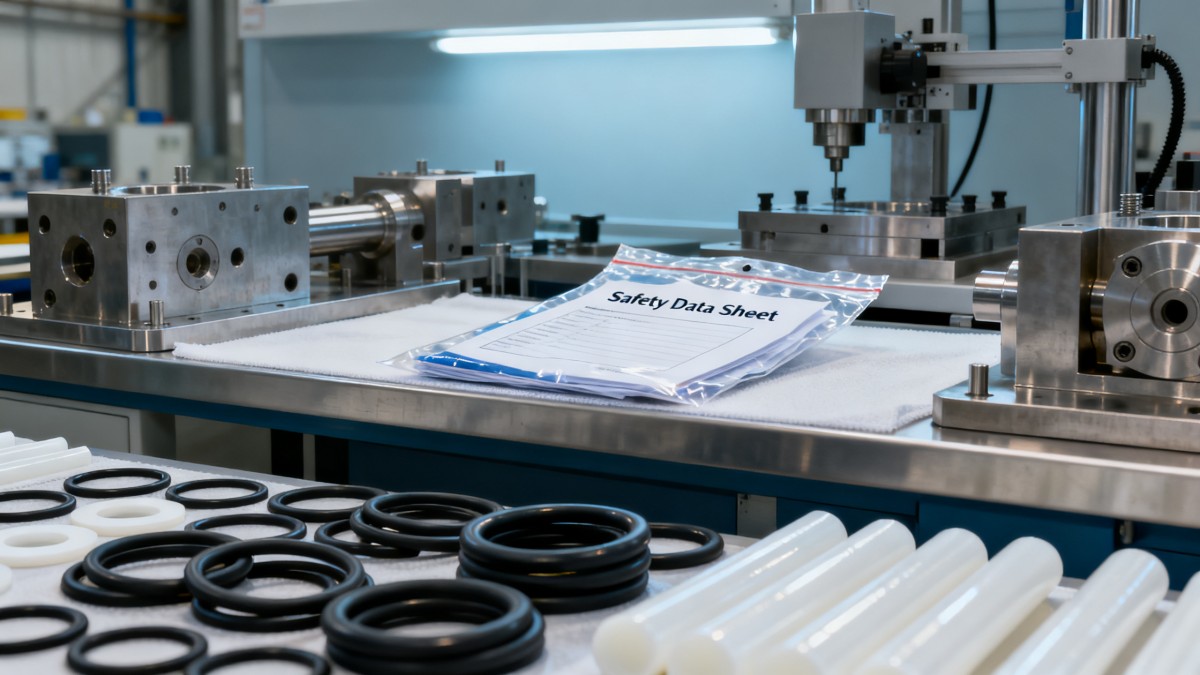
On May 22, 2026, Vietnam’s Ministry of Industry and Trade (MOIT) published the Guideline on Hazardous Substance Control for Industrial Sealants and Gaskets. The guideline mandates that, effective October 1, 2026, all imported industrial sealing products—including rubber sealing rings, fluoroelastomer gaskets, and polytetrafluoroethylene (PTFE) fillers—must not contain any of 17 specified PFAS-based processing aids. Additionally, suppliers must fully disclose all chemical constituents—including those 17 PFAS substances—in Safety Data Sheets (SDS).
Industries Affected by Segment
Direct Trading Enterprises
Exporters and importers handling bearings and seals destined for Vietnam will face customs clearance risks if products lack compliant SDS documentation or contain banned PFAS additives. Non-compliance may result in shipment rejection or mandatory rework prior to entry.
Raw Material Procurement Enterprises
Suppliers sourcing fluoroelastomers, PTFE resins, or specialty compounding agents must verify upstream supplier declarations regarding PFAS use in polymer synthesis, dispersion aids, or mold-release agents—especially where fluorinated surfactants or telomer-based processing aids are involved.
Manufacturing Enterprises
Producers of rubber seals, gaskets, and PTFE-based sealing components must reassess formulation practices. The 17 listed PFAS substances likely include common fluorinated surfactants (e.g., PFOS- and PFOA-related derivatives) used in emulsion polymerization or surface treatment—requiring reformulation or process modification before October 2026.
Supply Chain & Compliance Service Providers
Third-party testing labs, RoHS/PFAS compliance consultants, and SDS authoring services will see increased demand for verification of PFAS absence and technical documentation support—particularly for dual RoHS + PFAS compliance frameworks required by Chinese enterprises serving Vietnam.
What Relevant Enterprises or Practitioners Should Focus On Now
Monitor Official MOIT Implementation Clarifications
The guideline references a list of 17 PFAS substances but does not publicly name them in full. Enterprises should track MOIT’s forthcoming technical annexes or FAQs, as precise identification affects analytical method selection and supplier qualification.
Prioritize High-Risk Product Categories and Supply Links
Focus initial assessment on fluoropolymer-based items (e.g., FKM gaskets, PTFE filler rods) and compounds using fluorinated dispersants or wetting agents—especially materials sourced from suppliers without current PFAS screening protocols.
Distinguish Regulatory Signal from Operational Readiness
This is a binding requirement—not a proposal—but enforcement capacity and inspection frequency remain unconfirmed. Enterprises should treat the October 2026 date as operational, not aspirational; delays in SDS updates or lab testing cannot be justified post-deadline.
Initiate Supplier Engagement and Internal Documentation Updates
Begin requesting updated declarations and test reports from raw material suppliers now. Concurrently, revise internal SDS templates to include PFAS-specific disclosure fields—and align RoHS reporting systems to accommodate dual-scope chemical tracking.
Editorial Perspective / Industry Observation
Observably, this measure reflects Vietnam’s incremental integration of chemical management frameworks aligned with EU REACH and U.S. EPA PFAS initiatives—though its scope remains narrowly targeted to industrial sealing applications. Analysis shows it functions less as an isolated restriction and more as an early indicator of broader PFAS controls likely to expand into other elastomer-dependent sectors (e.g., automotive hoses, medical tubing) in coming years. From an industry perspective, the requirement’s emphasis on SDS disclosure—rather than just substance prohibition—suggests regulators intend to build traceability infrastructure first, ahead of wider bans. Current attention should therefore focus on documentation rigor and supply chain transparency, not just formulation substitution.
Conclusion: This regulation marks a concrete step toward PFAS stewardship in Southeast Asian industrial supply chains—not a broad market disruption, but a defined compliance obligation with clear timelines and documentation expectations. It is better understood as a procedural benchmark than a strategic inflection point; readiness hinges on disciplined implementation, not speculation about future scope expansion.
Source: Vietnam Ministry of Industry and Trade (MOIT), Guideline on Hazardous Substance Control for Industrial Sealants and Gaskets, issued May 22, 2026. Note: The full list of 17 PFAS substances has not yet been publicly released by MOIT and remains under observation.
Technical Specifications
- How to Select Electronic Hotel Key Card Locks for Guest Rooms and Staff AreasAuthor :Safety Compliance Lead
- How to Select Lab Instruments for Reliable Chemical Analysis WorkflowsAuthor :Precision Metrology Expert
- How to Size a UPS for Server Rooms: Load, Runtime, and Redundancy FactorsAuthor :Grid Infrastructure Analyst
Expert Insights

Chief Security Architect
Dr. Thorne specializes in the intersection of structural engineering and digital resilience. He has advised three G7 governments on industrial infrastructure security.
Related Analysis
- Sep 17, 2026How to Select Electronic Hotel Key Card Locks for Guest Rooms and Staff AreasAuthor :Safety Compliance Lead
- Sep 16, 2026How to Select Lab Instruments for Reliable Chemical Analysis WorkflowsAuthor :Precision Metrology Expert
- Sep 15, 2026How to Size a UPS for Server Rooms: Load, Runtime, and Redundancy FactorsAuthor :Grid Infrastructure Analyst
Core Sector // 01
Security & Safety
- Selecting Low-Friction Pneumatic Seals for High-Cycle, Low-Pressure CylindersAuthor :Heavy Industry Strategist

- Selecting Spherical Roller Bearings for Mining: Load, Contamination, and Service LifeAuthor :Heavy Industry Strategist

- Do Deep Groove Ball Bearings Need Special Seals in Coastal Humidity?Author :Heavy Industry Strategist

- How to Select Anti Vibration Rubber Shock Absorbers for Machinery and EquipmentAuthor :Heavy Industry Strategist

- When to Specify Induction Hardened Slewing Ring Bearings for Heavy-Duty EquipmentAuthor :Heavy Industry Strategist

- How to Evaluate Weather Resistant EPDM Extrusion for Outdoor Sealing ApplicationsAuthor :Heavy Industry Strategist

- Bearing and Seal Lead Times Stretch to 22 WeeksAuthor :Heavy Industry Strategist

- Angular Contact Ball Bearings Explained: Contact Angle, Load Capacity, and Common UsesAuthor :Heavy Industry Strategist