How to source Components & Metals without quality risk
Author
Date Published
Reading Time
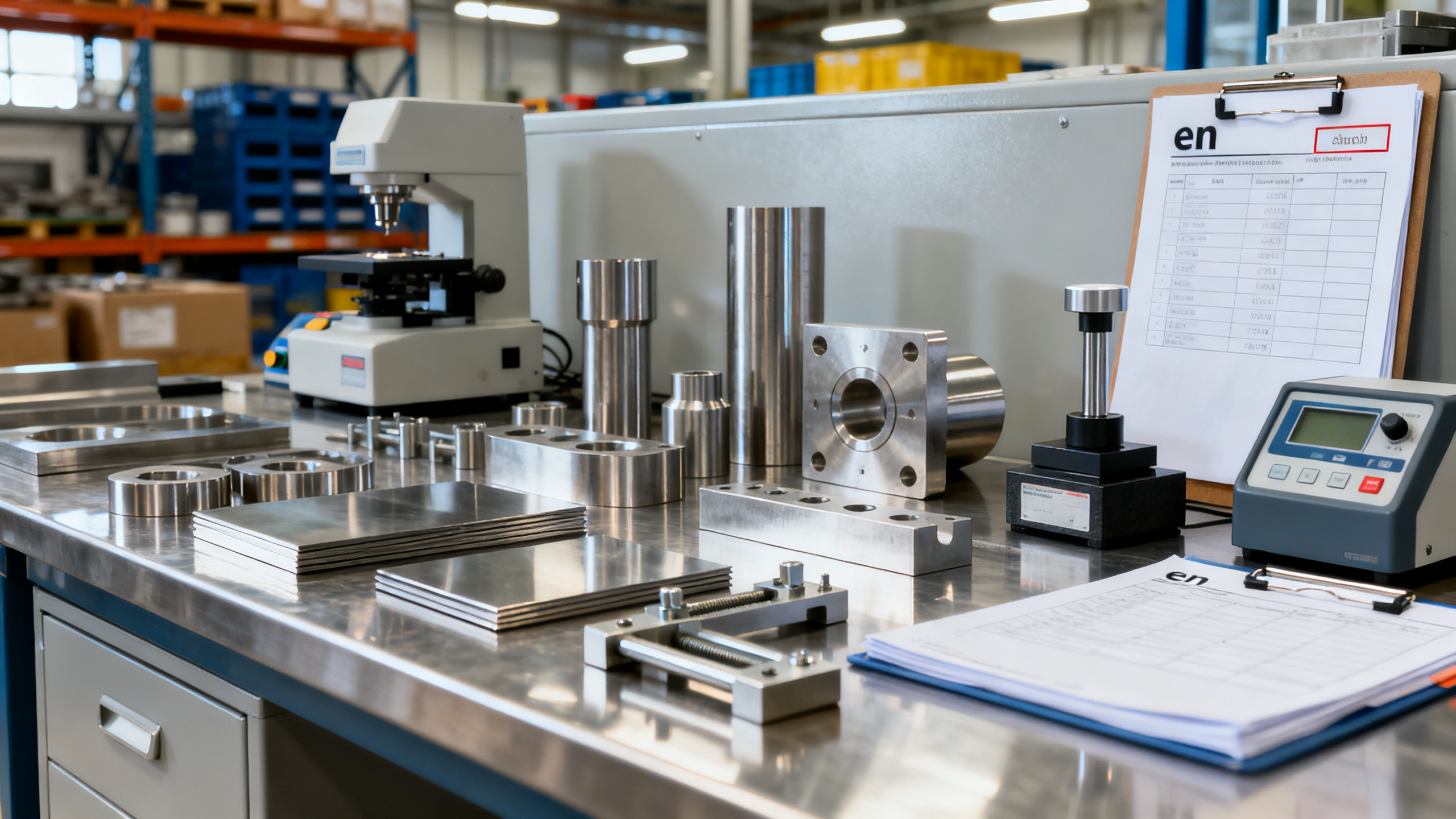
Sourcing Components & Metals without quality risk requires more than low quotations or polished catalogs. It depends on verified data, stable processes, and evidence that each batch will perform as required.
In industrial environments, poor Components & Metals can trigger downtime, safety incidents, corrosion failure, dimensional mismatch, or regulatory exposure. A stronger sourcing method reduces uncertainty before any order is released.
This guide explains how to evaluate suppliers, confirm material authenticity, compare inspection methods, and create a practical approval workflow for Components & Metals across demanding applications.
What makes Components & Metals sourcing high risk?
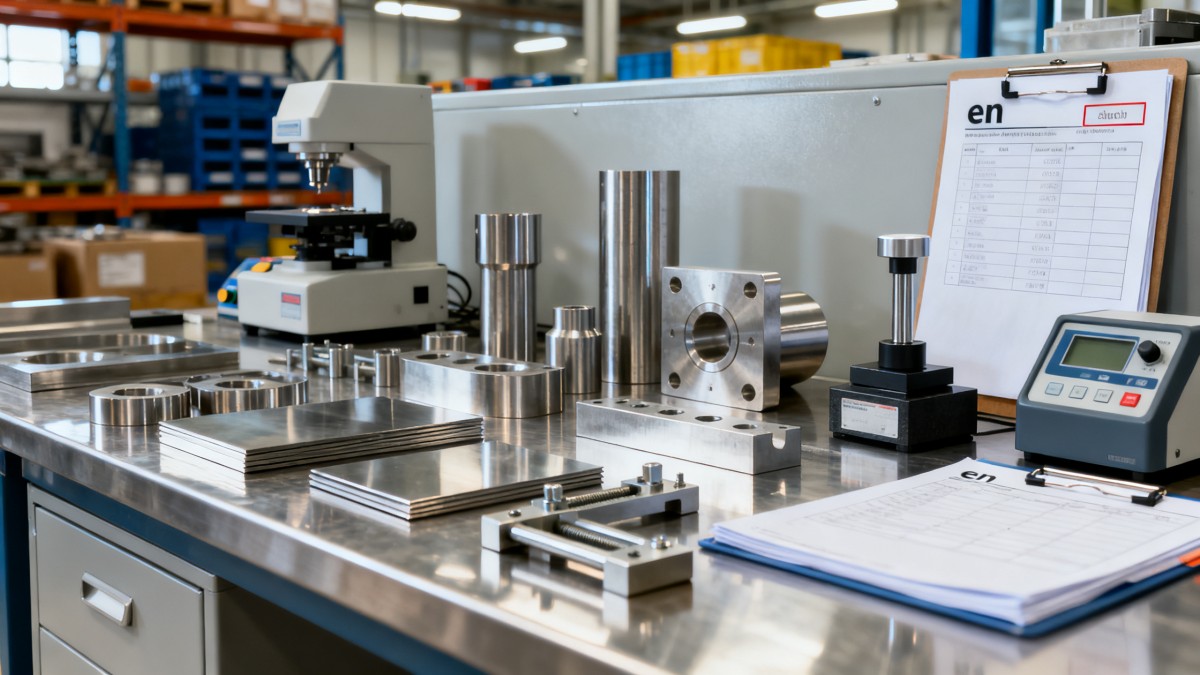
Quality risk often starts long before delivery. It appears when technical requirements are vague, grades are substituted, process capability is unknown, or traceability breaks between mill, processor, and final shipment.
For Components & Metals, visual acceptance is never enough. A part may look correct yet fail under load, heat, pressure, vibration, or chemical exposure.
Common risk sources include:
- Incorrect alloy or hidden material substitution
- Inconsistent hardness, coating thickness, or heat treatment
- Poor machining tolerance and surface finish
- Missing certificates, test reports, or batch records
- Uncontrolled subcontracting
- Packaging or storage conditions that damage integrity
The risk level rises for pressure systems, electrical enclosures, structural assemblies, measurement equipment, and corrosive service. In these cases, Components & Metals must meet exact mechanical and chemical expectations.
How can supplier credibility be verified before placing an order?
A credible supplier provides evidence, not only assurances. The first step is to validate whether the supplier truly controls production, inspection, and documentation for Components & Metals.
Start with a structured qualification review:
- Confirm legal registration, export history, and site location.
- Review ISO 9001 and any sector-specific certifications.
- Check calibration status for measuring and testing equipment.
- Request sample inspection records from recent batches.
- Verify whether critical processes are in-house or outsourced.
- Audit complaint handling, CAPA, and nonconformance control.
For Components & Metals, supplier credibility also depends on process discipline. Ask how raw material is received, identified, segregated, and linked to finished parts.
If a supplier cannot show batch mapping, heat number control, or inspection release authority, the quality risk remains high, even when price and lead time look attractive.
Site audits are ideal, but remote audits can still reveal gaps. Use live video walkthroughs, document sampling, and real-time demonstrations of inspection routines.
What documents prove the quality of Components & Metals?
Documentation should prove identity, conformity, and consistency. For Components & Metals, the required file set depends on application criticality, regulatory obligations, and service conditions.
Key documents often include:
- Material Test Certificate, such as EN 10204 3.1 or equivalent
- Chemical composition report
- Mechanical property test report
- Dimensional inspection report
- Coating, plating, or surface treatment report
- Heat treatment record
- RoHS, REACH, CE, UL, or other compliance declarations where applicable
The most useful records are traceable to the actual shipment. Generic certificates or old sample reports do not prove the quality of delivered Components & Metals.
A strong control point is document matching. Part number, revision level, heat number, batch quantity, and test reference should align across packing list, labels, and reports.
How should Components & Metals be evaluated beyond certificates?
Certificates are necessary, but they should be supported by verification. The right inspection plan depends on whether the risk is material, dimensional, functional, or environmental.
Useful validation methods for Components & Metals include:
- PMI for alloy verification
- Hardness testing for heat-treated parts
- Tensile or impact testing for load-bearing metals
- CMM inspection for precision dimensions
- Salt spray or corrosion testing for coated surfaces
- NDT such as UT, PT, or MT for hidden discontinuities
Application context matters. Stainless steel in a mild indoor setting may pass with basic checks. The same grade in chloride-rich exposure may need tighter corrosion review and weld procedure control.
For custom Components & Metals, a first article inspection is highly effective. It confirms dimensions, material, finish, and fit before larger quantities amplify any mistake.
What sourcing mistakes create hidden quality failures later?
Many failures are created by specification gaps rather than bad intent. When requirements are incomplete, suppliers may choose acceptable-looking alternatives that do not match the real service need.
Typical mistakes include:
- Buying by appearance or nominal grade only
- Ignoring tolerance stack-up in assembled components
- Skipping pre-production samples
- Accepting copied certificates without source validation
- Using one inspection standard for all Components & Metals
- Approving changes in source, process, or coating without requalification
Another common error is focusing only on purchase price. Lower-cost Components & Metals may increase total cost through scrap, field replacement, delayed commissioning, or compliance disputes.
A safer approach compares total landed risk. This includes logistics, testing, defect containment, rework probability, and service-life impact.
How can a low-risk procurement process be built for Components & Metals?
A repeatable sourcing process protects quality better than one-time checking. It should connect technical definition, supplier approval, inspection planning, and post-delivery feedback.
A practical process can follow these steps:
- Define exact material grade, dimensions, finish, and operating conditions.
- Assign a risk level to each category of Components & Metals.
- Approve suppliers through audit, document review, and trial orders.
- Set incoming, in-process, and final inspection requirements.
- Require traceable certificates and retained records.
- Track supplier performance by defect rate and response speed.
This process works especially well when paired with approved vendor lists, revision-controlled drawings, and formal deviation requests. Unapproved substitutions should never enter critical Components & Metals supply.
Quick FAQ table for evaluating Components & Metals suppliers
What is the best next step when quality risk is uncertain?
When uncertainty remains, narrow the scope before scaling. Start with a pilot order for Components & Metals, include full documentation requirements, and add independent inspection for critical characteristics.
Then review actual performance, not only delivery speed. Measure defect frequency, certificate accuracy, communication clarity, and corrective action quality after any issue appears.
Reliable sourcing of Components & Metals is built on traceability, verification, and technical alignment. Strong control at the beginning prevents expensive failures later.
If the goal is safer procurement, create a supplier checklist, define mandatory test documents, and require first-batch validation before expanding volume. That single step can sharply reduce quality risk.
Technical Specifications
- How to Select Electronic Hotel Key Card Locks for Guest Rooms and Staff AreasAuthor :Safety Compliance Lead
- How to Select Lab Instruments for Reliable Chemical Analysis WorkflowsAuthor :Precision Metrology Expert
- How to Size a UPS for Server Rooms: Load, Runtime, and Redundancy FactorsAuthor :Grid Infrastructure Analyst
Expert Insights

Chief Security Architect
Dr. Thorne specializes in the intersection of structural engineering and digital resilience. He has advised three G7 governments on industrial infrastructure security.
Related Analysis
- Sep 17, 2026How to Select Electronic Hotel Key Card Locks for Guest Rooms and Staff AreasAuthor :Safety Compliance Lead
- Sep 16, 2026How to Select Lab Instruments for Reliable Chemical Analysis WorkflowsAuthor :Precision Metrology Expert
- Sep 15, 2026How to Size a UPS for Server Rooms: Load, Runtime, and Redundancy FactorsAuthor :Grid Infrastructure Analyst
Core Sector // 01
Security & Safety
- Selecting Low-Friction Pneumatic Seals for High-Cycle, Low-Pressure CylindersAuthor :Heavy Industry Strategist

- Selecting Spherical Roller Bearings for Mining: Load, Contamination, and Service LifeAuthor :Heavy Industry Strategist

- Do Deep Groove Ball Bearings Need Special Seals in Coastal Humidity?Author :Heavy Industry Strategist

- How to Select Anti Vibration Rubber Shock Absorbers for Machinery and EquipmentAuthor :Heavy Industry Strategist

- When to Specify Induction Hardened Slewing Ring Bearings for Heavy-Duty EquipmentAuthor :Heavy Industry Strategist

- How to Evaluate Weather Resistant EPDM Extrusion for Outdoor Sealing ApplicationsAuthor :Heavy Industry Strategist

- Bearing and Seal Lead Times Stretch to 22 WeeksAuthor :Heavy Industry Strategist

- Angular Contact Ball Bearings Explained: Contact Angle, Load Capacity, and Common UsesAuthor :Heavy Industry Strategist