China Iron and Steel Association Reports 8.2% HRC Export Price Rise in April
Author
Date Published
Reading Time
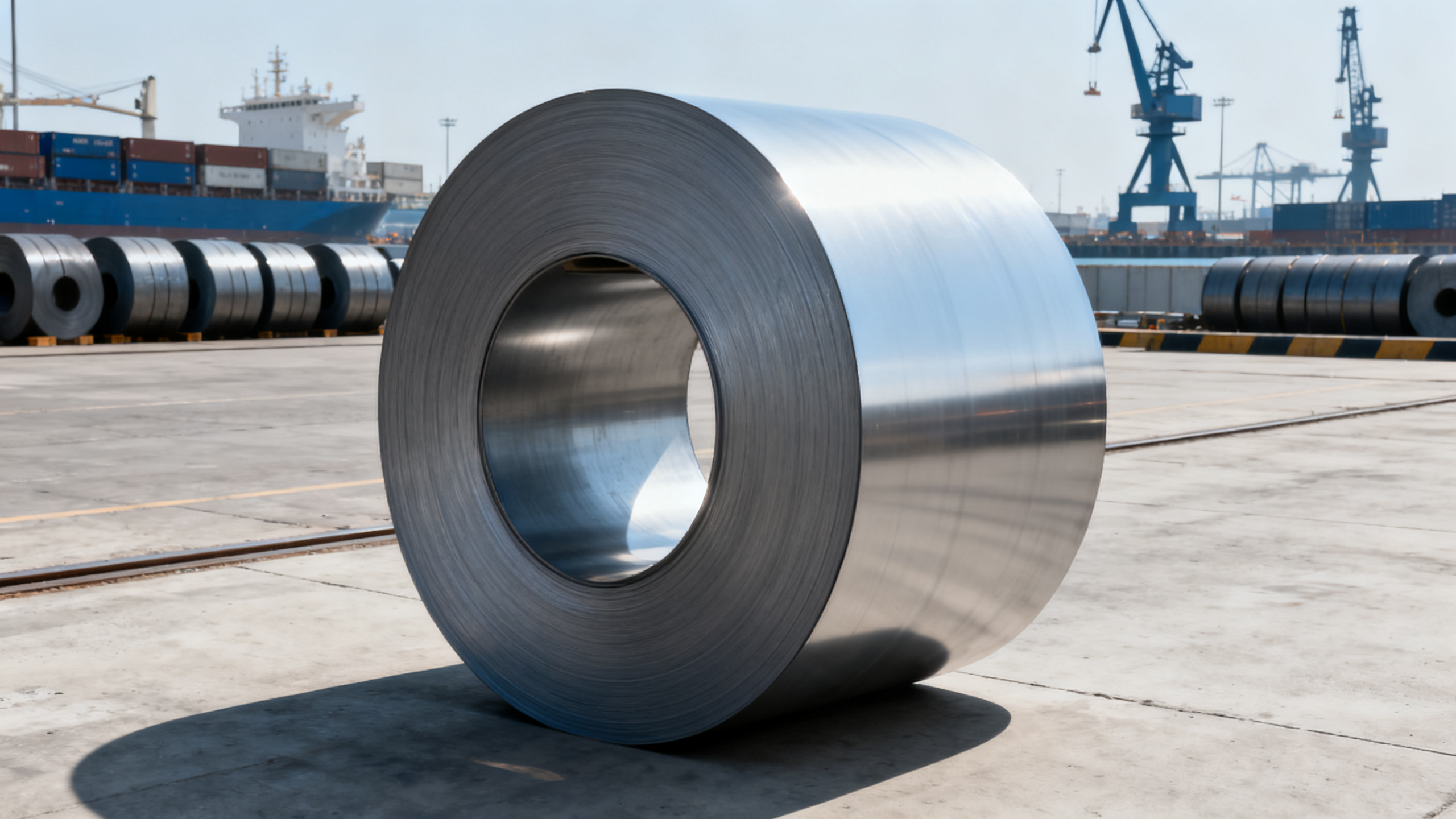
On May 15, 2026, the China Iron and Steel Association (CISA) reported that the export average price of hot-rolled coil (HRC) reached USD 682 per ton in April 2026 — an 8.2% month-on-month increase. This development directly affects downstream sectors including bearings and sealing components manufacturing, particularly those engaged in export-oriented production or reliant on GCr15 bearing steel. The price shift signals potential supply chain adjustments for international buyers and procurement planners across industrial equipment, automotive, and heavy machinery supply chains.
Event Overview
The China Iron and Steel Association released official data on May 15, 2026, stating that the April 2026 export average price of hot-rolled coil (HRC) was USD 682 per ton, up 8.2% from March 2026. CISA attributed the rise to concentrated overseas infrastructure project demand and a rebound in iron ore futures prices. Separately, multiple domestic bearing manufacturers reported that procurement costs for GCr15 bearing steel increased by 11.3% year-on-year. As a result, lead times for exported bearings and sealing components are expected to extend by 7–10 days on average in Q2 2026.
Impact on Specific Industry Segments
Direct Trading Enterprises
Export-oriented trading firms handling HRC or finished bearing/sealing products face compressed margins due to upstream cost pass-through. The 8.2% HRC price increase may trigger renegotiation pressure from overseas buyers accustomed to prior pricing benchmarks — especially in markets where contracts are priced on monthly rolling terms.
Raw Material Procurement Enterprises
Firms sourcing GCr15 bearing steel — including bearing makers and tier-1 component suppliers — are experiencing direct input cost inflation (11.3% YoY). Since GCr15 is a critical raw material with limited substitution options, procurement teams must now reassess vendor allocation, inventory safety stock levels, and forward-buying feasibility amid volatile feedstock pricing.
Manufacturing Enterprises (Bearings & Seals)
Domestic manufacturers of bearings and sealing components report extended production lead times (7–10 days longer in Q2 2026), primarily due to delayed material availability and internal capacity reallocation to manage cost volatility. This affects order fulfillment predictability for OEMs and aftermarket distributors relying on just-in-time delivery models.
Supply Chain Service Providers
Logistics and customs compliance service providers supporting cross-border shipments of steel products or precision mechanical components may observe increased documentation complexity — especially if buyers initiate more frequent price review clauses or request updated origin/cost breakdowns to justify landed cost calculations.
What Relevant Enterprises or Practitioners Should Monitor and Do Now
Track Official Updates on Export Policy Signals
Monitor upcoming CISA bulletins and Ministry of Commerce announcements for any guidance on export tax rebates, quota adjustments, or quality certification requirements — as these could offset or amplify current cost pressures.
Reassess Pricing and Delivery Terms for Key Export Markets
Focus specifically on markets with high infrastructure-related demand (e.g., Southeast Asia, Middle East, Latin America), where HRC-driven cost increases are most likely to influence buyer behavior and contract renewals in Q2–Q3 2026.
Review Inventory and Procurement Timing Against GCr15 Volatility
Given the 11.3% YoY rise in GCr15 procurement costs, evaluate whether incremental buffer stock — especially for high-turnover SKUs — improves delivery reliability without overexposing working capital to further price uncertainty.
Prepare Proactive Communication with Overseas Buyers
Develop standardized messaging on lead time extensions and cost drivers for use in customer-facing channels (e.g., order confirmations, shipment notices), helping to align expectations and reduce disputes during Q2 delivery cycles.
Editorial Perspective / Industry Observation
Observably, this HRC price movement functions less as an isolated commodity fluctuation and more as a transmission signal through the mechanical components value chain. Analysis shows the linkage between iron ore futures, flat-rolled steel export pricing, and specialty alloy procurement costs is tightening — suggesting greater interdependence across traditionally siloed procurement functions (e.g., bulk materials vs. precision alloys). From an industry perspective, it is not yet clear whether this reflects sustained structural cost pressure or a cyclical spike tied to near-term project timing. Current data does not indicate policy intervention or supply constraint — only demand-driven pricing momentum. Therefore, the event is better understood as an early-warning indicator requiring operational calibration rather than an immediate inflection point demanding strategic pivot.
Conclusion: This update underscores how shifts in primary steel export pricing can rapidly propagate into precision-engineered component supply chains — affecting cost structures, delivery commitments, and buyer-seller negotiation dynamics. It is not yet evidence of systemic disruption, but rather a measurable stress test for procurement agility and cross-tier communication. Currently, it is more appropriately understood as a near-term operational signal than a long-term market restructuring event.
Source: China Iron and Steel Association (CISA), official data release dated May 15, 2026.
Further observation is warranted regarding June 2026 HRC export pricing trends and any follow-up statements from CISA on raw material cost transmission mechanisms.
Technical Specifications
- How to Select Electronic Hotel Key Card Locks for Guest Rooms and Staff AreasAuthor :Safety Compliance Lead
- How to Select Lab Instruments for Reliable Chemical Analysis WorkflowsAuthor :Precision Metrology Expert
- How to Size a UPS for Server Rooms: Load, Runtime, and Redundancy FactorsAuthor :Grid Infrastructure Analyst
Expert Insights

Chief Security Architect
Dr. Thorne specializes in the intersection of structural engineering and digital resilience. He has advised three G7 governments on industrial infrastructure security.
Related Analysis
- Sep 17, 2026How to Select Electronic Hotel Key Card Locks for Guest Rooms and Staff AreasAuthor :Safety Compliance Lead
- Sep 16, 2026How to Select Lab Instruments for Reliable Chemical Analysis WorkflowsAuthor :Precision Metrology Expert
- Sep 15, 2026How to Size a UPS for Server Rooms: Load, Runtime, and Redundancy FactorsAuthor :Grid Infrastructure Analyst
Core Sector // 01
Security & Safety
- Selecting Low-Friction Pneumatic Seals for High-Cycle, Low-Pressure CylindersAuthor :Heavy Industry Strategist

- Selecting Spherical Roller Bearings for Mining: Load, Contamination, and Service LifeAuthor :Heavy Industry Strategist

- Do Deep Groove Ball Bearings Need Special Seals in Coastal Humidity?Author :Heavy Industry Strategist

- How to Select Anti Vibration Rubber Shock Absorbers for Machinery and EquipmentAuthor :Heavy Industry Strategist

- When to Specify Induction Hardened Slewing Ring Bearings for Heavy-Duty EquipmentAuthor :Heavy Industry Strategist

- How to Evaluate Weather Resistant EPDM Extrusion for Outdoor Sealing ApplicationsAuthor :Heavy Industry Strategist

- Bearing and Seal Lead Times Stretch to 22 WeeksAuthor :Heavy Industry Strategist

- Angular Contact Ball Bearings Explained: Contact Angle, Load Capacity, and Common UsesAuthor :Heavy Industry Strategist