Pleated filter cartridges are not always the right upgrade from standard
Author
Date Published
Reading Time
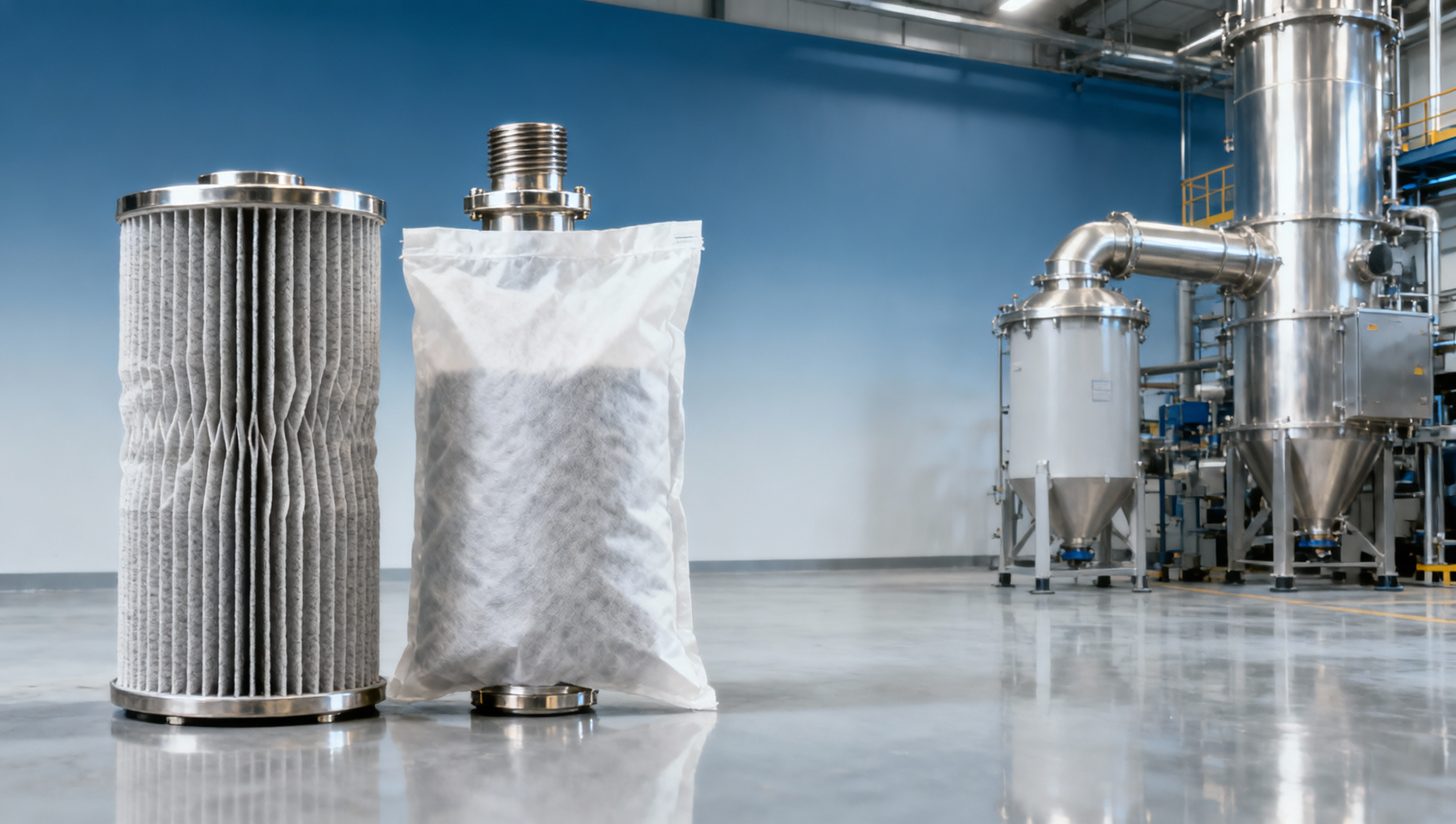
Pleated filter cartridges can improve dust capture and airflow stability, but they are not always the best upgrade from standard options in every industrial dust collector, cartridge dust collector, or pulse jet baghouse setup. For engineers, operators, and buyers comparing pleated filter cartridges with bag filter housings, pocket air filters, activated carbon air filter systems, and water filter cartridges wholesale solutions, the right choice depends on dust load, operating conditions, maintenance demands, and total lifecycle cost.
In industrial filtration, the phrase “upgrade” often hides a more practical question: upgrade for which duty, under which constraints, and at what cost over 12, 24, or 36 months of operation? A pleated filter cartridge may increase media area by 1.5 to 3 times versus some standard designs, yet that benefit can be offset if dust characteristics, humidity, pulse cleaning energy, or housing geometry are not aligned.
This matters to four core audiences. Researchers need a realistic comparison beyond product claims. Operators need stable pressure drop, manageable maintenance intervals, and fewer unplanned shutdowns. Procurement teams need a defendable total cost model. Decision-makers need filtration choices that support compliance, uptime, and predictable replacement planning across multiple facilities.
The discussion below examines where pleated filter cartridges fit well, where standard bags or other filtration formats still make more sense, and how to evaluate the choice in an industrial environment where dust loading, airflow volume, maintenance labor, and process reliability all matter.
Where pleated filter cartridges deliver clear value
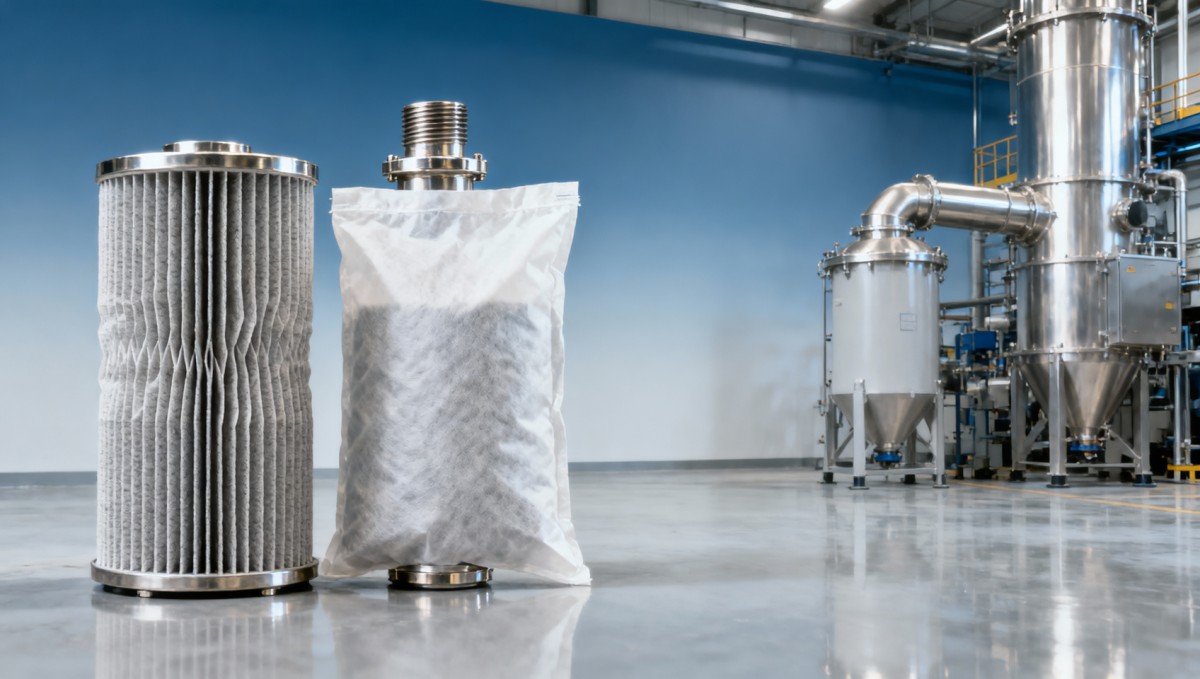
Pleated filter cartridges are often selected to increase filtration surface area within the same housing footprint. In retrofit projects, that can be attractive when a plant wants to improve capture efficiency without expanding the dust collector casing. In many cartridge dust collector applications, pleated media can support lower face velocity, steadier airflow, and improved fine-particle retention when dust loading remains within a moderate operating window.
They are particularly effective in dry, fine, free-flowing dust streams such as light powders, some metal finishing particulates, pharmaceutical solids, and selected food or packaging dusts. In these cases, pulse cleaning can remain effective over a 6 to 18 month service interval, depending on shift pattern, dust concentration, and cleaning frequency. Plants operating 8 to 16 hours per day often see the benefit first in reduced differential pressure spikes.
Another common advantage is maintenance access. In a well-designed system, cartridge replacement can be faster than bag replacement, sometimes reducing changeout time from several hours to less than 1 to 2 hours per module. That has real value in facilities where shutdown windows are narrow and labor availability is limited.
Typical conditions that favor pleated media
A pleated filter cartridge tends to perform better when the dust is non-sticky, relative humidity is controlled, and process temperatures stay within the media rating. For many standard industrial synthetic media options, practical operating ranges may sit around ambient to 80°C, though high-temperature applications need specialized materials. If the process routinely exceeds that range, standard baghouse configurations may be more robust.
- Moderate dust loading, often in the range of light to medium particulate burden rather than heavy bulk solids carryover.
- Stable airflow requirements where pressure drop control affects fan energy and process consistency.
- Installations with restricted footprint, where more media area in the same cabinet creates operational value.
- Applications requiring cleaner maintenance procedures and faster access for replacement tasks.
The table below summarizes where pleated filter cartridges are usually strong and where their advantages are more conditional.
The key takeaway is that pleated cartridges can be a strong engineering choice, but mostly in controlled dust profiles and balanced operating conditions. Their benefit is real, yet it is conditional rather than universal.
Why standard bags and other filter formats still remain relevant
Standard filter bags remain widely used because many industrial dust problems are not simply about finer capture or more media area. They are about durability under heavy loading, tolerance to temperature fluctuation, and the ability to shed difficult dust during repeated pulse cycles. In pulse jet baghouse systems handling abrasive, dense, or sticky dust, a conventional bag arrangement may provide longer and more predictable performance.
For example, cement, foundry, minerals processing, and some metallurgy applications can generate higher particulate mass loading, irregular particle size distribution, and more severe abrasion. In those environments, deep pleat geometry can become a liability. Dust may lodge in the pleats, cleaning efficiency can fall, and differential pressure may rise faster than expected, sometimes within weeks instead of months.
Other filter formats serve different goals. Pocket air filters are commonly used in HVAC or pre-filtration stages where large airflow volumes and lower particulate concentrations dominate. Activated carbon air filter systems target odors, VOCs, and chemical adsorption rather than heavy dust capture. Water filter cartridges wholesale solutions belong to liquid filtration, where the variables are micron rating, chemistry, and flow rate instead of pulse cleaning and dust cake release.
When “more efficient” can mean “less suitable”
A common purchasing mistake is to treat all filtration products as interchangeable upgrades. In practice, efficiency, pressure drop, media area, and service life must be matched to the contamination type. A filter that works well at 0.5 to 2.0 g/m³ dust loading may struggle in a system operating at 5.0 g/m³ or more, especially if the dust has moisture or oily residue.
The comparison below helps separate format suitability by industrial task rather than by marketing language alone.
For procurement teams, this means the selection process should begin with contamination type and operating duty, not with a default assumption that pleated filter cartridges are the modern answer in every system.
The four-factor selection model for engineers and buyers
A practical way to decide between pleated filter cartridges and standard formats is to evaluate four linked factors: dust load, dust behavior, process conditions, and maintenance economics. This method works well across manufacturing, process plants, utility support systems, and mixed industrial sites where multiple filtration duties coexist.
1. Dust load and particle behavior
Start by estimating actual dust concentration, particle size distribution, and whether the dust is abrasive, hygroscopic, oily, or fibrous. A collector facing fine, dry dust at moderate concentration may suit pleated media. A collector exposed to coarse and sticky dust with variable loading over 20% to 30% during batch swings may not. If dust cake release is uncertain, standard bags deserve serious consideration.
2. Operating temperature and humidity
Temperature excursions, condensation risk, and moisture content directly affect media stability. If inlet temperature moves from 35°C to 90°C during process fluctuation, or if dew point is approached during shutdown, pleat clogging risk rises. A more temperature-tolerant baghouse media may provide a safer margin in these conditions.
3. Cleaning performance and energy demand
Pulse jet cleaning must be matched to media geometry. If compressed air quality is inconsistent or pulse pressure is below target, cartridges may not clean effectively. That can result in higher differential pressure, more fan load, and increased energy use over 3 to 6 months. A lower initial footprint does not automatically mean lower running cost.
4. Maintenance labor and replacement planning
Maintenance economics should be modeled over at least one full replacement cycle. Compare labor hours, planned shutdown duration, spare inventory level, and disposal requirements. In some plants, a cartridge that costs more per unit still wins because replacement takes 50% less time. In other plants, higher replacement frequency cancels out that benefit.
The checklist below can be used during RFQ review or plant-side technical comparison.
- Confirm dust type, loading range, and whether material tends to cake, smear, or bridge.
- Verify operating temperature band, humidity pattern, and shutdown condensation risk.
- Check collector geometry, pulse cleaning pressure, and available compressed air quality.
- Estimate replacement interval in months, not just initial purchase price.
- Calculate labor hours per changeout and cost of downtime per maintenance event.
- Review compliance, sealing integrity, and whether leakage risk affects worker safety or emissions control.
Using these six checks creates a more defensible specification than asking vendors to quote only by dimensions or nominal efficiency.
Total lifecycle cost: the metric that changes the answer
Industrial buyers often focus on unit price first, but filtration value is better measured by lifecycle cost over 1 to 3 years. The true cost combines acquisition price, shipping, installation labor, compressed air demand, fan energy linked to pressure drop, service life, and production losses during planned or unplanned maintenance. This is where pleated filter cartridges may be either an excellent decision or an expensive mismatch.
Consider two simplified scenarios. In Scenario A, a plant with moderate dry dust reduces changeout labor from 6 hours to 3 hours per service event, extends stable operation to 12 months, and avoids a cabinet expansion project. In Scenario B, a heavy-dust process experiences rapid pleat loading, rising pressure drop after 8 to 10 weeks, and more frequent intervention. The purchase price alone would not reveal the difference between these outcomes.
A practical cost comparison framework
The table below shows the cost categories procurement and operations teams should compare before approving a retrofit or a platform change.
When lifecycle cost is modeled properly, the answer becomes more balanced. Pleated filter cartridges are often a smart investment in the right duty, but they should not replace a proven standard arrangement if the process conditions penalize pleat cleaning, service life, or operating stability.
Implementation risks, common mistakes, and a safer buying process
Many filtration disappointments do not come from poor product quality alone. They come from incomplete system matching. A plant may install pleated filter cartridges without checking pulse pressure, dust discharge efficiency, hopper flow, or air-to-cloth ratio. The result is often blamed on the filter element, while the actual issue sits in collector design or operating discipline.
Common mistakes in retrofit decisions
- Assuming a pleated retrofit will automatically lower pressure drop without reviewing dust release behavior.
- Ignoring process upsets such as moisture spikes, sticky batches, or seasonal humidity changes.
- Comparing products by nominal efficiency only, without testing replacement interval or pulse cleaning response.
- Overlooking seal compatibility, gasket integrity, and installation tolerances that may affect leakage control.
- Using a dust collector, HVAC pre-filter, and activated carbon stage as if they solve the same contamination problem.
A safer buying process usually involves 5 steps: site data collection, dust characterization, system review, pilot or phased trial, and post-installation monitoring. Even a 30 to 60 day monitored trial can reveal whether pressure drop trends remain stable or whether cleaning performance degrades too quickly for the duty.
What operators should monitor after installation
Operators should track at least four indicators weekly during the first 8 to 12 weeks: differential pressure trend, pulse cleaning frequency, hopper discharge condition, and visible change in airflow or capture performance at the source. If two or more indicators drift early, the issue should be escalated before full filter blinding occurs.
FAQ for specification and procurement teams
How do I know whether pleated filter cartridges are suitable for my plant?
Begin with dust type, loading range, humidity exposure, and process temperature. If the dust is dry, fine, and non-adhesive, with stable duty and reliable pulse cleaning, pleated media may be suitable. If the process involves sticky, fibrous, or heavy dust loading, standard bags may provide lower risk.
Are pleated cartridges always better for compact collectors?
Not always. Compact footprint is an advantage, but only if cleaning remains effective. If the collector geometry creates uneven airflow or poor dust release, a compact configuration can still underperform. Space savings should be weighed against cleaning stability and replacement interval.
What should procurement request from suppliers?
Request media specification, temperature range, recommended operating conditions, sealing details, expected service interval under similar duty, and installation requirements. It is also useful to ask for differential pressure guidance, replacement lead time, and any known limitations related to moisture, sticky dust, or pulse jet settings.
For industrial operators, engineers, and sourcing managers, the most reliable conclusion is simple: pleated filter cartridges are not a universal upgrade, but a targeted solution. They can outperform standard options in compact, dry, fine-dust applications with controlled operating conditions. In heavy-duty, variable, sticky, or high-temperature service, standard bags and other filtration formats may still offer stronger lifecycle value and lower operational risk.
A sound decision should balance filtration efficiency, maintenance effort, process compatibility, and total cost across at least one full replacement cycle. If your team is reviewing a retrofit, a new collector specification, or a multi-site filtration standard, compare the duty conditions first and the product category second.
Global Industrial Core supports industrial buyers and technical teams with structured sourcing insight across filtration, environmental control, and foundational plant systems. To evaluate pleated filter cartridges, baghouse options, or related industrial filtration solutions with greater confidence, contact us to discuss your application, request a tailored comparison framework, or explore more practical selection guidance.
Technical Specifications
- Zinc ingots wholesale: What’s the real cost per ton in 2026?Author :Heavy Industry Strategist
- Aluminum ingots bulk vs. cast bars: Which delivers better yield for extrusion?Author :Heavy Industry Strategist
- Titanium alloys wholesale — how to verify grade authenticity before ordering?Author :Heavy Industry Strategist
Expert Insights

Chief Security Architect
Dr. Thorne specializes in the intersection of structural engineering and digital resilience. He has advised three G7 governments on industrial infrastructure security.
Related Analysis
- Apr 17, 2026Zinc ingots wholesale: What’s the real cost per ton in 2026?Author :Heavy Industry Strategist
- Apr 17, 2026Aluminum ingots bulk vs. cast bars: Which delivers better yield for extrusion?Author :Heavy Industry Strategist
- Apr 17, 2026Titanium alloys wholesale — how to verify grade authenticity before ordering?Author :Heavy Industry Strategist
Core Sector // 01
Security & Safety
- Steam traps wholesale: Which type fails least in condensate return lines with air binding?Author :Environmental Engineering Director

- Check valves (swing type): When does water hammer override disc stability?Author :Environmental Engineering Director
: When does water hammer override disc stability?")
- Cast iron gate valves: Are they still viable for potable water mains in 2026?Author :Environmental Engineering Director

- Grease interceptor wholesale options differ more in cleaning designAuthor :Environmental Engineering Director

- Polyaluminium chloride PAC dosage errors often start with pH assumptionsAuthor :Environmental Engineering Director

- Polyacrylamide PAM wholesale grades are harder to compare than they lookAuthor :Environmental Engineering Director

- Wastewater treatment chemicals that cut sludge cost are not always cheaperAuthor :Environmental Engineering Director

- Pure water bottling machine downtime often starts in the rinsing sectionAuthor :Environmental Engineering Director