Wastewater treatment chemicals that cut sludge cost are not always cheaper
Author
Date Published
Reading Time
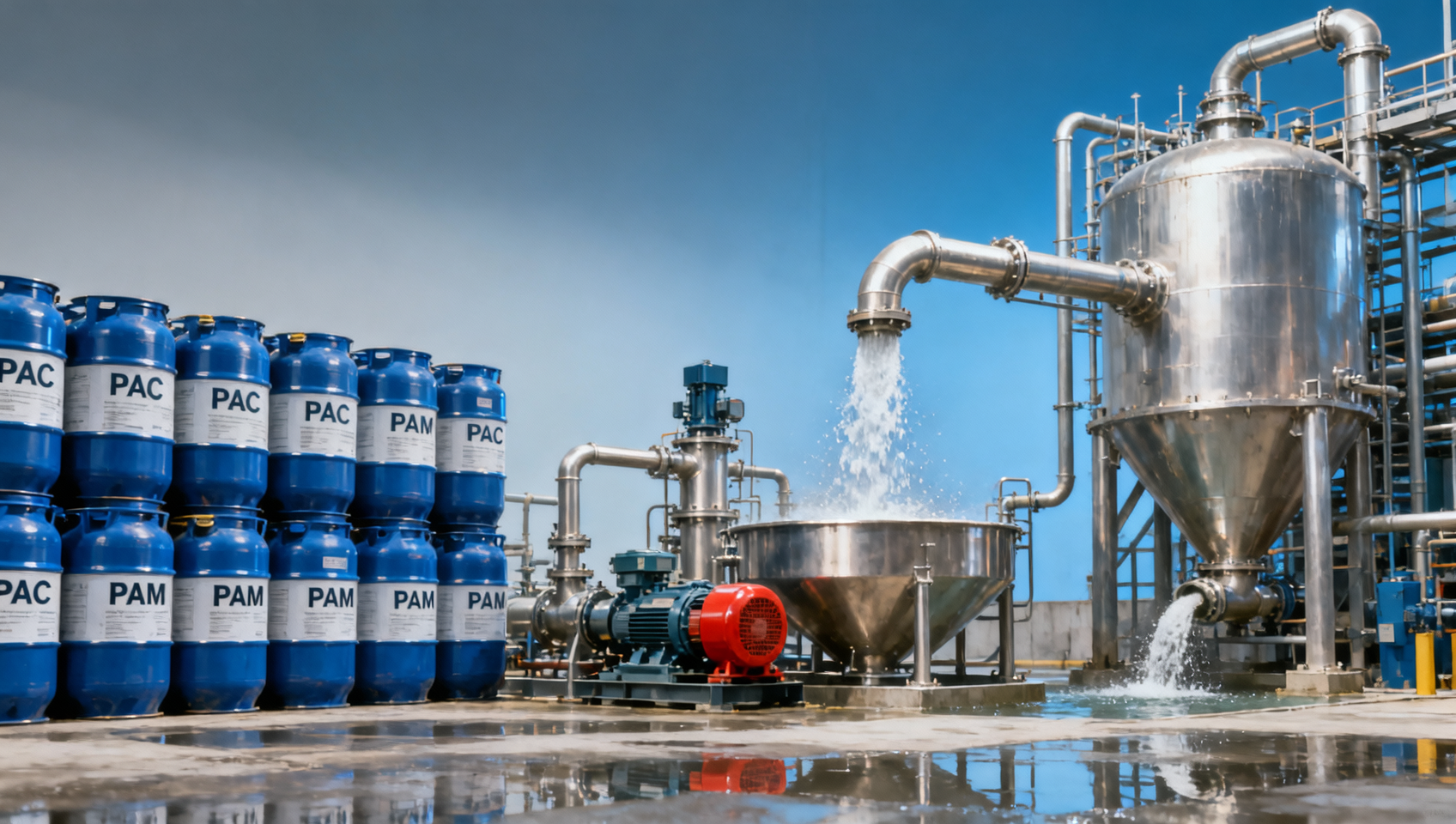
In wastewater operations, the lowest unit price rarely delivers the lowest total cost. Smart buyers now compare wastewater treatment chemicals not only by purchase price, but by sludge reduction, dosing efficiency, disposal savings, and system compatibility with equipment such as polyaluminium chloride pac, polyacrylamide pam wholesale solutions, dosing agitators wholesale, and submersible sewage pumps. This article explains why chemicals that cut sludge cost can create better long-term value even when they are not the cheapest upfront.
For researchers, operators, procurement teams, and plant-level decision makers, the practical question is not whether a coagulant or flocculant looks cheap on a quotation sheet. The real question is how that chemical performs over 30 days, 6 months, and a full budget cycle when sludge hauling, dewatering load, labor hours, pump wear, and compliance risk are included.
In industrial and municipal wastewater systems, a 10% reduction in sludge volume can outweigh a noticeably higher chemical price. In many facilities, sludge handling and disposal account for 25%–60% of total wastewater operating cost, depending on local transport distance, filter press performance, moisture content, and disposal route. That is why chemical selection has become a process optimization issue rather than a simple purchase decision.
Why unit price is a poor shortcut in wastewater chemical procurement
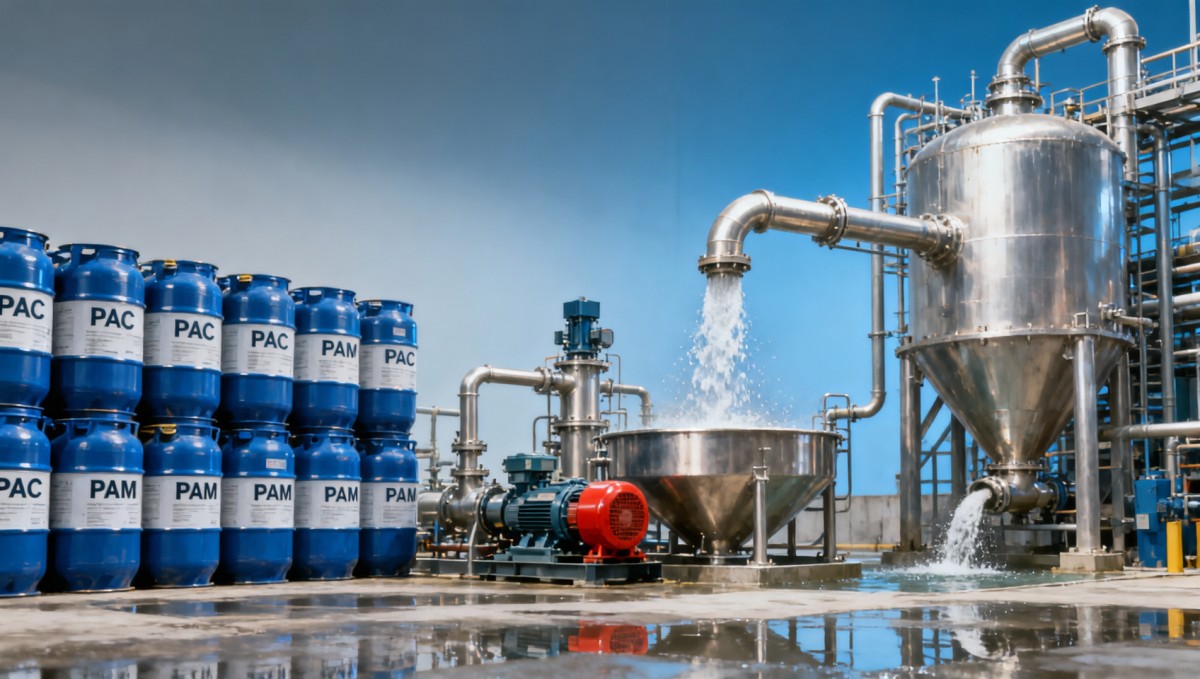
A lower per-kilogram price often hides a higher total dosage requirement. One wastewater treatment chemical may cost 15% less at purchase, yet require 20%–35% more dosing to reach the same turbidity, COD reduction, or floc size. Once storage, transfer, agitation, operator adjustment time, and sludge generation are added, the “cheap” option can quickly become the more expensive one.
This is especially true in facilities treating mixed influent streams from metal finishing, food processing, textile washing, paper production, or general industrial cleaning. Influent quality can fluctuate by hour, not just by day. A chemical that performs well only in a narrow pH range, such as 6.5–7.2, may create unstable results when actual wastewater swings between pH 5.8 and 8.3.
Operators also know that poor chemical fit increases downstream burden. If coagulation is weak, dewatering equipment may need longer cycle time. If floc structure is fragile, shear from transfer pumps or agitators can break solids apart before separation. That leads to higher polymer demand, wetter cake, and more sludge trucks leaving the site each month.
For procurement teams, the lesson is clear: compare chemicals by cost per cubic meter treated, cost per ton of dry solids removed, and cost per ton of sludge disposed. A price sheet alone does not measure actual economic performance.
Three cost layers buyers should calculate
- Direct chemical spend: unit price, dosage rate in ppm or kg/m³, storage stability, and delivery frequency.
- Process impact cost: mixing energy, dosing pump workload, operator intervention, pH correction demand, and dewatering throughput.
- Residuals management cost: sludge volume, cake moisture, transport frequency, disposal fee per ton, and compliance exposure.
Typical comparison logic
A plant treating 500 m³/day may see only a small monthly difference in purchase price between two chemical programs. But if one program cuts sludge output by 0.8–1.5 tons/day wet basis, annual disposal savings can exceed the initial price gap several times over. This is where data-driven evaluation becomes essential.
How sludge reduction changes the economics of treatment
Sludge cost is driven by more than volume. It includes water retained in the cake, polymer demand during dewatering, cycle time of presses or centrifuges, labor for cleaning, and the number of collections scheduled each week. Chemicals that generate denser flocs often improve solid-liquid separation and reduce final cake moisture by 3%–8%, which can materially change transport and disposal billing.
For example, PAC formulations with better charge neutralization can reduce the total amount of inorganic solids added to the process compared with overfeeding lower-performance alternatives. Likewise, selecting the right PAM molecular weight and ionic type can improve floc strength and reduce fines carryover. When the chemistry is aligned to wastewater character, less sludge is created and more water is released before disposal.
System compatibility matters as well. Dosing agitators wholesale packages must provide enough shear for solution preparation without damaging polymer chain structure. Submersible sewage pumps must handle slurry transfer without excessive turbulence. A good chemical can underperform if the make-down unit, feed pump, or mixing sequence is poorly configured.
The table below shows why buyers should compare total operating effect rather than list price alone.
The key takeaway is that sludge cost is a multiplier. Even modest improvements in cake dryness, settling speed, or solids capture can create meaningful savings over 12 months, especially in plants above 200 m³/day or sites paying high landfill, incineration, or third-party treatment fees.
Where savings usually appear first
- Fewer tons of sludge shipped out per week.
- Lower polymer correction during dewatering.
- Shorter press or centrifuge runtime per batch.
- Reduced operator adjustment on pH and feed rate.
- Less solids carryover into downstream tanks or pumps.
Selecting PAC, PAM, and dosing equipment as one process package
Wastewater treatment chemicals should not be purchased in isolation. PAC, PAM, dosing agitators, and submersible sewage pumps work as an integrated process chain. A mismatch in one part of that chain can erase the economic benefit of a better chemical. For instance, an unsuitable mixing speed may create fish-eyes in polymer preparation, while an oversized transfer pump can shear formed flocs before clarification.
PAC is commonly used for primary coagulation, especially where suspended solids, color, phosphorus, or emulsified contaminants need destabilization. PAM is then used to bridge particles into larger, stronger flocs. In practice, the most cost-effective program often depends on jar testing across 3–5 dosage bands and at least 2 pH points, not on generic supplier claims.
Preparation quality also affects results. Many polymer systems perform best when make-down concentration is controlled within 0.05%–0.3%, followed by an aging period of 30–60 minutes depending on chemistry. If the agitator is too aggressive or retention time is too short, the polymer may not fully activate, driving up consumption and reducing sludge dewatering efficiency.
The table below summarizes practical selection points for buyers evaluating chemicals together with dosing and transfer equipment.
For industrial buyers, the best sourcing decision often comes from bundling chemistry review with process equipment review. This reduces commissioning surprises and shortens the optimization cycle from several weeks to a more controlled 7–14 day test and adjustment program.
Practical selection checklist
- Request jar test guidance based on actual influent samples from at least 2 operating days.
- Check whether the supplier can define dosage as active performance per m³ rather than only by product weight.
- Verify compatibility with tank materials, agitator design, seals, hoses, and dosing pumps.
- Review sludge dewatering results after chemical change, not only clarified water appearance.
A procurement framework for comparing total value instead of headline price
A disciplined procurement process prevents short-term price pressure from creating long-term operating loss. Buyers should compare at least 4 dimensions: treatment effectiveness, sludge impact, operational stability, and service support. In large plants or multi-site groups, using a standard evaluation sheet can improve internal alignment between operations, engineering, and purchasing.
A practical trial should run long enough to capture process variation. For many facilities, 5–10 operating days is the minimum useful window, while 2–4 weeks is preferable when influent changes by batch production or season. Evaluation should include dosage per m³, sludge wet tonnage, filtrate clarity, equipment cleaning frequency, and operator feedback.
Procurement teams should also clarify supply terms that affect continuity: lead time, packaging size, storage life, technical support response, and replacement recommendations if influent chemistry changes. A cheaper product with frequent emergency adjustments can cost more in downtime than a premium product with stable technical backing.
The following framework can be used during supplier comparison meetings and internal approval reviews.
This framework shifts the discussion from “Which drum is cheaper?” to “Which program lowers the cost of treating one cubic meter while protecting system reliability?” That is the more useful question for B2B buyers with uptime, compliance, and budget accountability.
Common buying mistakes
Choosing only from supplier quotations
Without trial data, buyers may miss the downstream cost impact on sludge disposal and labor.
Ignoring equipment interaction
Even a strong PAM grade can fail if polymer preparation, agitation, or transfer pumping is unsuitable.
Not tracking post-change performance
Plants should compare at least 5 indicators before and after implementation to confirm value realization.
Implementation, risk control, and frequently asked questions
Once a wastewater treatment chemical program is selected, implementation should follow a controlled process. Start with bench testing, then a limited on-site trial, then a monitored scale-up. Most plants can complete this in 3 stages over 1–3 weeks, depending on tank capacity, operator availability, and process variability. A rushed full-scale switch often creates confusion about whether results come from the chemical itself or from incorrect dosing setup.
Risk control should include calibration of dosing pumps, verification of agitator run time, confirmation of polymer aging time, and review of sludge pump performance under actual solids load. Operators should record feed rate, pH, settling time, sludge level, and dewatering output at least once per shift during the trial period. These records make supplier claims measurable and defensible for management approval.
For decision makers, the most useful outcome is a documented cost-per-m³ and sludge-per-day comparison. This gives finance, procurement, and operations a shared basis for selecting PAC, PAM, and associated dosing equipment without relying on assumptions.
FAQ: How do we know if a higher-priced chemical is worth it?
Run a side-by-side evaluation using equal treatment objectives. Compare dose, settling speed, sludge volume, cake moisture, and total disposal cost over at least 5 operating days. If the premium product lowers sludge handling enough to offset the price gap, it is delivering better total value.
FAQ: Which indicators matter most during a trial?
At minimum, track 6 items: chemical dose per m³, pH adjustment need, clarified water quality, sludge wet tonnage, dewatering cycle time, and operator intervention frequency. Plants with tighter compliance targets may also add phosphorus, color, or residual solids indicators.
FAQ: Can equipment upgrades improve chemical performance?
Yes. Improved dosing agitators, better polymer preparation control, and correctly selected submersible sewage pumps can reduce shear damage, stabilize feed concentration, and improve sludge transfer. In many cases, process consistency improves even before chemical dosage is optimized.
FAQ: Who benefits most from total-cost chemical evaluation?
Facilities with daily flow above 100 m³, high sludge disposal fees, variable influent composition, or strict discharge requirements usually gain the most. The larger the sludge bill, the more important it becomes to choose wastewater treatment chemicals by system economics rather than invoice price alone.
Wastewater treatment chemicals that reduce sludge cost are often the better business decision even when their upfront price is higher. When PAC, PAM, dosing systems, and sludge transfer equipment are evaluated as one operating package, buyers gain a clearer view of total treatment cost, process stability, and long-term value.
For industrial researchers, plant operators, procurement managers, and business leaders, the smartest next step is to compare chemical options with real operating data rather than unit price alone. If you need support assessing wastewater treatment chemicals, dosing agitators wholesale options, PAC and PAM supply decisions, or pump compatibility for sludge handling, contact us to discuss a more reliable and cost-efficient treatment strategy.
Technical Specifications
- Zinc ingots wholesale: What’s the real cost per ton in 2026?Author :Heavy Industry Strategist
- Aluminum ingots bulk vs. cast bars: Which delivers better yield for extrusion?Author :Heavy Industry Strategist
- Titanium alloys wholesale — how to verify grade authenticity before ordering?Author :Heavy Industry Strategist
Expert Insights

Chief Security Architect
Dr. Thorne specializes in the intersection of structural engineering and digital resilience. He has advised three G7 governments on industrial infrastructure security.
Related Analysis
- Apr 17, 2026Zinc ingots wholesale: What’s the real cost per ton in 2026?Author :Heavy Industry Strategist
- Apr 17, 2026Aluminum ingots bulk vs. cast bars: Which delivers better yield for extrusion?Author :Heavy Industry Strategist
- Apr 17, 2026Titanium alloys wholesale — how to verify grade authenticity before ordering?Author :Heavy Industry Strategist
Core Sector // 01
Security & Safety
- Steam traps wholesale: Which type fails least in condensate return lines with air binding?Author :Environmental Engineering Director

- Check valves (swing type): When does water hammer override disc stability?Author :Environmental Engineering Director
: When does water hammer override disc stability?")
- Cast iron gate valves: Are they still viable for potable water mains in 2026?Author :Environmental Engineering Director

- Grease interceptor wholesale options differ more in cleaning designAuthor :Environmental Engineering Director

- Polyaluminium chloride PAC dosage errors often start with pH assumptionsAuthor :Environmental Engineering Director

- Polyacrylamide PAM wholesale grades are harder to compare than they lookAuthor :Environmental Engineering Director

- Wastewater treatment chemicals that cut sludge cost are not always cheaperAuthor :Environmental Engineering Director

- Pure water bottling machine downtime often starts in the rinsing sectionAuthor :Environmental Engineering Director