Grease interceptor wholesale options differ more in cleaning design
Author
Date Published
Reading Time
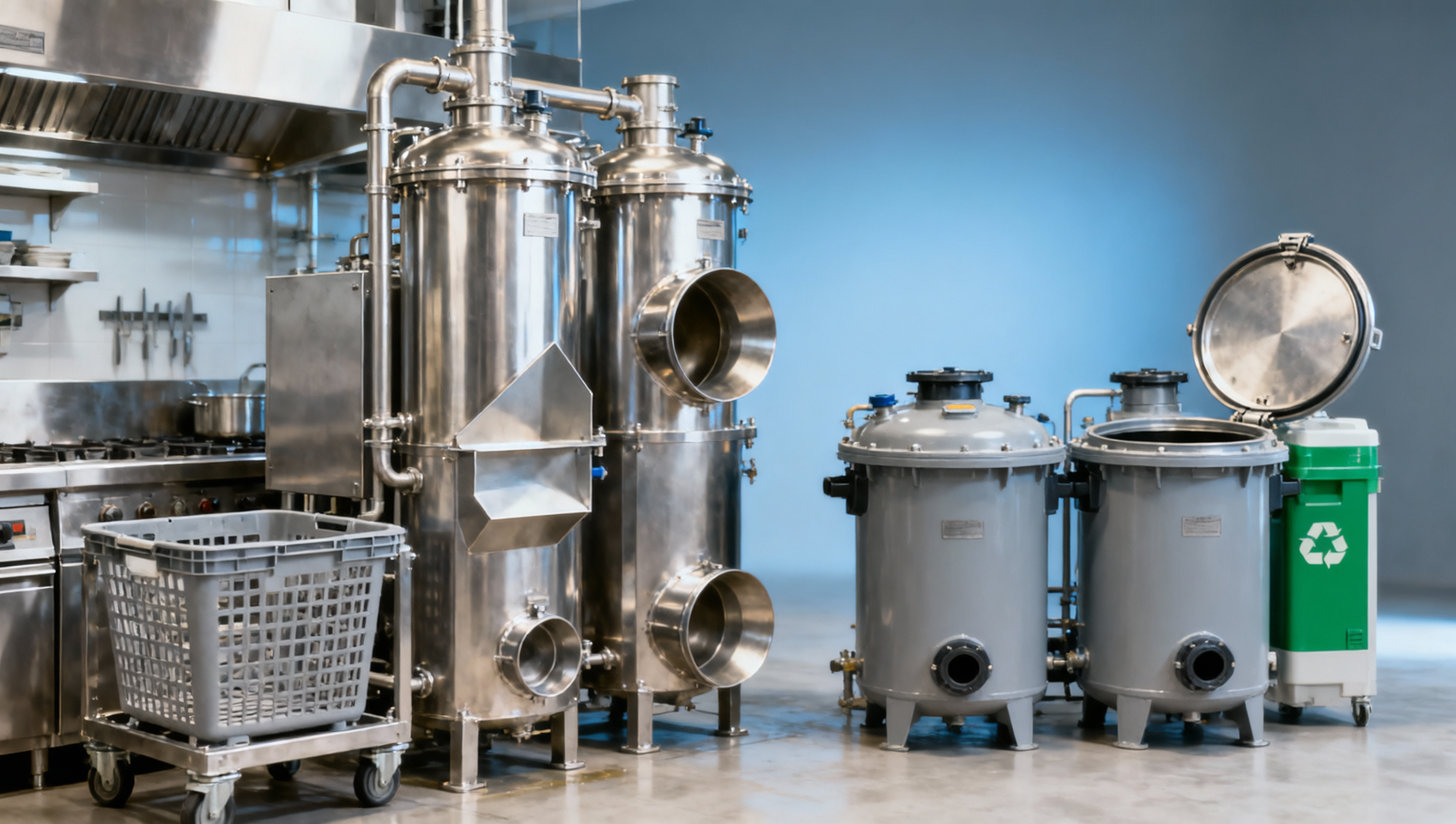
Grease interceptor wholesale choices vary far more in cleaning design than many buyers expect, directly affecting maintenance frequency, odor control, compliance, and lifecycle cost. For procurement teams, operators, and decision-makers comparing systems alongside broader environmental equipment such as wet scrubber manufacturer solutions, industrial dust collector units, or wastewater treatment chemicals, understanding these design differences is essential to selecting a reliable, efficient, and scalable installation.
In commercial kitchens, food processing sites, logistics parks, mixed-use developments, and industrial canteens, grease management is not a minor plumbing detail. A poorly matched grease interceptor can increase pump-out frequency from every 60–90 days to every 7–14 days, create recurring odor complaints, and expose operators to local discharge violations. For wholesale buyers sourcing multiple units across projects, the cleaning design becomes one of the most important variables in total cost of ownership.
This article examines how grease interceptor wholesale options differ in cleaning architecture, what those differences mean for maintenance teams, and how buyers can compare systems with the same rigor used for other environmental infrastructure. The goal is practical: help researchers, operators, purchasing teams, and executives choose a system that is easier to clean, safer to maintain, and better aligned with long-term facility performance.
Why cleaning design matters more than shell size or nominal flow rate
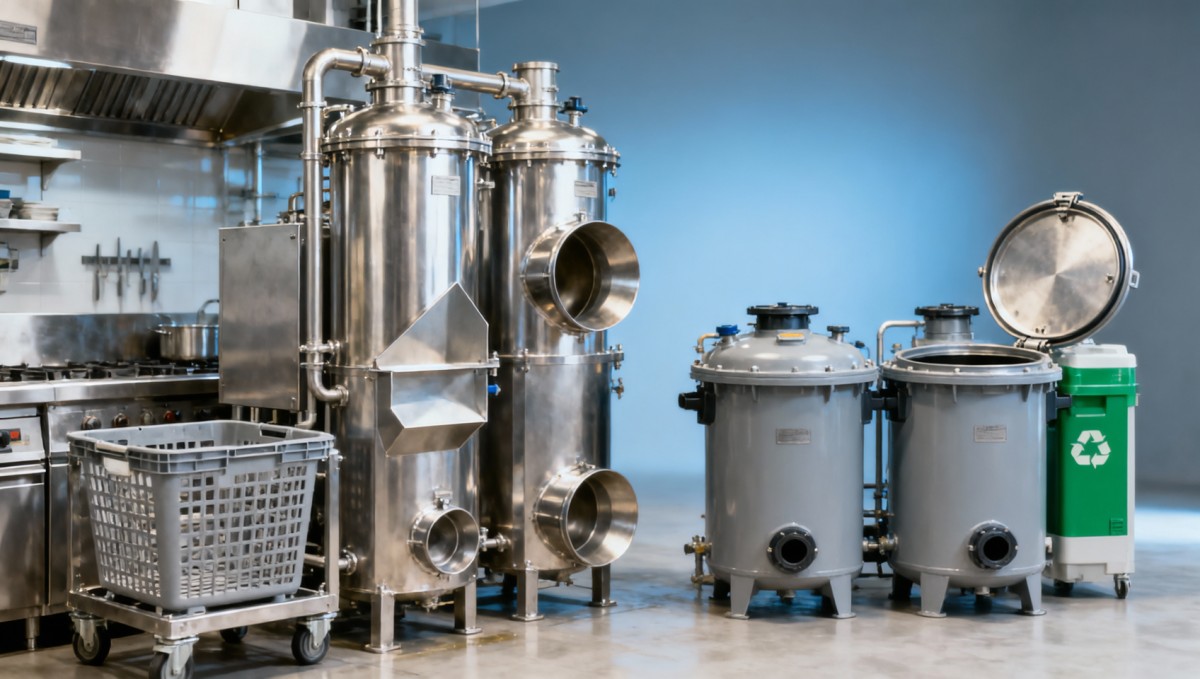
Many first-time buyers focus on tank volume, inlet and outlet size, or price per unit. Those specifications matter, but they do not reveal how the interceptor will actually be serviced after 3 months, 12 months, or 5 years of use. In practice, two units with the same 20–50 GPM rating can produce very different maintenance burdens depending on access covers, internal baffle layout, solids capture zones, and sludge evacuation paths.
Cleaning design determines whether operators can remove floating grease, settled solids, and trapped food particles in 20–30 minutes or whether the same task requires a 2-person team, partial shutdown, and external vacuum support. It also affects how much residue remains after service. A design that leaves 10%–15% of accumulated waste behind during each cleaning cycle may accelerate odor formation and reduce effective separation volume much faster than expected.
For wholesale procurement, this issue scales quickly. A contractor installing 15, 30, or 100 units across hospitality, retail, or institutional projects cannot treat maintenance complexity as a secondary concern. Even a 25% reduction in average cleaning time per unit can materially change labor planning, service contractor cost, and system uptime over a 12-month period.
Buyers also need to consider the regulatory side. In many jurisdictions, grease interceptors must be maintained at defined thresholds, often when grease and solids reach roughly 25% of wetted volume. A design that obscures inspection points or makes sludge depth difficult to verify can create compliance uncertainty, especially for multi-site operators who need repeatable service records.
Four design features that directly influence cleanability
- Top access geometry: Single small covers reduce manufacturing cost, but wider or segmented access openings usually improve manual cleaning and inspection coverage.
- Internal baffle arrangement: Complex flow paths can improve separation, yet overly tight compartments may trap solids where tools cannot reach efficiently.
- Drain-down and wash-down support: Sloped bottoms, sump areas, or guided clean-out zones can reduce residual waste after service.
- Removable components: Basket screens, dip plates, and modular inserts can shorten maintenance time if they are robust and easy to reinstall.
The table below compares common grease interceptor cleaning designs seen in wholesale supply programs. It highlights how seemingly similar units can differ significantly once maintenance access and residue removal are evaluated under real operating conditions.
The key takeaway is simple: identical flow ratings do not guarantee identical serviceability. In many projects, cleanability has a stronger impact on lifecycle value than nominal tank volume alone, especially when the installation will be replicated across multiple sites.
How wholesale grease interceptor options differ by cleaning architecture
Wholesale buyers typically encounter three broad cleaning architectures: fully passive interceptors, semi-serviceable interceptors with removable internal elements, and larger systems designed for coordinated manual plus vacuum cleaning. The best choice depends on grease load, staffing model, space constraints, and whether maintenance is handled in-house or by an external service provider every 2–8 weeks.
A passive design is common in cost-sensitive projects. It relies on gravity separation and periodic full clean-out, but service efficiency depends heavily on cover size and chamber access. These units can work well in low to moderate load settings, yet they may become labor-intensive in facilities producing heavy fryer waste, dairy-rich effluent, or food solids with high settling rates.
Semi-serviceable designs add removable baskets, screens, or skimming sections. These features can reduce solids carryover and make weekly inspection more manageable. However, they also introduce maintenance discipline requirements. If a basket is not seated correctly or a plate is damaged after repeated removal, hydraulic performance may degrade before the issue is noticed.
Larger chamber systems with planned vacuum interface are often selected for central kitchens, food courts, hospitals, and high-volume catering sites. Their main advantage is not just capacity. It is the ability to remove waste more completely and more predictably, especially when cleaning intervals must be extended to 30, 45, or 60 days without severe odor escalation.
Architecture comparison for procurement teams
The following comparison helps procurement teams match cleaning design to operating context rather than buying by price bracket alone.
For buyers comparing grease interceptor wholesale packages, the most cost-effective option is often the one that fits the service model already in place. A unit that is inexpensive to buy but incompatible with local maintenance practice can become the most expensive asset in the drainage chain within the first 12–18 months.
A practical shortlist before RFQ
- Estimate realistic grease load by meal count, fryer usage, and washwater pattern rather than relying only on fixture count.
- Map who cleans the unit: kitchen staff, facility technicians, or a contracted vacuum service.
- Check whether the installation area allows 360-degree tool access, cover removal, and safe waste transfer.
- Request exploded drawings or chamber layouts to verify that accumulated solids can actually be removed.
Cleaning design and its impact on maintenance, odor, and compliance
Maintenance cost is rarely driven by one major event. It builds through small inefficiencies: extra 10 minutes per cleaning, repeated wash-down, difficult solids scraping, splash risk, and incomplete sludge removal. In a network of 40 units, even 15 extra minutes per unit per service round can add 10 labor hours in a single cycle. Over a year, that becomes a serious operating expense.
Odor control is also directly tied to cleaning design. Stagnant corners, flat bottoms, poorly drained compartments, and inaccessible baffle shadows become retention points where decomposing fats and food solids remain after nominal cleaning. Once that residue accumulates through 3–5 service cycles, operators often respond with more chemicals rather than addressing the actual root cause: ineffective physical clean-out.
From a compliance perspective, serviceability supports documentation. Many facilities now maintain logbooks with inspection date, grease depth, solids depth, and cleaning action. A design that allows fast visual inspection through defined access zones supports more consistent records than a unit where levels must be inferred. For chains, campuses, and institutional sites, consistency across 10 or more locations can matter as much as performance at any one kitchen.
Health and safety should not be overlooked. Heavy covers, awkward reach zones, and poor splash containment increase manual handling and hygiene risks. A better cleaning design can reduce direct contact with waste, shorten exposure time, and lower the chance of tool slippage or spill events in confined back-of-house areas.
Typical problem indicators linked to poor cleaning design
- Odor returns within 24–72 hours after cleaning, suggesting residual trapped waste inside baffle zones.
- Pump-out contractor reports repeated solids accumulation in one chamber, indicating dead zones or uneven floor geometry.
- Staff skip weekly checks because covers are too heavy or access is too disruptive during operating hours.
- Grease carryover downstream increases despite unchanged kitchen output, often pointing to reduced effective working volume.
For multi-site purchasers, these indicators should be built into vendor evaluation. If a supplier cannot explain how the cleaning design addresses dead zones, residue control, access safety, and inspection visibility, the product may not be suitable for standardized deployment.
Maintenance intervals are design-dependent
In low-load retail food environments, a compact and well-accessed interceptor may be manageable with weekly checks and cleaning every 14–30 days. In higher-load kitchens, realistic inspection frequency may need to be every 3–7 days with deeper service every 2–4 weeks. The point is not to promise a universal interval, but to choose a cleaning design that supports the interval your operation can actually sustain.
What procurement teams should evaluate in grease interceptor wholesale programs
A wholesale decision should balance technical fit, serviceability, supply continuity, and implementation support. Too often, buyers compare only unit price, shell material, and nominal capacity. That misses the broader procurement question: can this interceptor be deployed repeatedly across projects with predictable maintenance outcomes, available replacement parts, and clear operating instructions for on-site teams?
For EPC contractors and industrial procurement managers, standardization matters. A single-source package may reduce documentation burden, training complexity, and spare-part variety. However, standardization only works if the cleaning design is robust across different site conditions. A unit that performs well in a small restaurant may not be service-efficient in a hospital kitchen running extended shifts and heavier solids loads.
The procurement review should include not just data sheets, but service drawings, cover handling method, internal layout visibility, gasket durability, and recommended cleaning workflow. A credible supplier should be able to outline inspection points, service sequence, and replacement intervals for consumable or removable elements. If those details are unclear, after-sales friction usually follows.
Lead time and packaging also belong in the evaluation. In project supply, typical delivery windows may range from 2–6 weeks for standard units and longer for customized inlet-outlet orientation or site-specific cover options. For overseas procurement, buyers should verify whether wholesale shipments include installation instructions, maintenance diagrams, and component labeling sufficient for local contractors and facility teams.
Procurement decision matrix
The matrix below can help teams compare grease interceptor wholesale offers beyond headline price. It is especially useful when evaluating projects that also involve related environmental systems such as dust control, gas cleaning, or wastewater chemicals, where lifecycle thinking is already part of procurement governance.
When procurement teams apply this structure, they often find that the best wholesale option is not the cheapest unit but the one with the lowest service friction. That distinction becomes critical in portfolios with repeated installations, service-level commitments, or tight operating windows.
Five questions to ask suppliers before purchase
- What percentage of the internal chamber can be visually inspected without disassembly?
- Which parts are removed during routine cleaning, and what is their expected replacement cycle?
- Can the unit be fully serviced by one technician, or is a 2-person procedure recommended?
- What cleaning interval range is typically achievable in low, medium, and high grease-load environments?
- Are maintenance drawings and installation instructions included in every shipment batch?
Implementation, common mistakes, and practical selection guidance
Successful installation starts before the unit arrives on site. Teams should confirm floor space, service clearance, inlet-outlet orientation, waste handling route, and who will own the cleaning procedure after commissioning. An interceptor with a strong cleaning design can still underperform if it is installed where covers cannot open fully or where technicians cannot safely remove accumulated waste.
One common mistake is specifying based on peak flow alone. Another is underestimating food solids. A site with moderate flow but high solids content may require a design emphasizing easy solids extraction more than extra chamber volume. A third error is assuming all cleaning can be outsourced. In reality, many facilities depend on a hybrid model: quick in-house checks every few days plus contractor clean-out every few weeks.
Operators should receive a basic service routine at handover. That usually includes 4 steps: inspect grease layer and solids depth, remove accessible waste, confirm baffle or basket position, and log the condition. Even a 10-minute checklist can prevent minor buildup from turning into odor complaints, drainage slowdown, or emergency callouts.
For decision-makers managing broader environmental portfolios, the lesson is consistent across categories. Whether buying a grease interceptor, a wet scrubber, or an industrial dust collector, equipment must be judged by maintainability as well as rated performance. The systems that win over 3–7 years are usually the ones that fit the service reality of the site.
Common selection mistakes to avoid
- Choosing by lowest bid without reviewing internal cleaning access and residue removal path.
- Ignoring cover ergonomics, then discovering service staff need special lifting support.
- Assuming inspection records can be maintained easily even when the design has poor visibility.
- Failing to align unit design with actual service interval, staff skill level, and contractor availability.
FAQ: buyer and operator questions
How often should a grease interceptor be cleaned?
There is no single interval for every site. Low-load installations may manage with cleaning every 14–30 days, while high-output kitchens may need inspection every 3–7 days and deeper service every 2–4 weeks. Cleaning design heavily influences whether those intervals are realistic and sustainable.
Is a larger interceptor always easier to maintain?
Not necessarily. Larger volume can extend cleaning intervals, but poor chamber geometry or limited access can still make cleaning difficult. A well-designed medium unit may outperform a larger but less serviceable tank in labor efficiency and odor control.
What matters most in a grease interceptor wholesale order?
For most B2B buyers, the priority list is: cleaning access, internal layout, maintenance method, supply continuity, and documentation support. Unit price is important, but it should be judged against service cost over at least 12 months, not just purchase day savings.
Grease interceptor wholesale options differ more in cleaning design than many specifications sheets suggest. The real buying advantage comes from identifying which units can be cleaned thoroughly, safely, and consistently under actual site conditions. That choice affects maintenance hours, odor risk, compliance visibility, and lifecycle cost across every installed location.
For researchers, operators, procurement teams, and business leaders, the most reliable path is to evaluate access geometry, internal cleaning path, service interval fit, and support documentation before finalizing supply. If you are comparing interceptors alongside broader environmental infrastructure, a structured review can prevent expensive downstream corrections.
To assess suitable grease interceptor wholesale solutions for your projects, installation conditions, and maintenance model, contact us to discuss technical details, request a tailored sourcing comparison, or explore more industrial environmental equipment solutions.
Technical Specifications
- How to choose an organic fertilizer machine for wet raw materialsAuthor :Environmental Engineering Director
- What affects output stability in a hydraulic briquetting pressAuthor :Environmental Engineering Director
- Waste paper baler wholesale prices vary for reasons beyond tonnageAuthor :Environmental Engineering Director
Expert Insights

Chief Security Architect
Dr. Thorne specializes in the intersection of structural engineering and digital resilience. He has advised three G7 governments on industrial infrastructure security.
Related Analysis
- Apr 16, 2026How to choose an organic fertilizer machine for wet raw materialsAuthor :Environmental Engineering Director
- Apr 16, 2026What affects output stability in a hydraulic briquetting pressAuthor :Environmental Engineering Director
- Apr 16, 2026Waste paper baler wholesale prices vary for reasons beyond tonnageAuthor :Environmental Engineering Director
Core Sector // 01
Security & Safety
- Grease interceptor wholesale options differ more in cleaning designAuthor :Environmental Engineering Director

- Polyaluminium chloride PAC dosage errors often start with pH assumptionsAuthor :Environmental Engineering Director

- Why MBR membrane bioreactor performance drops after 3 years — and what actually fixes itAuthor :Environmental Engineering Director

- Ultrafiltration UF membrane fouling: Is pretreatment really cutting costs or just hiding problems?Author :Environmental Engineering Director

- Seawater desalination plant energy use spikes in summer — is your design accounting for humidity?Author :Environmental Engineering Director

- Brackish water desalination scaling isn’t random — here’s how feedwater chemistry changes everythingAuthor :Environmental Engineering Director

- RO water purification plant reject ratio creeps up over time — what’s silently degrading your membranes?Author :Environmental Engineering Director

- Industrial reverse osmosis system pressure drop ≠ clogging — why flow profiling matters more than you thinkAuthor :Environmental Engineering Director