Polyacrylamide PAM wholesale grades are harder to compare than they look
Author
Date Published
Reading Time
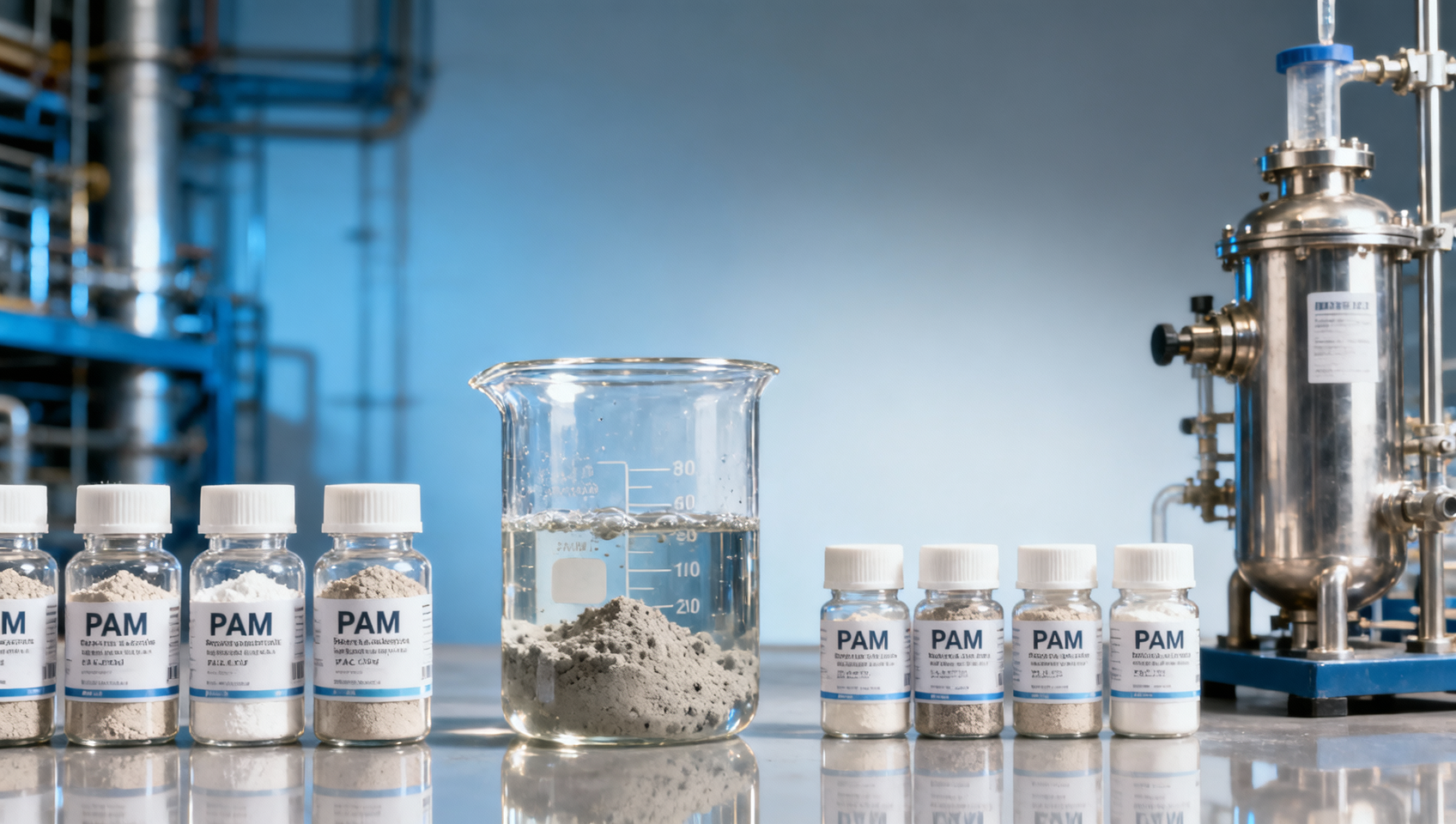
At first glance, polyacrylamide PAM wholesale grades may seem interchangeable, but real-world selection is far more complex. From wastewater treatment chemicals and polyaluminium chloride PAC compatibility to dosing performance in industrial systems, small formulation differences can affect cost, efficiency, and compliance. This guide helps researchers, operators, buyers, and decision-makers compare PAM grades with greater clarity and sourcing confidence.
For industrial buyers, the challenge is not simply finding a low unit price per kilogram. PAM performance depends on charge type, molecular weight, dissolution behavior, solids content, application water quality, and downstream process stability. In municipal and industrial treatment plants, a 5% difference in active performance can translate into higher sludge volume, more difficult dewatering, or unstable turbidity control.
That is why wholesale comparison must go beyond product labels such as anionic, cationic, or nonionic. Operators need predictable make-down time, procurement teams need batch consistency, and decision-makers need confidence that the selected grade will perform across seasonal variations, changing influent loads, and compliance requirements. A disciplined comparison framework reduces both technical risk and sourcing friction.
Why PAM grades that look similar can behave very differently
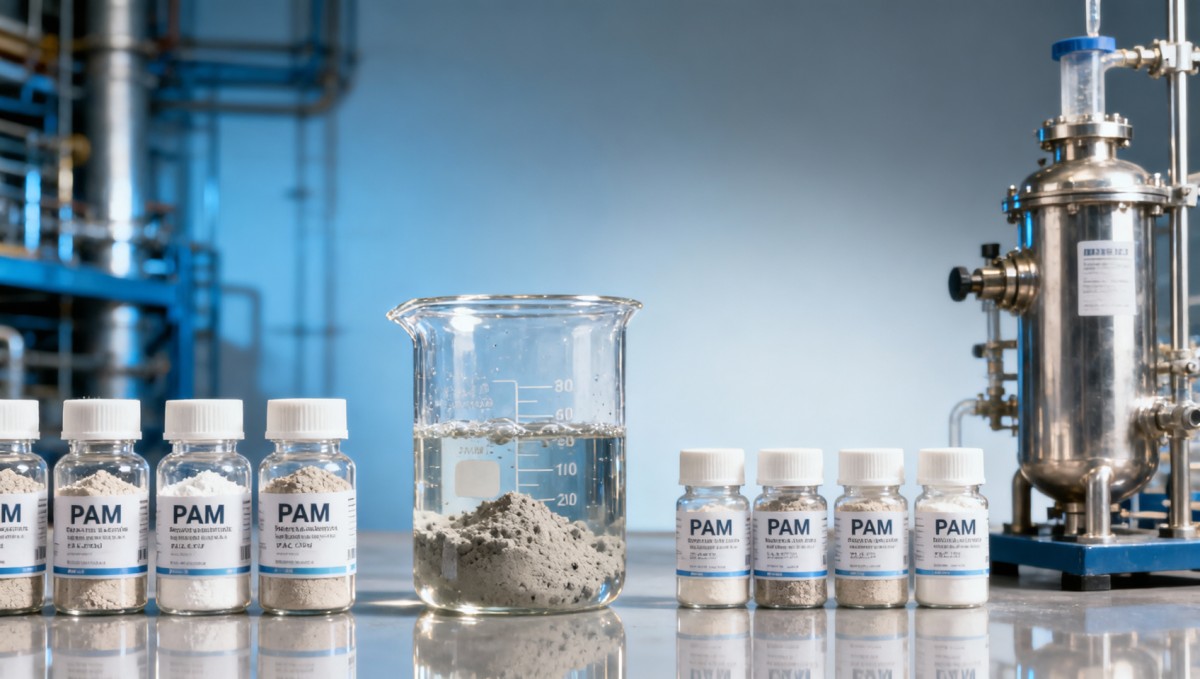
Polyacrylamide is often sold through broad commercial descriptions, but those labels hide several critical variables. Two cationic PAM products may both be described as suitable for sludge dewatering, yet one may have a different charge density, particle size distribution, or dissolution profile. In practical use, these differences can change polymer demand by 10% to 25% in the same system.
In wastewater treatment, grade selection is closely tied to process conditions. Belt presses, centrifuges, dissolved air flotation units, and sedimentation systems do not stress polymers in the same way. A grade that forms large, fast-settling flocs in one plant may shear too easily in a high-speed centrifuge running at 2,000 to 3,000 rpm. This is one of the main reasons operators cannot rely on a supplier data sheet alone.
Water chemistry also matters. pH shifts, conductivity, suspended solids concentration, and the presence of metal salts affect polymer bridging and charge neutralization. PAM used together with polyaluminium chloride PAC may deliver strong clarification at one dosing sequence, but weaker results if PAC hydrolysis, mixing intensity, or contact time changes. Even a dosing order shift of 30 to 90 seconds can influence floc formation.
Another common source of confusion is that “wholesale grade” may reflect packaging, export handling, or commercial segmentation rather than treatment performance. A bulk supply format of 25 kg bags or 750 kg super sacks does not guarantee that the polymer is optimized for the same sludge type, influent composition, or make-up system. Procurement teams need a specification sheet that separates logistics details from performance variables.
Core variables hidden behind the grade name
When technical teams compare PAM grades, they should assess at least five factors rather than one headline descriptor. This prevents underperforming substitutions and reduces the risk of requalification after purchase.
- Charge type: anionic, cationic, nonionic, or amphoteric, matched to solids and contaminant profile.
- Charge density: often a stronger predictor of sludge dewatering response than generic grade labels.
- Molecular weight range: influences bridging ability, viscosity, and floc robustness.
- Dissolution speed: many plants target full hydration within 30 to 90 minutes depending on water temperature and agitation.
- Residual monomer and impurity control: important for regulated applications and buyer risk review.
In industrial sourcing, these variables should be reviewed together with storage stability, moisture sensitivity, and batch-to-batch consistency. A product that appears competitively priced on paper can become more expensive if it requires 15% more dosage, additional operator time, or corrective PAC use downstream.
How to compare PAM wholesale grades in wastewater and process applications
A useful comparison starts with the application, not the catalog. Clarification, thickening, sludge dewatering, flotation, and process water recovery each impose different performance requirements. For example, a mining or metallurgy stream with high fine solids may need a very different anionic profile than a food processing sludge requiring cationic dewatering support.
Researchers and technical buyers should map the process into 3 layers: feed conditions, dosing system capability, and discharge target. This makes it easier to screen unsuitable products before plant trials. If the make-down water is cold, below 15°C, or has high hardness, some powders will hydrate more slowly, increasing fish-eyes and reducing effective polymer utilization.
PAC compatibility deserves special attention. In many treatment lines, PAC is used first for destabilization, followed by PAM for bridging. However, the ideal sequence depends on shear energy, pH window, and hydraulic retention time. Plants that use inline mixing with only 1 to 3 minutes of contact time may need more careful polymer tuning than plants with staged flocculation basins.
The table below provides a practical comparison framework for buyers evaluating PAM grades across common industrial treatment scenarios. It is not a substitute for jar testing or on-site trials, but it helps narrow the field before commercial negotiation.
The main lesson is that a PAM comparison must be linked to equipment and chemistry. If two suppliers propose products in the same broad category, the right question is not whether the grades look comparable, but whether they perform within the same operating window for pH, mixing energy, contact time, and sludge characteristics.
A practical 4-step comparison workflow
- Define the process objective, such as lower turbidity, higher cake solids, or reduced chemical cost per cubic meter.
- Collect baseline operating data for 7 to 14 days, including dose, solids, pH, filtrate clarity, and operator observations.
- Run lab screening with at least 3 to 5 candidate grades under consistent mixing and dilution conditions.
- Validate the top 2 candidates in plant trials long enough to capture influent variation and operator handling factors.
This workflow helps prevent decisions based only on a short jar test or a single low-price quote. In industrial procurement, that discipline usually saves more money than aggressive first-round price negotiation.
Technical and procurement criteria that should appear on every sourcing checklist
For procurement personnel, comparing wholesale grades becomes easier when technical and commercial criteria are reviewed side by side. A low ex-works price may still produce a high total treatment cost if the product has inconsistent particle size, variable dissolution, or unstable packing quality during humid-season transport. Technical buyers should therefore assess both product fit and supply reliability.
A complete sourcing checklist should include at least 6 categories: application fit, dosage efficiency, hydration behavior, packaging and storage, quality documentation, and supply continuity. For international buyers, lead time matters as much as unit price. Powder PAM often ships with lead times of 2 to 6 weeks depending on region, while emergency resupply may be much harder during peak logistics periods.
Documentation should also be reviewed with care. Buyers typically request a technical data sheet, safety data sheet, certificate of analysis format, recommended make-down concentration, and guidance on storage duration. Common storage recommendations range from 12 to 24 months under dry, ventilated conditions, but actual shelf life can be shortened by moisture exposure or repeated package opening.
The following table summarizes the criteria most often used by industrial teams to compare offers beyond headline pricing.
For enterprise decision-makers, the bigger issue is continuity. A slightly cheaper grade is rarely a good choice if it creates reordering uncertainty, inconsistent sludge handling, or operator retraining across multiple sites. Standardization on 1 or 2 verified grades per application often delivers better long-term cost control than switching vendors too frequently.
Common buying mistakes
Choosing by ion type only
Many buyers stop at “cationic” or “anionic,” but that is only the first filter. Within the same ion category, performance can vary significantly due to charge density and molecular architecture.
Ignoring operator handling limits
A technically strong polymer may still fail if the on-site system cannot dissolve it properly. Agitation intensity, aging tank volume, and feed pump calibration all influence the outcome.
Comparing only price per ton
The more useful metric is treatment cost per cubic meter, per ton of dry solids, or per batch cycle. That captures dosage, labor, downtime, and sludge disposal effects in one view.
Implementation, testing, and operational control after the grade is selected
Once a promising PAM grade is identified, implementation should follow a structured qualification plan. Many plants make the mistake of approving a product after a single successful trial, only to discover issues 2 or 3 weeks later when influent solids or pH drift. A stronger approach is to confirm performance under normal variation rather than one ideal test condition.
Operational teams should define acceptance criteria in advance. These often include target turbidity, settling rate, cake solids, filtrate clarity, sludge capture, and polymer consumption. If PAC is used in the same line, the combined chemical program should be reviewed together, because optimizing PAM alone may shift PAC demand or change sludge behavior downstream.
Training is another overlooked factor. Even well-selected PAM can underperform if operators use the wrong make-down concentration or insufficient maturation time. In many systems, a solution concentration of 0.1% to 0.3% and an aging time of 30 to 60 minutes is common, but actual settings depend on grade design and equipment capability.
A disciplined rollout typically includes the following control points so the selected grade can move from successful trial to stable routine operation.
- Confirm dilution water quality and temperature before scaling from lab to plant.
- Calibrate dosing pumps and verify actual feed concentration, not just nominal setting.
- Track at least 5 operational indicators during the first 2 to 4 weeks after switchover.
- Retain reference samples from each lot in case performance drift appears later.
- Review PAC and PAM interaction if clarification, flotation, or dewatering changes unexpectedly.
For multi-site companies, it is useful to create a standard qualification template. This can reduce duplicate testing effort and speed up supplier comparison across plants with similar wastewater profiles. It also gives procurement and operations a shared language for acceptance, reducing conflict between low-cost purchasing goals and real process stability.
FAQ for researchers, operators, and procurement teams
How many PAM grades should be tested before bulk purchase?
In most industrial programs, screening 3 to 5 grades is a practical starting point. Fewer than 3 often limits comparison quality, while more than 5 can slow decision-making unless the application is highly specialized.
How long should a plant trial run?
A useful site trial often runs for at least 5 to 10 operating days, and longer if influent variability is high. The goal is to observe performance across normal fluctuations, not only during a stable shift.
Can one PAM grade work for both clarification and sludge dewatering?
Sometimes, but it is not typical. The best grade for floc growth in clarification may not provide the same cake solids or shear resistance in dewatering equipment. Separate optimization is often more reliable.
What should buyers ask suppliers before final approval?
Ask for recommended application window, hydration guidance, storage advice, COA format, packaging options, and trial support expectations. For import programs, confirm lead time, lot traceability, and moisture protection during transit.
Building sourcing confidence for long-term industrial procurement
The reason polyacrylamide PAM wholesale grades are harder to compare than they look is simple: industrial performance depends on context. Grade labels offer only a partial picture. Real comparison requires a combined review of chemistry, equipment, dosing practice, operator handling, documentation, and supply reliability.
For information researchers, the key takeaway is to organize data around process outcomes rather than product names. For operators, the priority is hydration quality, dosing control, and consistent floc behavior. For procurement teams, the most useful evaluation lens is total operating cost and batch consistency. For business leaders, the strategic value lies in reducing risk across multiple treatment lines and supply cycles.
A structured sourcing process turns PAM from a confusing commodity into a controllable performance input. That approach supports better wastewater treatment efficiency, stronger PAC compatibility decisions, and more predictable compliance outcomes across industrial environments.
If your team is comparing polyacrylamide grades for wastewater treatment chemicals, sludge dewatering, or integrated PAC-PAM programs, now is the right time to review your criteria in more detail. Contact Global Industrial Core to discuss application needs, refine your comparison framework, and get a more confident sourcing path for your next procurement cycle.
Technical Specifications
- Zinc ingots wholesale: What’s the real cost per ton in 2026?Author :Heavy Industry Strategist
- Aluminum ingots bulk vs. cast bars: Which delivers better yield for extrusion?Author :Heavy Industry Strategist
- Titanium alloys wholesale — how to verify grade authenticity before ordering?Author :Heavy Industry Strategist
Expert Insights

Chief Security Architect
Dr. Thorne specializes in the intersection of structural engineering and digital resilience. He has advised three G7 governments on industrial infrastructure security.
Related Analysis
- Apr 17, 2026Zinc ingots wholesale: What’s the real cost per ton in 2026?Author :Heavy Industry Strategist
- Apr 17, 2026Aluminum ingots bulk vs. cast bars: Which delivers better yield for extrusion?Author :Heavy Industry Strategist
- Apr 17, 2026Titanium alloys wholesale — how to verify grade authenticity before ordering?Author :Heavy Industry Strategist
Core Sector // 01
Security & Safety
- Steam traps wholesale: Which type fails least in condensate return lines with air binding?Author :Environmental Engineering Director

- Check valves (swing type): When does water hammer override disc stability?Author :Environmental Engineering Director
: When does water hammer override disc stability?")
- Cast iron gate valves: Are they still viable for potable water mains in 2026?Author :Environmental Engineering Director

- Grease interceptor wholesale options differ more in cleaning designAuthor :Environmental Engineering Director

- Polyaluminium chloride PAC dosage errors often start with pH assumptionsAuthor :Environmental Engineering Director

- Polyacrylamide PAM wholesale grades are harder to compare than they lookAuthor :Environmental Engineering Director

- Wastewater treatment chemicals that cut sludge cost are not always cheaperAuthor :Environmental Engineering Director

- Pure water bottling machine downtime often starts in the rinsing sectionAuthor :Environmental Engineering Director