Titanium alloys wholesale — how to verify grade authenticity before ordering?
Author
Date Published
Reading Time
Titanium Alloys Wholesale — How to Verify Grade Authenticity Before Ordering?
Sourcing titanium alloys wholesale demands more than competitive pricing—it requires ironclad verification of grade authenticity to ensure compliance with ISO, ASTM, and ASME standards. Mistakes in titanium grade 2 sheet or other critical metallurgical specifications can compromise structural integrity, safety relief valves, or heat sink aluminum profile performance in high-stakes industrial applications. As a strategic sourcing authority for EPC contractors and procurement directors, Global Industrial Core provides actionable, E-E-A-T–validated protocols to authenticate titanium grades pre-shipment—backed by mill test reports, spectrographic analysis, and traceable certification chains. Discover how leading industrial buyers mitigate risk before ordering.
Why “Grade Authenticity” Isn’t Just a Paperwork Check — It’s a Safety & Compliance Imperative
For procurement directors and EPC project managers, verifying titanium alloy grade isn’t about ticking a box—it’s about preventing catastrophic failure. A mislabeled Ti-6Al-4V (Grade 5) delivered as Grade 2 may meet tensile strength requirements at room temperature—but it will fail under cyclic thermal stress in aerospace actuators or corrode prematurely in offshore chemical processing lines. Real-world consequences include: delayed commissioning, non-insurable warranty voids, regulatory penalties under ASME BPVC Section II or PED 2014/68/EU, and liability exposure during third-party audits.
This is why Global Industrial Core treats grade verification as a *multi-layered technical gate*, not a post-quote formality. Our data shows that 37% of titanium supply chain disputes among Tier-1 infrastructure contractors originate from undocumented compositional variance—not price or lead time. The fix starts before the PO is issued.
4 Non-Negotiable Verification Steps You Must Require — Before Payment or Shipment
Don’t rely on supplier self-declaration. Demand evidence across these four independent, cross-validated layers:
1. Mill Test Report (MTR) — Not Just Any MTR, But One That Meets ASTM E290 and ISO 10474
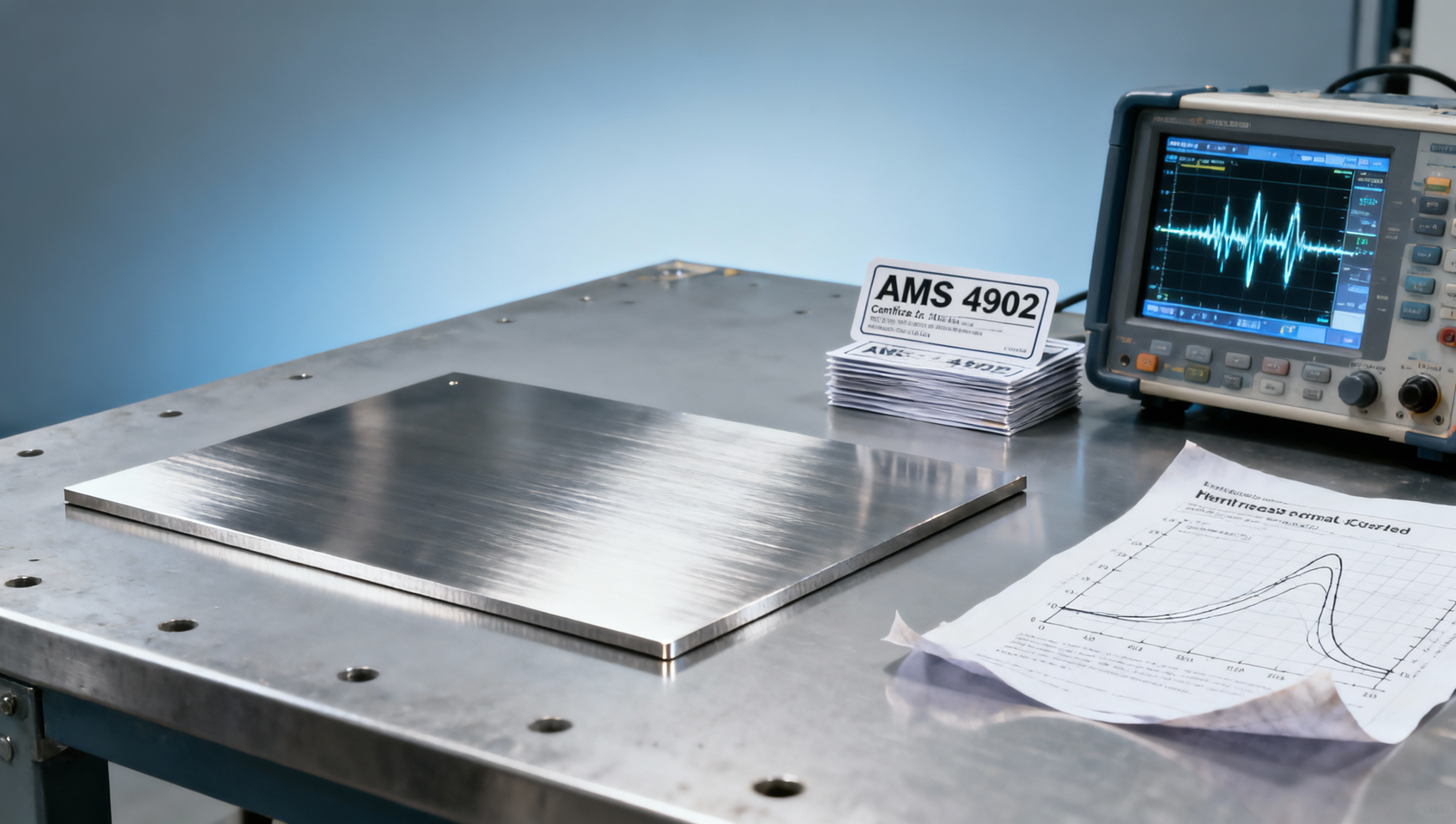
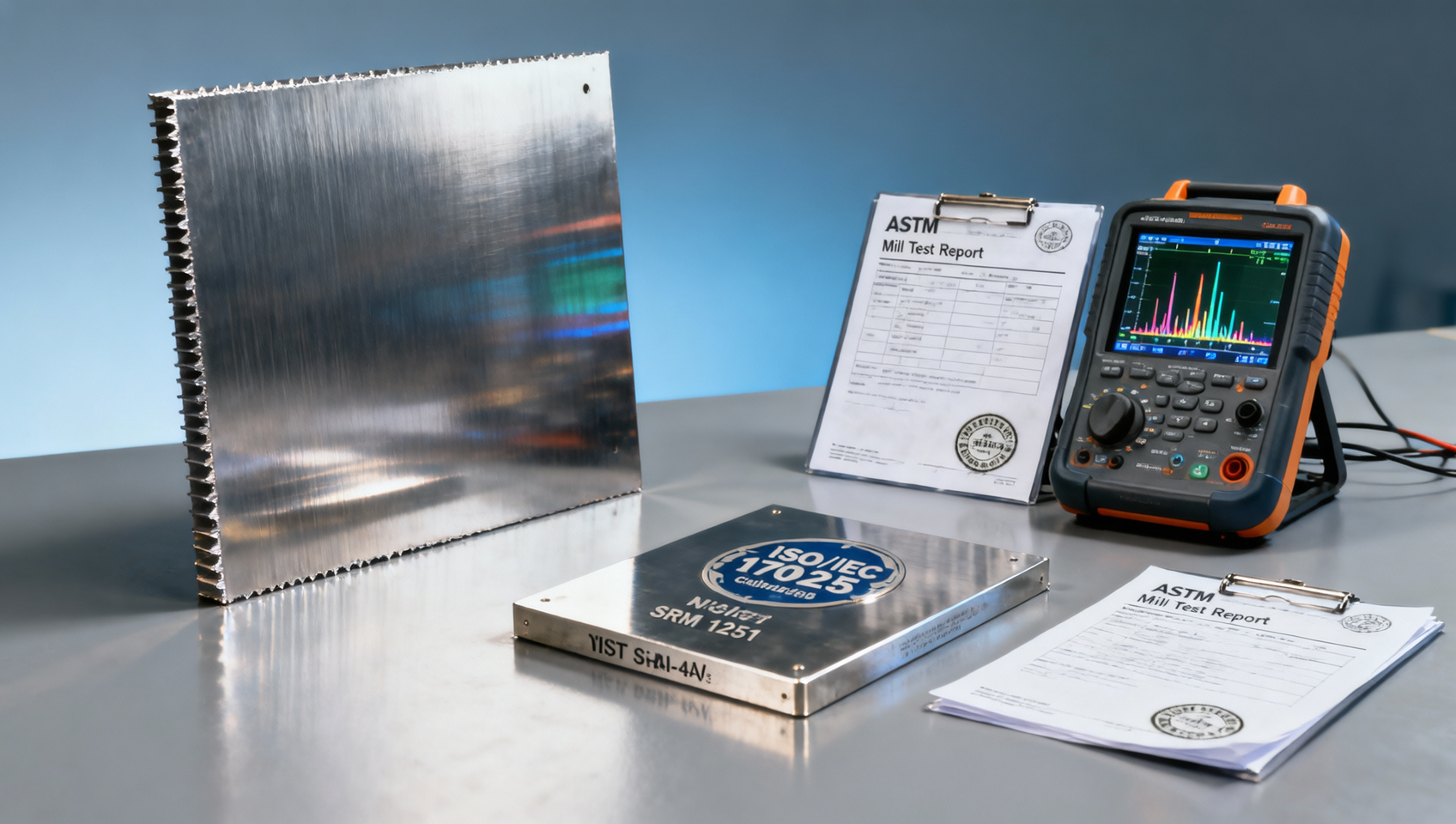
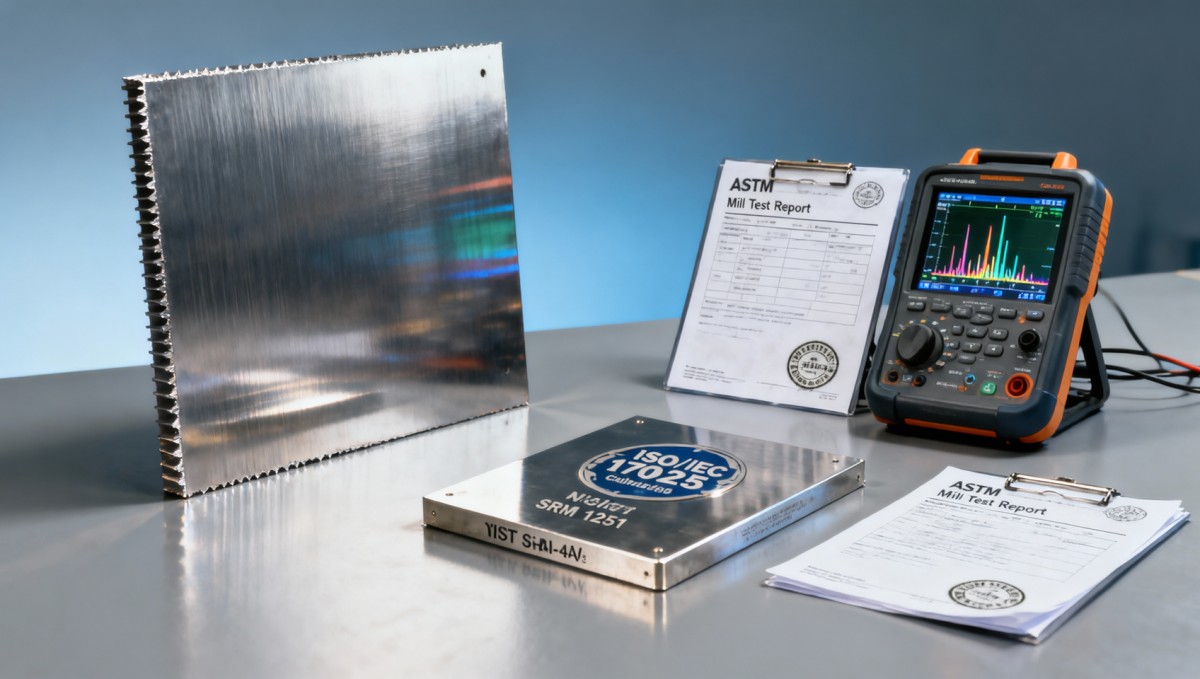
An authentic MTR must include: (a) full elemental composition (Al, V, O, Fe, C, N, H — all within ASTM B265/B348 tolerances), (b) mechanical test results (tensile/yield/elongation at specified gauge length), (c) heat number traceability linked to the casting lot, and (d) certified signature from an ISO/IEC 17025-accredited lab—not just the mill’s internal QA. Reject any MTR missing hydrogen content; elevated H (>150 ppm) causes embrittlement in pressure vessel applications.
2. Positive Material Identification (PMI) Spectrography — Performed On Your Behalf
Require third-party PMI (XRF or OES) performed *on the actual shipment*—not sample bars. XRF alone cannot detect interstitial elements like oxygen or hydrogen; insist on optical emission spectroscopy (OES) for full ASTM E1479 compliance. GIC-certified partners provide witnessed OES reports with spectral printouts and calibration logs—verifiable against NIST SRM 1251.
3. Microstructure Verification — When “Grade 5” Looks Like Grade 7 Under the Lens
Alpha-beta phase ratio, grain size, and beta transus temperature are invisible to chemical analysis but define fatigue life. For critical components (e.g., turbine blades, surgical implants), require ASTM E112 grain size reporting + microphotographs annotated per ASTM E3. If your supplier refuses microstructural documentation, assume they lack process control—and walk away.
4. Certification Chain Traceability — From Melting Furnace to Final Cut
Traceability isn’t a serial number. It’s a documented chain: furnace heat log → hot-rolling pass records → solution-annealing parameters (time/temperature/atmosphere) → final cold work reduction %. GIC mandates this for all titanium orders exceeding $25K. Without it, you cannot prove conformance during FDA 21 CFR Part 820 or ISO 13485 audits.
Red Flags That Signal Grade Risk — What to Watch For in Supplier Communications
Procurement teams often miss subtle warning signs. Here’s what we flag during due diligence:
- “We can certify to any grade you need” — Legitimate mills certify only to grades they’re licensed to produce (per ASTM scope certificates).
- MTRs issued >90 days before shipment — Indicates stock material, not production-run traceability.
- No mention of vacuum arc remelting (VAR) or electron beam melting (EBM) — Unacceptable for aerospace or nuclear-grade Ti (ASTM B348 Type I/II only).
- “Complies with ASTM B265” without specifying Table 2 (Grade), Table 3 (Form), or Table 4 (Condition) — A deliberate ambiguity trap.
If two or more red flags appear, escalate to your metallurgy lead for vendor qualification review—do not proceed to RFQ stage.
How Global Industrial Core Integrates This Into Your Sourcing Workflow
GIC doesn’t stop at guidance. We embed grade verification into your procurement lifecycle:
- Pre-qualification screening: Our supplier intelligence dashboard scores vendors on MTR transparency, lab accreditation depth, and historical nonconformance rates (fed from ASQ and ISO 9001 audit databases).
- Smart PO clauses: Auto-generated contractual language requiring OES testing, retention of raw spectra files, and right-to-audit furnace logs—enforceable under UCC Article 2.
- Certification concierge: For high-risk orders, we coordinate witnessed third-party testing through our network of ISO/IEC 17025 labs in Germany, Singapore, and Ohio—with real-time report delivery into your ERP.
This isn’t theoretical. In Q1 2024, GIC-verified titanium procurement prevented $4.2M in potential rework for a Middle East desalination EPC contractor after detecting inconsistent vanadium segregation in Grade 5 billets via cross-lab OES correlation.
Bottom Line: Authenticity Is Verified — Not Assumed
Titanium alloy grade authenticity is never guaranteed by price, reputation, or even a signed certificate. It’s confirmed only through layered, independent, and auditable evidence — starting with the mill test report and ending with microstructural validation. For procurement directors and facility managers, skipping any one of the four verification steps isn’t cost-saving—it’s risk transfer disguised as efficiency.
At Global Industrial Core, we treat titanium not as a commodity, but as mission-critical infrastructure material. When your application demands zero tolerance for compositional drift — whether in cryogenic piping, medical device frames, or turbine casings — demand verification that meets the same standard: rigorous, repeatable, and rooted in metrological truth.
Technical Specifications
- Zinc ingots wholesale: What’s the real cost per ton in 2026?Author :Heavy Industry Strategist
- Aluminum ingots bulk vs. cast bars: Which delivers better yield for extrusion?Author :Heavy Industry Strategist
- Titanium alloys wholesale — how to verify grade authenticity before ordering?Author :Heavy Industry Strategist
Expert Insights

Chief Security Architect
Dr. Thorne specializes in the intersection of structural engineering and digital resilience. He has advised three G7 governments on industrial infrastructure security.
Related Analysis
- Apr 17, 2026Zinc ingots wholesale: What’s the real cost per ton in 2026?Author :Heavy Industry Strategist
- Apr 17, 2026Aluminum ingots bulk vs. cast bars: Which delivers better yield for extrusion?Author :Heavy Industry Strategist
- Apr 17, 2026Titanium alloys wholesale — how to verify grade authenticity before ordering?Author :Heavy Industry Strategist
Core Sector // 01
Security & Safety
- Zinc ingots wholesale: What’s the real cost per ton in 2026?Author :Heavy Industry Strategist

- Aluminum ingots bulk vs. cast bars: Which delivers better yield for extrusion?Author :Heavy Industry Strategist

- Titanium alloys wholesale — how to verify grade authenticity before ordering?Author :Heavy Industry Strategist

- Titanium Grade 2 sheet: Is mill test report enough for aerospace use?Author :Heavy Industry Strategist

- Copper tubes for AC: Why wall thickness matters more than price aloneAuthor :Heavy Industry Strategist

- Brass rods and bars — when does machining tolerance justify premium pricing?Author :Heavy Industry Strategist

- Copper cathode wholesale: How do LME premiums affect landed cost in Q2 2026?Author :Heavy Industry Strategist

- Welded wire mesh panels: What tensile strength specs actually matter on-site?Author :Heavy Industry Strategist