Pure water bottling machine downtime often starts in the rinsing section
Author
Date Published
Reading Time
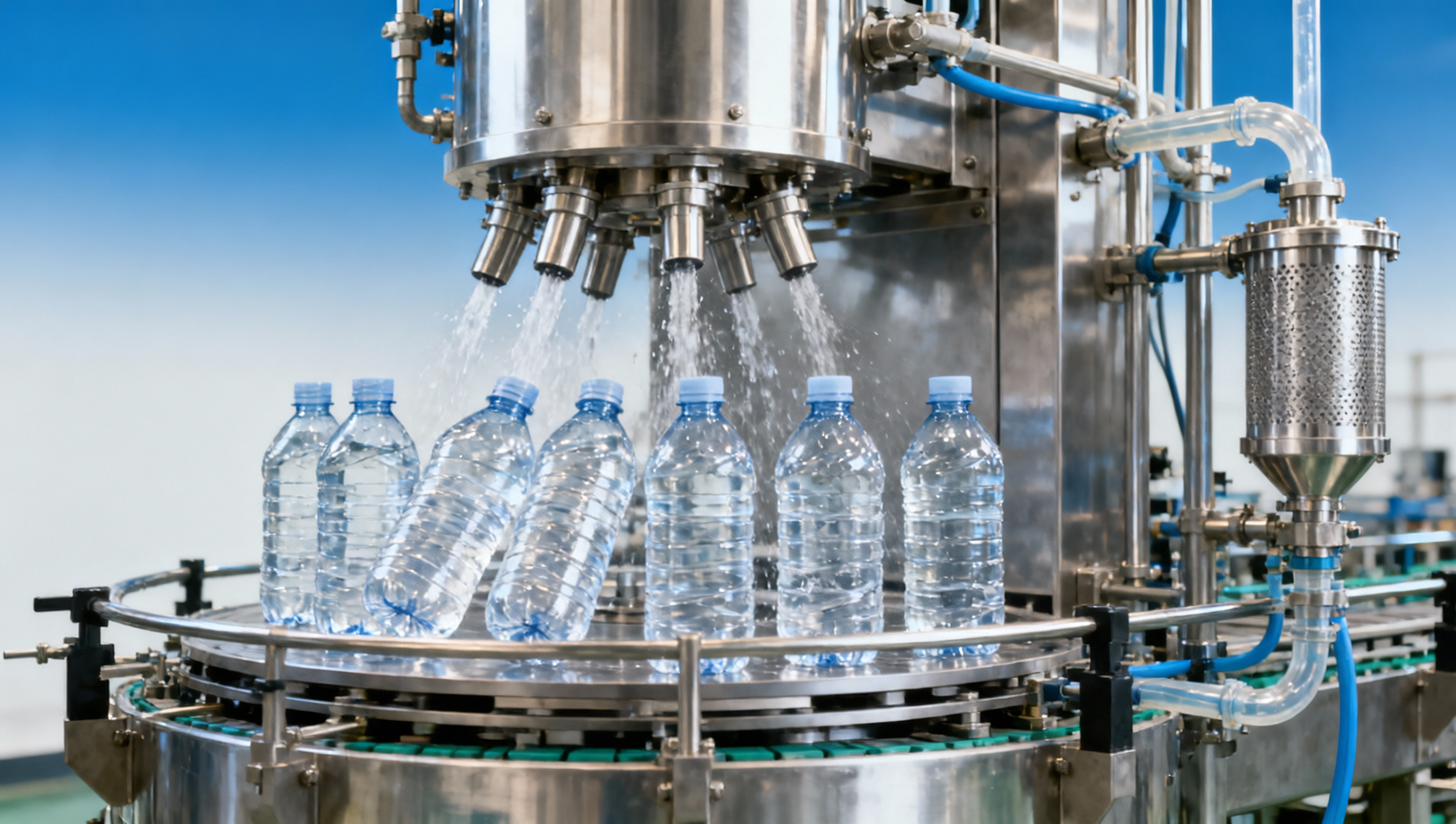
When a pure water bottling machine stops unexpectedly, the problem often begins in the rinsing section—where spray pressure, water quality, and timing must stay perfectly synchronized. For operators, buyers, and plant decision-makers evaluating a pet bottle washing line, ro membrane elements, industrial water softeners, or automatic self cleaning filter systems, understanding this weak point is essential to reducing downtime, protecting hygiene standards, and improving overall line efficiency.
In most bottled water lines, the rinsing section is not just a cleaning step. It is a process control point that directly affects bottle hygiene, filler stability, reject rate, and line continuity. A small deviation in nozzle spray pattern, rinse water conductivity, or bottle infeed timing can create a chain reaction that stops downstream filling and capping within minutes.
For industrial users, the practical question is not whether rinsing problems happen, but how quickly they can be detected, isolated, and prevented. For procurement teams, the more strategic issue is whether the selected equipment package includes the right upstream water treatment, filtration, control logic, and maintenance access to keep the rinsing module reliable over 8-hour, 16-hour, or 24-hour production schedules.
This article explains why downtime often starts in the rinsing section of a pure water bottling machine, what technical warning signs matter most, how supporting systems such as RO membrane elements and industrial water softeners influence performance, and what operators and buyers should review before selecting or upgrading a PET bottle washing line.
Why the rinsing section becomes the first point of failure
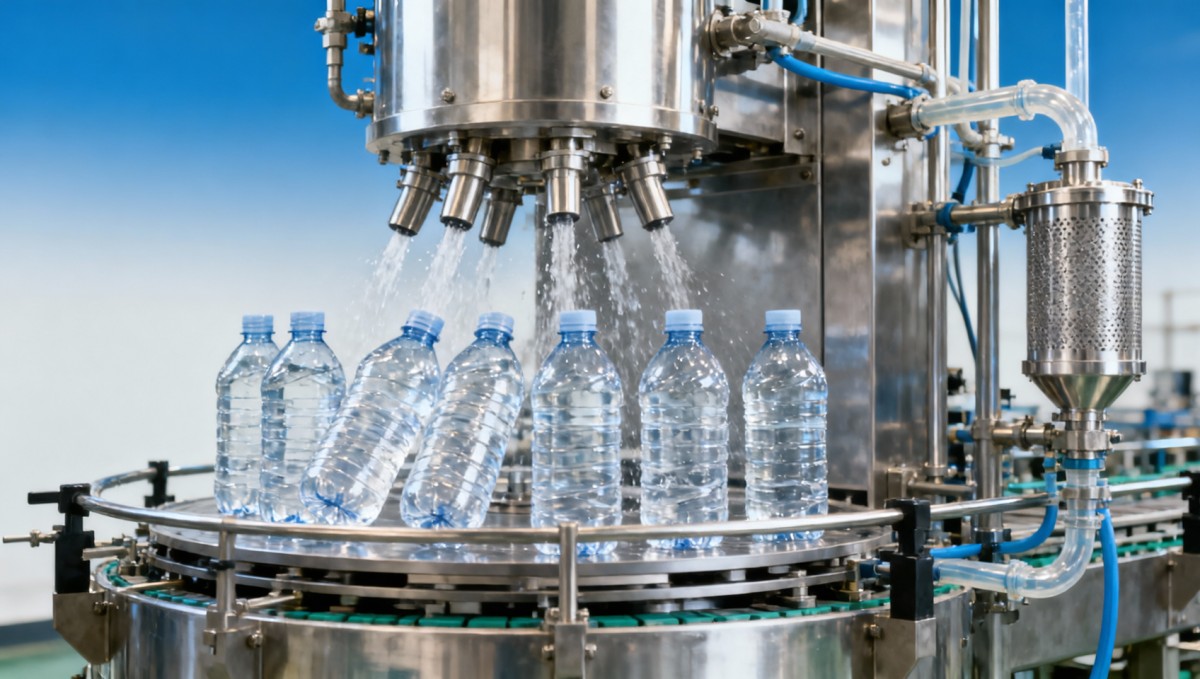
The rinsing section works at the intersection of mechanics, water treatment, pneumatics, and automation. Unlike a single-function conveyor, it must align bottle positioning, gripper motion, nozzle pressure, rinse duration, and drainage in real time. On a line running 4,000 to 18,000 bottles per hour, even a 1 to 2 second process mismatch can create bottle jams or incomplete rinsing.
Most unplanned stoppages begin with one of four conditions: unstable spray pressure, poor rinse water quality, bottle transfer misalignment, or sensor timing errors. These issues often look minor at first. A single blocked nozzle or inconsistent bottle inversion may only increase reject counts by 1% to 3%, but if ignored, it can force a full stop for manual inspection and sanitation verification.
The rinsing section is also vulnerable because it depends on upstream water consistency. If feed water hardness rises, if particulate load increases above the expected range, or if membrane performance drifts, the machine may still run mechanically while hygiene performance deteriorates. In regulated beverage environments, that is not a tolerable trade-off.
Another reason the rinsing section fails first is maintenance access. On many compact monoblock or triblock designs, operators can easily see the filler and capper, but the rinsing carousel, internal spray lines, and nozzle manifolds are harder to inspect during operation. As a result, wear accumulates in seals, clamps, filters, and valves until downtime occurs suddenly rather than gradually.
The most common fault chain in daily production
A typical shutdown sequence starts with water pressure drift, often caused by clogged filters, scaling, pump instability, or valve response delay. Pressure variation of only 0.1 to 0.3 MPa can be enough to reduce spray coverage, especially in lightweight PET formats where bottle geometry changes spray rebound behavior.
The second stage is bottle handling inconsistency. Wet grippers, misaligned stars, or worn guides can alter bottle inversion angles. That creates uneven rinsing and increases the risk of bottles reaching the filler with residual droplets, particles, or sanitation concerns. Once the filler detects abnormal bottle flow, the entire line often enters alarm or stop mode.
Operator warning signs that should not be ignored
- Repeated nozzle cleaning more than 2 to 3 times per shift
- Spray pressure fluctuation beyond the machine’s normal operating band
- Bottle rejection at the filler increasing above the usual baseline by 1% or more
- Visible scaling on rinse lines, manifolds, or nozzle tips within 2 to 4 weeks
- Frequent sensor alarms during bottle transfer into or out of the rinsing carousel
When these signs appear together, the issue usually extends beyond the rinsing machine itself. It often points to a combined problem involving filtration quality, water hardness control, preventive maintenance discipline, and line synchronization logic.
How water treatment quality affects rinsing reliability
A pure water bottling machine can only perform as well as the water treatment system feeding it. In many facilities, decision-makers focus on filling accuracy and packaging speed while underestimating the role of RO membrane elements, industrial water softeners, and automatic self cleaning filter systems. Yet these components often determine whether the rinsing section remains stable over months of production.
RO membrane elements reduce dissolved solids and help maintain rinse water consistency, but they are not designed to solve every upstream issue alone. If hardness is not controlled before the RO stage, scale can build on membrane surfaces and downstream spray components. If suspended solids are not removed effectively, nozzle blockage becomes more frequent, increasing maintenance intervals and downtime risk.
Industrial water softeners are especially relevant in facilities with feed hardness above common operating ranges, such as 100 to 300 ppm as CaCO3. Without softening, calcium and magnesium deposits can narrow spray channels, affect valve sealing, and reduce rinse repeatability. In bottling environments where hygiene is audited, visible scaling also raises sanitation concerns.
Automatic self cleaning filter systems help stabilize the rinsing process by protecting nozzles and valves from suspended solids without requiring constant manual intervention. Compared with basic cartridge filtration alone, self-cleaning designs can reduce maintenance interruptions, especially on lines operating more than 12 hours per day or in regions with variable source water quality.
Key supporting systems and their impact on downtime
The table below shows how common upstream components influence rinsing section reliability in a PET bottle washing line and where buyers should focus during technical evaluation.
The practical takeaway is straightforward: if the water treatment chain is incomplete, the rinsing section becomes the place where hidden upstream weaknesses first appear. That is why buyers should assess the machine and water system as one integrated package rather than separate purchases.
Baseline water-related checks for plant teams
- Verify feed water hardness and seasonal variation over at least 2 to 4 sampling periods.
- Review RO recovery targets and membrane cleaning intervals under actual production load.
- Confirm filtration micron rating matches nozzle passage size and contamination risk.
- Check whether rinse water pressure remains stable during peak line speed and CIP-related demand shifts.
Plants that complete these checks before commissioning usually experience fewer start-up disruptions and shorter root-cause analysis cycles when abnormalities occur.
What operators should monitor during routine production
For operators and maintenance personnel, the rinsing section should be treated as a monitored control point, not a passive station. Stable operation depends on a short list of indicators being reviewed consistently every shift: spray pressure, bottle inversion accuracy, drainage behavior, nozzle condition, sensor response, and reject patterns at the filler.
Many stoppages can be prevented by shift-based inspection routines lasting 5 to 10 minutes. These routines do not require advanced instrumentation in every case. Visual inspection, trend logging, and disciplined recording of minor abnormalities often reveal wear patterns before a shutdown occurs. For example, a nozzle bank that needs cleaning every 3 days instead of every 2 weeks is already showing a system-level issue.
Operators should also pay close attention to changeovers. A pure water bottling machine running 330 ml, 500 ml, and 1.5 L PET bottles may need different timing windows, gripper positions, and spray settings. If the rinsing section is not revalidated after format change, downtime risk rises sharply during the first 30 to 60 minutes of resumed production.
From a sanitation perspective, incomplete drainage is another important warning sign. Residual droplets left inside bottles can interfere with downstream filling accuracy and create quality concerns, even when the machine appears to be running normally. This is why mechanical speed alone should never be the only performance metric.
Recommended monitoring checklist for each shift
The following checklist can help operators standardize inspections and reduce reactive maintenance in the rinsing section.
This type of checklist supports both production continuity and audit readiness. It also gives maintenance teams better evidence when deciding whether the problem is mechanical, hydraulic, or related to water quality.
Frequent operating mistakes that increase downtime
- Running extended shifts without cleaning review because the line appears stable
- Replacing nozzles without checking upstream filter performance
- Adjusting speed before confirming bottle transfer timing and inversion stability
- Ignoring small reject increases after bottle format change
- Using manual fixes instead of documenting recurring alarm patterns
These errors are common because they seem to save time in the moment. In reality, they usually extend troubleshooting time and increase the chance of repeated stoppages over the following 1 to 3 weeks.
How buyers and decision-makers should evaluate a PET bottle washing line
For procurement teams and plant managers, buying a pure water bottling machine is not only a capacity decision. It is a reliability decision. A rinsing section that performs well in demonstrations may still generate high downtime if the design does not match actual bottle formats, water conditions, sanitation routines, or operator skill level at the target site.
The first evaluation point is line integration. Buyers should ask whether the rinsing module is sized for the real production window, such as 6,000, 12,000, or 18,000 bottles per hour, and whether the water treatment package is matched to that throughput. A strong equipment specification on paper can still underperform if pump sizing, filter area, or drain design is too narrow for continuous production.
The second point is maintainability. Access to nozzles, manifolds, filters, and wear parts matters because service time directly affects line availability. If a nozzle bank takes 45 minutes to inspect and clean instead of 10 to 15 minutes, the plant will either delay maintenance or lose more production time during planned stops.
The third point is controls and diagnostics. Modern buyers should not only request alarm lists. They should confirm whether the system supports clear fault localization, trend visibility, and practical operator guidance. Faster diagnosis can reduce recovery time significantly when stoppages occur during high-volume shifts.
Procurement comparison factors for rinsing-section reliability
A structured comparison can prevent under-specification and reduce total lifecycle cost. The table below highlights practical factors for technical and commercial review.
For many decision-makers, the lowest initial quotation is not the best option if it leads to frequent rinsing interruptions, sanitation rechecks, and higher labor input. A stronger specification at procurement stage can improve uptime and reduce operational volatility over the first 12 to 24 months.
Questions buyers should ask suppliers before approval
- What feed water conditions were assumed in the machine design and quotation?
- How long does routine cleaning or nozzle replacement typically take per maintenance cycle?
- What bottle sizes and neck finishes were validated for the rinsing section?
- Which parts are considered consumables over the first 6 to 12 months of operation?
- How is alarm history presented to maintenance teams during fault diagnosis?
These questions help move the conversation from generic performance claims to operational reality, which is where the true cost of downtime becomes visible.
Implementation, maintenance planning, and long-term risk control
Even a well-designed pure water bottling machine will underperform if commissioning and maintenance planning are weak. Plants that achieve better uptime usually treat the rinsing section as part of a wider control plan that includes water treatment verification, mechanical alignment, operator training, spare parts planning, and scheduled inspection intervals.
A practical implementation plan often has 4 stages: pre-installation review, commissioning validation, early production stabilization, and routine optimization. During the first stage, teams confirm utilities, water quality assumptions, drainage, and bottle specifications. During the second, they verify spray coverage, pressure stability, and transfer timing under real operating speed. The third and fourth stages focus on trend control and preventive maintenance.
Spare parts planning is another critical factor. Nozzle assemblies, seals, sensors, and selected valve components should be reviewed before start-up, not after the first fault. For plants in remote locations or those importing equipment, replacement lead times of 2 to 6 weeks can turn a minor rinsing issue into a major production loss if local stock is not available.
Training should also be role-specific. Operators need daily checks and alarm response guidance. Maintenance teams need component-level understanding of pressure, flow, and transfer issues. Procurement and management teams need visibility into lifecycle cost, service dependencies, and the operational impact of water-treatment performance on bottling hygiene.
FAQ: practical questions from plants and buyers
How often should the rinsing section be inspected?
Basic visual checks should happen every shift, with more detailed nozzle and spray-line inspection every 8 to 12 operating hours depending on water condition and line speed. Facilities with unstable feed water or multiple bottle changeovers may need tighter inspection intervals during the first 2 to 4 weeks after commissioning.
Is RO water alone enough to protect the rinsing section?
Not always. RO membrane elements improve water purity, but they work best when paired with proper pretreatment. If hardness, iron, or suspended solids are poorly controlled upstream, the rinsing section can still suffer scaling, nozzle blockage, or unstable pressure. In many plants, softening and self-cleaning filtration remain essential.
What is a realistic maintenance priority for reducing downtime?
Start with the items that most directly affect rinse consistency: spray pressure, nozzle condition, filter cleanliness, bottle transfer alignment, and residual water checks. These 5 points usually provide faster returns than waiting for a complete shutdown and then troubleshooting the entire line at once.
How long does it usually take to stabilize a new line?
For a standard installation, initial commissioning may take several days, but stable routine performance often depends on the first 1 to 3 weeks of monitored production. That period is when recurring alarms, changeover issues, and water-treatment mismatches become visible and can be corrected before they turn into chronic downtime.
Downtime in a pure water bottling machine often starts where water quality, spray consistency, and bottle handling intersect most tightly: the rinsing section. For operators, that means tighter monitoring and faster response to pressure drift, nozzle fouling, and transfer instability. For buyers and decision-makers, it means evaluating the rinsing module together with RO membrane elements, industrial water softeners, and automatic self cleaning filter systems as one integrated reliability package.
If your plant is assessing a new PET bottle washing line, upgrading water treatment, or trying to reduce repeated stoppages in the rinsing area, a structured technical review can uncover the real source of lost uptime. Contact us to discuss your operating conditions, compare configuration options, and get a more practical solution for stable, hygienic, and efficient bottling performance.
Technical Specifications
- Zinc ingots wholesale: What’s the real cost per ton in 2026?Author :Heavy Industry Strategist
- Aluminum ingots bulk vs. cast bars: Which delivers better yield for extrusion?Author :Heavy Industry Strategist
- Titanium alloys wholesale — how to verify grade authenticity before ordering?Author :Heavy Industry Strategist
Expert Insights

Chief Security Architect
Dr. Thorne specializes in the intersection of structural engineering and digital resilience. He has advised three G7 governments on industrial infrastructure security.
Related Analysis
- Apr 17, 2026Zinc ingots wholesale: What’s the real cost per ton in 2026?Author :Heavy Industry Strategist
- Apr 17, 2026Aluminum ingots bulk vs. cast bars: Which delivers better yield for extrusion?Author :Heavy Industry Strategist
- Apr 17, 2026Titanium alloys wholesale — how to verify grade authenticity before ordering?Author :Heavy Industry Strategist
Core Sector // 01
Security & Safety
- Steam traps wholesale: Which type fails least in condensate return lines with air binding?Author :Environmental Engineering Director

- Check valves (swing type): When does water hammer override disc stability?Author :Environmental Engineering Director
: When does water hammer override disc stability?")
- Cast iron gate valves: Are they still viable for potable water mains in 2026?Author :Environmental Engineering Director

- Grease interceptor wholesale options differ more in cleaning designAuthor :Environmental Engineering Director

- Polyaluminium chloride PAC dosage errors often start with pH assumptionsAuthor :Environmental Engineering Director

- Polyacrylamide PAM wholesale grades are harder to compare than they lookAuthor :Environmental Engineering Director

- Wastewater treatment chemicals that cut sludge cost are not always cheaperAuthor :Environmental Engineering Director

- Pure water bottling machine downtime often starts in the rinsing sectionAuthor :Environmental Engineering Director