Polyaluminium chloride PAC dosage errors often start with pH assumptions
Author
Date Published
Reading Time
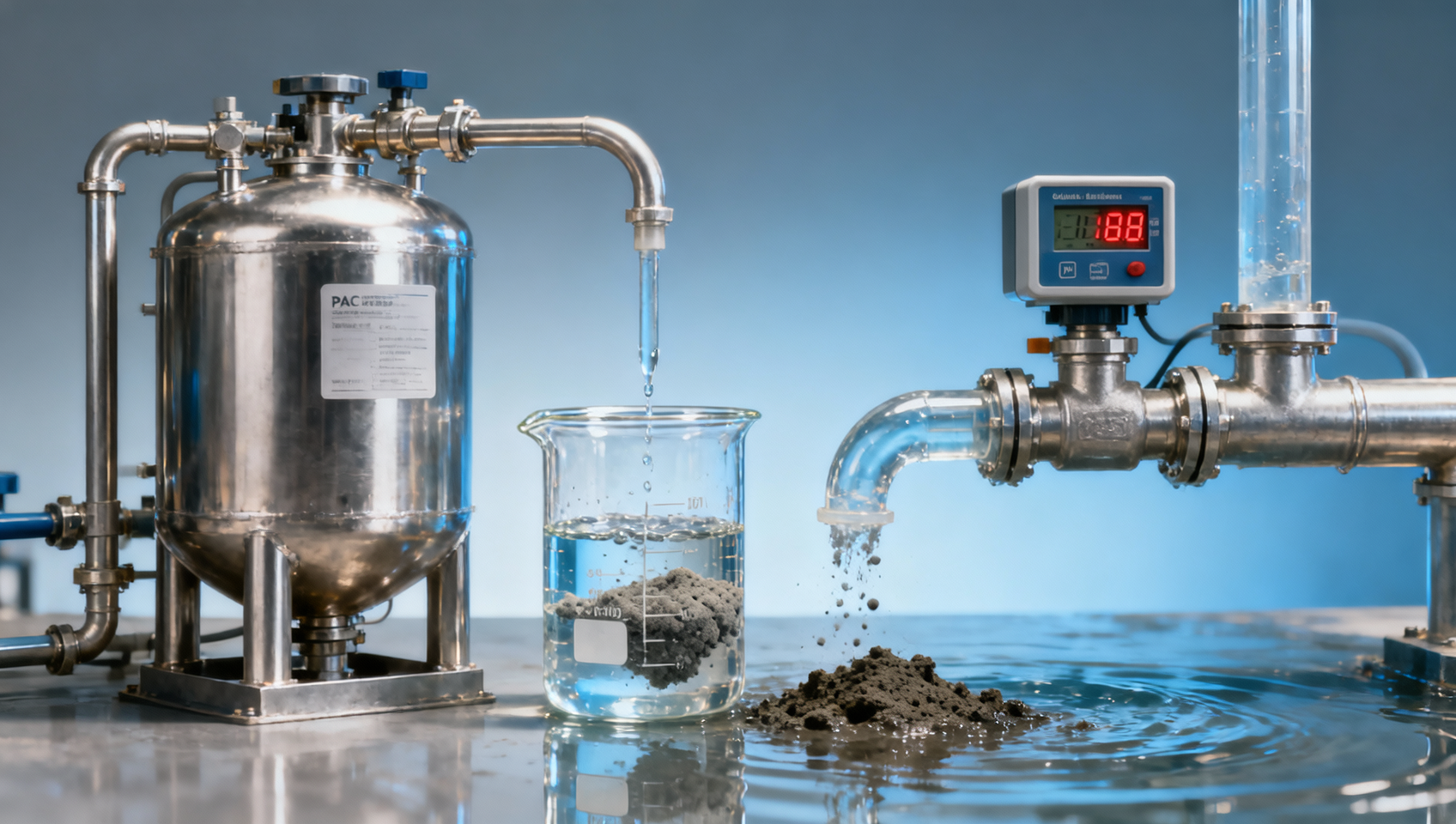
Polyaluminium chloride PAC dosage errors often begin with a wrong pH assumption, turning a routine wastewater treatment chemicals adjustment into unstable clarification, higher sludge volume, and wasted cost. For operators, buyers, and technical decision-makers comparing polyaluminium chloride pac, polyacrylamide pam wholesale options, dosing agitators wholesale, and static mixers wholesale, understanding how pH shifts coagulation performance is the first step toward reliable, compliant, and cost-efficient treatment results.
In industrial water and wastewater treatment, PAC is rarely a simple “dose-and-go” chemical. Its performance depends on raw water variability, alkalinity, mixing energy, temperature, solids load, and, most critically, actual operating pH. A small assumption error of 0.5 to 1.0 pH units can move a system from strong floc formation into poor charge neutralization, forcing operators to increase dosage by 15% to 40% without solving the root cause.
For procurement teams and plant managers, this is not only a chemistry issue. It affects chemical consumption, sludge hauling, dewatering efficiency, agitator sizing, inline mixing design, and compliance stability. The article below explains where pH-based PAC dosage errors start, how to test and correct them, and what buyers should verify when sourcing PAC, PAM, dosing equipment, and mixing hardware for industrial applications.
Why pH Assumptions Distort PAC Dosage in Real Operations
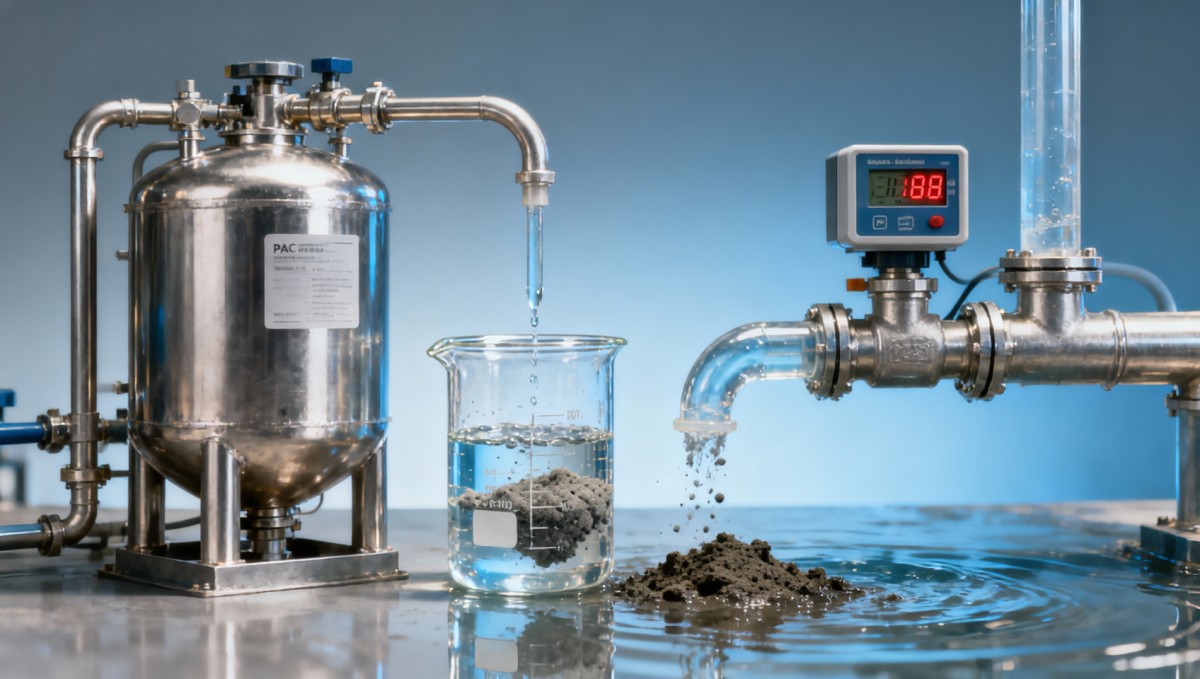
PAC works by destabilizing colloids and promoting aggregation, but the hydrolysis behavior of aluminium species changes across the pH range. In many industrial streams, effective coagulation is commonly observed within roughly pH 5.5 to 8.0, yet the optimal point can shift depending on wastewater composition. A dosage that performs well at pH 6.4 may fail at pH 7.6 if alkalinity, organics, or suspended solids are different from the original test condition.
The first common error is assuming influent pH equals reaction-zone pH. Once PAC is added, local hydrolysis can temporarily depress pH in the flash-mix area, especially when feed concentration is high or mixing is uneven. Operators who only read a grab sample upstream may miss the fact that the actual coagulation window inside the tank or pipe is outside target conditions for 30 to 120 seconds, which is enough to weaken floc development.
The second error is treating all PAC grades as interchangeable. Basicity, aluminium content, insoluble matter, and solution stability influence dosage response. A plant changing from one supplier to another may keep the same setpoint in mg/L, but if the active content differs by 8% to 12%, effective dosage changes immediately. Without pH verification and jar testing, the result is often overdosing, pin floc, or carryover turbidity.
A third issue is seasonal variation. At 10°C to 15°C, floc growth is slower than at 25°C to 30°C. Plants sometimes compensate by increasing PAC dosage alone, when the better correction is a combination of pH adjustment, mixing optimization, and polymer support. This matters for users evaluating polyacrylamide pam wholesale, because PAM should support bridge formation after coagulation, not compensate for an unstable PAC condition caused by incorrect pH assumptions.
Typical sources of pH-related dosage mistakes
- Using historical dosing values from a previous wastewater profile without rechecking current influent pH, conductivity, and alkalinity.
- Measuring pH at only one point instead of at least 3 locations: influent, flash-mix zone, and post-coagulation basin.
- Changing PAC supplier, concentration, or dilution ratio without recalculating active aluminium dosage.
- Ignoring pH drift caused by acid or alkali side streams, CIP discharge, or batch cleaning events.
Operational consequence
When pH is wrong, plants often see three linked symptoms: higher PAC consumption, larger sludge volume, and lower final clarity. In practical terms, turbidity removal may drop from a stable 85% to 92% range down to 60% to 75%, while sludge generation can rise by 10% to 30%. That creates a direct cost issue for disposal and a hidden capacity issue in clarifiers, thickeners, and filter presses.
How to Establish the Right PAC Dosage Window Instead of Guessing
The most reliable method is a controlled jar test program tied to actual plant conditions. Rather than test only one PAC dose, technical teams should run at least 5 to 7 dose points across 20 to 100 mg/L or another range appropriate to the wastewater. Each point should be checked at different pH conditions, commonly in 0.3 to 0.5 unit steps, so the plant can identify where clarification improves and where overdosing begins.
A proper evaluation should record initial pH, adjusted pH, PAC concentration, rapid-mix time, slow-mix time, settling time, supernatant turbidity, sludge volume, and if used, PAM type and dosage. This structured approach helps plants avoid selecting a dosage based only on visual floc size, which can be misleading. Larger floc is not always better if the settling profile or sludge compaction is poor after 10 to 20 minutes.
The table below shows a practical framework that operators and buyers can use when reviewing PAC treatment performance across changing pH conditions. It is especially useful when comparing different polyaluminium chloride pac offers from multiple suppliers.
The key takeaway is that dosage cannot be separated from pH and mixing conditions. A PAC quote with attractive unit pricing may still increase total treatment cost if the product requires a narrower pH window or produces more sludge under the same plant conditions. Buyers should therefore request technical data, recommended operating range, and sample evaluation support before approving volume orders.
A practical 4-step validation process
- Measure raw water pH, alkalinity, temperature, and turbidity over at least 3 to 7 operating days.
- Run jar tests with 5 or more PAC dosages and 3 or more pH conditions.
- Confirm results in pilot or full-scale operation for 24 to 72 hours.
- Lock dosage ranges, alarm limits, and retest frequency into SOPs for operators.
The Role of Mixing Equipment, Dilution Practice, and PAM Support
Even when pH is correct, poor chemical contact can create the same symptoms as a dosage error. This is why dosing agitators wholesale and static mixers wholesale matter in procurement planning. PAC should enter the stream with enough turbulence for fast dispersion, but not with such excessive shear that early floc nuclei are broken apart. In many systems, flash-mix energy is controlled within seconds, while flocculation energy is deliberately lower over 5 to 15 minutes.
Concentrated PAC feed can produce localized acidic zones if injected without proper dilution or mixing. A common plant mistake is using a high-concentration feed directly into a low-flow branch line. That may reduce storage volume, but it often worsens pH variability and mixing uniformity. For many facilities, a controlled dilution strategy and a correctly sized mixer provide more stable results than simply increasing pump rate or chemical concentration.
PAM enters after coagulation as a support chemical, not as a substitute for proper PAC control. When operators increase PAM first, they may get visibly larger flocs, but if PAC-pH conditions are wrong, the system can still show weak supernatant quality and difficult dewatering. Typical PAM dosages can range from below 1 mg/L to several mg/L depending on solids and polymer type, but the right value should be optimized only after the PAC window is stabilized.
For industrial procurement teams, the equipment package should match process hydraulics. Static mixers fit continuous pipelines with predictable flow, while mechanical agitators are more flexible in tanks with variable retention time. The correct choice depends on whether the site needs inline flash mixing, batch equalization, or multistage flocculation control.
Equipment and chemical coordination points
The table below compares common decision factors when selecting supporting equipment for PAC and PAM dosing systems in industrial treatment lines.
A well-matched equipment setup reduces variation and improves repeatability. In many plants, chemical savings of 5% to 15% come not from changing chemistry but from improving feed stability, dilution uniformity, and mixing sequence. That is a meaningful result for both operators managing daily performance and procurement managers evaluating total cost of ownership over 12 to 36 months.
What buyers should ask suppliers
- What is the recommended dilution concentration for PAC and the expected solution stability period?
- What construction materials are suitable for chloride-containing or corrosive wastewater streams?
- What is the workable flow range for the mixer or agitator before performance drops?
- Can the supplier support jar testing, startup guidance, or commissioning checklists?
Procurement, Quality Control, and Common Mistakes in PAC Selection
Industrial buyers often focus first on delivered price per ton or per cubic meter treated. That is necessary, but incomplete. PAC should be evaluated on active performance, consistency lot to lot, solubility, storage behavior, and compatibility with the site’s pH control strategy. Two quotations that look similar on paper can produce very different field outcomes if one product has narrower application tolerance or more insoluble residue.
A disciplined procurement checklist should include chemical data sheets, recommended operating pH, concentration, appearance, packaging format, shelf-life guidance, and trial support conditions. For large-volume users, it is also practical to align incoming inspection with 3 to 6 routine checks such as solution appearance, pH confirmation, dilution behavior, and trial coagulation response. This reduces the risk of process drift after supplier changes.
Plants that buy PAC and PAM together should avoid making purchasing decisions in separate silos. Coagulant and flocculant performance must be assessed as a treatment sequence. A cheaper polymer may lose value if it requires a narrow dosing band or cannot maintain floc strength at the site’s normal solids range. Cross-functional review between operations, maintenance, quality, and procurement is usually more effective than isolated chemical purchasing.
The table below summarizes practical criteria that help enterprise decision-makers compare suppliers beyond unit price.
This comparison shows why sourcing should be tied to process evidence. A low initial price can become expensive if the site needs 20% more dosage, more pH correction chemical, or more frequent sludge handling. For most industrial facilities, the more useful metric is treated-water cost per cubic meter over a stable operating period, not the invoice price of PAC alone.
Frequent purchasing and operating mistakes
- Approving PAC only by aluminum content without checking pH response in the actual wastewater matrix.
- Skipping supplier comparison trials because the current dose “mostly works” under average conditions.
- Buying mixing hardware without reviewing retention time, feed point geometry, and chemical dilution practice.
- Using emergency dosage increases as a permanent control strategy instead of correcting pH and process variability.
FAQ: Field Questions from Operators, Buyers, and Decision-Makers
How do I know whether PAC underperformance is caused by pH or by insufficient dosage?
Start by checking pH at more than one point, especially immediately after dosing. If influent pH looks normal but post-injection pH falls outside the target window, increasing PAC may worsen the problem. Run a side-by-side jar test with at least 3 pH conditions and 3 to 5 dosage levels. If clarification improves more from pH correction than from higher PAC dose, the core issue is chemical environment rather than dose quantity.
When should PAM be adjusted relative to PAC?
Adjust PAC first until coagulation is stable, then fine-tune PAM for floc size, settling, and dewatering. If PAC is unstable, changing PAM may create temporary visual improvement but usually does not solve clarity inconsistency. In practice, many sites review PAC daily or per shift under variable loads, while PAM refinement is made in smaller steps after the coagulation zone is under control.
What operating records are most useful for long-term dosage optimization?
Keep at least 8 core records: influent pH, reaction pH, temperature, turbidity or suspended solids, PAC dosage, PAM dosage, sludge volume, and final water quality. Over a 2 to 4 week period, these records often reveal whether spikes are linked to batch discharge, temperature shift, or weak mixing. This history helps buyers justify better equipment, different chemical grades, or improved dosing automation.
Can a static mixer replace an agitator?
Sometimes, but not always. A static mixer is effective for continuous, steady-flow injection where pipe velocity and pressure drop remain within design range. An agitator is usually better for tanks, variable batches, or systems needing controlled retention and staged mixing. Selection should follow hydraulic conditions, not convenience alone.
PAC dosage errors rarely begin with the pump setting alone. They usually begin with an unverified pH assumption, then expand into unstable clarification, excess sludge, and unnecessary chemical spending. The most reliable correction is a combined approach: measure actual reaction pH, validate dosage by structured jar testing, align PAC with PAM logically, and match chemical feed with the right mixing equipment.
For information researchers, plant operators, procurement teams, and industrial decision-makers, better PAC performance comes from process discipline rather than guesswork. If you are reviewing polyaluminium chloride pac supply, polyacrylamide pam wholesale, dosing agitators wholesale, or static mixers wholesale for industrial treatment systems, a technically grounded sourcing plan can reduce risk and improve treatment consistency. Contact Global Industrial Core to discuss application details, compare solution paths, and obtain a tailored recommendation for your operating conditions.
Technical Specifications
- How to choose an organic fertilizer machine for wet raw materialsAuthor :Environmental Engineering Director
- What affects output stability in a hydraulic briquetting pressAuthor :Environmental Engineering Director
- Waste paper baler wholesale prices vary for reasons beyond tonnageAuthor :Environmental Engineering Director
Expert Insights

Chief Security Architect
Dr. Thorne specializes in the intersection of structural engineering and digital resilience. He has advised three G7 governments on industrial infrastructure security.
Related Analysis
- Apr 16, 2026How to choose an organic fertilizer machine for wet raw materialsAuthor :Environmental Engineering Director
- Apr 16, 2026What affects output stability in a hydraulic briquetting pressAuthor :Environmental Engineering Director
- Apr 16, 2026Waste paper baler wholesale prices vary for reasons beyond tonnageAuthor :Environmental Engineering Director
Core Sector // 01
Security & Safety
- Grease interceptor wholesale options differ more in cleaning designAuthor :Environmental Engineering Director

- Polyaluminium chloride PAC dosage errors often start with pH assumptionsAuthor :Environmental Engineering Director

- Why MBR membrane bioreactor performance drops after 3 years — and what actually fixes itAuthor :Environmental Engineering Director

- Ultrafiltration UF membrane fouling: Is pretreatment really cutting costs or just hiding problems?Author :Environmental Engineering Director

- Seawater desalination plant energy use spikes in summer — is your design accounting for humidity?Author :Environmental Engineering Director

- Brackish water desalination scaling isn’t random — here’s how feedwater chemistry changes everythingAuthor :Environmental Engineering Director

- RO water purification plant reject ratio creeps up over time — what’s silently degrading your membranes?Author :Environmental Engineering Director

- Industrial reverse osmosis system pressure drop ≠ clogging — why flow profiling matters more than you thinkAuthor :Environmental Engineering Director