Water filter cartridges wholesale quality varies in ways specs may miss
Author
Date Published
Reading Time
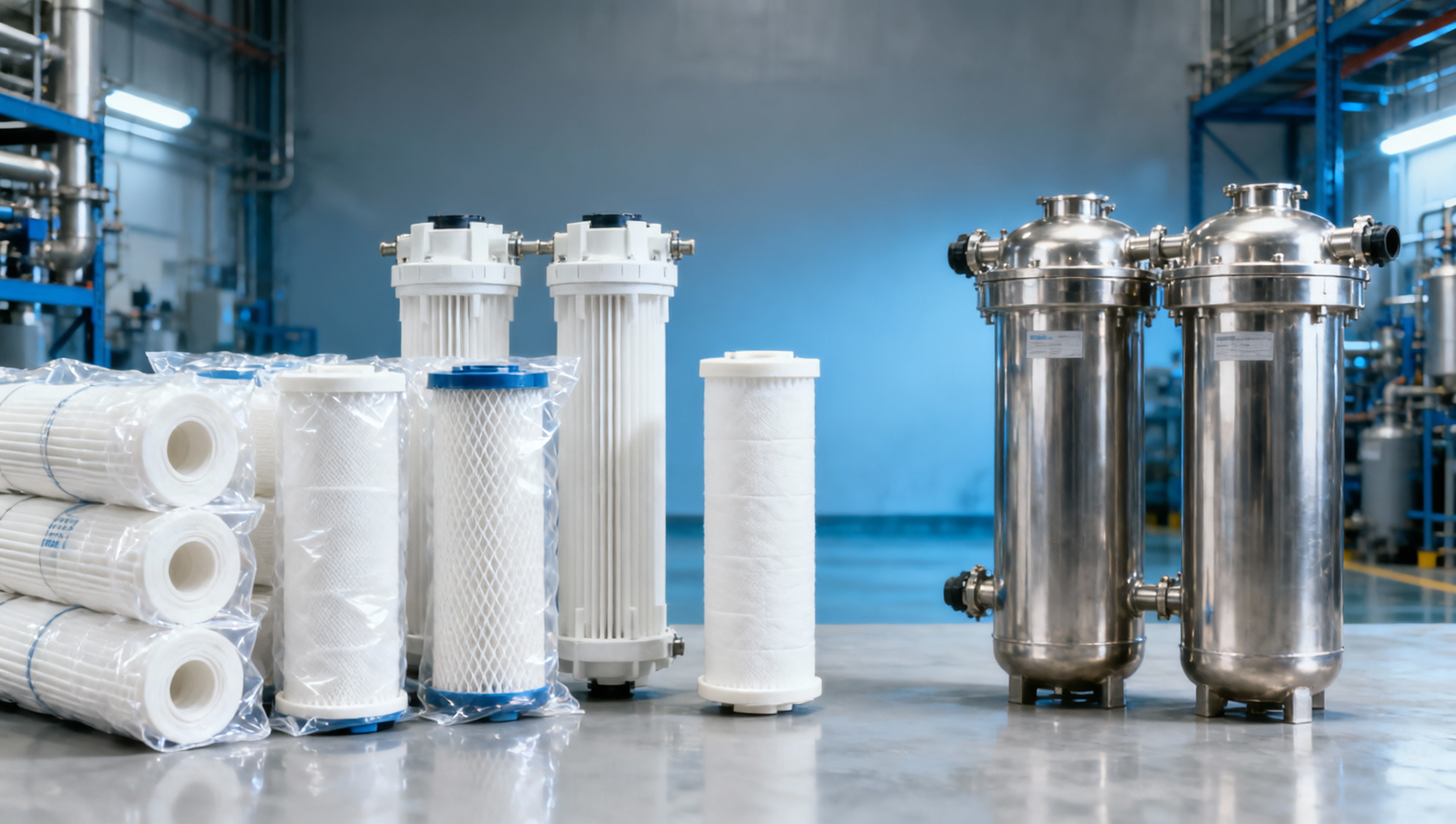
In water treatment procurement, water filter cartridges wholesale quality can differ in ways standard specs rarely reveal. For researchers, operators, buyers, and decision-makers comparing pleated filter cartridges, ro membrane elements, bag filter housings, or activated carbon filter vessel systems, hidden factors like media integrity, seal performance, contamination risk, and service life often determine true value. This article explores what specifications may miss and how to source with greater confidence.
In industrial and commercial water systems, a cartridge that appears equivalent on paper can perform very differently once it faces pressure cycling, variable feedwater, long storage periods, or inconsistent installation practices. A nominal 5-micron label, a standard length, and a familiar material callout do not always tell the full story.
That gap matters across the supply chain. Operators need stable differential pressure and predictable changeout intervals. Procurement teams need repeatable incoming quality and fewer emergency replacements. Decision-makers need lower lifecycle cost, not just a lower unit quote. In wholesale purchasing, where batches may range from 100 to 10,000 pieces, small quality deviations can scale into major maintenance and downtime risks.
Why published specifications do not capture the whole quality picture
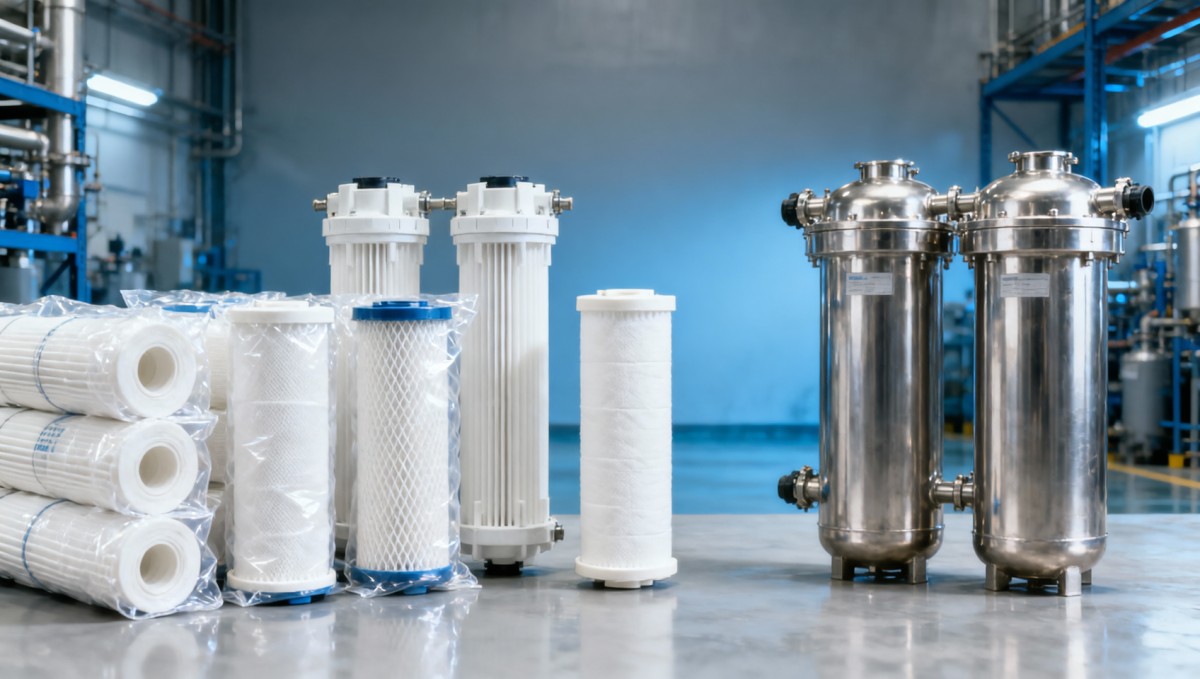
Many water filter cartridges wholesale listings focus on visible specifications such as micron rating, outer diameter, length, end cap type, temperature range, and maximum pressure drop. These are necessary starting points, but they rarely show how consistently the cartridge is made from lot to lot. In practice, consistency often matters as much as nominal performance.
A pleated filter cartridge, for example, may be described as polypropylene with a 0.45, 1, 5, or 10 micron rating. Yet the actual pleat spacing, pleat support, thermal bond integrity, and media uniformity can determine whether the element delivers 3 months of stable service or clogs in 3 weeks under the same flow conditions. The specification sheet may not disclose those manufacturing details.
For RO prefiltration and final polishing steps, the difference becomes more critical. A cartridge with poor seal geometry or uneven media density may allow bypass, shed fibers, or release extractables into upstream or downstream equipment. That can increase SDI load to RO membrane elements, accelerate membrane fouling, or create quality excursions in process water applications.
Another blind spot is tolerance control. Even a length deviation of 1–2 mm or an inconsistent gasket hardness can affect sealing in multi-round housings. In a high-flow skid with 20 to 80 cartridges, one poorly fitting element can compromise the entire vessel’s filtration efficiency. For this reason, buyers should treat dimensional tolerance as an operational parameter, not a minor manufacturing detail.
Common specification gaps in wholesale sourcing
The following table highlights several areas where written specifications may look complete, while important performance risks remain unaddressed during actual use.
The key takeaway is simple: specifications confirm baseline compatibility, but they do not automatically prove manufacturing control, contamination discipline, or service stability. For wholesale buyers, supplier process capability is often the hidden variable behind long-term filtration cost.
The hidden quality factors that drive lifecycle performance
When evaluating water filter cartridges wholesale quality, four hidden factors deserve closer review: media integrity, seal performance, cleanliness control, and service life consistency. These factors influence not only filtration efficiency but also labor frequency, changeout planning, and downstream asset protection.
Media integrity refers to how uniformly the filter medium is formed, pleated, bonded, and supported. In pleated cartridges, uneven pleat height can reduce effective area by 10% to 25% compared with a well-made element of the same nominal dimensions. Lower usable area means faster pressure rise and earlier replacement, even if the catalog sheet shows similar flow capability.
Seal performance is equally important. End caps, adapters, and O-rings must maintain compression through startup shock, pressure swings, and thermal changes. In industrial systems operating at 2–6 bar differential conditions, even minor bypass can undermine the intended filtration grade. A low-cost cartridge that leaks around the seal can be more damaging than a cartridge with a coarser but stable filtration rating.
Cleanliness control matters especially in food process water, pharmaceuticals support utilities, electronics rinse systems, and RO pretreatment. Poor packaging, dusty storage, or inadequate post-production flushing can introduce particles before the cartridge is even installed. This issue is often invisible during purchase review because it does not appear in standard dimensional or material tables.
What quality teams should verify beyond the datasheet
- Batch-to-batch dimensional tolerance, especially length, gasket diameter, and adapter fit across at least 3 sample pieces per lot.
- Initial differential pressure under a defined flow rate, compared across competing cartridge samples at the same nominal micron grade.
- Visual and microscopic cleanliness checks for loose fibers, dust, carbon fines, or packaging debris.
- Seal compression recovery after storage periods of 30, 60, or 90 days when inventory turns are slow.
- Traceability for raw material batches and production dates, especially for high-volume monthly purchases.
Why service life consistency matters more than best-case life
Some suppliers highlight maximum life under ideal laboratory conditions, but procurement should focus on repeatable life under site conditions. If one batch lasts 8 weeks and the next lasts 4 weeks, maintenance planning becomes unreliable. The resulting labor disruption, vessel opening frequency, and spare stock inflation can raise total ownership cost by far more than the original price gap.
The same principle applies to activated carbon filter vessel systems and bag filter housings. Carbon quality, underdrain design, and bag seal integrity all influence leakage, fines release, and replacement intervals. In other words, the cartridge is only one part of the filtration chain, and hidden quality issues can propagate system-wide.
How to compare pleated cartridges, RO elements, bags, and carbon systems in procurement
Different filtration products solve different contamination problems, so direct price comparison can be misleading. A pleated filter cartridge is often selected for fine particulate control and lower pressure drop. A bag filter usually suits higher dirt-holding applications. RO membrane elements provide dissolved solids reduction, while activated carbon vessels address chlorine, odor, organics, and some trace contaminants.
Procurement decisions should therefore start with process duty. Is the goal sediment reduction before an RO train? Polishing after multimedia filtration? Protection of nozzles, valves, and instruments? Or improvement of taste, odor, and oxidant removal in a process line? The answer determines which quality factors deserve top priority.
For example, in RO pretreatment, stable particle retention and low extractables matter more than simply choosing the cheapest 5-micron cartridge. In cooling water side-stream applications, dirt capacity and ruggedness may matter more. In food and beverage or electronics support utilities, cleanliness and packaging controls often carry greater weight than nominal dirt load.
Practical comparison by application role
The table below helps researchers and buyers match product type with the quality criteria that most influence operational success.
This comparison shows why wholesale evaluation should be application-led. The right filtration media for a 20 m³/h pretreatment line may not be the right choice for a 200 m³/h recirculation loop, even if both use similar housings or nominal micron grades.
A four-point comparison method for buyers
- Define the contaminant target: suspended solids, oxidants, organics, or dissolved salts.
- Set the operating window: flow rate, pressure, temperature, and expected changeout interval, such as 2 weeks, 1 month, or 3 months.
- Compare lifecycle behavior, not only purchase price: include labor, downtime, and rejected production risk.
- Run a side-by-side sample validation on at least 2 or 3 batches before committing to annual volume.
A practical wholesale sourcing framework for lower risk purchasing
A strong water filter cartridges wholesale strategy combines technical review, supplier verification, and receiving inspection. This approach is especially useful for EPC contractors, facility managers, and industrial procurement teams managing multi-site operations. The goal is not to create unnecessary complexity, but to reduce failure points before volume orders are placed.
First, define the minimum technical baseline. For many industrial users, that includes compatible dimensions, required micron range, allowable pressure drop, chemical compatibility, and packaging cleanliness expectations. If the operating environment includes oxidants, solvents, or temperatures above 60°C, the material review should be even more detailed.
Second, request evidence of process control. That may include quality inspection records, sample retention practices, production batch traceability, and incoming raw material verification. Wholesale supply reliability often depends less on marketing claims and more on whether the factory can repeat the same output over 6, 12, or 24 months.
Third, establish incoming checks at your warehouse or project site. Even simple controls such as carton integrity review, label verification, sample dimension checks, and initial visual cleanliness inspections can prevent costly installation of unsuitable stock. A 15-minute receiving process may save days of disruption later.
Suggested supplier evaluation checklist
The following checklist can help turn general quality concerns into a more disciplined sourcing decision. It works well for both cartridges and related filtration components.
A disciplined checklist makes wholesale filtration buying more measurable. It also helps procurement teams communicate quality requirements clearly across engineering, operations, and finance, reducing the risk of choosing solely on unit price.
Recommended implementation flow
- Step 1: Shortlist 2–4 suppliers with compatible product range and stable production capacity.
- Step 2: Test samples in actual service for 2 to 8 weeks, depending on process cycle and fouling rate.
- Step 3: Compare pressure rise, replacement frequency, fit reliability, and packaging cleanliness.
- Step 4: Approve one primary source and one backup source for business continuity.
Common mistakes, maintenance realities, and final buying guidance
One common mistake in water filter cartridges wholesale purchasing is treating all cartridges with the same nominal micron rating as interchangeable. In reality, nominal retention, absolute retention behavior, surface area, media depth, and seal quality can vary enough to change system outcomes. A lower bid may still produce a higher annual filtration budget.
Another mistake is ignoring storage and handling. Cartridges kept in damaged cartons, exposed to sunlight, or stored in damp areas for 6 to 12 months may lose packaging cleanliness or seal elasticity. This is especially relevant for project-based procurement, where bulk orders arrive well before commissioning.
Maintenance teams should also document actual cartridge life by application. If a certain line changes filters every 21 days while another runs 60 days, that difference should feed back into future sourcing decisions. Over time, site data becomes more useful than generic catalog expectations because it reflects real solids loading, upset events, and operating habits.
For enterprises managing multiple filtration assets, standardizing evaluation criteria can improve both supply resilience and negotiation strength. It also enables better forecasting for spare stock, vessel maintenance windows, and membrane protection strategies. Wholesale buying works best when engineering data and purchasing discipline are aligned.
FAQ: questions buyers often ask before placing larger orders
How many samples should be tested before a wholesale order?
For critical industrial service, testing at least 3 to 10 pieces from one batch is a practical start. If the annual volume is high or the duty is sensitive, test samples from 2 separate lots to check consistency rather than one-time peak performance.
What lead time should buyers expect?
Lead times vary by cartridge type, quantity, and packaging requirements, but common planning windows are 7–15 days for standard stock and 3–6 weeks for larger or customized batches. Buyers should confirm not only nominal lead time but also supplier ability to maintain it over repeated orders.
Which indicator matters most: micron rating or service life?
Both matter, but service life consistency often has greater cost impact. A cartridge that meets the target filtration grade and performs predictably for 45 days can be more valuable than one that starts well but varies between 15 and 50 days across batches.
Is the cheapest cartridge ever the right option?
It can be in low-risk, noncritical service, but in systems protecting RO membrane elements, precision spray nozzles, or process quality, the cheapest option may create the highest downstream cost. Buyers should compare total cost across filter life, labor hours, downtime risk, and equipment protection.
Water treatment buyers rarely fail because they overlooked a catalog number; they fail when hidden quality variables were never checked. In wholesale filtration sourcing, real value comes from stable media performance, dependable sealing, clean handling, and predictable service intervals. Those factors protect uptime, reduce maintenance disruption, and support more confident purchasing decisions across pleated cartridges, RO elements, bag systems, and activated carbon filtration.
If your team is comparing suppliers, validating alternative cartridge sources, or building a more resilient filtration procurement framework, now is the right time to apply a deeper evaluation standard. Contact GIC to discuss product details, sourcing criteria, or a tailored solution for your water treatment application.
Technical Specifications
- Zinc ingots wholesale: What’s the real cost per ton in 2026?Author :Heavy Industry Strategist
- Aluminum ingots bulk vs. cast bars: Which delivers better yield for extrusion?Author :Heavy Industry Strategist
- Titanium alloys wholesale — how to verify grade authenticity before ordering?Author :Heavy Industry Strategist
Expert Insights

Chief Security Architect
Dr. Thorne specializes in the intersection of structural engineering and digital resilience. He has advised three G7 governments on industrial infrastructure security.
Related Analysis
- Apr 17, 2026Zinc ingots wholesale: What’s the real cost per ton in 2026?Author :Heavy Industry Strategist
- Apr 17, 2026Aluminum ingots bulk vs. cast bars: Which delivers better yield for extrusion?Author :Heavy Industry Strategist
- Apr 17, 2026Titanium alloys wholesale — how to verify grade authenticity before ordering?Author :Heavy Industry Strategist
Core Sector // 01
Security & Safety
- Steam traps wholesale: Which type fails least in condensate return lines with air binding?Author :Environmental Engineering Director

- Check valves (swing type): When does water hammer override disc stability?Author :Environmental Engineering Director
: When does water hammer override disc stability?")
- Cast iron gate valves: Are they still viable for potable water mains in 2026?Author :Environmental Engineering Director

- Grease interceptor wholesale options differ more in cleaning designAuthor :Environmental Engineering Director

- Polyaluminium chloride PAC dosage errors often start with pH assumptionsAuthor :Environmental Engineering Director

- Water filter cartridges wholesale quality varies in ways specs may missAuthor :Environmental Engineering Director

- RO membrane elements scale faster when pretreatment looks acceptableAuthor :Environmental Engineering Director

- Ion exchange resin bulk supply can create storage and fouling issuesAuthor :Environmental Engineering Director