Multimedia sand filter backwash problems that reduce effluent clarity
Author
Date Published
Reading Time
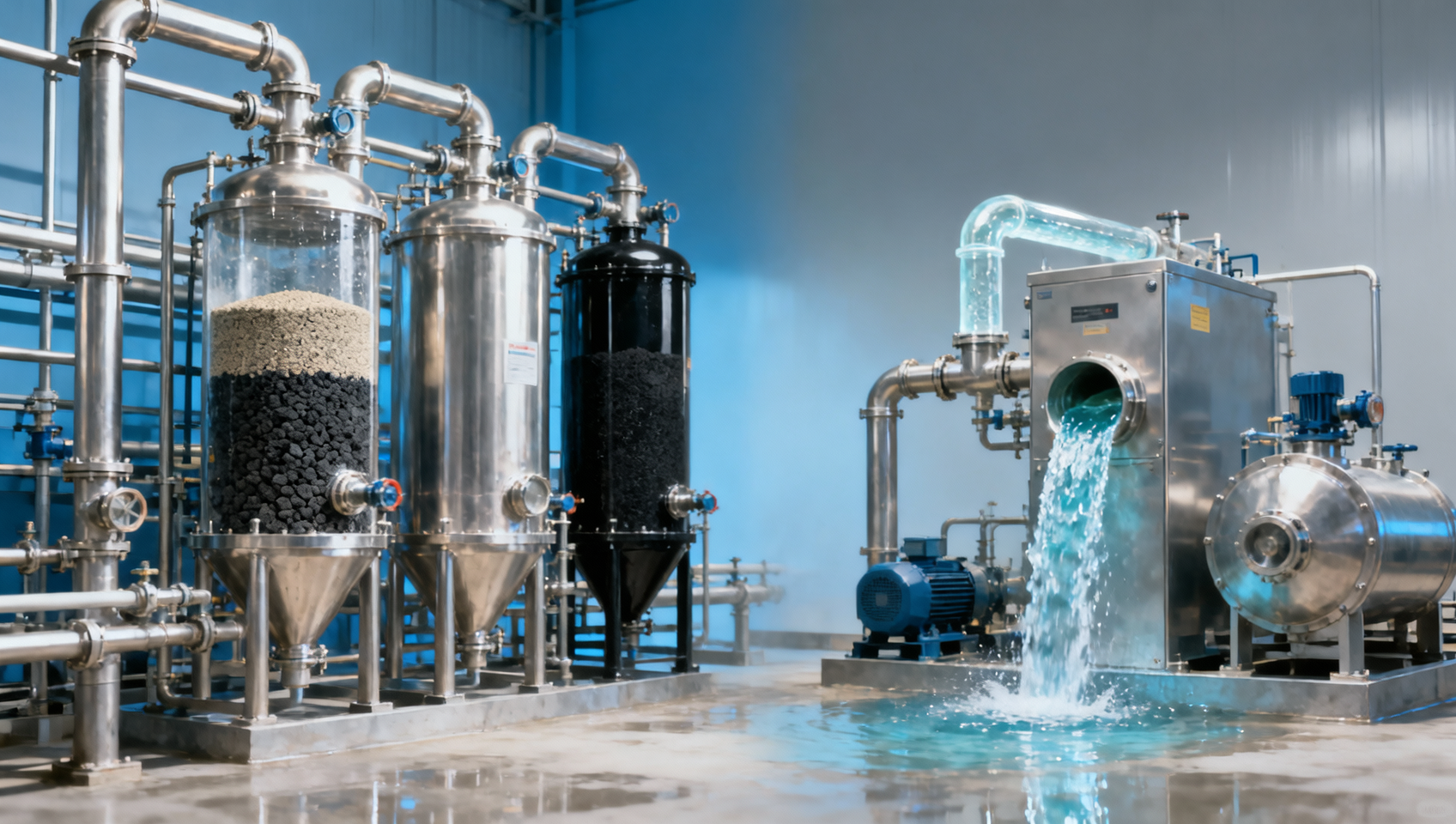
When a multimedia sand filter backwash cycle is poorly timed, under-expanded, or hydraulically unbalanced, effluent clarity can decline fast and trigger downstream fouling. For operators, buyers, and plant decision-makers evaluating industrial water softeners, activated carbon filter vessel systems, automatic self cleaning filter units, or water filter cartridges wholesale options, understanding these backwash problems is essential to protecting treatment performance, maintenance budgets, and long-term process reliability.
In industrial water treatment, backwash is not a housekeeping step. It is the reset mechanism that restores bed porosity, removes trapped solids, and stabilizes filtration performance between service cycles. When this process fails, the effect is rarely isolated to one vessel. Plants can see higher turbidity, shorter run lengths, more frequent cartridge changeouts, and increased chemical demand in downstream polishing units.
This matters across multiple buying and operating scenarios. A facility reviewing a multimedia filter upgrade may also be comparing activated carbon filter vessel sizing, automation levels in self cleaning filtration, or whether to buffer inconsistent pretreatment with cartridge filtration. In each case, poor effluent clarity from an unstable sand filter backwash regime can distort equipment selection, operating cost forecasts, and maintenance planning.
For EPC teams, procurement managers, and plant supervisors, the practical question is straightforward: which backwash problems most often reduce effluent clarity, how do they show up in daily operation, and what should be verified before purchase, retrofit, or commissioning? The sections below address those points with operational guidance and sourcing-focused criteria.
How backwash failures directly reduce effluent clarity
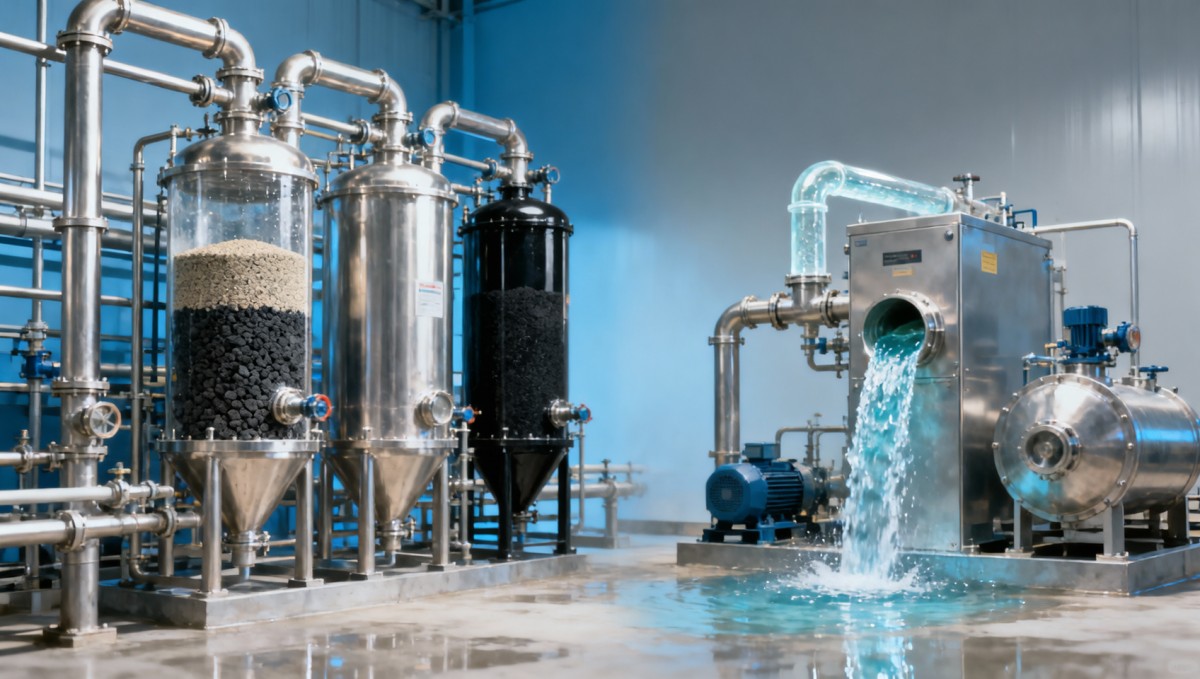
A multimedia sand filter depends on layer stability and controlled expansion. Typical media stacks may include anthracite, sand, and garnet, each with different density and particle size. During a proper backwash, the bed expands by roughly 20% to 40%, allowing retained solids to release without causing full media mixing. If expansion drops below the useful range, mud balls, channeling, and compacted zones can develop.
Poor effluent clarity often begins with one of three conditions: backwash starts too late, flow rate is too low, or distribution inside the vessel is uneven. Late initiation allows solids loading to rise beyond normal design conditions. Low flow fails to lift heavier media fractions. Uneven hydraulics create dead zones, so one area fluidizes while another remains fouled. The result is inconsistent particle capture during the next filtration run.
Operators may first notice symptoms rather than root causes. Effluent turbidity can spike at startup after backwash, differential pressure can recover only partially, and run time between wash cycles can fall from 24 hours to 8–12 hours in high-solids applications. In severe cases, carryover fines move downstream and shorten the service life of activated carbon vessels or water filter cartridges used as final barriers.
Temperature also matters. Cold water has higher viscosity, so a backwash flow that worked at 25°C may be insufficient at 10°C. Without seasonal adjustment, the same valve sequence can produce under-expansion for weeks at a time. Plants that rely on fixed-speed pumps and manual settings are especially exposed to this problem.
Common operating signs that should not be ignored
- Effluent clarity deteriorates within 15–30 minutes after returning to service.
- Backwash waste water appears cleaner than expected, suggesting low bed agitation and poor solids release.
- Differential pressure remains 20% or more above clean-bed baseline after washing.
- Filter run length declines over 2–4 consecutive cycles.
- Downstream cartridge replacement frequency doubles compared with the prior operating period.
Backwash problem-to-impact relationship
The table below summarizes how typical backwash errors translate into visible process deterioration. This can help information researchers and buyers connect daily operating symptoms with specification gaps or maintenance issues.
The key conclusion is that clarity loss is usually a system interaction, not a single bad reading. If a plant sees rising effluent turbidity together with shorter run times and higher downstream fouling, backwash hydraulics should be reviewed before replacing the entire filter train.
Root causes in design, controls, and vessel internals
Many backwash problems originate upstream of daily operation, especially during system design or equipment selection. A vessel may be sized for the service flow but not for the peak backwash demand. In practice, the backwash pump, drain line, and control valve Cv must all support the required expansion rate. A filter that treats 50 m³/h may still need a much higher short-duration wash flow, depending on media density and water temperature.
Underdrain design is another critical factor. If laterals are cracked, unevenly slotted, or partially plugged, backwash water distribution becomes nonuniform. This creates localized jets that over-expand one zone while leaving other zones compacted. The same problem appears when a distributor header is poorly aligned or when media support gravel gradation is inconsistent after maintenance.
Controls can either protect or weaken performance. Fixed-time backwash cycles are common in budget-oriented systems, but they may ignore actual solids loading and pressure rise. More stable operation usually comes from combining at least 2 triggers, such as differential pressure and elapsed run time. For example, initiating backwash at 0.5–0.8 bar pressure rise or after a maximum service period can reduce unnecessary washing while preventing late-cycle breakthrough.
Air scour, if included, adds another variable. In some multimedia systems, 3–5 minutes of low-pressure air before water backwash improves solids release. But if air rate is too aggressive or poorly sequenced, media segregation can be disturbed and fines carryover may increase during restart. This is one reason commissioning data matters more than brochure claims.
Design checkpoints for procurement and technical review
- Verify both service flow and backwash flow capacity, not just nominal treatment throughput.
- Review seasonal operating temperature range, especially if source water can drop by 10–15°C.
- Check underdrain type, lateral material, slot dimensions, and inspection accessibility.
- Confirm whether control logic supports pressure-based, timer-based, or hybrid backwash initiation.
- Assess drain capacity so waste discharge does not throttle backwash performance.
Why this matters for adjacent equipment categories
A poorly backwashed multimedia filter can create false demand for other components. Plants may overinvest in automatic self cleaning filter units to capture solids that should have been removed earlier. They may also increase cartridge filtration stages or shorten change intervals. In softening systems, suspended solids carryover can foul resin beds, increasing brine consumption and reducing exchange efficiency over time.
For activated carbon filter vessel systems, excessive particulate loading reduces bed utilization and can increase pressure loss faster than expected. What looks like a carbon performance issue may actually begin with unstable pretreatment. This is why procurement teams should evaluate filtration trains as an integrated sequence instead of buying each vessel category in isolation.
Operational settings that improve backwash performance and clarity
Correcting clarity loss usually starts with disciplined operating parameters. The goal is to achieve sufficient bed expansion, complete solids release, and a controlled return to service. Many facilities improve stability by reviewing 4 settings first: trigger point, backwash flow, wash duration, and rinse duration. Even a 10% to 15% deviation in one of these settings can produce repeated quality swings.
Backwash duration should reflect solids loading and vessel geometry. A short 3-minute wash may be inadequate for heavily loaded industrial influent, while an excessively long cycle wastes water without additional cleaning benefit. In many applications, 8–15 minutes of water backwash plus a 3–8 minute rinse is a practical starting window, followed by adjustment based on turbidity recovery and pressure trend.
Restart sequencing deserves equal attention. Sending the filter immediately back to production without an adequate rinse can push loosened fines downstream. Some plants use a filter-to-drain step for the first 2–5 minutes after backwash, especially when supplying sensitive membrane, carbon, or cartridge polishing stages. This small water loss can prevent much larger maintenance costs later.
Instrumentation should support quick verification rather than just alarm history. A useful minimum set includes influent and effluent pressure indicators, differential pressure trend, backwash flow indication, and effluent turbidity monitoring where water quality is critical. Without these points, operators are forced to infer performance from delayed symptoms such as cartridge plugging or customer complaints.
Suggested operating ranges to review during optimization
The following ranges are general industrial references. Actual settings depend on media composition, source water quality, vessel diameter, and process sensitivity, but they provide a practical framework for troubleshooting and commissioning discussions.
For buyers, these ranges help during technical clarification. If a supplier cannot explain how the selected vessel, internals, and pump package will achieve the necessary wash performance across temperature changes and solids variability, the risk of recurring clarity issues remains high after installation.
Three practical correction steps before major replacement
- Measure actual backwash flow at the vessel instead of assuming the pump curve is being achieved.
- Inspect underdrain and media depth during shutdown if pressure recovery remains poor for 2 or more cycles.
- Recalibrate control logic to combine pressure rise and maximum runtime, then trend results for 7–14 days.
Procurement and retrofit decisions for reliable pretreatment trains
When effluent clarity declines repeatedly, replacing media alone may not solve the problem. Procurement teams should decide whether the issue is operational, mechanical, or architectural. In some cases, a retrofit to valves, underdrains, and controls is enough. In others, the filter train should be rebalanced with upstream solids reduction or downstream polishing better matched to actual risk.
This evaluation is especially relevant where multimedia filters feed industrial water softeners, activated carbon vessels, or automatic self cleaning filters. If the pretreatment stage remains unstable, downstream equipment may be oversized to compensate, raising capital and service costs. A stronger purchasing approach compares lifecycle performance across the entire line instead of focusing only on the initial vessel price.
Water filter cartridges wholesale planning is a good example. Many buyers negotiate on micron rating and unit price, yet fail to model the real cartridge consumption caused by poor backwash control upstream. If backwash optimization can extend cartridge life from 2 weeks to 5–6 weeks, the savings may justify better instrumentation or a redesigned backwash skid far more quickly than expected.
Lead time and serviceability should also be reviewed. A low-cost vessel with limited spare parts access or difficult internal inspection can become more expensive over a 3–5 year period. Industrial users should ask not only what is supplied at delivery, but what can be inspected, replaced, and recalibrated during shutdown windows of 8–24 hours.
Procurement comparison for common response options
The table below helps compare typical corrective paths when multimedia sand filter backwash problems are affecting effluent clarity and downstream operating cost.
A useful procurement discipline is to request 3 things from suppliers: design wash rate basis, expected clean-bed and fouled-bed pressure range, and recommended inspection interval. These details reveal whether the proposed solution is engineered for stable operation or simply priced for quick approval.
Questions decision-makers should ask before approval
- Can the system maintain backwash performance across seasonal temperature variation?
- What field measurements are needed during commissioning in the first 30 days?
- How long will spare laterals, valves, and seals typically take to source?
- What indicators show that a retrofit has solved the clarity problem rather than only masking it?
Maintenance routines, operator checks, and frequently asked questions
Preventive maintenance is the lowest-cost protection against recurring backwash-related clarity loss. A practical routine includes weekly review of differential pressure trend, monthly verification of backwash flow, and periodic inspection of valve actuation and drain condition. Where source water solids vary sharply, operators should also log run length and effluent appearance by shift to catch instability before it becomes a maintenance event.
For plants with multiple shifts or outsourced operations, written setpoints are essential. A multimedia filter may appear simple, but inconsistent manual overrides can cause large performance swings. The most reliable sites treat backwash as a controlled procedure with documented thresholds, not as an operator preference adjusted informally during production pressure.
Maintenance planning should consider the full pretreatment chain. If a filter repeatedly sends fines to softeners, carbon vessels, or cartridges, each downstream maintenance record becomes part of the troubleshooting picture. Looking at the whole chain often reveals that an “expensive consumables problem” is actually a “poor backwash stability problem.”
For enterprise decision-makers, this is where operational detail meets strategic sourcing. Reliable filtration protects production uptime, chemical efficiency, and compliance with internal quality targets. It also improves budget predictability by reducing emergency interventions and unnecessary cartridge or media consumption.
FAQ: How often should multimedia filters be backwashed?
There is no universal fixed interval. Many systems run from once per shift to once every 24–72 hours depending on solids loading and service velocity. A better approach is to combine a maximum time limit with a differential pressure or turbidity-based trigger so the wash occurs neither too early nor too late.
FAQ: Can more downstream cartridges solve poor effluent clarity?
They can reduce immediate risk, but they rarely solve the root cause. If backwash remains ineffective, cartridge loading will stay high and replacement frequency may rise sharply. This increases consumable cost, labor, and pressure drop while leaving the pretreatment problem unresolved.
FAQ: What should operators inspect first after a clarity drop?
Start with actual backwash flow, cycle timing, and post-backwash rinse adequacy. Then review differential pressure recovery and look for signs of uneven distribution, such as inconsistent vessel behavior or suspected underdrain blockage. If the same issue appears over 2–3 cycles, plan an internal inspection rather than repeating unchanged settings.
FAQ: When is a retrofit better than full replacement?
If the vessel shell and general mechanical condition remain sound, a retrofit may be more economical when the main gaps are controls, internals, or wash hydraulics. Full replacement becomes more likely when vessel access is poor, internals are extensively degraded, or process conditions have shifted beyond the original design envelope.
Multimedia sand filter backwash problems reduce effluent clarity by leaving solids in the bed, destabilizing layer separation, and sending particulate load into downstream treatment stages. The most effective response combines design review, field measurement, disciplined operating setpoints, and procurement decisions based on lifecycle reliability rather than vessel price alone.
If your team is evaluating industrial water softeners, activated carbon filter vessel systems, automatic self cleaning filter units, or water filter cartridges wholesale strategies, a clear understanding of pretreatment backwash performance will improve both technical outcomes and cost control. Contact Global Industrial Core to discuss your application, compare retrofit paths, or obtain a tailored sourcing and technical review for more reliable industrial filtration performance.
Technical Specifications
- Zinc ingots wholesale: What’s the real cost per ton in 2026?Author :Heavy Industry Strategist
- Aluminum ingots bulk vs. cast bars: Which delivers better yield for extrusion?Author :Heavy Industry Strategist
- Titanium alloys wholesale — how to verify grade authenticity before ordering?Author :Heavy Industry Strategist
Expert Insights

Chief Security Architect
Dr. Thorne specializes in the intersection of structural engineering and digital resilience. He has advised three G7 governments on industrial infrastructure security.
Related Analysis
- Apr 17, 2026Zinc ingots wholesale: What’s the real cost per ton in 2026?Author :Heavy Industry Strategist
- Apr 17, 2026Aluminum ingots bulk vs. cast bars: Which delivers better yield for extrusion?Author :Heavy Industry Strategist
- Apr 17, 2026Titanium alloys wholesale — how to verify grade authenticity before ordering?Author :Heavy Industry Strategist
Core Sector // 01
Security & Safety
- Steam traps wholesale: Which type fails least in condensate return lines with air binding?Author :Environmental Engineering Director

- Check valves (swing type): When does water hammer override disc stability?Author :Environmental Engineering Director
: When does water hammer override disc stability?")
- Cast iron gate valves: Are they still viable for potable water mains in 2026?Author :Environmental Engineering Director

- Grease interceptor wholesale options differ more in cleaning designAuthor :Environmental Engineering Director

- Polyaluminium chloride PAC dosage errors often start with pH assumptionsAuthor :Environmental Engineering Director

- Water filter cartridges wholesale quality varies in ways specs may missAuthor :Environmental Engineering Director

- RO membrane elements scale faster when pretreatment looks acceptableAuthor :Environmental Engineering Director

- Ion exchange resin bulk supply can create storage and fouling issuesAuthor :Environmental Engineering Director