Ion exchange resin bulk supply can create storage and fouling issues
Author
Date Published
Reading Time
Buying ion exchange resin bulk can lower unit costs, but it often introduces hidden storage, contamination, and fouling risks that affect system reliability. For buyers comparing ion exchange resin bulk, ro membrane elements, wholesale frp tanks, and industrial water softeners, understanding inventory handling and water treatment compatibility is essential before scaling procurement.
In industrial water treatment, procurement decisions are rarely limited to the resin price per liter or per cubic foot. Large-volume buying changes warehouse requirements, handling procedures, moisture control, packaging exposure time, and commissioning schedules. If these variables are not managed carefully, the expected savings from ion exchange resin bulk purchasing can be offset by pressure drop, organic fouling, microbial growth, shortened media life, and unstable outlet water quality.
This matters to multiple stakeholders. Researchers and technical evaluators need to compare treatment compatibility. Operators need practical storage and loading guidance. Procurement teams must balance MOQ, lead time, and working capital. Decision-makers need to understand where bulk buying creates value and where it creates operational risk. The most effective sourcing strategy connects resin selection with vessel design, pretreatment, maintenance planning, and inventory turnover.
Why bulk ion exchange resin purchasing creates operational risks
Buying ion exchange resin bulk can make commercial sense when annual consumption exceeds 5–10 m³, when replacement cycles are predictable, or when multi-site facilities want to consolidate supply. However, resin is not an inert commodity that can be stored indefinitely under any condition. Moisture loss, freezing, prolonged exposure to heat above common warehouse ranges, and damaged packaging can all affect bead integrity and performance.
In practice, many storage problems begin before the resin reaches the vessel. A shipment may sit in a warehouse for 3–6 months, be exposed to direct sunlight, or remain partially opened after inspection. Cation and anion resins are both sensitive to handling conditions, and poor stock rotation can increase the risk of oxidation, contamination, and irreversible fouling once the media enters service.
Another common issue is that procurement volume grows faster than process discipline. A plant may increase resin inventory but keep the same unloading method, the same storage area, and the same pretreatment performance. When feedwater quality fluctuates, especially with iron above low ppm levels, organics, chlorine leakage, or suspended solids, large resin inventories do not solve the underlying process problem. They simply increase the cost of avoidable degradation.
Typical hidden failure points in bulk storage
- Packaging damage during forklift movement or pallet stacking above 2 layers.
- Warehouse temperature swings, especially below 0°C or above 40°C for extended periods.
- Long holding periods beyond planned turnover cycles of 60–120 days.
- Cross-contamination from chemicals, lubricants, dust, or nearby metalworking operations.
- Opening partial containers without controlled resealing and traceability labeling.
These are not minor warehouse details. Resin bead damage can contribute to fines formation, pressure loss, poor regeneration efficiency, and carryover into downstream equipment. Once fines and foulants migrate through the system, the impact can extend beyond the resin vessel to strainers, valves, instrumentation, and even RO pretreatment loops.
Where buyers often underestimate risk
The first mistake is treating all bulk media as equally tolerant to storage. The second is assuming that a lower unit price always improves total cost of ownership. The third is ignoring compatibility between resin inventory strategy and actual plant utilization. If a facility only consumes resin once every 12–18 months, oversized purchases can lock in material that degrades before use.
How storage conditions influence contamination, fouling, and resin life
Fouling rarely starts as a single dramatic event. It usually develops through small, cumulative failures in storage and process control. Resin stored in unstable conditions may still look acceptable externally, yet internal performance can decline once it encounters variable feedwater. In industrial settings, the most common fouling categories are iron fouling, organic fouling, suspended solids loading, oxidant damage, and microbiological contamination.
Environmental control is therefore critical. In many facilities, a practical storage range is roughly 5°C–30°C, away from direct UV exposure, with intact sealed packaging and clean palletization. High humidity alone is not always the primary problem, but repeated thermal cycling and package opening can change moisture balance and raise contamination risk. A simple warehouse issue can later appear as a process issue during startup.
Bulk resin also interacts with upstream chemistry. If activated carbon maintenance is weak and oxidants break through, or if clarification and cartridge filtration allow high silt loading, resin life may fall well below expected operating intervals. That is why buyers comparing ion exchange resin bulk with ro membrane elements, wholesale frp tanks, and industrial water softeners should evaluate the entire treatment train, not each item in isolation.
Storage and fouling risk matrix
The table below summarizes frequent warehouse and process-side conditions that increase the probability of resin performance loss in industrial water treatment systems.
The key takeaway is that storage and process risks are linked. Even a well-selected resin can underperform if the facility lacks stable pretreatment, disciplined inventory turnover, and a controlled loading procedure. A lower purchase price is not the same as lower lifecycle cost.
Operational signs that fouling may already be developing
- Pressure drop rises faster than expected during the first 2–8 weeks after replacement.
- Regeneration chemical consumption increases without matching capacity recovery.
- Outlet conductivity or hardness leakage becomes inconsistent between cycles.
- Backwash water shows excessive fines or unusual discoloration.
When these symptoms appear, operators should not assume the resin itself is the only cause. Storage records, feedwater excursions, pretreatment performance, and vessel hydraulics should all be reviewed together.
Comparing resin bulk supply with RO membranes, FRP tanks, and industrial water softeners
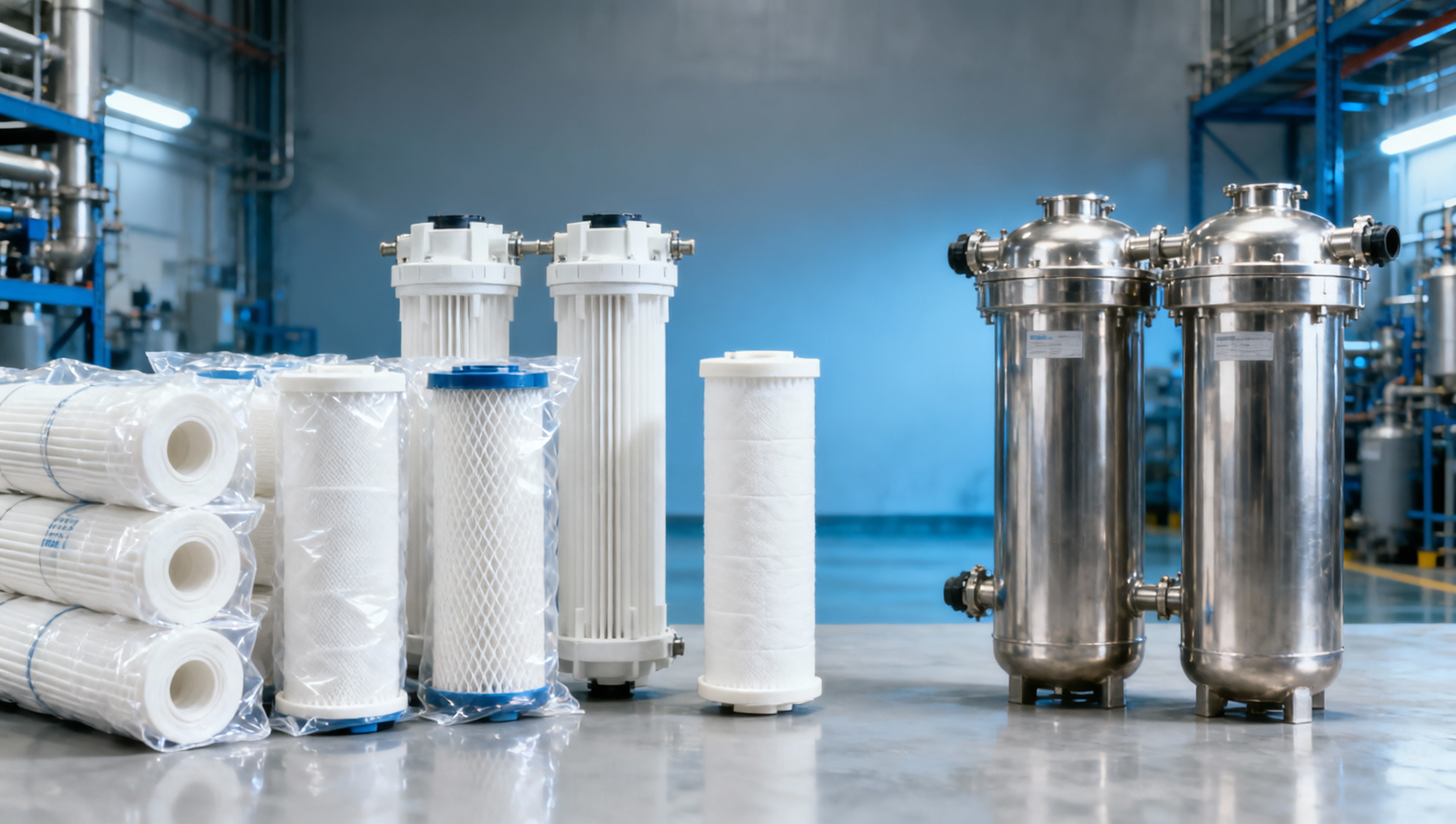
Industrial buyers often assess several water treatment components in the same procurement cycle. Yet each item behaves differently in storage, installation, and service life. Ion exchange resin bulk is sensitive to handling and feedwater chemistry. RO membrane elements require stricter preservation control, packaging integrity, and anti-oxidant compatibility. Wholesale FRP tanks are less chemically fragile in storage but depend heavily on correct pressure rating, nozzle configuration, and installation support. Industrial water softeners combine media, vessel, valve, and control logic into one system-level purchase.
This distinction matters because a procurement team may optimize one line item while increasing total project risk. For example, buying excess resin without matching tank availability or startup schedule can create warehouse exposure. Buying membranes too early can shorten preservation windows. Buying FRP tanks without confirming distributor specifications can delay commissioning by 2–4 weeks. A coordinated sourcing plan reduces these handoff failures.
For decision-makers, the practical question is not whether bulk buying is good or bad. It is whether the storage profile, installation sequence, and treatment design support the chosen volume. In many facilities, the strongest performance comes from synchronized procurement across resin, vessels, softening systems, and membrane pretreatment components.
Procurement comparison across key water treatment items
The following table highlights how common industrial water treatment products differ in storage sensitivity, turnover planning, and purchasing logic.
A balanced sourcing plan usually treats resin bulk buying as part of a sequence, not a standalone transaction. If vessels, pretreatment, and commissioning are not aligned, the project can absorb more hidden cost than the initial unit-price discount saves.
When bulk resin buying is usually more justified
- Annual replacement demand is stable across 2 or more treatment lines.
- The facility has a clean, temperature-controlled storage area and batch traceability.
- Pretreatment is reliable enough to avoid repeated fouling events.
- The expected consumption window is closer to 1–6 months rather than 12+ months.
Selection, handling, and implementation guidelines for industrial buyers
A disciplined procurement process starts with defining operating conditions rather than only comparing quotations. Buyers should document feedwater profile, regeneration chemistry, vessel dimensions, service flow requirements, backwash rates, and expected replacement intervals. For many industrial projects, four evaluation dimensions are essential: media compatibility, storage readiness, supplier packing consistency, and startup timing. Skipping any one of these can create avoidable risk.
Handling procedures should be standardized before the resin arrives. This includes pallet inspection, receiving checks, batch labeling, first-in-first-out rotation, and clean transfer tools. If packaging is damaged on receipt, the material should be quarantined for technical review instead of being mixed into usable stock. Small process controls at receiving can prevent large troubleshooting costs after loading.
Implementation should also account for vessel and pretreatment compatibility. FRP tanks must match process pressure and chemical exposure. Distributors and underdrain systems should support correct service and backwash hydraulics. If the plant uses industrial water softeners upstream, hardness control, brine system performance, and residual solids should be checked to prevent unnecessary loading on downstream equipment.
A practical 5-step sourcing and deployment workflow
- Confirm design basis: raw water variability, service flow, regeneration method, and vessel size.
- Set inventory target: typically align stock with a realistic 1–3 replacement cycles, not unlimited reserve.
- Audit storage conditions: clean area, sealed packaging, controlled temperature, pallet protection, and traceability.
- Coordinate adjacent equipment: RO membrane elements, FRP tanks, valves, and softener pretreatment timing.
- Commission with verification: backwash observation, pressure baseline, outlet quality trend, and early-cycle inspection.
Procurement checklist for decision-makers and operators
The checklist below can help align technical, purchasing, and operational teams before committing to larger resin orders.
In many cases, phased delivery can outperform a single large shipment. Buyers may give up a small pricing advantage but gain lower storage exposure, better cash flow control, and cleaner commissioning. For plants with variable demand, that tradeoff is often commercially sound.
Common questions from buyers, operators, and project teams
How much bulk resin inventory is usually reasonable?
A reasonable stock level depends on consumption predictability, lead time, and storage control. Many industrial facilities aim for coverage tied to 1 planned replacement plus limited contingency rather than purchasing multiple years of supply. If lead times are 4–8 weeks, a moderate reserve is often safer than a very large warehouse position.
Can poor storage conditions really affect fouling in service?
Yes. Poor storage does not always create fouling directly, but it can weaken media condition and increase vulnerability once the resin faces real feedwater stress. If the system also has iron carryover, organics, oxidant leakage, or solids upset, degraded storage discipline can accelerate capacity loss and performance instability.
What should operators inspect when loading new resin into FRP tanks?
Operators should verify underdrain condition, vessel cleanliness, distributor integrity, transfer cleanliness, and correct loading volume. They should also establish baseline pressure drop and monitor the first backwash and service cycles. Early observation during the first few operating days can reveal fines, maldistribution, or abnormal carryover before larger issues develop.
Is bulk buying still attractive if a plant also runs RO membrane systems?
It can be, but only when the pretreatment strategy is coordinated. If softening, cartridge filtration, oxidant control, and cleaning procedures are inconsistent, both resin and membrane life can suffer. Plants using hybrid treatment trains should assess resin bulk orders together with membrane replacement timing, pretreatment reliability, and startup sequencing.
Ion exchange resin bulk purchasing can deliver meaningful savings, but only when storage control, pretreatment reliability, and equipment coordination are strong enough to protect those savings. For industrial buyers evaluating ion exchange resin bulk alongside ro membrane elements, wholesale frp tanks, and industrial water softeners, the smarter strategy is to align inventory size with actual turnover, warehouse conditions, and system design.
Global Industrial Core supports industrial sourcing decisions with a practical focus on reliability, compatibility, and procurement clarity. If you need help comparing water treatment components, reviewing storage risks, or building a more resilient purchasing plan, contact us to get a tailored solution, discuss product details, or explore broader industrial water treatment options.
Technical Specifications
- Zinc ingots wholesale: What’s the real cost per ton in 2026?Author :Heavy Industry Strategist
- Aluminum ingots bulk vs. cast bars: Which delivers better yield for extrusion?Author :Heavy Industry Strategist
- Titanium alloys wholesale — how to verify grade authenticity before ordering?Author :Heavy Industry Strategist
Expert Insights

Chief Security Architect
Dr. Thorne specializes in the intersection of structural engineering and digital resilience. He has advised three G7 governments on industrial infrastructure security.
Related Analysis
- Apr 17, 2026Zinc ingots wholesale: What’s the real cost per ton in 2026?Author :Heavy Industry Strategist
- Apr 17, 2026Aluminum ingots bulk vs. cast bars: Which delivers better yield for extrusion?Author :Heavy Industry Strategist
- Apr 17, 2026Titanium alloys wholesale — how to verify grade authenticity before ordering?Author :Heavy Industry Strategist
Core Sector // 01
Security & Safety
- Steam traps wholesale: Which type fails least in condensate return lines with air binding?Author :Environmental Engineering Director

- Check valves (swing type): When does water hammer override disc stability?Author :Environmental Engineering Director
: When does water hammer override disc stability?")
- Cast iron gate valves: Are they still viable for potable water mains in 2026?Author :Environmental Engineering Director

- Grease interceptor wholesale options differ more in cleaning designAuthor :Environmental Engineering Director

- Polyaluminium chloride PAC dosage errors often start with pH assumptionsAuthor :Environmental Engineering Director

- Water filter cartridges wholesale quality varies in ways specs may missAuthor :Environmental Engineering Director

- RO membrane elements scale faster when pretreatment looks acceptableAuthor :Environmental Engineering Director

- Ion exchange resin bulk supply can create storage and fouling issuesAuthor :Environmental Engineering Director