Activated carbon filter vessel performance drops before media is exhausted
Author
Date Published
Reading Time
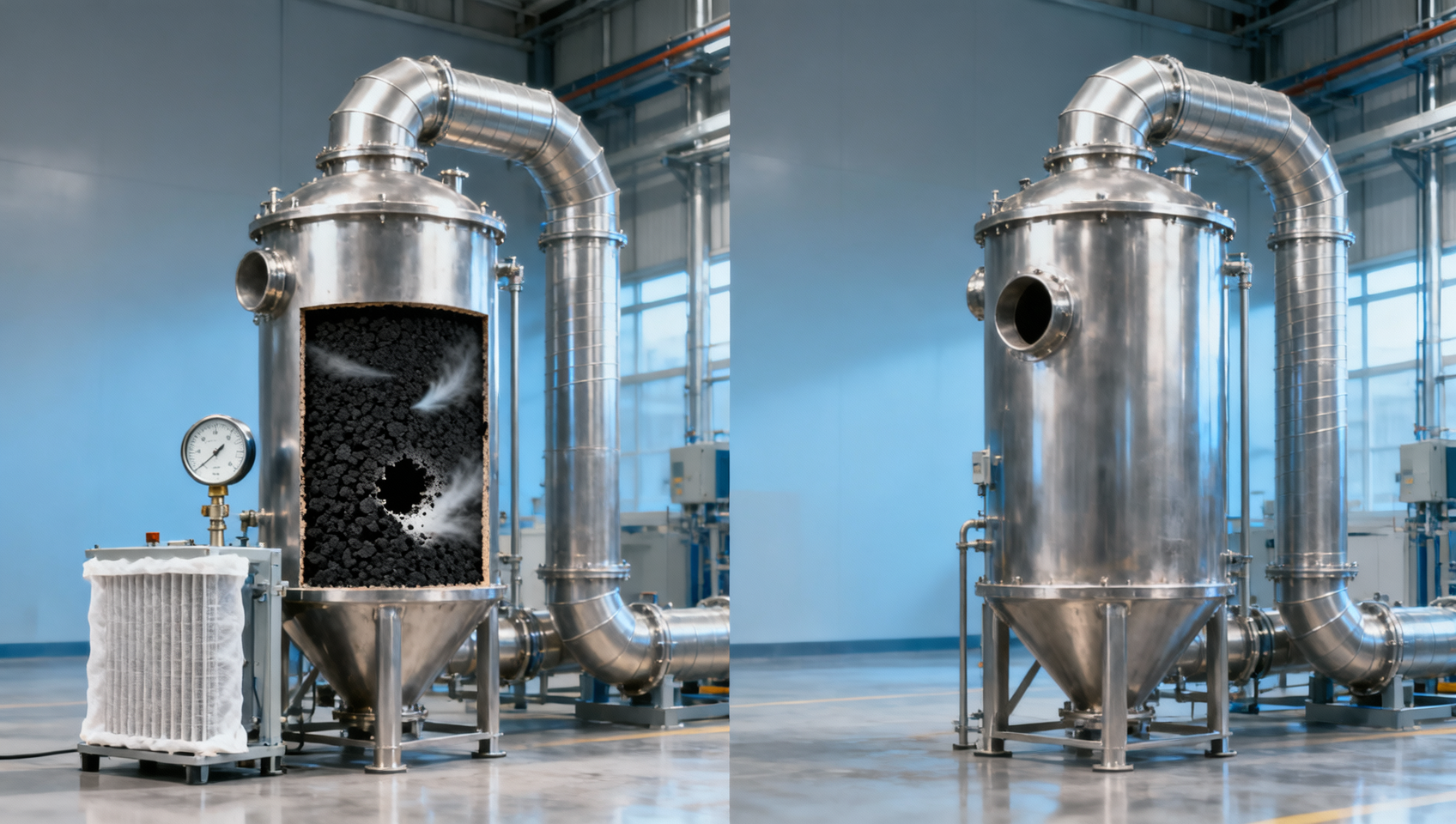
When an activated carbon filter vessel shows a performance drop before the media is fully exhausted, the issue often points to airflow imbalance, channeling, poor prefiltration, or mismatched system design rather than carbon capacity alone. For engineers, operators, and buyers evaluating activated carbon air filter systems, this guide explains the hidden causes, warning signs, and practical fixes that protect filtration efficiency and operating cost.
In industrial air treatment, early performance decline is rarely a simple “replace the carbon” problem. It often signals a deeper issue in vessel geometry, bed depth, residence time, contaminant loading, humidity control, or maintenance discipline. For EPC teams, facility managers, and procurement leaders, identifying the true failure mode can prevent repeated media change-outs, production risk, and unnecessary operating expense.
This article focuses on activated carbon filter vessel performance in real B2B operating environments, including process exhaust treatment, odor control, VOC reduction, corrosion protection, and indoor air quality support in industrial facilities. The goal is practical: help decision-makers distinguish media exhaustion from system underperformance, and improve vessel reliability through better design, operation, and sourcing.
Why Performance Can Fall Before the Carbon Bed Is Truly Spent
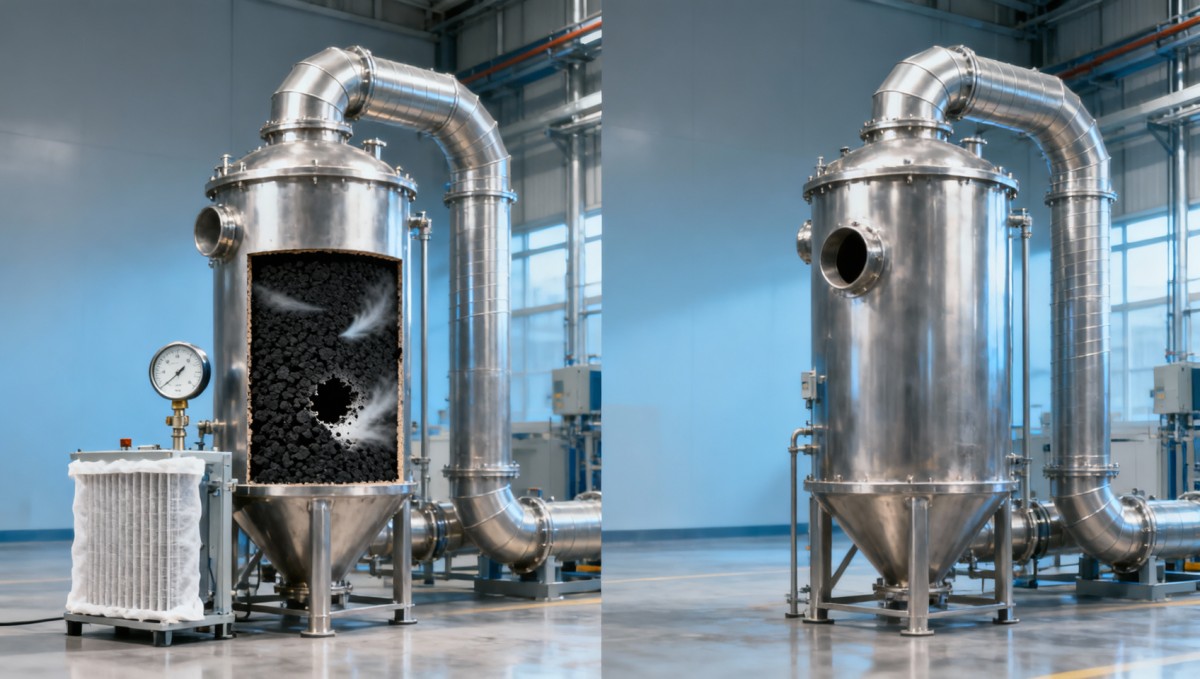
Activated carbon works through adsorption, and its actual field performance depends on more than total carbon mass. A vessel may still contain usable adsorption capacity, yet show breakthrough because contaminated air is not moving evenly through the bed. In many industrial systems, even a 10% to 20% airflow maldistribution can create localized overloading that causes early odor leakage or VOC escape at the outlet.
One of the most common causes is channeling. Instead of passing uniformly through the full bed depth, air finds lower-resistance paths. This can happen when the bed settles unevenly, when distributor design is weak, or when vibration alters packing density over time. If only 60% to 70% of the bed volume is being effectively used, the vessel may appear exhausted long before the media actually reaches full adsorption saturation.
Another frequent issue is insufficient contact time, often expressed as empty bed contact time, or EBCT. For many industrial odor and VOC control applications, practical EBCT ranges often fall between 0.1 and 0.3 seconds for lighter polishing duties and 0.5 to 2.0 seconds for more demanding contaminant loads. If system airflow increases beyond design values, the carbon bed may lose capture efficiency even with fresh media installed.
Humidity, temperature, and contaminant chemistry also change vessel behavior. High relative humidity, often above 70%, can occupy adsorption sites and reduce carbon effectiveness for some organic compounds. Fine aerosols, oils, or sticky particulates can blind the bed surface and raise pressure drop. In these conditions, the vessel does not fail because the carbon is “used up”; it fails because access to the active surface has been reduced.
Procurement teams should note that identical vessel sizes do not guarantee identical performance. Carbon grade, pellet or granule size, bed depth, support screen design, and inlet distribution all affect results. Two systems with the same nominal airflow of 5,000 m³/h can show very different service life if one has poor prefiltration or a shallow bed.
Typical Root Causes Behind Early Breakthrough
- Airflow exceeds design rate by 15% to 30%, reducing residence time below the required adsorption window.
- Bed settling creates voids or sidewall bypass, especially after transport, vibration, or irregular refill practices.
- Prefilters are undersized, allowing dust above 1–5 microns to load the carbon surface prematurely.
- Moisture carryover or condensation changes adsorption behavior and blocks usable pore volume.
- Contaminant spikes are higher than expected, such as solvent peaks during batch processing or maintenance events.
Early Warning Signs Operators Should Not Ignore
Operators often first notice odor return, rising outlet VOC readings, corrosion complaints downstream, or unstable differential pressure. A sudden change in one week is usually linked to a process upset, while a gradual decline across 4 to 12 weeks may point to loading imbalance, media settling, or poor maintenance control.
If outlet concentration rises while pressure drop remains low, bypass or channeling is more likely than full-bed saturation. If both outlet contamination and pressure drop rise together, particulate fouling or moisture loading becomes a stronger suspect. This distinction matters because replacing carbon without correcting the root cause often leads to the same failure cycle.
How to Diagnose the Real Problem in an Activated Carbon Filter Vessel
A disciplined diagnosis starts with measuring actual operating conditions rather than relying on nameplate assumptions. In industrial environments, system airflow can drift by 5% to 25% due to fan changes, duct restrictions, seasonal temperature shifts, or process expansion. If the vessel was designed for 3,000 m³/h but is now handling 3,800 m³/h, reduced EBCT may fully explain early performance loss.
Field teams should compare inlet concentration, outlet concentration, pressure drop, humidity, and temperature over time. A minimum trend window of 2 to 4 weeks is useful, and in variable processes, daily snapshots at fixed production intervals provide a better picture than a single inspection reading. This is especially important where VOC levels fluctuate during startup, cleaning cycles, or shift changes.
Bed inspection is equally important. If safe isolation procedures permit, technicians should check for uneven settling, crusting, moisture pockets, or discoloration patterns. Distinct clean zones and heavily loaded zones within the same bed often indicate channeling or poor inlet distribution. In vertical vessels, support plate integrity and hold-down arrangement can also affect flow uniformity.
Sampling the carbon from multiple depths can help distinguish surface fouling from full-depth exhaustion. If top-layer samples are heavily loaded while lower layers retain substantial capacity, the issue may be prefiltration failure or inadequate contaminant conditioning. This finding can save cost by preventing a redesign based only on media volume.
Diagnostic Priorities for Engineering and Operations Teams
The table below summarizes practical checks that can be completed during troubleshooting. It is designed for facilities that need to quickly identify whether the problem is process-related, vessel-related, or media-related.
The key takeaway is that diagnosis should connect process data with physical bed condition. Replacing media based only on runtime hours is risky. A vessel that lasts 9 months in one line may fail in 3 months on another line with higher humidity, inconsistent loading, or poor particulate control.
A Practical 5-Step Troubleshooting Sequence
- Confirm actual airflow, static pressure, and fan condition.
- Record inlet and outlet contaminant levels across at least 3 operating periods.
- Inspect prefilters, demisters, and moisture management components.
- Check carbon bed condition for settling, voids, and uneven loading.
- Compare observed conditions with original design assumptions for EBCT and contaminant profile.
This sequence helps buyers and operators avoid the common mistake of ordering more carbon when the true corrective action may be flow balancing, distributor modification, or prefiltration upgrade.
Design and Operating Factors That Most Strongly Affect Service Life
Several design variables have a direct influence on whether an activated carbon filter vessel performs consistently over its expected service interval. Bed depth is one of the most important. A deeper bed generally improves contaminant capture and increases usable mass transfer zone, but only if pressure drop remains manageable and airflow distribution is controlled. In many industrial systems, bed depths of 300 mm to 900 mm are common, while severe-duty applications may require deeper configurations.
Carbon particle size also matters. Smaller granules can provide better surface access but may increase pressure drop and become more sensitive to dust loading. Larger pellets may improve airflow but reduce adsorption kinetics for some compounds. Selection should match contaminant type, required pressure drop, and maintenance capacity, not just unit price per kilogram.
Inlet air conditioning is another major variable. If the process stream includes aerosols, condensable organics, or intermittent moisture spikes, a vessel without proper prefiltration, mist elimination, or temperature control will struggle. For example, a system processing warm exhaust that cools below dew point in ducting can introduce condensation into the carbon bed, sharply reducing effective life.
System design should also account for contaminant profile stability. Carbon selected for low-level solvent polishing may not perform well if occasional peaks are 3 to 5 times higher than baseline. In these conditions, a staged approach with pre-treatment or multiple vessels in series may provide a better life-cycle cost than a single oversized bed.
Key Design Variables and Their Operational Impact
The table below outlines common design and operation factors that affect early performance decline. It can support specification reviews during project design, retrofits, or procurement comparisons.
For buyers, the main lesson is that vessel service life must be evaluated as a system outcome rather than a media-only number. A low-cost vessel with limited distribution control can create repeated carbon replacement costs that exceed the initial equipment savings within 6 to 12 months.
Common Design Mistakes in Industrial Projects
- Specifying by nominal airflow only, without verifying contaminant concentration range and peak loading events.
- Ignoring humidity and dew point behavior in seasonal or batch-operated facilities.
- Using one generic carbon grade for mixed contaminants with different adsorption characteristics.
- Underestimating the need for even inlet distribution and bed retention design in large vertical vessels.
Where reliability is critical, design reviews should include at least 4 dimensions: contaminant profile, airflow stability, prefiltration strategy, and maintenance accessibility. These factors strongly influence real-world performance and cost per treated cubic meter.
Procurement and Specification Guidance for Buyers and Decision-Makers
Industrial procurement teams often receive quotations that emphasize vessel size, carbon fill weight, and headline airflow. Those metrics are useful, but they are not enough. Purchasing decisions should examine whether the supplier has matched the vessel design to the actual contaminant mix, target removal efficiency, maintenance interval, and site operating variability.
A practical RFQ should ask for at least 6 technical details: design airflow, expected EBCT, bed depth, carbon type, prefiltration recommendation, and allowable pressure drop range. Without these points, it becomes difficult to compare bids on true technical value. A lower unit price may hide a vessel that needs 2 or 3 extra media changes per year.
Decision-makers should also evaluate serviceability. Media replacement time, inspection access, pressure drop monitoring points, and safe isolation procedures affect total operating cost. If a vessel takes 8 hours and multiple confined-space precautions to service, this cost belongs in the purchasing analysis. For multi-vessel systems, modularity and bypass flexibility can reduce downtime significantly.
For global projects, buyers should align technical specification with applicable material, fabrication, and safety expectations. Even when exact certifications vary by region, consistent documentation on construction materials, corrosion resistance, sealing integrity, and inspection points supports better commissioning and long-term asset performance.
Buyer Evaluation Matrix for Activated Carbon Vessel Projects
The following matrix can help procurement teams compare suppliers on performance-related factors rather than headline pricing alone.
A disciplined buying process should also consider replacement media logistics, lead time, and technical support. In many industrial projects, standard vessel lead times may range from 4 to 10 weeks, while specialty media or custom internals can extend schedules. Early coordination reduces startup risk and unplanned procurement under emergency conditions.
RFQ Questions That Improve Supplier Comparability
- What EBCT was used in the proposed sizing basis?
- How is airflow distributed across the full vessel cross-section?
- What prefiltration level is recommended for this contaminant profile?
- What pressure drop range is expected at clean and loaded conditions?
- How should carbon be monitored and sampled during service life?
These questions move procurement discussions from “How much carbon is inside?” to “How reliably will this vessel perform over the next operating cycle?” That shift is often where better purchasing decisions begin.
Corrective Actions, Maintenance Strategy, and Practical FAQ
Once the root cause is identified, corrective action should be matched to the actual failure mode. If the problem is airflow overload, rebalance the system, review fan settings, or increase vessel capacity. If the issue is channeling, inspect the internals, level the bed, and verify refill procedures. If moisture or particulate loading is the driver, improve prefiltration, install mist removal, or control upstream temperature and condensation points.
Maintenance strategy should be condition-based wherever possible. Instead of fixed replacement at arbitrary 3-month or 6-month intervals, facilities benefit from monitoring outlet quality, differential pressure, and process changes. A simple review cadence of monthly operating data plus quarterly physical inspection can significantly improve media utilization and reduce premature replacement.
For critical operations such as electronics manufacturing support, chemical handling, wastewater odor control, or corrosion-sensitive instrument rooms, redundancy should be considered. Duplex or staged vessel arrangements allow one unit to remain online during service, protecting uptime while supporting better diagnostic control.
From a life-cycle perspective, the best-performing activated carbon filter vessel is not necessarily the one with the lowest purchase price. It is the one that sustains removal performance, minimizes unplanned shutdowns, and allows predictable service intervals under real plant conditions.
Maintenance Actions That Deliver the Fastest Improvement
- Verify airflow quarterly and after any fan, duct, or process modification.
- Replace or upgrade prefilters before dust carryover reaches the carbon bed.
- Inspect for condensation and insulation gaps during seasonal temperature swings.
- Record outlet readings at the same production stage each week for trend quality.
- Review bed settling and refill method after transport, vibration events, or media replacement.
FAQ: What buyers and operators ask most often
How do I know whether the carbon is actually exhausted?
Do not rely only on service hours. Compare inlet and outlet readings, inspect pressure drop trends, and where possible sample carbon at multiple bed depths. If only the top layer is heavily loaded while lower layers remain active, the problem is likely uneven utilization rather than complete exhaustion.
Can higher carbon fill weight alone solve early breakthrough?
Not always. More media helps only if the full bed is being used effectively. If the system has channeling, high humidity, or poor prefiltration, adding 20% more carbon may deliver little improvement compared with correcting distribution or upstream conditioning.
What operating data should be tracked every month?
At minimum track airflow, pressure drop, inlet condition, outlet condition, humidity, and major process deviations. Six consistent data points often provide enough visibility to separate normal media aging from design or maintenance problems.
When is a system redesign better than repeated media replacement?
If the vessel repeatedly underperforms despite fresh media, and service life is less than half of the original expectation, a redesign review is justified. Typical triggers include frequent flow excursions, contaminant peaks 3x above design, or persistent moisture and particulate carryover.
Activated carbon filter vessel performance drops before media exhaustion are usually symptoms of a broader system mismatch. The most effective response is a structured review of airflow, contact time, bed condition, contaminant loading, and prefiltration performance. For industrial operators, engineers, and sourcing teams, that approach protects both filtration efficiency and total cost of ownership.
If your facility is evaluating an activated carbon air filter system, upgrading an existing vessel, or troubleshooting repeated breakthrough, Global Industrial Core can support your decision process with practical technical guidance and sourcing insight. Contact us to discuss your application, request a tailored specification checklist, or explore more industrial air filtration solutions.
Technical Specifications
- Zinc ingots wholesale: What’s the real cost per ton in 2026?Author :Heavy Industry Strategist
- Aluminum ingots bulk vs. cast bars: Which delivers better yield for extrusion?Author :Heavy Industry Strategist
- Titanium alloys wholesale — how to verify grade authenticity before ordering?Author :Heavy Industry Strategist
Expert Insights

Chief Security Architect
Dr. Thorne specializes in the intersection of structural engineering and digital resilience. He has advised three G7 governments on industrial infrastructure security.
Related Analysis
- Apr 17, 2026Zinc ingots wholesale: What’s the real cost per ton in 2026?Author :Heavy Industry Strategist
- Apr 17, 2026Aluminum ingots bulk vs. cast bars: Which delivers better yield for extrusion?Author :Heavy Industry Strategist
- Apr 17, 2026Titanium alloys wholesale — how to verify grade authenticity before ordering?Author :Heavy Industry Strategist
Core Sector // 01
Security & Safety
- Steam traps wholesale: Which type fails least in condensate return lines with air binding?Author :Environmental Engineering Director

- Check valves (swing type): When does water hammer override disc stability?Author :Environmental Engineering Director
: When does water hammer override disc stability?")
- Cast iron gate valves: Are they still viable for potable water mains in 2026?Author :Environmental Engineering Director

- Grease interceptor wholesale options differ more in cleaning designAuthor :Environmental Engineering Director

- Polyaluminium chloride PAC dosage errors often start with pH assumptionsAuthor :Environmental Engineering Director

- Water filter cartridges wholesale quality varies in ways specs may missAuthor :Environmental Engineering Director

- RO membrane elements scale faster when pretreatment looks acceptableAuthor :Environmental Engineering Director

- Ion exchange resin bulk supply can create storage and fouling issuesAuthor :Environmental Engineering Director