Automatic self cleaning filter choices depend on solids shape, not size only
Author
Date Published
Reading Time
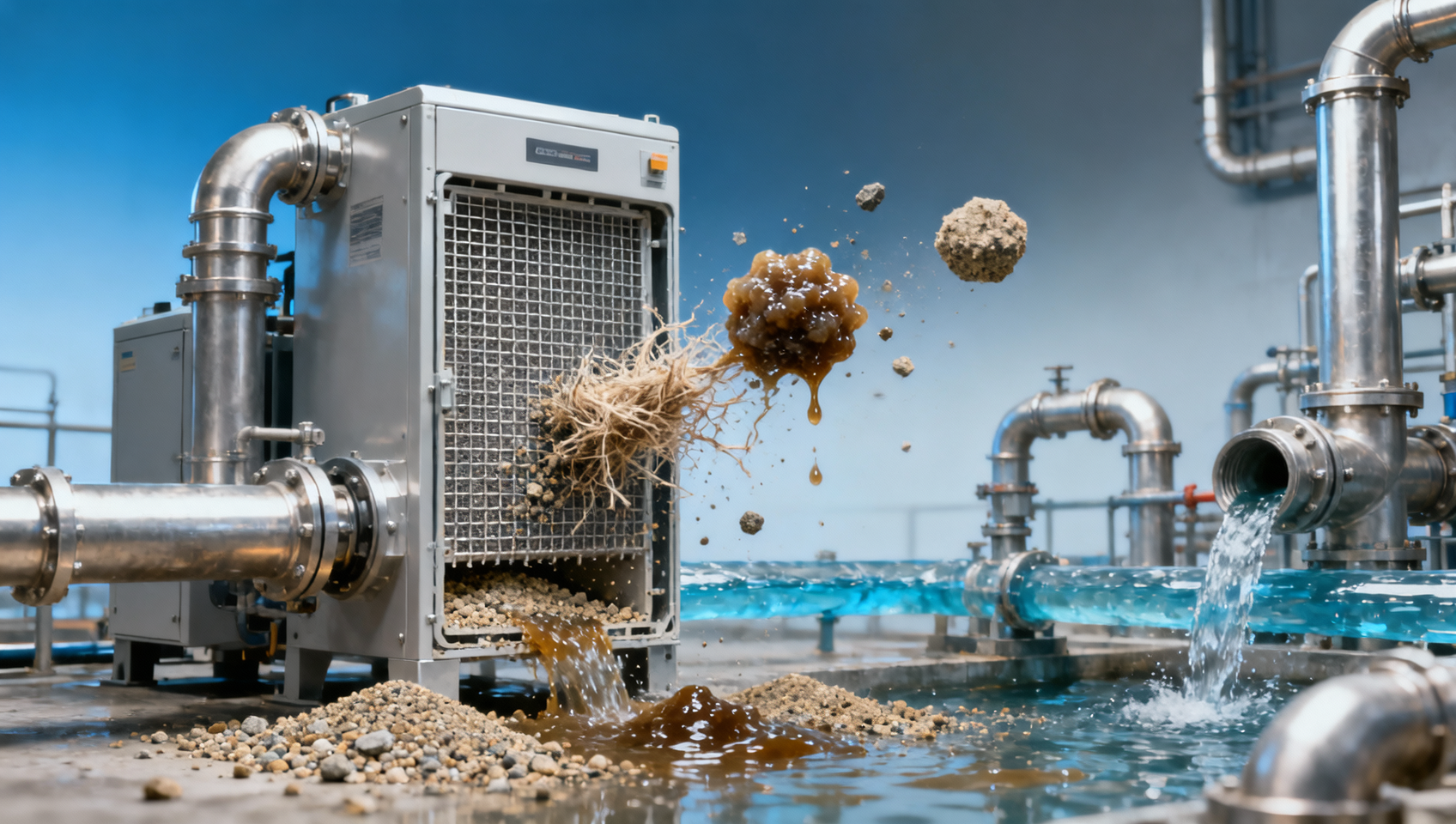
When selecting an automatic self cleaning filter, many buyers focus only on particle size, but solids shape often determines real filtration performance, pressure stability, and maintenance frequency. For engineers, operators, and procurement teams in water treatment and industrial process systems, understanding how irregular, fibrous, or sticky contaminants behave is essential to choosing a reliable automatic self cleaning filter that protects equipment and lowers operating risk.
In industrial water loops, cooling circuits, pretreatment lines, wastewater reuse systems, and process fluid applications, two contaminants with the same nominal size can behave very differently. A 200-micron sand grain may pass or be discharged predictably, while a 200-micron fiber can bridge openings, compress into a mat, and trigger repeated cleaning cycles. That difference affects pump load, differential pressure, cleaning water consumption, and the true service life of screens and seals.
For procurement teams, this means filter selection should not stop at micron rating. For operators, it means recurring alarms, unstable flow, or excessive flush frequency may stem from solids geometry rather than poor equipment quality. For decision-makers, matching filtration technology to contaminant shape can reduce unplanned downtime, extend maintenance intervals from weekly to monthly in some systems, and improve total cost predictability over 12 to 36 months of operation.
Why solids shape changes filtration outcomes in real industrial systems
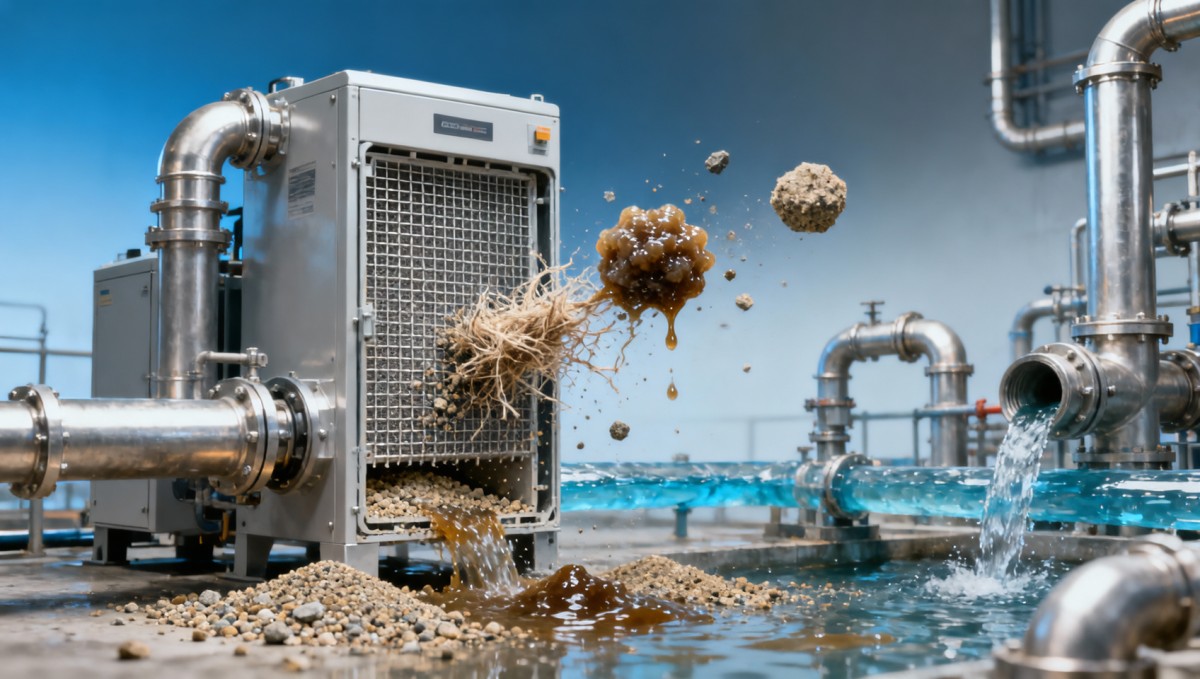
In practice, automatic self cleaning filter performance depends on how particles interact with the filter surface during both capture and discharge. Rounded solids such as sand, scale granules, or metal fines tend to roll, settle, and release more easily. Elongated solids, however, can align across screen slots, increasing the chance of bridging. Sticky organics can smear onto the screen surface, reducing open area faster than their nominal particle size suggests.
This matters because a filter rated at 100 to 500 microns may perform consistently with granular solids but struggle with fibers, algae, pulp fragments, biofilm clusters, or soft sludge. In those cases, the issue is not whether the opening is small enough, but whether the self-cleaning mechanism can remove the captured solids before pressure loss rises above the normal trigger band, often around 0.3 to 0.7 bar depending on system design.
Another factor is compressibility. Hard particles maintain their shape under pressure, while soft contaminants flatten and pack into screen openings. This can create a false sense of oversizing the filter because operators see a low nominal micron rating but still experience rapid fouling. In many process plants, the real challenge is not initial capture efficiency but stable cleaning repeatability over 24-hour, 7-day duty cycles.
Flow pattern also amplifies the effect of solids shape. At velocities of 1.5 to 3.0 m/s, rigid particles may stay suspended and pass toward the cleaning zone efficiently. Fibrous or sheet-like solids can tumble, wrap, or attach unevenly, especially in systems with fluctuating load, intermittent inflow, or variable solids concentration. That behavior can turn a theoretically suitable filter into a maintenance-intensive asset.
Three common solids behavior categories
- Rigid granular solids: sand, rust flakes, hard scale, catalyst fines. These usually respond well to standard screen flushing and predictable differential pressure control.
- Fibrous or stringy solids: plant fibers, hair-like debris, pulp remnants, textile fibers. These often bridge across openings and require more robust cleaning geometry.
- Soft or sticky solids: biofilm, grease-laden sludge, organic agglomerates. These may smear, compress, and resist full removal during a short backwash cycle.
A practical selection process should classify contaminants by at least four dimensions: size, shape, hardness, and adhesiveness. Plants that assess only one of these variables often underestimate cleaning frequency and overestimate stable throughput. For B2B buyers managing uptime-sensitive assets, this is a critical shift from buying by micron number to buying by solids behavior profile.
Matching automatic self cleaning filter design to contaminant shape
Different automatic self cleaning filter designs handle different solids profiles. A suction scanner design may perform efficiently on hard suspended solids with moderate loading. A brush-assisted system may be better where soft fouling layers build on the screen. Some wedge wire or slot-based configurations are more tolerant of fibrous material than fine mesh screens, especially when the cleaning path is designed to avoid dead zones.
Housing orientation and discharge path matter as much as screen media. Vertical bodies can help gravity-assisted solids release in applications with dense particles. Horizontal arrangements may be suitable where installation space is limited, but they require careful review of sludge collection and flush velocity. In systems with 2% to 5% peak solids loading during upset conditions, poor discharge geometry can be the difference between autonomous cleaning and manual intervention every shift.
Control logic is another design variable. Filters triggered only by timer-based cleaning may work in stable cooling water service but perform poorly in wastewater reuse or intake water systems with variable debris loads. Differential-pressure-triggered cleaning combined with a time override is often more reliable because it responds to real fouling conditions while preventing long idle periods that can allow solids to cake.
The table below summarizes how solids shape should influence design preference. The ranges are general engineering guidance and should be validated against actual flow, viscosity, pressure envelope, and contaminant testing where possible.
The main takeaway is that “finer” is not always “better.” In systems handling fibrous or adhesive contaminants, reducing the micron rating without redesigning the cleaning method can increase flush frequency, raise wear on moving parts, and reduce available flow. The better procurement decision is to align screen type, cleaning method, and discharge design with the actual solids shape profile.
Key design questions for buyers and engineers
- Is the contaminant mostly rigid, fibrous, or sticky during normal operation and upset events?
- Does solids loading stay below 500 ppm, or does it spike during seasonal, cleaning, or startup conditions?
- Is pressure stability more important than peak filtration fineness for downstream equipment protection?
- Can the filter clean effectively within 10 to 30 seconds without excessive reject water loss?
Selection criteria for operators, procurement teams, and decision-makers
An effective automatic self cleaning filter selection process starts with operational evidence, not catalog assumptions. Operators should review at least 2 to 4 weeks of trend data where available: pressure drop, cleaning interval, pump amperage changes, seasonal debris variation, and any downstream fouling events. Procurement should then compare suppliers on cleaning principle, screen material, control architecture, spare parts availability, and maintenance accessibility.
Decision-makers often focus on purchase price, but total cost is shaped by water loss, energy stability, labor time, and outage avoidance. A lower-cost filter that requires manual cleaning twice per week may carry a higher 12-month operating burden than a more suitable unit with quarterly inspection only. In critical utilities, the cost of a single pump seal failure or heat exchanger fouling event can exceed the savings of buying the wrong filtration design.
Material compatibility should also be reviewed carefully. Carbon steel bodies may be acceptable in some closed-loop industrial services, while stainless steel is often preferred for corrosive water, coastal exposure, or chemically treated streams. For seals and internal moving parts, temperature bands such as 5°C to 60°C or 60°C to 90°C can influence elastomer choice, wear rate, and cleaning reliability.
The following table provides a practical procurement framework that teams can use during technical clarification and vendor comparison.
For cross-functional teams, it is useful to score each candidate across 4 core dimensions: separation suitability, cleaning reliability, maintainability, and supply assurance. A simple 1-to-5 scoring matrix can expose where a technically attractive option may underperform in service support or spare part continuity. This is especially important for EPC projects and multi-site industrial groups that standardize components across regions.
A practical 5-step selection workflow
- Collect solids samples from normal and upset conditions, not from a single clean day.
- Classify contaminants by shape, hardness, and stickiness in addition to micron range.
- Match screen type and cleaning mechanism to the contaminant profile and target flow rate.
- Review maintenance steps, spare availability, and actuator or control requirements.
- Confirm commissioning support, acceptance criteria, and operator training scope before purchase.
Application scenarios, operating risks, and common selection mistakes
In cooling water systems, solids are often a mix of sand, rust, biofilm fragments, and seasonal organics. During dry months, the dominant concern may be hard suspended particles. During rainy or algae-heavy periods, the same automatic self cleaning filter may face light but fibrous contamination that behaves very differently. This is why filters sized only for average particle diameter often underperform during 2 to 3 months of peak debris season.
In industrial process water and pretreatment lines, irregular polymer residue, soft scale, and coagulated organics can create rapid screen blinding. Operators may assume the solution is a larger body size or a finer screen, but the real fix may be a different cleaning principle, a staged filtration approach, or an upstream change to reduce agglomeration. A poorly matched unit can cycle too often, causing unstable downstream pressure and unnecessary reject water losses.
Wastewater reuse systems introduce another challenge: solids shape can change throughout the day. Early shift washdown, batch dumping, or chemical dosing can alter whether contaminants arrive as flakes, fibers, or sticky clusters. In these environments, a filter should be selected for the worst credible solids condition rather than the neatest laboratory sample. A 20-minute stable run during testing is less meaningful than a full shift under variable loading.
One of the most common mistakes is specifying a screen opening based solely on downstream equipment tolerance. That is important, but it must be balanced against cleanability. If the process requires 100-micron protection but solids are long and fibrous, a single-stage automatic self cleaning filter may need support from upstream coarse separation, strainers, or process changes to remain reliable.
Frequent mistakes that increase operating risk
- Using nominal particle size as the only basis for selection while ignoring particle shape and compressibility.
- Choosing the finest available screen without checking whether the self-cleaning cycle can clear sticky or fibrous deposits.
- Assuming one solids sample represents the full annual operating profile, despite seasonal or batch variation.
- Overlooking reject handling, drain sizing, and flush discharge capacity during cleaning events.
Risk control measures before final specification
Before issuing a purchase order, many industrial teams benefit from a short validation checklist. Review solids morphology, expected concentration range, design flow in m3/h, normal and maximum pressure, acceptable cleaning water loss, and maintenance window frequency. If possible, request a recommendation based on actual solids description or photos, not only a target micron value.
Where contamination is uncertain, conservative engineering often means allowing for inspection ports, manual override capability, and easier screen access. These features may add some upfront cost, but they significantly reduce the risk of extended manual cleaning events during commissioning or seasonal process changes.
Implementation, maintenance planning, and support expectations
A suitable automatic self cleaning filter still needs correct installation and support planning. Piping layout should minimize turbulence entering the unit, and drain lines must be sized to evacuate solids efficiently during each flush. Commissioning should verify baseline differential pressure, cleaning trigger setpoint, actuator function, and cycle response under actual process flow. In many facilities, the first 7 to 14 days are critical for tuning.
Maintenance planning should reflect solids behavior. Hard mineral solids mainly drive abrasion, so periodic inspection of screen wear and moving seals is important. Fibrous or sticky contaminants demand closer attention to cleaning path integrity, scanner movement, or brush condition. A practical maintenance schedule may include weekly trend review, monthly visual inspection, and seal or wear-part checks every 6 to 12 months depending on service severity.
For procurement and plant management, after-sales support is not a soft issue. It affects restart speed, spare planning, and operational continuity. Buyers should confirm whether commissioning guidance, spare kits, exploded drawings, maintenance instructions, and troubleshooting support are available. Lead times of 2 to 6 weeks for consumables may be acceptable in some plants, but critical utilities often require local stocking or strategic spare holding.
The final objective is not just to install a filter that captures particles. It is to secure a stable, low-intervention filtration function that protects downstream assets while fitting the plant’s maintenance capability. When solids shape is properly considered, the result is usually fewer nuisance alarms, more predictable cleaning intervals, and better lifecycle value across the entire industrial system.
FAQ for industrial buyers and end users
How do I know if solids shape is the real problem in my filtration system?
If your filter has the correct nominal micron rating but still shows rapid pressure rise, incomplete cleaning, or frequent manual intervention, solids shape may be the root issue. Look for symptoms such as uneven fouling, fibrous mats on the screen, sticky deposits, or performance changes tied to season, batch, or washdown events.
Can one automatic self cleaning filter handle mixed solids?
Often yes, but only within a defined operating envelope. Mixed solids systems usually require more conservative sizing, flexible control logic, and careful selection of cleaning mechanism. If rigid particles and sticky organics coexist, a supplier should explain how the unit maintains cleaning reliability during both low-load and peak-load conditions.
What should procurement teams request from suppliers?
At minimum, request recommended application range, screen type, cleaning cycle description, pressure and temperature limits, materials of construction, spare parts list, and maintenance steps. It is also useful to ask what solids types the design handles poorly, because that answer reveals whether the recommendation is realistic for your service.
Selecting an automatic self cleaning filter by micron size alone leaves too much risk in demanding industrial service. Solids shape influences bridging, blinding, cleaning efficiency, pressure stability, and maintenance frequency just as strongly as particle size. For engineers, operators, procurement specialists, and business leaders, the best results come from evaluating contaminant behavior, matching filter design to that behavior, and confirming maintenance and support requirements early in the buying process.
If your project involves complex water treatment or process filtration conditions, a more precise solids-based review can prevent costly misselection. Contact Global Industrial Core to discuss your operating scenario, compare filtration options, and obtain a solution-oriented recommendation tailored to your flow conditions, contaminant profile, and procurement priorities.
Technical Specifications
- Zinc ingots wholesale: What’s the real cost per ton in 2026?Author :Heavy Industry Strategist
- Aluminum ingots bulk vs. cast bars: Which delivers better yield for extrusion?Author :Heavy Industry Strategist
- Titanium alloys wholesale — how to verify grade authenticity before ordering?Author :Heavy Industry Strategist
Expert Insights

Chief Security Architect
Dr. Thorne specializes in the intersection of structural engineering and digital resilience. He has advised three G7 governments on industrial infrastructure security.
Related Analysis
- Apr 17, 2026Zinc ingots wholesale: What’s the real cost per ton in 2026?Author :Heavy Industry Strategist
- Apr 17, 2026Aluminum ingots bulk vs. cast bars: Which delivers better yield for extrusion?Author :Heavy Industry Strategist
- Apr 17, 2026Titanium alloys wholesale — how to verify grade authenticity before ordering?Author :Heavy Industry Strategist
Core Sector // 01
Security & Safety
- Steam traps wholesale: Which type fails least in condensate return lines with air binding?Author :Environmental Engineering Director

- Check valves (swing type): When does water hammer override disc stability?Author :Environmental Engineering Director
: When does water hammer override disc stability?")
- Cast iron gate valves: Are they still viable for potable water mains in 2026?Author :Environmental Engineering Director

- Grease interceptor wholesale options differ more in cleaning designAuthor :Environmental Engineering Director

- Polyaluminium chloride PAC dosage errors often start with pH assumptionsAuthor :Environmental Engineering Director

- Water filter cartridges wholesale quality varies in ways specs may missAuthor :Environmental Engineering Director

- RO membrane elements scale faster when pretreatment looks acceptableAuthor :Environmental Engineering Director

- Ion exchange resin bulk supply can create storage and fouling issuesAuthor :Environmental Engineering Director