Industrial water softeners sized by flow alone often miss the real load
Author
Date Published
Reading Time
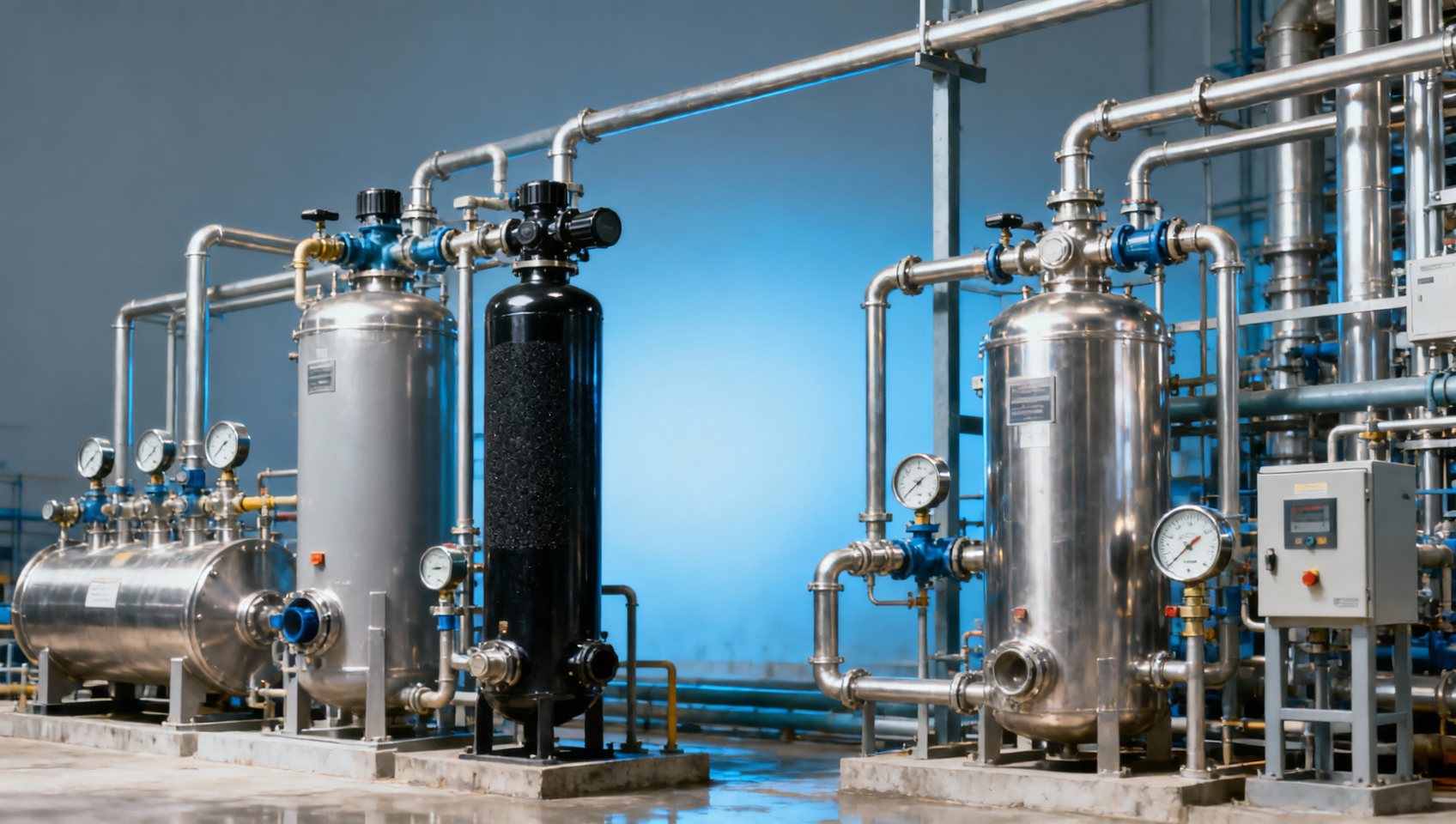
Many industrial water softeners are selected by peak flow, yet real performance depends on hardness load, regeneration strategy, resin capacity, and upstream filtration. For engineers, operators, buyers, and decision-makers comparing industrial water softeners, activated carbon filter vessel setups, multimedia sand filter options, or automatic self cleaning filter systems, understanding the true load profile is the key to preventing scale, downtime, and avoidable operating costs.
In industrial utilities, a system that looks adequate on a nameplate can still underperform once the plant runs 16 to 24 hours per day, feedwater hardness fluctuates, and production schedules create uneven demand. A softener sized only by m³/h or gpm may hit flow targets for a short window, but still regenerate too often, leak hardness at critical times, or consume excess salt and water.
That is why serious evaluation should move beyond nominal flow and into total hardness load, service cycle length, resin working capacity, pressure loss, pretreatment quality, and regeneration logic. For B2B buyers and plant teams, this approach supports more reliable procurement decisions and lowers lifecycle cost rather than simply minimizing upfront equipment size.
Why peak flow is not the same as real softening demand
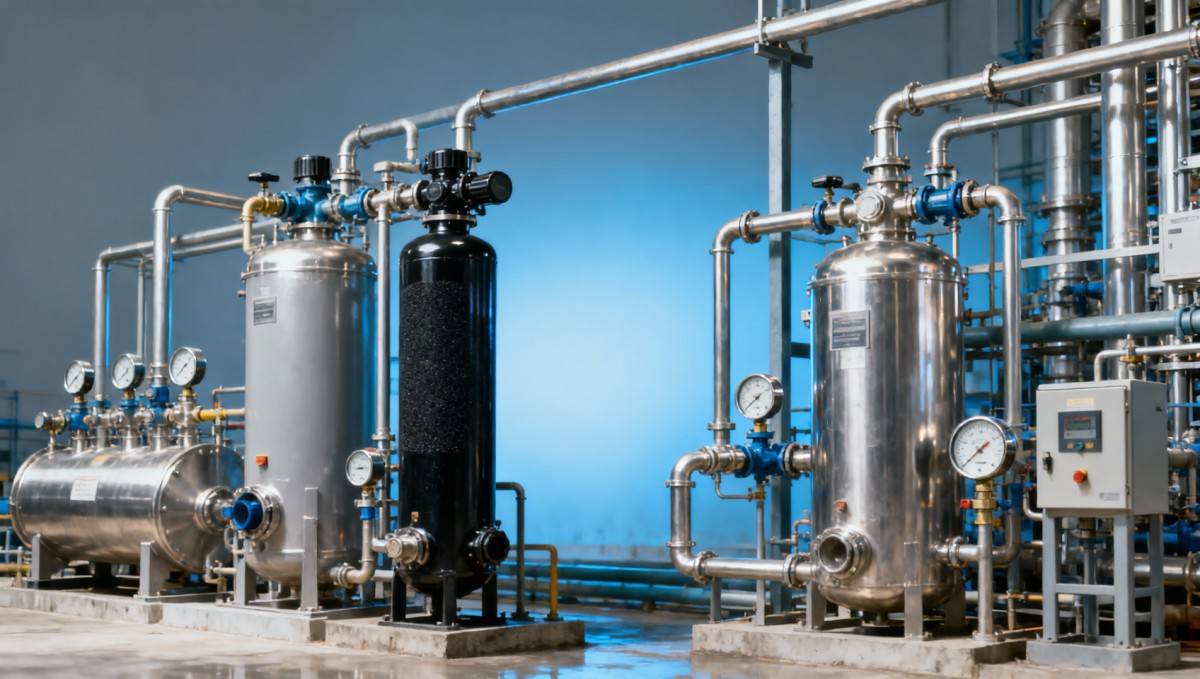
Industrial water softeners remove calcium and magnesium ions by exchanging them with sodium ions in resin beds. The true design driver is not just instantaneous flow, but the total hardness mass passing through the bed over time. A line running 20 m³/h at 300 ppm hardness creates a far heavier load than the same flow at 80 ppm hardness.
This matters because resin capacity is finite between regenerations. If a system is selected only for peak hydraulic flow, the operational cycle may shrink from an expected 12 hours to 4 or 6 hours under real load. Short cycles increase brine usage, valve wear, drain demand, and the risk of hardness leakage during production peaks.
Many facilities also have variable demand rather than a flat 24-hour profile. A boiler feed line, cooling make-up system, textile finishing plant, food processing line, or metal treatment line can swing between 30% and 100% of design flow in the same shift. If the softener is not matched to this demand pattern, regeneration timing becomes disruptive and capacity utilization becomes poor.
In practical terms, a reliable sizing review should ask four questions: how hard is the water, how many hours per day does the system run, what is the average versus peak flow, and what level of residual hardness is acceptable downstream. These questions shape bed volume, vessel quantity, operating velocity, and whether duplex or triplex duty is required.
The basic load calculation operators and buyers should understand
A simplified working method is to estimate daily hardness load as flow × hardness × operating time. Even without advanced modeling, this reveals whether the softener is being asked to remove 10, 50, or 200 hardness-units per day. That difference directly affects resin volume, salt consumption, and recommended regeneration interval.
- Peak flow indicates the maximum hydraulic throughput the valve and vessel must handle safely.
- Average flow indicates the more realistic loading level across a shift or full day.
- Hardness concentration determines how quickly resin exchange capacity is consumed.
- Operating hours determine whether a system needs 1, 2, or more regenerations per day.
Typical consequences of flow-only sizing
Plants that size only by flow often report three recurring issues within 3 to 12 months: frequent regeneration alarms, unstable outlet quality, and higher-than-expected salt cost. In severe cases, scaled heat exchangers, blocked spray nozzles, boiler carryover risk, or shortened membrane pretreatment life create a much larger operating penalty than the original equipment savings.
The table below shows how similar flow rates can create very different softener loads when hardness and runtime change.
The key conclusion is simple: equal flow does not mean equal duty. Plants B and C may require larger resin inventories, alternating vessels, or more disciplined regeneration control than Plant A, even though the nameplate flow appears identical.
The hidden variables that determine industrial water softener performance
Once flow is understood as only one design input, several other variables become critical. The first is resin capacity. Strong acid cation resin can deliver different working capacities depending on salt dosage, feedwater quality, operating temperature, and target hardness leakage. A system tuned for lower salt consumption may not deliver the same run length as one tuned for maximum capacity.
The second variable is regeneration strategy. Time-clock regeneration may be acceptable in stable demand environments, but meter-controlled regeneration is often better in plants with 2-shift versus 3-shift variability. Incorrect regeneration settings can waste 10% to 30% of salt and rinse water or cause the unit to enter regeneration during a production peak.
The third variable is service flow velocity through the resin bed. Excessive velocity can reduce contact efficiency and increase pressure drop. Typical industrial practice often keeps service rates within a defined range based on vessel diameter and resin depth, rather than simply pushing the vessel to the highest possible throughput.
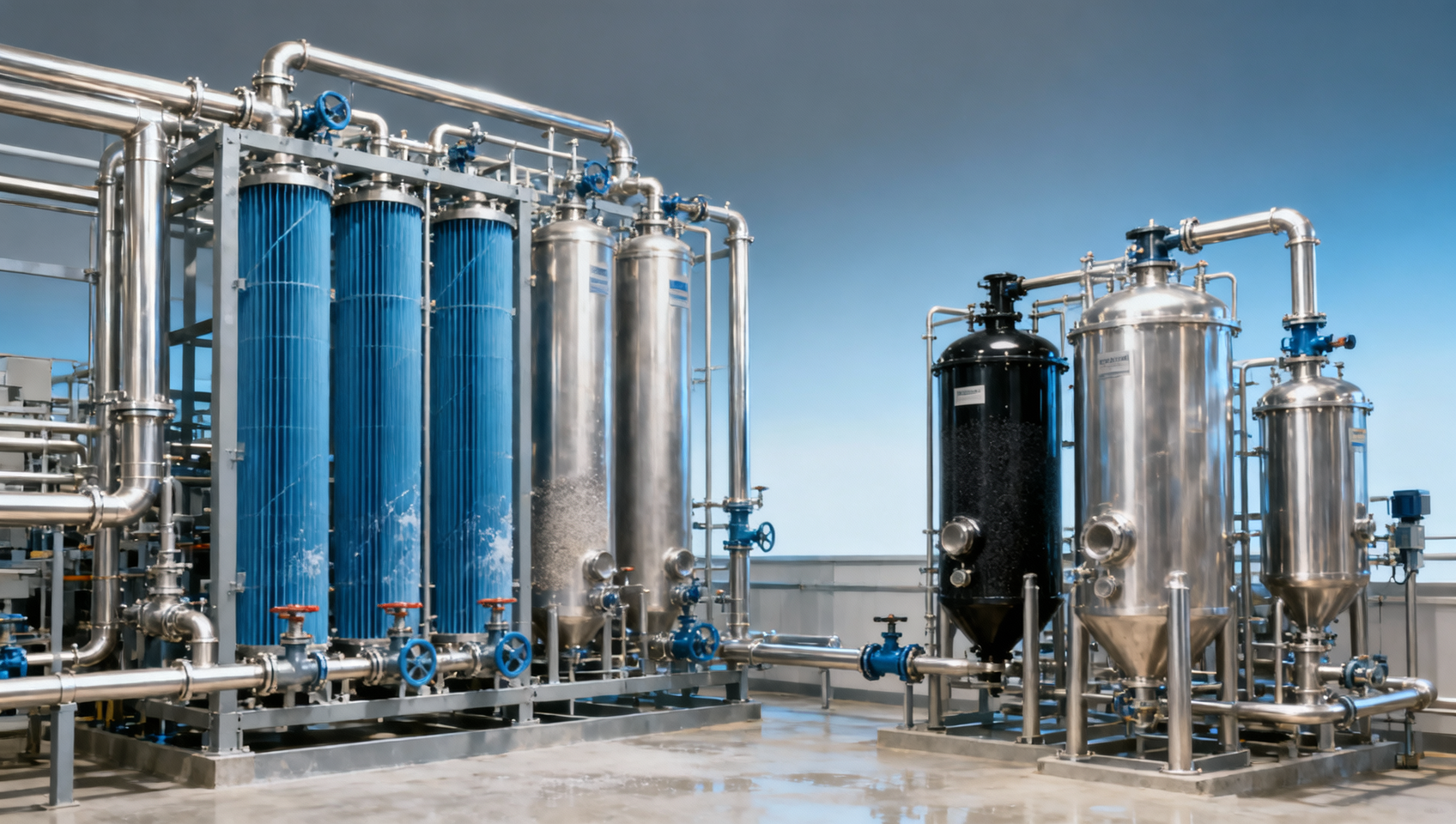
The fourth variable is pretreatment. Suspended solids, oil traces, oxidants, and organic fouling can all shorten resin life. This is where activated carbon filter vessel systems, multimedia sand filter configurations, and automatic self cleaning filter units become part of the sizing conversation rather than optional accessories.
Why pretreatment changes the economics
A multimedia sand filter is commonly used to remove larger suspended solids and reduce turbidity before softening. In raw water with visible particulate loading, this can reduce resin fouling and protect downstream valves. An activated carbon filter vessel is typically selected when chlorine, odor, organics, or oxidants may damage resin or interfere with process water quality.
An automatic self cleaning filter is especially useful when particulate levels fluctuate during source changes, seasonal shifts, or intake disturbances. Instead of relying on frequent cartridge changes, these systems can support continuous operation with automatic backwash or screen cleaning cycles, which is attractive for plants targeting lower manual intervention.
Performance factors that should be checked before procurement
Before finalizing a purchase, cross-functional teams should verify at least six items: inlet hardness range, iron or manganese presence, turbidity trend, chlorine exposure, average and peak flow split, and required service continuity during regeneration. Missing even one of these inputs can distort the final configuration.
The following comparison table helps buyers align pretreatment choices with actual water conditions.
For many facilities, pretreatment is not a secondary add-on but a direct factor in sizing accuracy, resin life, and maintenance cost. When pretreatment is ignored, the softener is often blamed for problems caused by upstream water instability.
How to size and configure a system around real operating conditions
A robust sizing process begins with a water analysis and duty profile, not a single flow figure. At minimum, engineers should gather total hardness, hardness variation range, iron content if present, suspended solids trend, average daily demand, peak hourly demand, and planned hours of operation. For critical lines, the review should also include standby philosophy and acceptable regeneration windows.
In many industrial projects, the most resilient layout is duplex alternating or duty-standby rather than a single vessel. This ensures service continuity when one unit regenerates. In 24/7 plants, the difference between single-tank interruption and duplex continuity may be operationally significant, especially for boiler feed, rinse water, and heat-exchange systems.
Procurement teams should also distinguish between initial capital cost and cost over a 3-year to 5-year period. A smaller unit may appear attractive on purchase price, but if it regenerates twice as often, consumes more salt, and causes more service calls, its total ownership cost may exceed that of a better-sized system.
The checklist below is useful when comparing supplier proposals for industrial water softeners and related filtration trains.
A 5-step evaluation framework
- Confirm water quality over time, not from a single sample. Seasonal variation over 3 to 12 months can materially change design assumptions.
- Separate average demand from peak demand. Many plants run at 50% to 70% average load but require short bursts at full capacity.
- Set a regeneration target that fits operations, such as once per shift, once per day, or another practical interval.
- Review pretreatment need based on turbidity, chlorine, and particulate spikes rather than assuming raw water is stable.
- Compare salt, water, labor, spare parts, and downtime risk over the equipment lifecycle.
Key decision points for different buyer roles
Operators usually focus on ease of regeneration, alarm clarity, valve reliability, and maintenance frequency. Procurement teams focus on specification clarity, spare part availability, and delivery lead time, which commonly ranges from 2 to 8 weeks depending on vessel size, control valve type, and project documentation. Management focuses on uptime, compliance, and cost predictability.
The table below organizes these priorities into a practical purchasing view.
This stakeholder view helps prevent a common procurement mistake: buying a system that looks competitively priced but lacks the operating logic, pretreatment fit, or service support required in real industrial use.
Common sizing mistakes, operating risks, and how to avoid them
The first mistake is using only peak flow from a pump curve or line spec. Peak flow is important, but it should be paired with hardness concentration and daily usage. Without that context, a plant may oversize hydraulics while undersizing exchange capacity, which creates poor regeneration economics.
The second mistake is assuming feedwater quality is constant. Municipal supply changes, well blending, seasonal turbidity, or upstream treatment disruptions can alter load enough to change cycle length by 20% or more. A design with no margin for variation may perform well in commissioning and then degrade later.
The third mistake is excluding upstream filtration from the budget because it appears non-essential. In reality, a multimedia sand filter or automatic self cleaning filter may protect resin and valves from solids that would otherwise increase maintenance frequency. Similarly, an activated carbon filter vessel may be necessary where oxidants threaten resin condition.
The fourth mistake is neglecting service strategy. If the process cannot accept even 30 to 90 minutes of regeneration downtime, the softener arrangement must reflect that. For batch production this may be manageable, but for continuous utilities it can be unacceptable.
Risk signals that indicate a review is needed
- Salt consumption rises noticeably within 6 months without a corresponding increase in production output.
- Outlet hardness alarms appear near the end of each cycle or during higher-demand shifts.
- Pressure drop across pretreatment or softener vessels increases faster than expected.
- Operators manually trigger regeneration because the automatic sequence no longer matches plant demand.
- Scale appears in heat exchangers, steam lines, spray systems, or wash equipment despite a softening system being installed.
Practical mitigation measures
A practical response starts with data logging over at least 2 to 4 weeks. Record inlet hardness, flow pattern, regeneration frequency, salt usage, and outlet hardness. This short operating picture often reveals whether the limitation is vessel sizing, resin age, control settings, or untreated feedwater variation.
Where uncertainty remains, request suppliers to provide a sizing basis sheet rather than only a quotation. A credible document should define assumed hardness, average and peak flow, service hours, regeneration interval, pretreatment scope, and expected consumables. That transparency is valuable for both technical validation and procurement control.
Implementation, maintenance, and procurement guidance for long-term value
Selecting the right industrial water softener is only part of the outcome. Installation quality, commissioning discipline, and routine maintenance determine whether the system performs as designed over 1 year, 3 years, and beyond. For industrial users, the most cost-effective systems are usually those with clear operating windows, available spare parts, and practical service procedures.
Commissioning should verify inlet analysis, valve sequence, regeneration timing, brine draw performance, pressure drop, and outlet hardness under actual plant flow rather than only during a low-load startup window. A system commissioned at 25% demand may appear stable but reveal issues when production reaches 80% to 100% of design.
Maintenance planning should include resin inspection intervals, brine tank checks, valve seal review, pretreatment backwash verification, and operator training. In many industrial settings, a quarterly inspection and an annual performance review are reasonable starting points, though the exact schedule depends on water quality and runtime intensity.
For procurement leaders, vendor evaluation should not stop at equipment list and price. Documentation quality, commissioning support, consumables estimate, local service response time, and spare part continuity often have more effect on uptime than minor purchase price differences.
FAQ for buyers and plant teams
How do I know if my current softener is undersized?
Frequent regeneration, rising salt consumption, outlet hardness drift, or scale formation downstream are common signs. If regeneration happens more often than the original operating plan, or if production demand has increased by 15% to 25% since installation, a new load assessment is advisable.
When is an activated carbon filter vessel necessary before softening?
It is typically considered when feedwater contains chlorine or oxidizing agents that may shorten resin life, or when organic compounds affect downstream process quality. This is particularly relevant for municipal feedwater applications and plants with mixed utility water sources.
Is a multimedia sand filter enough for all pretreatment needs?
Not always. A multimedia sand filter is effective for reducing suspended solids and turbidity, but it does not replace carbon adsorption for oxidants and organics, nor does it provide the same automation profile as an automatic self cleaning filter in some continuous-duty environments.
What delivery and implementation timeline is typical?
For standard industrial water softeners and filtration vessels, a common supply window is 2 to 8 weeks depending on size, control package, and documentation requirements. Site installation and commissioning may add several days to 2 weeks depending on piping readiness, power availability, and acceptance testing scope.
Industrial water softeners deliver the best results when they are sized by real hardness load, operating pattern, regeneration logic, and pretreatment condition rather than by peak flow alone. For facilities comparing softeners with activated carbon filter vessel systems, multimedia sand filter trains, or automatic self cleaning filter options, the winning solution is the one that protects uptime, controls consumables, and fits the actual water profile.
Global Industrial Core supports industrial buyers, EPC teams, operators, and decision-makers with practical sourcing intelligence for resilient utility systems. If you are reviewing an existing installation or planning a new project, now is the right time to obtain a load-based evaluation, compare configuration options, and request a tailored recommendation. Contact us to discuss your application, get a customized solution, and explore more industrial water treatment strategies built for long-term performance.
Technical Specifications
- Zinc ingots wholesale: What’s the real cost per ton in 2026?Author :Heavy Industry Strategist
- Aluminum ingots bulk vs. cast bars: Which delivers better yield for extrusion?Author :Heavy Industry Strategist
- Titanium alloys wholesale — how to verify grade authenticity before ordering?Author :Heavy Industry Strategist
Expert Insights

Chief Security Architect
Dr. Thorne specializes in the intersection of structural engineering and digital resilience. He has advised three G7 governments on industrial infrastructure security.
Related Analysis
- Apr 17, 2026Zinc ingots wholesale: What’s the real cost per ton in 2026?Author :Heavy Industry Strategist
- Apr 17, 2026Aluminum ingots bulk vs. cast bars: Which delivers better yield for extrusion?Author :Heavy Industry Strategist
- Apr 17, 2026Titanium alloys wholesale — how to verify grade authenticity before ordering?Author :Heavy Industry Strategist
Core Sector // 01
Security & Safety
- Steam traps wholesale: Which type fails least in condensate return lines with air binding?Author :Environmental Engineering Director

- Check valves (swing type): When does water hammer override disc stability?Author :Environmental Engineering Director
: When does water hammer override disc stability?")
- Cast iron gate valves: Are they still viable for potable water mains in 2026?Author :Environmental Engineering Director

- Grease interceptor wholesale options differ more in cleaning designAuthor :Environmental Engineering Director

- Polyaluminium chloride PAC dosage errors often start with pH assumptionsAuthor :Environmental Engineering Director

- Water filter cartridges wholesale quality varies in ways specs may missAuthor :Environmental Engineering Director

- RO membrane elements scale faster when pretreatment looks acceptableAuthor :Environmental Engineering Director

- Ion exchange resin bulk supply can create storage and fouling issuesAuthor :Environmental Engineering Director