Wholesale FRP tanks need closer checks on resin system and wall build
Author
Date Published
Reading Time
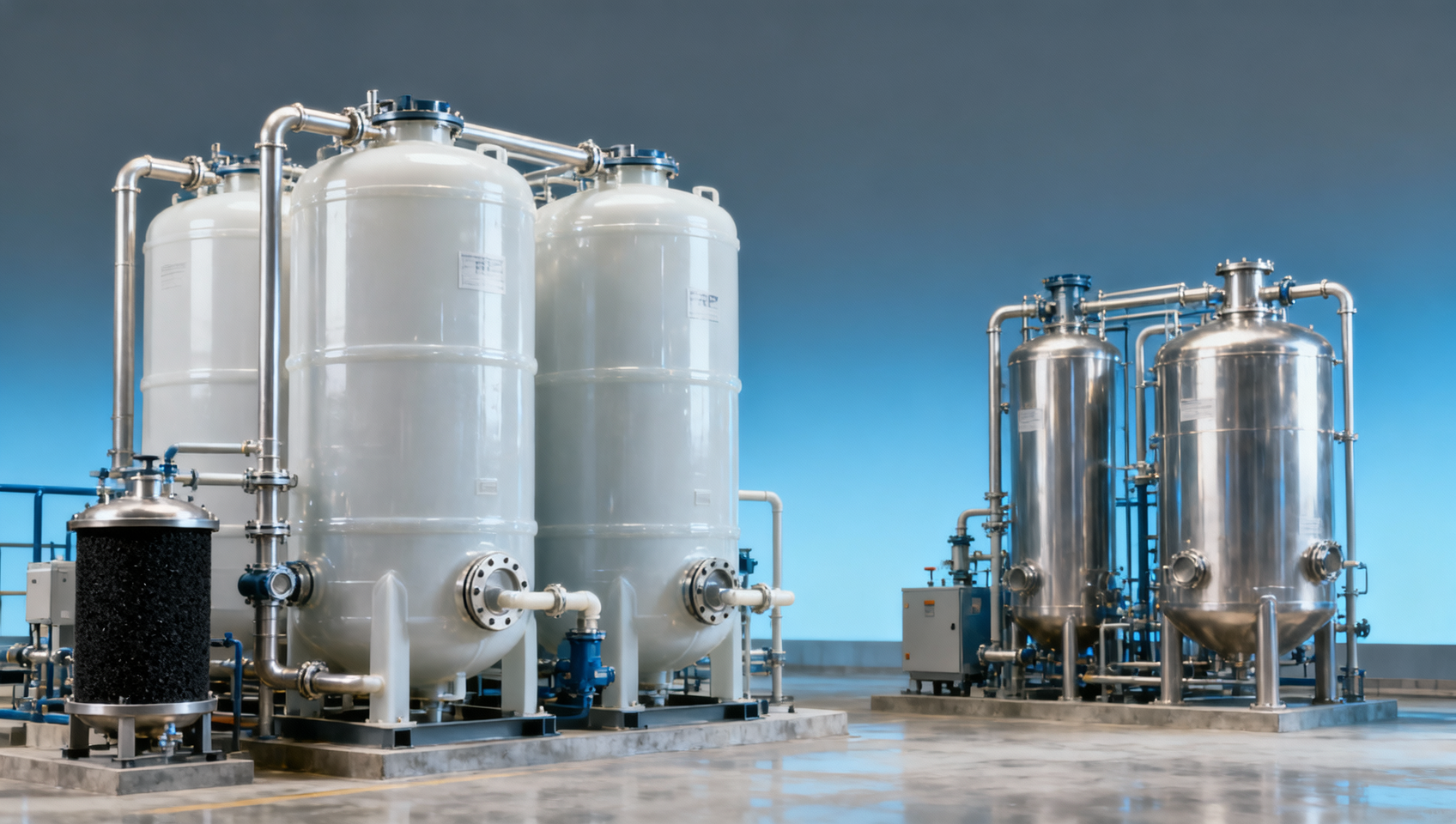
When evaluating wholesale FRP tanks for water treatment or process storage, buyers should look beyond price and verify the resin system, corrosion resistance, and wall build in detail. For EPC teams, operators, and procurement managers comparing industrial water softeners, activated carbon filter vessel setups, multimedia sand filter units, or ro membrane elements, these checks are essential to long-term safety, compliance, and lifecycle value.
In industrial projects, an FRP tank is rarely a standalone purchase. It sits inside a broader treatment train, often alongside control valves, distributors, underdrain assemblies, dosing systems, pumps, and membrane skids. If the vessel specification is too light, chemically mismatched, or poorly documented, the resulting failure can disrupt commissioning schedules, increase maintenance frequency, and create avoidable replacement costs within 12 to 36 months.
That is why wholesale FRP tanks deserve a more disciplined review process. Beyond nominal diameter and height, buyers should examine the liner and structural resin system, wall construction, pressure and temperature limits, nozzle details, curing quality, and traceable testing records. The closer these checks align with the actual media, duty cycle, and site environment, the lower the risk across procurement, operations, and asset management.
Why resin system selection matters more than many bulk buyers expect
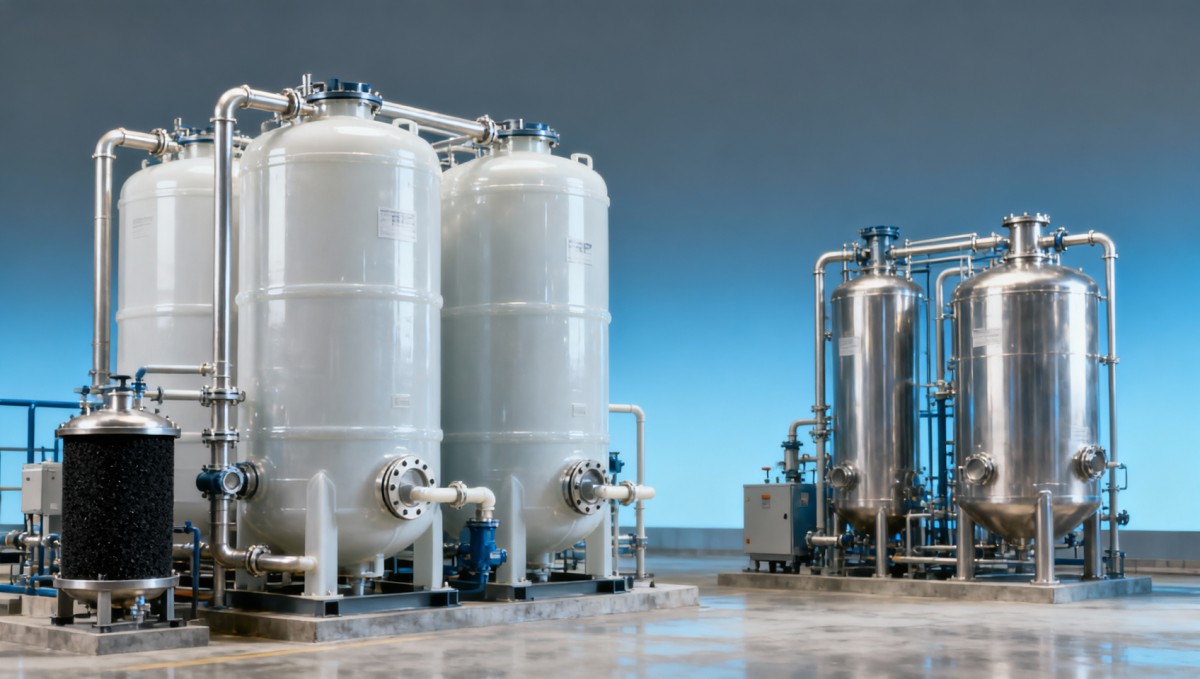
In wholesale FRP tanks, the resin system is not a minor material detail. It is one of the main determinants of chemical resistance, structural stability, and service life. In water treatment applications, the tank may see raw water, chlorinated water, acidic cleaning chemicals, brine, or intermittent oxidants. A vessel that performs well with neutral water at 25°C may degrade much faster when exposed to low pH or repeated chemical regeneration.
Many buyers focus first on capacity, shell color, or unit price, but a lower-cost tank with a general-purpose resin can become the more expensive option over a 3 to 5 year operating window. The issue is especially relevant for industrial water softeners, carbon filters, and multimedia filters that operate in cycles and face repeated internal pressure changes. Resin mismatch can lead to blistering, microcracking, fiber exposure, or loss of barrier integrity.
For most industrial review processes, at least 4 questions should be asked before approving a wholesale FRP tank: what chemicals will contact the inner wall, at what concentration, at what temperature range, and for how long in each cycle. If the vessel is used upstream of RO membrane elements, this review becomes even more important because vessel degradation can introduce particulates or contamination that affect downstream performance.
Common resin categories in industrial FRP vessel procurement
Not every project needs the same resin chemistry. Orthophthalic polyester may appear in light-duty applications, while isophthalic polyester often offers better chemical resistance and mechanical stability. Vinyl ester is frequently preferred where stronger corrosion resistance is required, especially in more aggressive service conditions. The right choice depends on the actual fluid profile rather than a generic “industrial grade” label.
The table below outlines a practical comparison framework procurement teams can use during supplier discussions. These are typical industry tendencies rather than fixed universal ratings, so final suitability should still be confirmed against process conditions, cleaning chemicals, and design pressure.
The main takeaway is simple: resin selection should be tied to duty conditions, not sales wording. A buyer comparing 2 visually similar wholesale FRP tanks may actually be comparing very different long-term risk profiles. Asking for resin data sheets, temperature guidance, and chemical compatibility notes can eliminate costly ambiguity before purchase orders are issued.
Minimum resin review checklist
- Confirm whether the liner resin and structural resin are the same or different, because dual-layer construction is common in more demanding service.
- Verify intended operating temperature range, such as 5°C to 49°C or another supplier-defined window.
- Check regeneration chemicals, oxidizing agents, and cleaning frequency over a 12-month cycle.
- Request written compatibility confirmation for media contact, not only verbal assurance from sales staff.
Wall build, structural layers, and why nominal thickness alone is not enough
A second area that deserves closer scrutiny is wall build. In wholesale FRP tanks, the shell is usually constructed through layered reinforcement and resin application, often with a corrosion barrier and a structural wall working together. Two tanks can have the same nominal size and similar listed pressure ratings, yet differ significantly in laminate quality, fiber distribution, and resistance to cyclic stress.
This matters in systems that experience daily backwash, pressure fluctuation, or valve actuation. A multimedia sand filter unit may cycle several times per week, while a carbon filter vessel can face repeated hydraulic changes depending on process demand. Over 1,000 to 3,000 operating cycles, weak laminate control can show up as dimensional distortion, local soft spots, or early leakage around neck openings and fittings.
Buyers should avoid reducing the review to one question: “What is the wall thickness?” The better question is how the wall is built, how it is reinforced, and how consistently it is manufactured. Structural reliability depends on the total layup design, not just a single millimeter figure printed on a quote sheet.
What procurement and engineering teams should inspect
A practical technical review should include reinforcement type, winding or layup method, local reinforcement around ports, curing control, and tolerance consistency. In many industrial orders, especially those above 20 to 50 units, requesting a cutaway sample, process photos, or factory inspection records can be justified. These materials help identify whether the supplier is controlling repeatability rather than only delivering attractive exterior finish.
The comparison table below can help teams translate wall build questions into a usable supplier evaluation sheet during RFQ or technical clarification stages.
A stronger supplier response will include specific build logic, not vague wording such as “thick wall” or “heavy duty.” For industrial buyers, evidence of process control often has more value than a broad marketing claim. If one supplier cannot explain shell construction clearly, that is a risk signal in itself.
Four signs a wall build review is too shallow
- The quote lists only diameter, height, and pressure, with no material layering details.
- No tolerance or inspection information is available for neck size, port machining, or shell finish.
- The supplier cannot separate chemical barrier design from structural reinforcement design.
- The same tank specification is recommended for softening, carbon adsorption, and aggressive cleaning without qualification.
Application-specific checks for softeners, carbon filters, sand filters, and RO-related systems
Not every wholesale FRP tank faces the same loading, chemistry, or operating rhythm. A water softener vessel may cycle brine regeneration every 1 to 3 days in high-demand facilities. An activated carbon filter vessel may need periodic backwash to control pressure drop and bed compaction. A multimedia sand filter can face higher solids loading and stronger hydraulic disturbance. Tanks supporting RO pretreatment should also be reviewed for particle control and system cleanliness because pretreatment instability often impacts membrane protection.
For operators and end users, this means the vessel should be evaluated as part of the process package. The same nominal tank volume may perform differently depending on distributor design, freeboard allowance, superficial velocity, and expected backwash expansion. In many systems, vessel reliability is shaped by both shell quality and internals compatibility.
EPC teams should therefore match the FRP tank specification to the actual application category rather than using one default vessel across all pretreatment units. The matrix below provides a practical way to align service conditions with vessel review priorities.
The key conclusion is that process context changes vessel priorities. For example, a tank serving a low-cycle storage application may tolerate a simpler configuration than one used in a filter that backwashes twice per week. Matching the vessel to the process can reduce unplanned maintenance events and improve lifecycle economics even when initial CAPEX is 8% to 15% higher.
Typical application review points
- Confirm service pressure, including upset conditions, not only normal operating pressure.
- Check whether media loading and backwash velocity could create repeated mechanical shock at the vessel base and neck.
- Review all chemicals used in commissioning, sanitization, and periodic cleaning over a full annual maintenance cycle.
- Verify compatibility of top openings, bottom openings, and internals interface dimensions before shipment.
Procurement workflow, inspection points, and documentation buyers should request
For purchasing teams, the safest approach is to build a repeatable technical-commercial workflow. This prevents FRP tanks from being treated like generic commodity items. In industrial procurement, a missed detail during RFQ can reappear later as a factory acceptance issue, site fit-up delay, or warranty dispute. A disciplined review process usually saves more time than it costs.
A practical workflow often includes 5 stages: application definition, technical bid review, sample or document validation, pre-shipment inspection, and incoming verification. Even on smaller orders, moving through these stages can help buyers compare suppliers on substance instead of relying on price-driven shortlisting alone.
The table below summarizes the documents and checks that are most useful when sourcing wholesale FRP tanks for industrial treatment systems.
When reviewing suppliers, lead time should also be interpreted carefully. A shorter delivery promise of 7 to 10 days may not be attractive if build transparency is weak, while a 3 to 4 week lead time with documented inspection checkpoints may create lower project risk. Buyers should compare delivery certainty, not only calendar speed.
Recommended incoming inspection checklist
- Inspect for cracks, impact marks, or resin-rich surface defects after unloading.
- Verify vessel openings, thread condition, and connection orientation against approved drawings.
- Confirm labeling, quantity, and accessory completeness before warehouse acceptance.
- Store upright and protected from unnecessary impact, especially before internals installation.
- Record any nonconformance within 24 to 48 hours for faster supplier response.
Common mistakes, maintenance implications, and decision guidance for long lifecycle value
One common mistake is assuming all FRP tanks used in water systems are functionally equivalent. In reality, the difference between an acceptable vessel and a reliable one often shows up only after months of operation. Another mistake is separating vessel selection from operating reality. If chemical cleaning, pressure surges, poor support conditions, or high-cycle backwashing are not discussed during procurement, the chosen tank may be under-specified from day one.
Maintenance teams also benefit when the vessel specification is right. A more suitable resin system and better wall build can reduce unplanned interventions, lower spare consumption around fittings, and improve confidence during shutdown planning. For industrial sites running 24/7 or near-continuous operation, even one avoided vessel replacement can offset a meaningful part of the original price premium.
For decision-makers, the core question is not simply “Which wholesale FRP tank is cheaper today?” It is “Which vessel delivers the best documented fit for the next 3 to 7 years under actual process conditions?” That framing supports stronger decisions across EPC execution, procurement governance, and plant reliability.
FAQ
How do I compare two wholesale FRP tanks that look almost identical?
Start with 6 points: resin type, corrosion barrier design, structural wall build, pressure and temperature range, neck reinforcement, and inspection documentation. If one supplier cannot provide clear answers in these areas, the visual similarity has little technical value.
Are higher-pressure ratings always better for industrial water treatment?
Not always. A higher pressure rating can be useful, but the better choice is the tank that matches normal duty, upset conditions, and installation design with a reasonable engineering margin. Overbuying pressure while ignoring chemical compatibility is not an effective selection strategy.
What lead time is typical for bulk orders?
For standard sizes, many projects see lead times from 2 to 4 weeks, while larger quantities, customized openings, or added inspection requirements may extend this window. Buyers should confirm not just shipping date but also documentation readiness and packaging quality.
What is the biggest red flag during sourcing?
The biggest red flag is a supplier that sells only by dimensions and price, with little transparency on resin system, wall build, or quality checks. In industrial procurement, lack of technical clarity usually creates downstream cost, not savings.
For buyers sourcing vessels for softening, carbon filtration, multimedia filtration, or RO pretreatment support, the most resilient decisions come from aligning resin chemistry, wall build, and documented inspection with actual duty conditions. That approach improves safety, reduces lifecycle surprises, and creates better value than price comparison alone.
Global Industrial Core supports industrial teams that need clearer technical sourcing logic for critical equipment categories. If you are reviewing wholesale FRP tanks or broader treatment system components, contact us to discuss application-specific checks, compare specification paths, and get a more reliable basis for procurement and project planning.
Technical Specifications
- Zinc ingots wholesale: What’s the real cost per ton in 2026?Author :Heavy Industry Strategist
- Aluminum ingots bulk vs. cast bars: Which delivers better yield for extrusion?Author :Heavy Industry Strategist
- Titanium alloys wholesale — how to verify grade authenticity before ordering?Author :Heavy Industry Strategist
Expert Insights

Chief Security Architect
Dr. Thorne specializes in the intersection of structural engineering and digital resilience. He has advised three G7 governments on industrial infrastructure security.
Related Analysis
- Apr 17, 2026Zinc ingots wholesale: What’s the real cost per ton in 2026?Author :Heavy Industry Strategist
- Apr 17, 2026Aluminum ingots bulk vs. cast bars: Which delivers better yield for extrusion?Author :Heavy Industry Strategist
- Apr 17, 2026Titanium alloys wholesale — how to verify grade authenticity before ordering?Author :Heavy Industry Strategist
Core Sector // 01
Security & Safety
- Steam traps wholesale: Which type fails least in condensate return lines with air binding?Author :Environmental Engineering Director

- Check valves (swing type): When does water hammer override disc stability?Author :Environmental Engineering Director
: When does water hammer override disc stability?")
- Cast iron gate valves: Are they still viable for potable water mains in 2026?Author :Environmental Engineering Director

- Grease interceptor wholesale options differ more in cleaning designAuthor :Environmental Engineering Director

- Polyaluminium chloride PAC dosage errors often start with pH assumptionsAuthor :Environmental Engineering Director

- Water filter cartridges wholesale quality varies in ways specs may missAuthor :Environmental Engineering Director

- RO membrane elements scale faster when pretreatment looks acceptableAuthor :Environmental Engineering Director

- Ion exchange resin bulk supply can create storage and fouling issuesAuthor :Environmental Engineering Director