HEPA filters bulk orders can fail if storage rules are ignored
Author
Date Published
Reading Time
Bulk procurement mistakes often start long before installation. For buyers comparing hepa filters bulk options, ignoring storage rules can quietly damage media performance, shorten service life, and raise compliance risks. From humidity exposure to packaging pressure, proper warehousing matters as much as product specs. This article explains why storage discipline is critical for industrial air filtration and how procurement teams can prevent costly failures.
In industrial projects, filtration performance is often evaluated at the point of commissioning, but hidden losses usually begin earlier in the supply chain. A HEPA filter that leaves the factory in compliant condition can arrive at site with compromised media, frame distortion, gasket fatigue, or contamination if bulk storage is poorly managed for even 2 to 8 weeks.
That risk matters to multiple stakeholders at once. Operators want stable airflow and reliable particle capture. Procurement teams need inventory integrity across mixed batches and long lead-time projects. Facility managers need traceability, shelf-life control, and fewer startup failures. Decision-makers need to avoid waste, rework, and preventable downtime in regulated or dust-sensitive environments.
Why Storage Conditions Matter as Much as Filter Specification
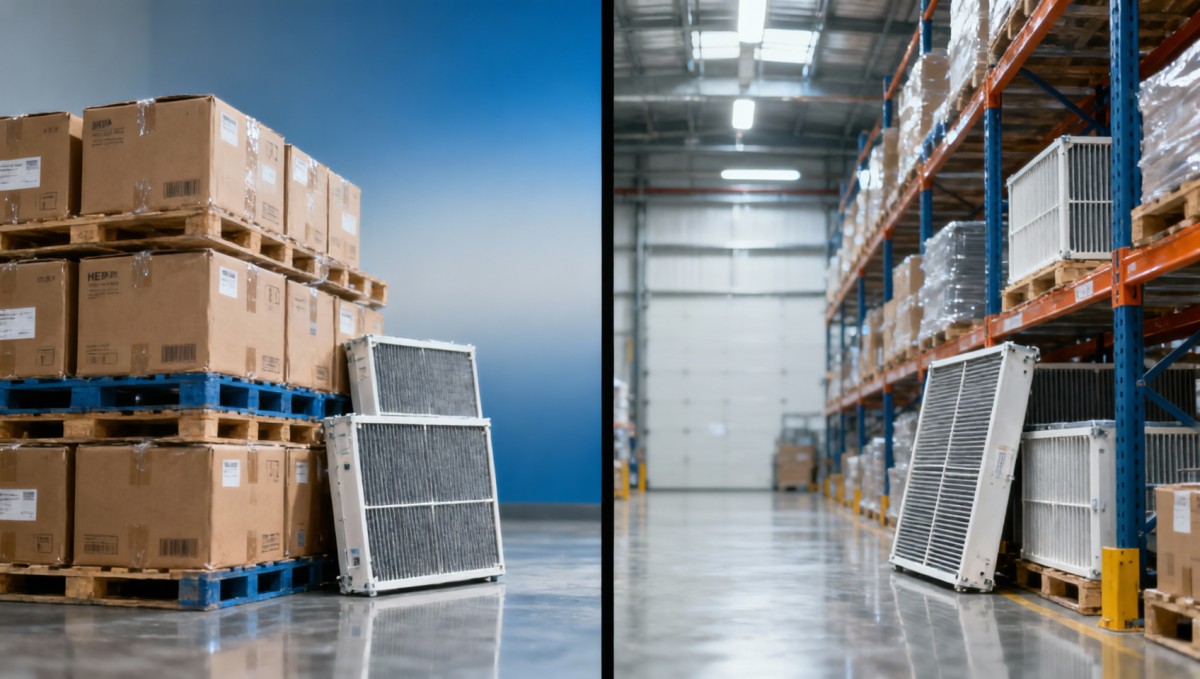
A HEPA filter is not just a boxed spare part. It is a precision filtration assembly made from delicate media, separators or mini-pleat structures, sealants, frames, and gaskets. In bulk orders, these components can be affected by temperature swings, stacking pressure, moisture, vibration, and airborne contamination. Even a small shift in shape or sealing can reduce performance once the unit is installed.
In typical industrial warehousing, recommended storage temperatures often fall within 5°C to 35°C, while relative humidity should ideally remain below 60% and, for more sensitive media or packaging systems, below 50%. When cartons are stored near loading bays, roof leaks, or unconditioned walls, short-term spikes above 70% RH can soften packaging, weaken adhesive bonds, and increase the risk of media deformation.
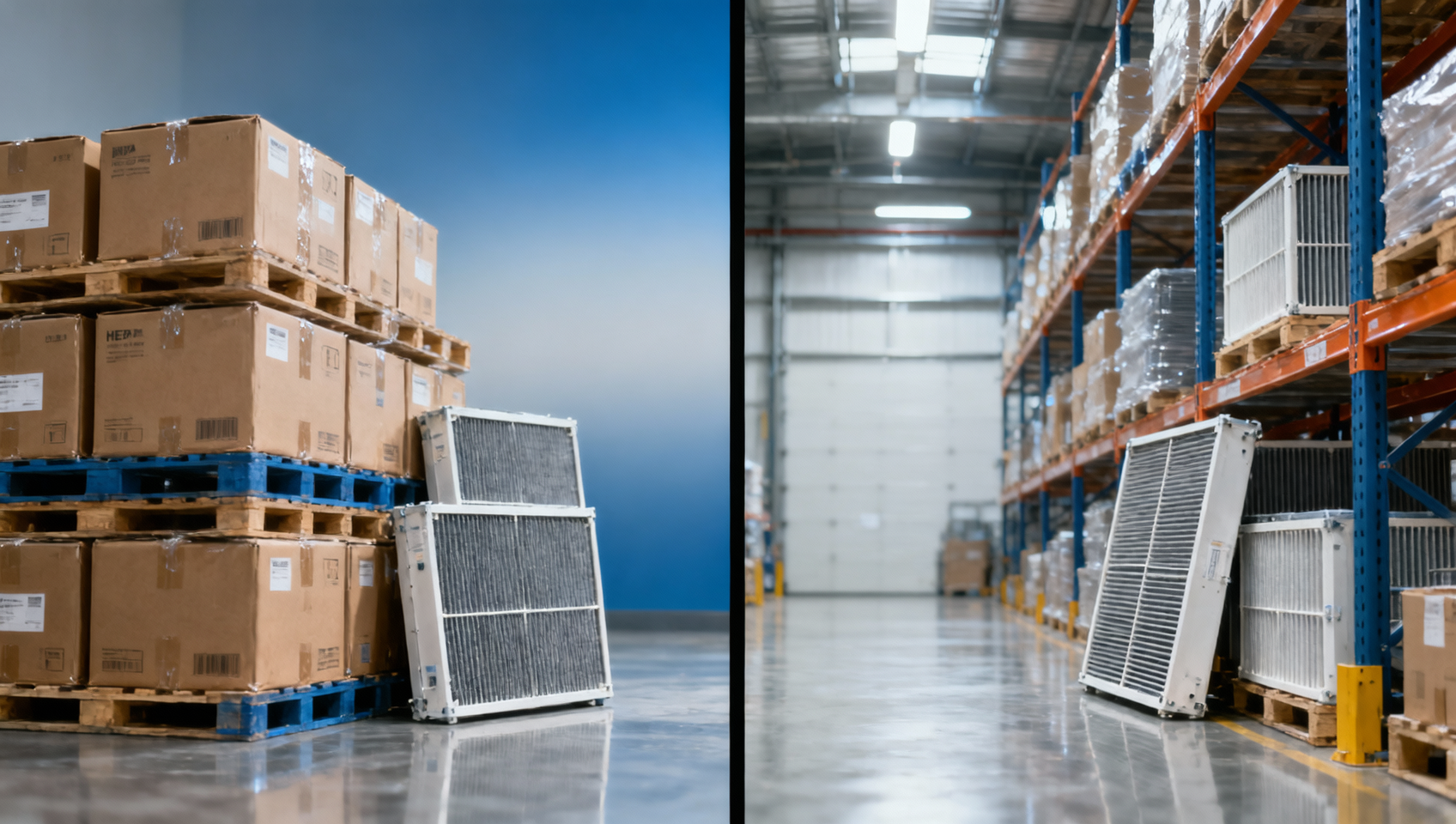
Bulk buyers sometimes assume that sealed packaging is enough protection. In reality, packaging is only one barrier. If cartons are stacked too high for 30 to 90 days, lower units may carry enough compression load to warp frames or damage corner protection. A filter can still look acceptable externally while sealing surfaces are no longer flat enough for critical applications.
Storage discipline becomes even more important in multi-phase EPC projects. Filters may arrive months before mechanical completion, then remain in temporary warehouses while civil works, duct installation, and electrical commissioning continue. In these cases, procurement planning should treat storage exposure as part of total filtration risk, not as a separate logistics issue.
Common Failure Mechanisms During Bulk Storage
The most common storage-related failures appear in four areas: media damage, frame distortion, gasket aging, and contamination intrusion. Media damage may come from impact, compression, or moisture. Frame distortion is common when pallets are uneven or overloaded. Gasket aging accelerates under ozone, heat, or UV exposure. Contamination intrusion happens when outer packaging is torn or stored in dirty zones.
Risk indicators to watch
- Visible carton softening, crushed corners, or punctures after 7 to 14 days in storage
- Warehouse humidity readings repeatedly above 65% RH
- Stack heights exceeding supplier guidance, often more than 2 to 3 pallet levels
- Filters stored within 3 meters of doors, vents, or active fabrication areas
- Unlabeled mixed batches with no receiving date or shelf rotation control
When two or more of these signs appear together, the probability of hidden degradation rises significantly. That is why inspection at receipt should be followed by periodic warehouse checks rather than a single acceptance event.
The Storage Variables That Most Often Damage HEPA Filters in Bulk
Not all warehouse risks are equal. In bulk HEPA filter storage, three variables cause a disproportionate share of failures: humidity, physical load, and environmental contamination. A procurement team that controls these three factors can reduce avoidable losses far more effectively than one that only negotiates unit price or delivery timing.
Humidity is especially important because HEPA assemblies include bonded materials. Adhesives and sealants may tolerate normal transport exposure, but prolonged damp storage can change stiffness and adhesion behavior. This is particularly relevant when filters are held for 1 to 6 months before installation in clean-support systems, pharmaceutical areas, electronics plants, food processing zones, or sensitive HVAC upgrades.
Physical load is the second major factor. Bulk orders often arrive palletized, and warehouse teams may restack them to save floor space. If stack weight is not controlled, bottom cartons can deform gradually. The result may be bent frames, damaged pleat packs, or compromised corners that make leak-free installation much harder. This type of damage often appears only during fit-up or integrity testing.
The third factor is local contamination. Filters stored in general-purpose warehouses near grinding, welding, concrete cutting, or high-dust traffic can absorb particulate load before they are ever commissioned. Once outer packaging is breached, the product is no longer protected to the same level. In some facilities, temporary storage areas expose filtration inventory to oil mist, salt air, or chemical fumes that accelerate material aging.
Key storage variables and practical control limits
The table below summarizes common storage variables and control ranges used in industrial warehousing practice. Exact requirements should follow supplier documentation, but these ranges offer a practical screening framework for bulk buyers and warehouse supervisors.
The main lesson is simple: HEPA filters bulk purchases require environmental control, not just covered space. Even one weak variable can cancel the value of a well-specified product, particularly when stored in large quantities over extended project timelines.
Procurement Controls That Reduce Storage Failure Before Installation
Preventing storage-related loss starts at the procurement stage, not in the warehouse after delivery. Buyers should define storage expectations in RFQs, purchase orders, and receiving procedures. This includes packaging requirements, pallet orientation, label clarity, date coding, inspection checkpoints, and responsibility for concealed storage damage discovered before installation.
For large projects, one effective strategy is phased delivery instead of a single full-volume drop. If the installation window is spread across 8 to 20 weeks, staged shipments can reduce storage duration, lower damage exposure, and make batch traceability simpler. This may slightly increase logistics coordination, but it often cuts hidden loss and replacement urgency later.
Another key control is warehouse zoning. HEPA filters should not share overflow space with metal stock, chemicals, wet maintenance goods, or high-traffic packing areas. A dedicated clean, dry, low-vibration zone with pallet supports and recorded environmental monitoring provides stronger protection than general inventory storage. Even a basic temperature and humidity log checked twice per day can reveal risk patterns early.
Procurement teams should also align with operations on first-in, first-out rotation. This matters when projects use multiple delivery lots over 2 to 6 months. Without date-based issue control, older stock may remain in storage while newer stock is used first, increasing the chance that the final installation phase receives the most exposed inventory.
A practical 5-step receiving and storage workflow
- Verify packaging condition, quantity, batch labels, and orientation immediately on receipt.
- Record delivery date, storage location, and environmental baseline within the first 24 hours.
- Place pallets on level supports away from doors, drains, direct sun, and vibration sources.
- Inspect cartons and pallet integrity every 2 to 4 weeks during storage.
- Perform pre-installation visual checks and document any deformation, seal issues, or contamination before release to site.
This workflow is simple, but it closes a frequent gap between purchasing and operations. In many facilities, acceptance ends after counting cartons. A better process treats storage integrity as part of procurement quality control all the way to installation release.
Procurement checklist for bulk HEPA filter orders
The following checklist helps buyers compare suppliers and internal readiness before committing to a large order. It is especially useful for EPC contractors, maintenance planners, and facility teams managing mixed installation schedules.
Used properly, this checklist turns storage from an afterthought into a purchasing criterion. That shift helps teams evaluate total usable value, not only the quoted unit price.
How Operators and Facility Teams Should Inspect Stored Filters Before Use
Even when warehousing is generally compliant, stored HEPA filters should be checked before installation. This final inspection is not redundant. It is the point where hidden storage damage can still be intercepted before it becomes a commissioning delay, airflow imbalance, or integrity test failure. In large shutdown windows, finding bad stock late can cost far more than the original filter value.
A practical inspection should review the carton, frame, media face, separator or pleat structure, gasket continuity, and label traceability. Operators do not need a laboratory protocol for every unit, but they do need a repeatable visual and handling standard. For critical areas, a sample-based incoming verification plan or pre-install fit check can be justified, especially for lots stored longer than 60 to 90 days.
One common mistake is opening too many units too early. If inspection is done days before installation in a dusty maintenance zone, filters can be re-exposed unnecessarily. The better approach is controlled inspection close to the installation window, with resealing or protected transfer if the unit will not be fitted immediately.
Facility teams should also verify that storage records match actual condition. If warehouse logs show repeated humidity excursions, rough handling, or water incidents, the inspection threshold should be more conservative. In some cases, replacing a suspect pallet proactively is safer than risking a delayed startup in a controlled environment.
Pre-installation inspection points
- Check the frame for twist, crushed corners, or uneven seating surfaces.
- Inspect gaskets for continuity, dryness, cracks, or compression set.
- Look for pleat collapse, punctures, loose separators, or visible dirt loading.
- Confirm labels, airflow direction, and batch references against the install plan.
- Review storage duration and any recorded exposure event before release for use.
When should a stored filter be held back?
A filter should be isolated for review if it shows warped frames, torn packaging with contamination ingress, wetness marks, gasket deterioration, or signs of media contact damage. Filters stored after a known leak, flood, or severe humidity event should also be assessed more carefully. In critical process or clean-support applications, conservative rejection criteria are often justified because replacement labor and retesting costs can exceed the product cost by several times.
Common Procurement Mistakes, FAQ, and a Smarter Bulk Storage Strategy
Several repeat mistakes explain why HEPA filters bulk orders fail in practice. The first is buying the right specification with no storage plan. The second is accepting long pre-install storage without environmental monitoring. The third is mixing high-value filtration inventory with general warehouse stock. The fourth is relying on visual carton condition alone instead of controlled receiving, periodic checks, and pre-install release inspection.
A stronger strategy combines supplier guidance, internal warehousing discipline, and realistic project scheduling. If a site cannot maintain acceptable storage conditions for 8 to 12 weeks, the better decision may be phased delivery, split inventory, or shorter call-off orders. This approach often protects both quality and working capital, especially when the project uses multiple system zones or staggered installation crews.
For industrial buyers, the key takeaway is that filtration reliability begins before the filter enters the air handling system. Storage is part of product integrity. When procurement, warehousing, and operations treat it that way, the result is fewer rejected units, smoother installation, and better confidence in final air quality performance.
FAQ: How long can HEPA filters be stored before installation?
Storage duration depends on supplier packaging, material system, and environmental control. In practical industrial conditions, shorter is usually safer. If storage extends beyond 60 to 90 days, teams should increase inspection frequency, verify humidity and temperature records, and review whether staged delivery would be more appropriate for future orders.
FAQ: What is the biggest warehouse risk for bulk HEPA filters?
In many facilities, the biggest combined risk is humidity plus compression. Moisture affects packaging and bonded materials, while stacking pressure distorts frames and pleats. Either one can reduce usable product quality; together they create a much higher chance of hidden failure at installation.
FAQ: Should procurement teams request storage instructions in the RFQ?
Yes. Storage instructions should be requested as part of commercial and technical evaluation. This includes preferred temperature range, humidity limit, stacking guidance, packaging details, and any shelf-life or inspection recommendations. Doing this early helps buyers compare real delivered value rather than product data alone.
FAQ: Which sites benefit most from tighter storage control?
The highest benefit usually appears in facilities where air cleanliness, uptime, or validation matters: electronics production, pharmaceutical support areas, food processing, hospitals, laboratories, battery manufacturing, and sensitive HVAC retrofits. In these environments, one failed filter lot can create delays that extend far beyond simple replacement lead time.
For organizations sourcing industrial filtration at scale, the most cost-effective decision is often not the lowest purchase price, but the best protected delivered condition. Global Industrial Core helps procurement leaders, operators, and project teams evaluate storage-sensitive components with a more complete operational lens. If you are reviewing hepa filters bulk options for an upcoming project, contact us to discuss sourcing criteria, storage risk controls, and practical procurement strategies tailored to your installation schedule.
Technical Specifications
- How to choose an organic fertilizer machine for wet raw materialsAuthor :Environmental Engineering Director
- What affects output stability in a hydraulic briquetting pressAuthor :Environmental Engineering Director
- Waste paper baler wholesale prices vary for reasons beyond tonnageAuthor :Environmental Engineering Director
Expert Insights

Chief Security Architect
Dr. Thorne specializes in the intersection of structural engineering and digital resilience. He has advised three G7 governments on industrial infrastructure security.
Related Analysis
- Apr 16, 2026How to choose an organic fertilizer machine for wet raw materialsAuthor :Environmental Engineering Director
- Apr 16, 2026What affects output stability in a hydraulic briquetting pressAuthor :Environmental Engineering Director
- Apr 16, 2026Waste paper baler wholesale prices vary for reasons beyond tonnageAuthor :Environmental Engineering Director
Core Sector // 01
Security & Safety
- Electrostatic precipitator ESP vs baghouse in high temperature dustAuthor :Environmental Engineering Director

- Commercial kitchen exhaust hood sizing mistakes that hurt captureAuthor :Environmental Engineering Director

- HVAC ozone generator use cases where odor control can backfireAuthor :Environmental Engineering Director

- Industrial humidifiers wholesale orders often miss water quality limitsAuthor :Environmental Engineering Director

- Commercial dehumidifiers that work in cold rooms need a closer lookAuthor :Environmental Engineering Director

- AHU handling units: where energy loss often starts in the design stageAuthor :Environmental Engineering Director

- Activated carbon air filter life span depends on more than airflowAuthor :Environmental Engineering Director

- Pocket air filters with low pressure drop are not always the best fitAuthor :Environmental Engineering Director