Industrial Servo Motors vs Steppers
Author
Date Published
Reading Time
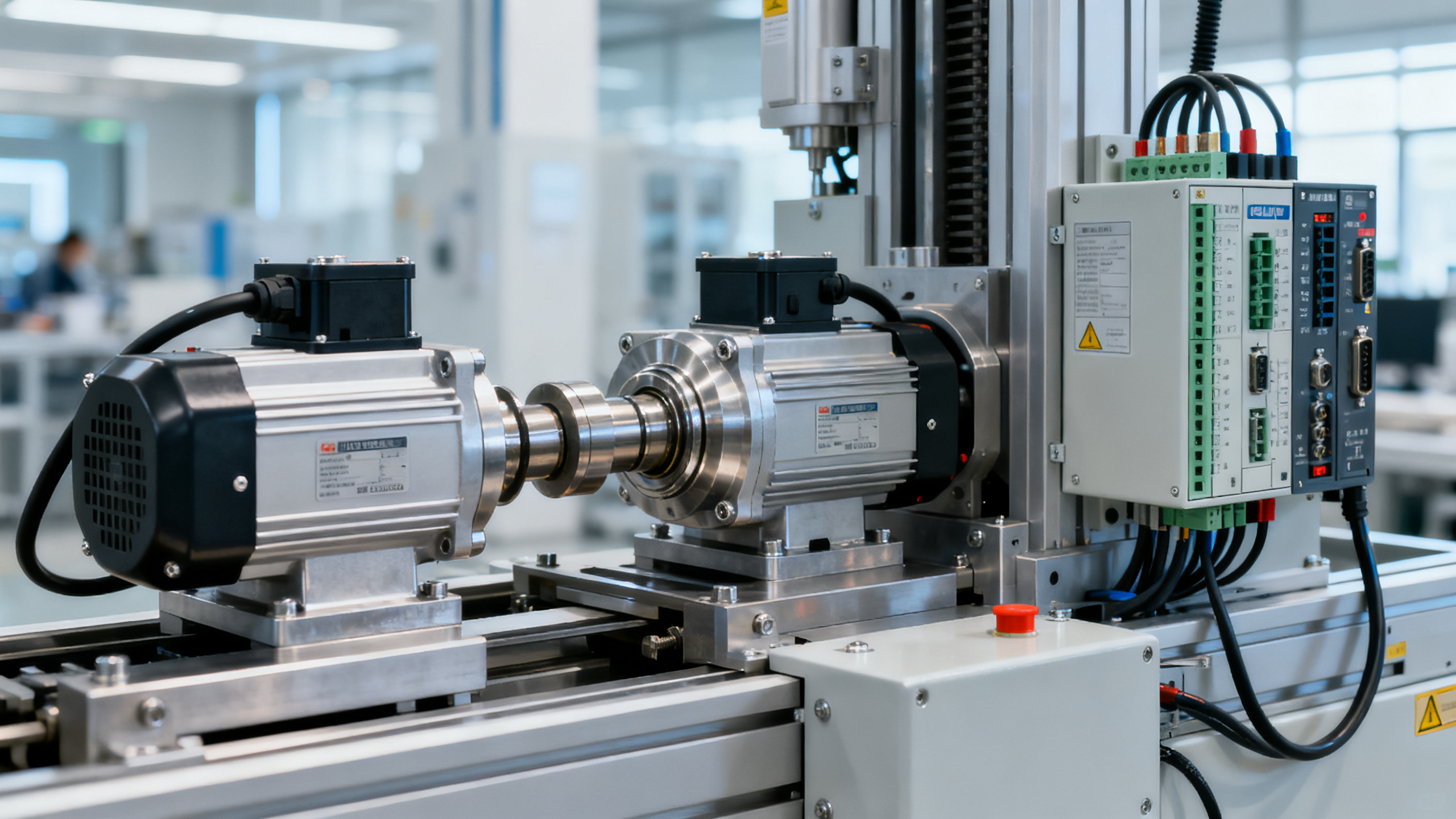
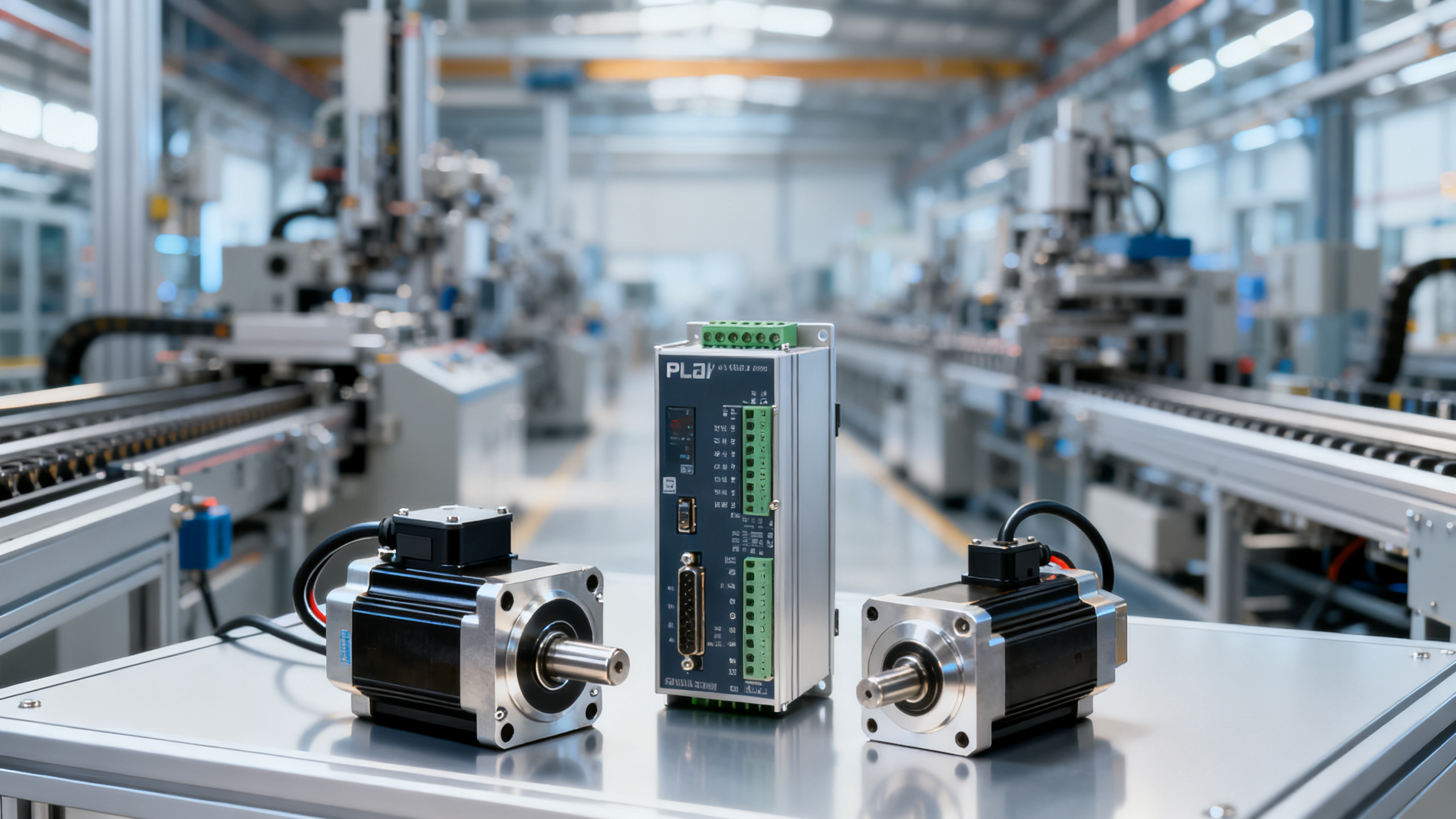
Choosing between industrial servo motors and wholesale stepper motors can directly affect precision, speed, energy efficiency, and long-term maintenance costs. For engineers, operators, buyers, and decision-makers, understanding how these motion solutions compare is essential when integrating variable frequency drive VFD, programmable logic controller PLC, and broader industrial automation systems into reliable, high-performance operations.
In industrial environments, motor selection is rarely a simple specification exercise. It influences machine throughput, positioning repeatability, commissioning complexity, spare parts strategy, and even power quality within the larger control architecture. A packaging line running at 120 cycles per minute, a CNC axis requiring micron-level stability, and a material handling station that stops and starts 20,000 times per shift do not place the same demands on motion hardware.
For procurement teams and technical decision-makers, the challenge is balancing capital cost against lifecycle value. Servo motors often promise dynamic response and closed-loop control, while stepper motors remain attractive for straightforward indexing, moderate torque demands, and cost-sensitive deployments. The right answer depends on duty cycle, load variability, environmental stress, and the quality of integration with PLC, drives, sensors, and safety systems.
Understanding the Core Difference Between Servo and Stepper Motion
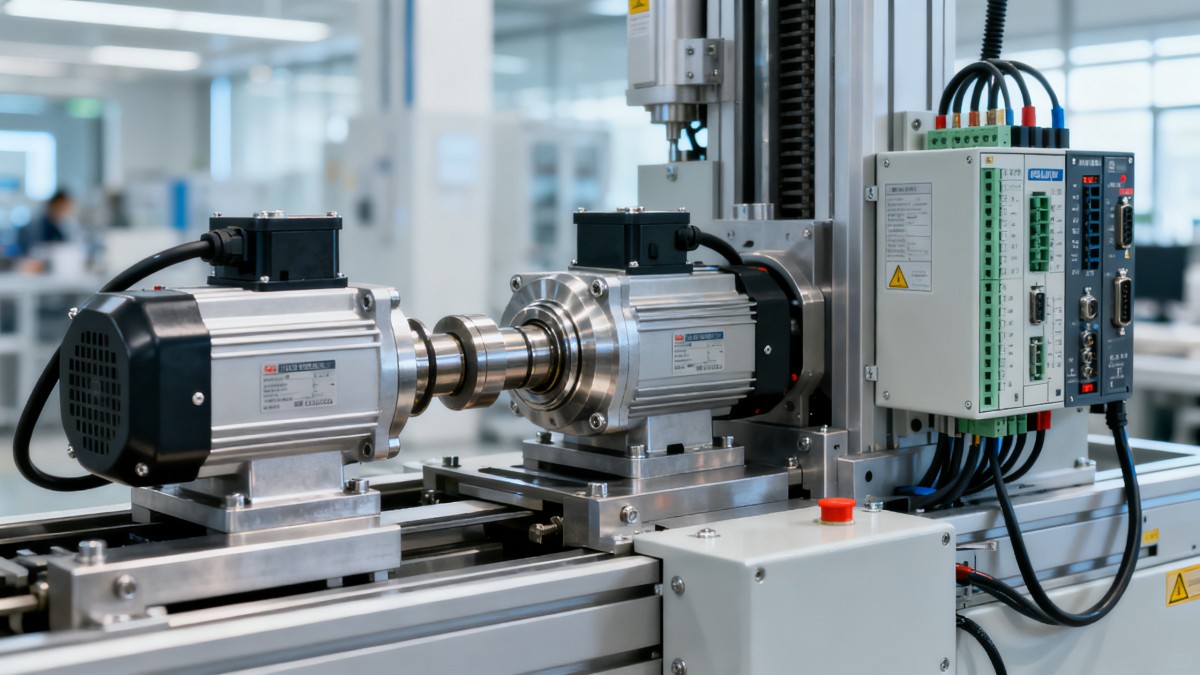
At the most practical level, an industrial servo motor is a closed-loop motion device. It uses feedback from an encoder or resolver to continuously correct position, speed, and torque. A stepper motor, by contrast, typically moves in discrete steps and is often applied in open-loop control, although closed-loop stepper systems are also available for higher reliability and reduced missed-step risk.
This distinction matters because closed-loop correction changes how a machine behaves under load variation. If a conveyor axis sees a 15% to 30% fluctuation in product weight, a servo system can compensate in real time. A traditional stepper may lose synchronization if torque margin is too narrow, especially during fast acceleration, abrupt stopping, or resonance zones.
Servo motors are commonly selected where speed exceeds 1,500 rpm, where acceleration ramps are aggressive, or where repeatability must remain stable over long production runs. Stepper motors are frequently used for lower-speed positioning tasks, such as valve actuation, dosing, small-format indexing tables, and light-duty feeders that do not require constant feedback correction.
How control behavior affects industrial performance
In a PLC-driven automation cell, response quality is not only about peak motor power. It is also about how quickly the axis reaches target position, how well it holds torque at low speed, and whether it can maintain stability through 8-hour, 16-hour, or 24-hour duty cycles. Servo systems typically outperform in dynamic applications because they retain better torque across a broader speed band.
Steppers, however, remain valuable where motion is predictable and loads are consistent. Their simpler architecture can reduce setup time for compact machines and help lower entry cost in OEM designs. In facilities managing dozens of auxiliary stations, that cost difference can be meaningful when multiplied across 20, 50, or 100 installed points.
Key operational distinctions
- Servo motors use feedback devices and continuously correct motion error during operation.
- Stepper motors typically move in fixed increments, often 1.8° per full step before microstepping is applied.
- Servos generally support higher peak torque during acceleration and deceleration.
- Steppers are often easier to implement in compact, low-to-medium speed indexing applications.
Performance Comparison: Precision, Speed, Torque, and Efficiency
When engineering teams compare industrial servo motors and wholesale stepper motors, four criteria usually dominate early evaluation: precision, speed, torque behavior, and energy efficiency. These metrics directly influence line productivity, reject rate, thermal management, and machine uptime. They also shape how much tuning work is needed before the system is production-ready.
Precision is often misunderstood. A stepper can offer very fine commanded resolution through microstepping, but commanded resolution is not identical to actual positioning accuracy under changing loads. Servo systems generally maintain stronger real-world accuracy because feedback continuously corrects deviation. In machines where tolerance drift beyond ±0.05 mm creates scrap or alignment issues, that distinction becomes commercially significant.
Speed is another major divider. A stepper motor may perform well at low to moderate rpm, but torque usually drops sharply as speed increases. Servo motors maintain usable torque over a wider operating range and are better suited to rapid indexing, synchronized motion, and applications exceeding 1,000 to 2,000 rpm. This makes them common in robotics, converting equipment, and precision assembly lines.
The following comparison table highlights typical engineering differences used during concept evaluation. Exact values vary by frame size, drive design, load inertia, and control method, but these ranges reflect common industrial selection logic.
For many industrial users, efficiency becomes more important after commissioning than during purchase. A servo system may cost more upfront, yet lower wasted energy, reduced heat load in enclosed panels, and fewer positioning-related stoppages can improve operating economics over 3 to 5 years. Stepper systems still make sense when cycles are light, throughput is moderate, and thermal buildup is manageable within cabinet design limits.
Where performance gaps matter most
The performance gap widens in applications with variable inertia, frequent start-stop events, or multi-axis synchronization. If one axis must coordinate with VFD-controlled conveyors, vision inspection, and pneumatic timing, servo control often simplifies maintaining repeatable machine behavior. In contrast, if a simple actuator performs 2 to 4 indexed moves per cycle at low speed, a stepper may deliver sufficient value with less system cost.
Application Fit: Which Industries and Use Cases Favor Each Technology?
No motion platform is universally better. The right choice depends on process dynamics, mechanical load profile, environmental exposure, and the consequences of positioning error. In broad industrial settings, servo motors are typically favored where throughput, feedback, and accuracy directly affect production quality. Stepper motors are frequently chosen for auxiliary movements, compact equipment, and machines where the load is predictable and the control sequence is comparatively simple.
Servo technology is common in CNC feed axes, industrial robots, pick-and-place systems, labeling equipment, coordinated web handling, and automated inspection machines. In these applications, even a small deviation can cascade into product waste, collision risk, or line imbalance. When a plant runs 3 shifts and unscheduled downtime costs accumulate hourly, the stability of closed-loop motion becomes a strategic advantage rather than a premium feature.
Stepper motors remain highly practical in laboratory automation, light-duty dosing, small indexing mechanisms, valve positioning, textile guides, electronic assembly feeders, and compact OEM modules. They can also be useful where operators need straightforward replacement procedures and where the machine builder wants a compact motion package without advanced tuning requirements.
Typical selection by application profile
The table below maps common industrial scenarios to the motion choice that often aligns best with operational priorities. It is not a rigid rulebook, but it provides a practical screening tool during early design or procurement review.
A useful rule is to assess the cost of failure, not just the cost of the motor. If one missed position every 5,000 cycles leads to scrap, mislabeling, or safety intervention, a lower-cost stepper may become the more expensive choice over time. If the process remains tolerant of minor speed limitations and operates with stable load conditions, stepper architecture can still be commercially sound.
Screening questions before selection
- Will the axis face load variation above roughly 10% to 15% during normal operation?
- Does the machine require continuous feedback for safety, synchronization, or traceability?
- Is cycle time compressed enough that acceleration and settling time affect output targets?
- Would a missed step or stalled position trigger scrap, rework, or unplanned downtime?
Procurement and Total Cost: What Buyers Should Evaluate Beyond Unit Price
Industrial buyers often begin with unit price, but the more reliable evaluation model is total cost of ownership. That includes the motor, drive, feedback device, tuning time, cabling, panel space, energy draw, spare strategy, and maintenance impact over the expected service window. In many factories, the relevant decision horizon is not 30 days but 36 to 60 months.
Servo systems usually carry a higher initial price because they involve more sophisticated drives and feedback components. However, they may reduce hidden costs in applications where downtime, reject rates, or manual corrections are expensive. Stepper systems can be more economical in volume machine builds, especially where 10, 20, or more identical axes are used in low-load stations that do not justify servo-grade responsiveness.
Lead time and serviceability also matter. In some sourcing programs, stepper motors and compatible drivers can be acquired with shorter replenishment windows, while servo systems may require more careful vendor coordination for encoder matching, tuning support, or regional after-sales coverage. Buyers should also confirm compatibility with PLC communication protocols, cabinet thermal limits, and local compliance expectations.
A practical buyer checklist
The procurement matrix below helps technical and commercial teams align on selection factors that influence both risk and lifecycle value. It is especially useful in EPC, OEM, and plant upgrade projects where budget pressure can overshadow performance requirements.
The most effective purchasing decisions often come from cross-functional review. Engineering defines inertia, torque, and precision needs. Operations reports actual duty conditions. Maintenance flags service risks. Procurement compares supply continuity, documentation quality, and replacement lead times that may range from 7 days to 8 weeks depending on market and configuration.
Common cost traps to avoid
- Buying a low-cost motor without checking whether the drive and feedback interface match the existing PLC architecture.
- Ignoring thermal load, then paying later for cabinet cooling upgrades or repeated shutdowns.
- Sizing only for average torque instead of peak acceleration demand during the fastest 10% of the cycle.
- Underestimating the value of local commissioning support when production deadlines are tight.
Implementation, Maintenance, and Common Selection Mistakes
Even a correctly chosen motor can underperform if implementation is weak. Mechanical coupling, load inertia ratio, cable routing, grounding, and drive parameter setup all affect motion quality. Servo systems usually require more careful tuning, but they also provide diagnostic visibility that helps teams correct oscillation, overshoot, or following error during commissioning. Stepper systems are simpler to start, yet they can hide performance issues until a missed step appears under real production load.
Maintenance strategies should match the technology. For servo axes, teams should monitor encoder condition, alarm history, bearing noise, connector integrity, and temperature trends. For steppers, technicians should inspect holding temperature, mechanical resonance, shaft coupling wear, and any signs that torque margin is shrinking as friction increases. A simple preventive check every 3 to 6 months can prevent larger failures in high-cycle equipment.
One frequent mistake is choosing a stepper based only on nominal holding torque. Holding torque at standstill is not the same as available torque during high-speed motion. Another mistake is selecting a servo without enough attention to tuning support, inertia mismatch, or braking needs on vertical axes. In both cases, the hardware may look adequate on paper yet become unstable in actual industrial duty.
A structured implementation sequence
- Define load profile, including peak torque, continuous torque, speed target, and acceleration time.
- Verify control compatibility with PLC outputs, communication bus, and any VFD-linked timing dependencies.
- Check mechanical factors such as backlash, coupling stiffness, and inertia ratio before final sizing.
- Commission under real load conditions, not only no-load testing, and record temperature and stability after 1, 4, and 8 hours.
- Create a maintenance baseline with alarm logs, vibration observations, and replacement part references.
FAQ for engineers and buyers
How do I know when a servo motor is worth the added cost?
A servo is usually justified when the application demands high acceleration, closed-loop precision, variable load handling, or rapid recovery from disturbances. If downtime costs are high or tolerance is tighter than many stepper-based systems can reliably maintain, servo value often becomes clear within the first 1 to 3 years of operation.
Can a closed-loop stepper replace a servo?
In some mid-range applications, yes. A closed-loop stepper can improve reliability and reduce missed steps while preserving simpler control economics. However, it still may not match servo performance in high-speed response, dynamic torque retention, or demanding multi-axis synchronization.
What should maintenance teams stock as critical spares?
At minimum, keep matched drive-motor assemblies for the most critical axes, plus cables, connectors, and any feedback accessories that are difficult to source quickly. For facilities with 24/7 operation, one spare set for every 10 to 15 critical axes is a common planning approach, adjusted for lead time and process criticality.
How long does integration usually take?
Simple stepper installations may be completed in days, while servo integration can range from several days to 2 to 4 weeks depending on tuning, communication setup, safety validation, and production acceptance testing. The timeline grows when multiple axes must coordinate with PLC logic, sensors, and upstream or downstream equipment.
Industrial servo motors and stepper motors each have a valid place in modern automation, but they solve different problems. Servo systems are usually the stronger choice for high-speed, high-precision, feedback-driven motion where process stability and uptime matter more than the lowest upfront cost. Stepper systems remain efficient and practical for predictable, moderate-duty positioning tasks where simplicity and budget discipline are priorities.
For engineers, operators, buyers, and business leaders evaluating motion architecture, the best result comes from matching motor technology to real load behavior, control strategy, maintenance capability, and lifecycle cost. If you are reviewing a new build, retrofit, or sourcing program, Global Industrial Core can help you compare industrial motion options with a sharper focus on operational risk, compliance expectations, and long-term value. Contact us to discuss application details, request a tailored selection framework, or explore broader industrial automation solutions.
Expert Insights

Chief Security Architect
Dr. Thorne specializes in the intersection of structural engineering and digital resilience. He has advised three G7 governments on industrial infrastructure security.
Related Analysis
Core Sector // 01
Security & Safety
- How to Select Overhead Line FittingsAuthor :Heavy Industry Strategist

- Cross Arms and Hardware: Steel or CompositeAuthor :Heavy Industry Strategist

- Composite Polymer Insulators: Pros and LimitsAuthor :Heavy Industry Strategist

- Porcelain Insulators Wholesale: Avoid These IssuesAuthor :Heavy Industry Strategist

- Power Factor Correction Capacitor: Is It NeededAuthor :Heavy Industry Strategist

- How to Pick an Industrial Battery ChargerAuthor :Heavy Industry Strategist

- UPS Buying Mistakes to Avoid in 2026Author :Heavy Industry Strategist

- Wholesale Stepper Motors: Which Type FitsAuthor :Heavy Industry Strategist