Safety Compliance Explained: Which Standards Matter for Industrial Buyers?
Author
Date Published
Reading Time

Safety compliance shapes far more than legal acceptance in industrial buying. It influences equipment selection, installation risk, maintenance planning, insurance exposure, and long-term asset reliability across complex operating environments.
That is why the question is rarely whether a product is certified. The real issue is which standards apply, how they interact, and whether the documented evidence matches the intended use.
In sectors tied to power systems, process control, site protection, environmental monitoring, and heavy mechanical infrastructure, weak safety compliance can create expensive gaps long before a failure occurs.
A careful review helps reduce sourcing mistakes, align with international expectations, and support operational continuity. It also creates a clearer basis for comparing suppliers beyond price and delivery claims.
Why safety compliance now carries more weight

Industrial supply chains have become more global, but acceptance conditions remain highly local. A component cleared for one market may still face restrictions in another due to labeling, testing scope, or sector-specific rules.
At the same time, plant owners expect traceability. EPC projects, retrofits, and brownfield upgrades increasingly require documented proof that a product fits the exact electrical, mechanical, and environmental conditions on site.
This is where disciplined safety compliance review becomes strategic. Global Industrial Core, or GIC, operates in that space by focusing on the systems that power, protect, and sustain heavy industry.
The value is not in collecting certificates for appearance. The value lies in understanding whether those certificates support safe deployment in real industrial conditions.
What safety compliance really means in industrial sourcing
In practical terms, safety compliance is the verified alignment between a product, a standard, a test method, and a defined application. It is both technical evidence and a decision framework.
A compliant item is not automatically suitable for every project. A cable gland certified for general industrial use may still be unsuitable for explosive atmospheres, marine exposure, or aggressive chemical washdown.
This distinction matters because many industrial failures come from misuse rather than outright product defects. Documentation may be valid, but the scope can be narrower than the buyer assumes.
Usually, the safest approach is to read compliance as a layered system: market access, product safety, installation conditions, and operating environment all need to line up.
The standards that most often matter
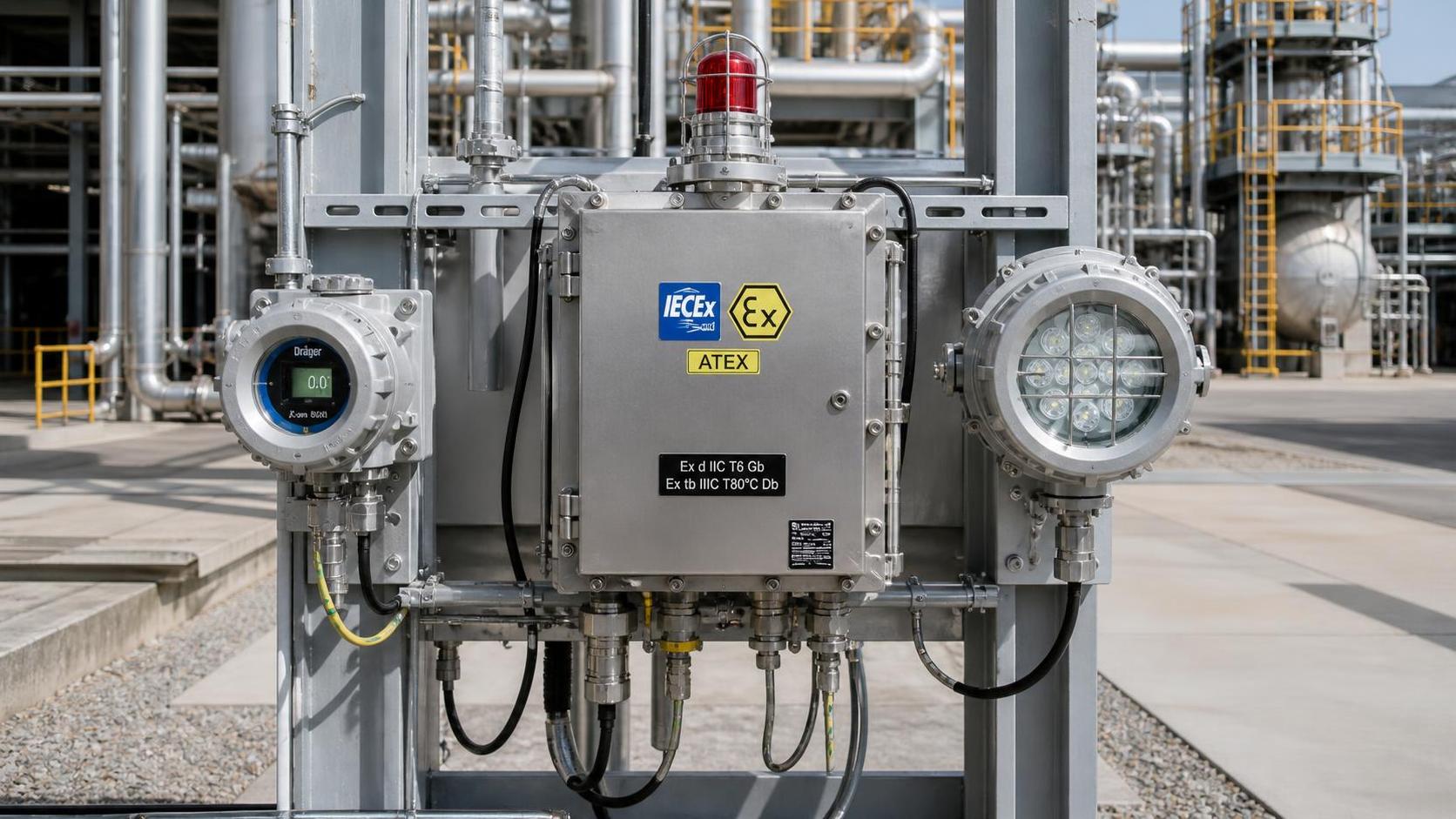
Some marks are familiar, but their importance depends on geography and equipment category. The table below helps separate common signals from their actual sourcing use.
The important point is that no single mark covers everything. Strong safety compliance review compares certification scope against voltage, temperature, ingress protection, hazard zone, and mechanical duty.
Where confusion often begins
Many sourcing errors come from treating symbols as universal proof. In reality, several documents can look similar while representing very different levels of testing, surveillance, or legal responsibility.
Certification is not the same as self-declaration
For some product groups, a manufacturer may declare conformity under applicable rules. That can be legitimate, but it is different from third-party listing or certification.
System standards are not product standards
A supplier with ISO 9001 may run a controlled factory. That does not confirm a switchgear assembly, sensor, valve, or enclosure meets the safety requirements of a target application.
Test reports are not always current approval evidence
A report may describe one tested sample from years ago. Safety compliance decisions should also confirm certificate validity, revision status, production consistency, and applicable product variants.
How standards connect to real industrial categories
Across GIC’s coverage areas, the standards that matter change with the equipment function. Looking at categories makes compliance review far more precise.
- Security and safety devices may require electrical safety, fire performance, and enclosure protection evidence.
- Instrumentation often needs calibration traceability, electromagnetic compatibility, and hazardous area approval.
- Power distribution equipment usually demands short-circuit ratings, insulation coordination, and installation code alignment.
- Environmental systems may require material compatibility, leak integrity, and emissions-related conformity.
- Mechanical components can depend on pressure ratings, metallurgical traceability, and fatigue or impact performance.
Simple sourcing templates often miss these differences. A better method is to start from failure mode and site condition, then map required safety compliance evidence from there.
A practical way to evaluate supplier claims
When certifications appear in catalogs or quotations, they should be reviewed as operating evidence, not just branding language. A short checklist helps separate reliable documentation from vague claims.
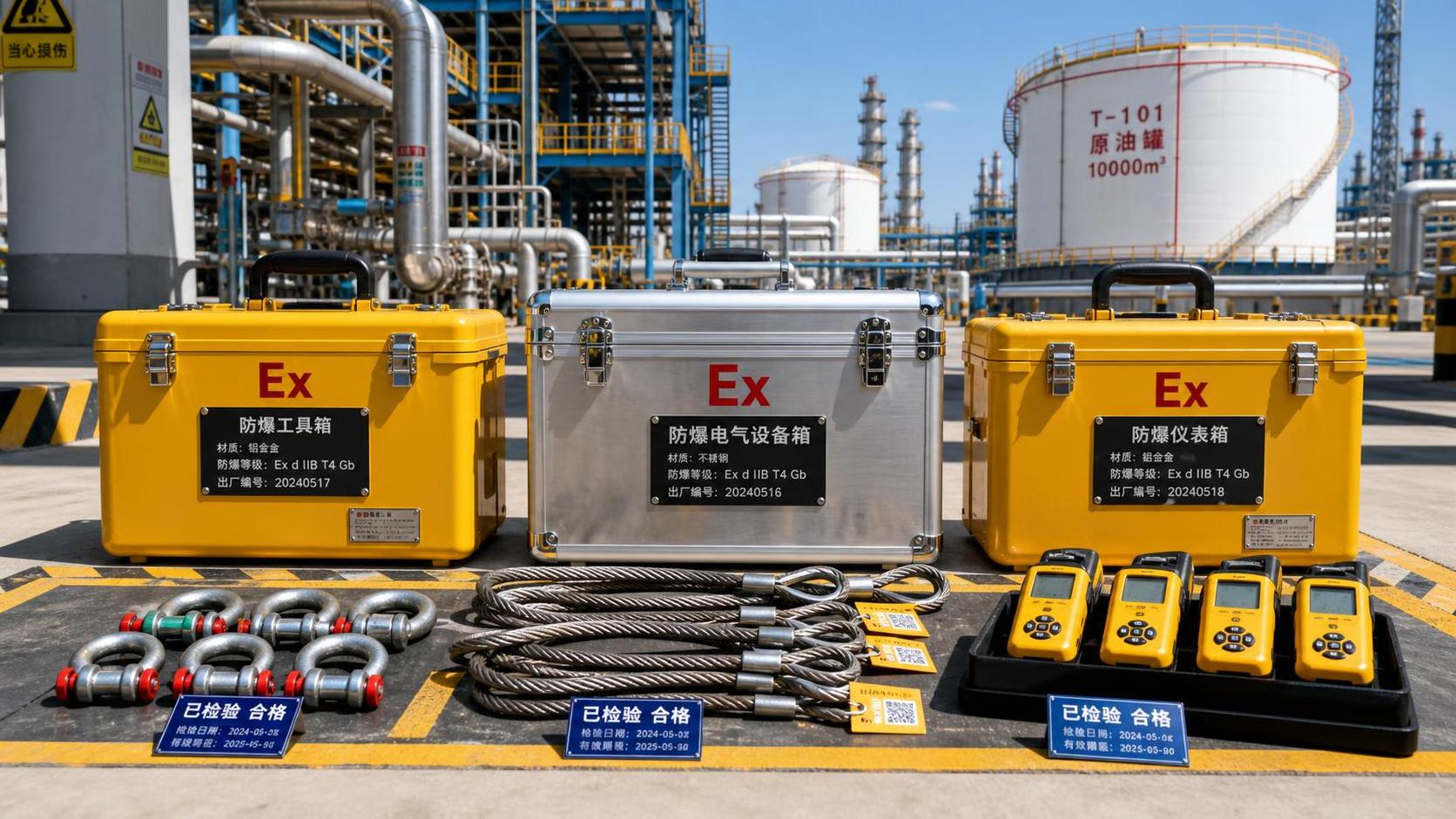
- Confirm the exact standard number and edition, not only a logo or generic statement.
- Check whether the certificate covers the full assembled product or only a component inside it.
- Match ratings to the project environment, including temperature, dust, moisture, voltage, and vibration.
- Verify the issuing body, file number, expiry details, and public listing where available.
- Ask whether design changes, substitutions, or regional variants affect certification status.
- Review manuals, labels, and installation limitations because safety compliance often depends on correct field use.
This process reduces the risk of buying a technically sound product that still fails site approval, audit review, or commissioning requirements.
Why documentation quality matters as much as the mark
Strong suppliers support safety compliance with a complete documentation trail. That usually includes declarations, certificates, test summaries, datasheets, material details, and installation instructions.
The absence of alignment across those documents is often a warning sign. A certificate may show one model family, while the datasheet describes another configuration with different ratings.
For industrial infrastructure, that mismatch can delay approvals, trigger rework, or weaken incident defensibility. Reliable sourcing depends on consistency, not isolated paperwork.
That is one reason editorially curated intelligence matters. In high-stakes procurement, interpretation quality is often as important as document availability.
Turning compliance review into better decisions
The best safety compliance process does not end with pass or fail. It creates a structured basis for comparing options, escalating technical questions, and documenting acceptance decisions.
A useful next step is to group current purchases by risk level. High-consequence items should receive deeper review of certification scope, traceability, and installation constraints.
It also helps to maintain a standards matrix by equipment type and target market. That makes repeat buying faster and reduces confusion during audits, expansions, and multi-country projects.
Where uncertainty remains, compare supplier claims against independent technical references and verified certification sources. That approach supports more confident decisions without turning procurement into guesswork.
In the end, safety compliance is not just about satisfying a requirement. It is a practical tool for protecting performance, maintaining trust in industrial assets, and preventing avoidable risk before equipment reaches the field.
Technical Specifications
- How to Select Electronic Hotel Key Card Locks for Guest Rooms and Staff AreasAuthor :Safety Compliance Lead
- How to Select Lab Instruments for Reliable Chemical Analysis WorkflowsAuthor :Precision Metrology Expert
- How to Size a UPS for Server Rooms: Load, Runtime, and Redundancy FactorsAuthor :Grid Infrastructure Analyst
Expert Insights

Chief Security Architect
Dr. Thorne specializes in the intersection of structural engineering and digital resilience. He has advised three G7 governments on industrial infrastructure security.
Related Analysis
- Sep 17, 2026How to Select Electronic Hotel Key Card Locks for Guest Rooms and Staff AreasAuthor :Safety Compliance Lead
- Sep 16, 2026How to Select Lab Instruments for Reliable Chemical Analysis WorkflowsAuthor :Precision Metrology Expert
- Sep 15, 2026How to Size a UPS for Server Rooms: Load, Runtime, and Redundancy FactorsAuthor :Grid Infrastructure Analyst
Core Sector // 01
Security & Safety
- Can One Supplier Provide Both IEC- and ATEX-Certified Safety Equipment?Author :Safety Compliance Lead

- Are Dual IEC and NEC Safety Certifications Worth the Cost?Author :Safety Compliance Lead

- What Is the Difference Between Class I and Class II PPE?Author :Safety Compliance Lead

- Which Oil and Gas Safety Standards Should Contractors Meet Before Site Mobilization?Author :Safety Compliance Lead

- EU REACH Adds PFAS Cap for PPE WorkwearAuthor :Safety Compliance Lead

- How to Evaluate a Chemical Resistant Suit Supplier for Industrial Safety ProcurementAuthor :Safety Compliance Lead

- EU REACH Sets 50 ppb PFAS Cap for PPE WorkwearAuthor :Safety Compliance Lead

- EU Tightens PFOA Limit for PPE and Industrial Filter MediaAuthor :Safety Compliance Lead