USTR Tariff Plan Raises New PPE and Workwear Compliance Bar
Author
Date Published
Reading Time

The timing of the event is not clearly specified in the input, but the latest disclosed development is that the Office of the United States Trade Representative (USTR) released a Section 301 determination on June 2 proposing an additional 12.5% tariff on goods shipped from China to the U.S. over forced-labor enforcement concerns. For exporters of PPE and workwear, the more immediate issue is not only tariff exposure, but also a stricter documentation threshold covering yarn, dyeing and finishing, and sewing, which puts manufacturers, importers, and supply chain coordinators under closer compliance scrutiny.
What the June 2 determination actually says
According to the information provided, USTR announced a Section 301 determination on June 2 and concluded that China had not effectively enforced a system prohibiting the import of products linked to forced labor. On that basis, it proposed an additional 12.5% tariff on goods exported to the United States.
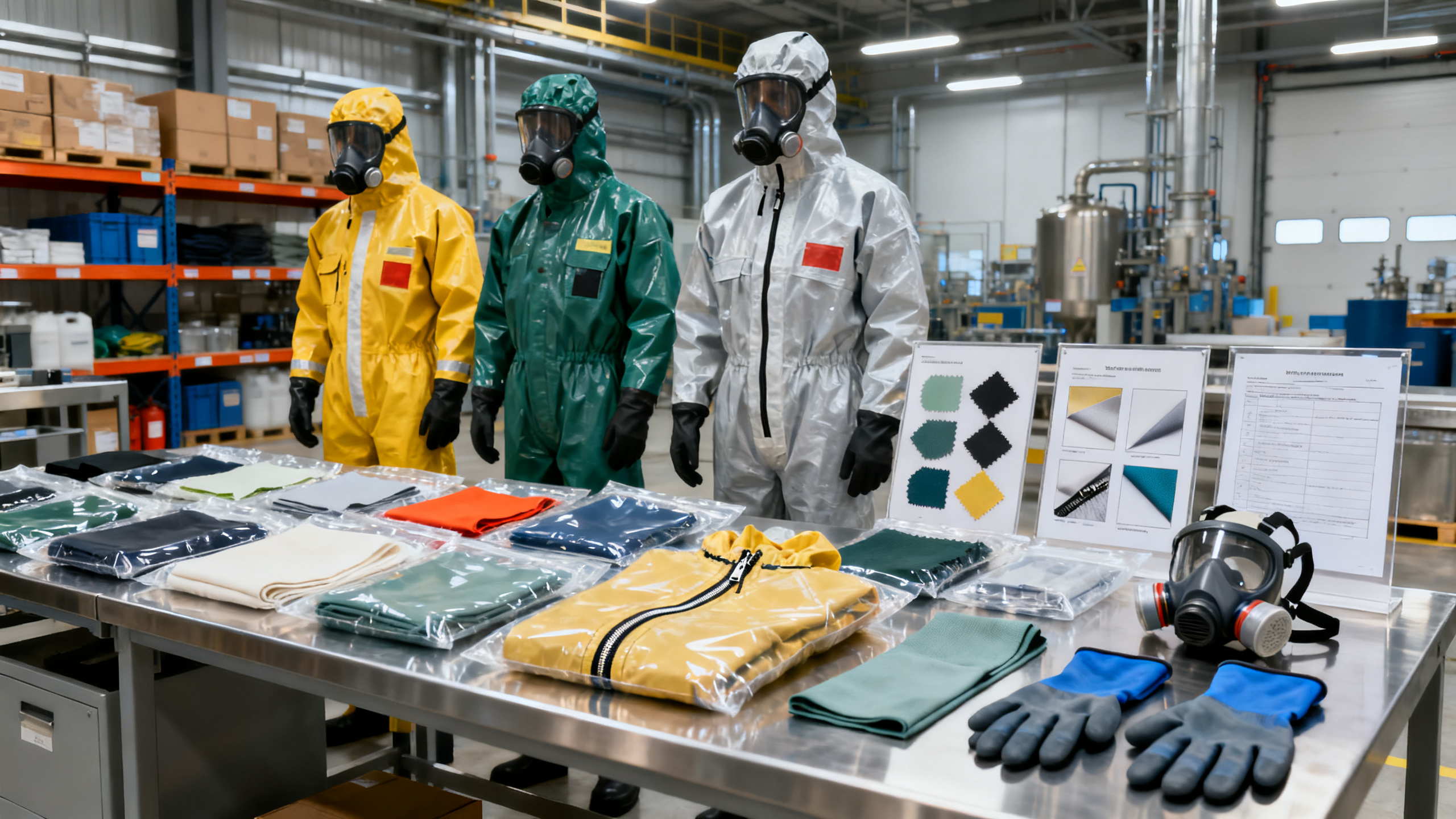
The same information indicates that the new rule would require exporters of PPE products such as protective clothing, safety shoes, and respirators, as well as workwear products such as flame-resistant garments and antistatic suits, to provide end-to-end labor compliance documentation.
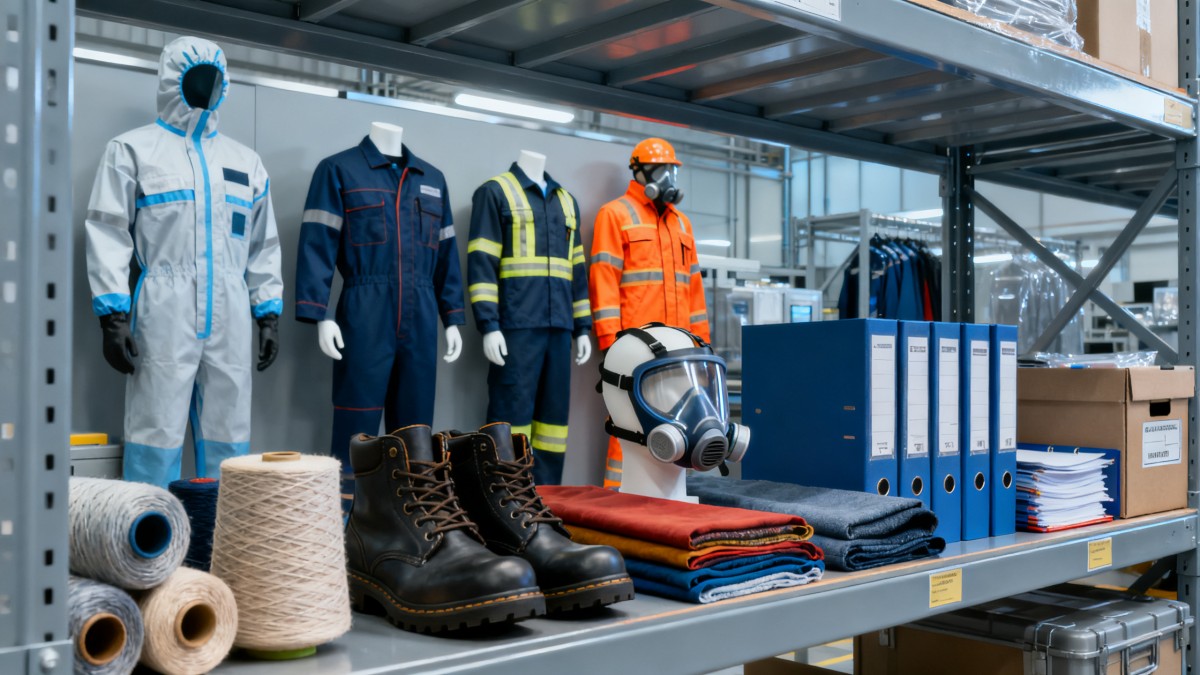
The required documentation scope, as described in the input, covers third-party audit reports across upstream and manufacturing stages, including raw-material yarn, dyeing and finishing, and sewing. Importers would also need to complete a USMCA-style origin declaration filing before customs clearance.
Why the pressure extends beyond the finished-goods exporter
Export-facing manufacturers may face dual pressure on cost and proof
From an industry perspective, companies directly shipping PPE and workwear to the U.S. may be affected in two linked areas: the proposed 12.5% additional tariff and the need to organize full-chain labor compliance evidence. The operational pressure is likely to fall on document preparation, supplier coordination, and shipment readiness rather than on production alone.
Upstream material and processing partners move into the compliance frame
Analysis shows that the new threshold, as described, reaches back to yarn sourcing and dyeing and finishing stages. That means upstream suppliers and processors may come under closer review because their records and third-party audits could become necessary for downstream exporters to complete compliance files.
Importers and customs-facing teams may need earlier file completion
The requirement for a USMCA-style origin declaration filing before customs clearance suggests that U.S. importers and customs compliance teams may need to move document review further forward in the transaction process. What deserves closer attention is the timing: if filing must be completed before clearance, document gaps may affect shipment scheduling and handover coordination.
Supply chain service providers may see higher documentation demands
Observably, logistics coordinators, trade service providers, and other supply chain intermediaries may also be drawn more deeply into compliance work because the practical burden often involves document collection, consistency checks, and coordination across multiple production stages.
What companies should monitor now
Separate the proposed tariff from the proof-of-compliance task
Analysis shows that businesses should treat the proposed 12.5% additional tariff and the labor compliance documentation requirement as related but distinct issues. One affects landed cost expectations, while the other affects whether supporting files are complete enough for trade execution.
Check whether core product lines fall within the named categories
What deserves closer attention is whether current U.S.-bound products are within the PPE and workwear categories described in the input, including protective clothing, safety shoes, respirators, flame-resistant garments, and antistatic suits. For affected lines, companies may need to review where evidence is strongest and where supply chain visibility is weakest.
Review document readiness across yarn, processing, and sewing
From an industry perspective, the practical challenge is not simply having internal statements on file, but matching them with the third-party audit materials described in the information provided. Businesses should pay attention to whether records from yarn suppliers, dyeing and finishing facilities, and sewing factories can be assembled into a consistent chain.
Align exporter and importer communication earlier in the order cycle
Observably, importer filing obligations before customs clearance make early communication more important. Companies involved in sourcing, manufacturing, and import processing may need to clarify responsibility for origin declarations, audit reports, and cutoff timing before goods reach the shipment stage.
Why this looks like a policy signal as much as a trade measure
This section is an editorial observation. Based on the information provided, the development appears to be more than a narrow tariff adjustment for selected product groups. The combination of a proposed additional tariff and full-chain labor compliance documentation suggests a policy direction in which traceability and labor-related proof become central to market access for certain goods.
At the same time, it is more appropriate to understand this as a development that still requires continued observation rather than as a fully settled commercial outcome. The input states that the tariff is proposed, and the practical impact will depend on how the stated requirements are applied and clarified in subsequent official communication.
How the market may need to read this development
For the industry, the key significance lies in the fact that compliance expectations appear to be expanding from the finished product to the full production chain. That matters for PPE and workwear exporters because these categories often involve multiple suppliers and processing stages.
A neutral reading is that this development should currently be understood as both a near-term operational issue and a longer-term compliance signal. It does not yet justify broad conclusions beyond the information provided, but it does justify closer monitoring of documentation capability, importer coordination, and any further rule clarification.
About the basis for this article
This article is generated from the user-provided news title, event timing, and event summary. The specific official source link was not provided in the input, so the underlying wording and any subsequent updates still need ongoing verification.
For this type of development, source categories that are typically relevant include official government notices, company disclosures, industry association updates, authoritative media reporting, and standards-related documents. Based on the current input, the areas that warrant continued follow-up are any further official clarification on the tariff proposal, the exact scope of covered goods, and the implementation details for labor compliance documentation and pre-clearance origin filing.
Technical Specifications
- How to Select Electronic Hotel Key Card Locks for Guest Rooms and Staff AreasAuthor :Safety Compliance Lead
- How to Select Lab Instruments for Reliable Chemical Analysis WorkflowsAuthor :Precision Metrology Expert
- How to Size a UPS for Server Rooms: Load, Runtime, and Redundancy FactorsAuthor :Grid Infrastructure Analyst
Expert Insights

Chief Security Architect
Dr. Thorne specializes in the intersection of structural engineering and digital resilience. He has advised three G7 governments on industrial infrastructure security.
Related Analysis
- Sep 17, 2026How to Select Electronic Hotel Key Card Locks for Guest Rooms and Staff AreasAuthor :Safety Compliance Lead
- Sep 16, 2026How to Select Lab Instruments for Reliable Chemical Analysis WorkflowsAuthor :Precision Metrology Expert
- Sep 15, 2026How to Size a UPS for Server Rooms: Load, Runtime, and Redundancy FactorsAuthor :Grid Infrastructure Analyst
Core Sector // 01
Security & Safety
- Can One Supplier Provide Both IEC- and ATEX-Certified Safety Equipment?Author :Safety Compliance Lead

- Are Dual IEC and NEC Safety Certifications Worth the Cost?Author :Safety Compliance Lead

- What Is the Difference Between Class I and Class II PPE?Author :Safety Compliance Lead

- Which Oil and Gas Safety Standards Should Contractors Meet Before Site Mobilization?Author :Safety Compliance Lead

- EU REACH Adds PFAS Cap for PPE WorkwearAuthor :Safety Compliance Lead

- How to Evaluate a Chemical Resistant Suit Supplier for Industrial Safety ProcurementAuthor :Safety Compliance Lead

- EU REACH Sets 50 ppb PFAS Cap for PPE WorkwearAuthor :Safety Compliance Lead

- EU Tightens PFOA Limit for PPE and Industrial Filter MediaAuthor :Safety Compliance Lead