US Tightens ISF Rules for PPE and Workwear Imports
Author
Date Published
Reading Time

Effective July 15, 2026, U.S. Customs and Border Protection will apply tighter ISF enforcement to imported PPE and workwear, with a sharper focus on 8-digit HTS classification detail and country-of-origin verification. For importers, exporters, manufacturers, and supply chain service providers handling flame-resistant garments, cut-resistant gloves, high-visibility apparel, and related products, this matters because filing errors will no longer remain an administrative issue alone; they can now translate directly into hold-and-inspect action at U.S. ports and slower cargo release.
What the new filing requirement changes
According to the provided information, the new CBP enforcement protocols take effect on 2026-07-15 and apply to imported PPE and workwear shipments. The requirement centers on two confirmed filing elements: more granular HTS classification at the 8-digit subheading level and verification of country of origin.
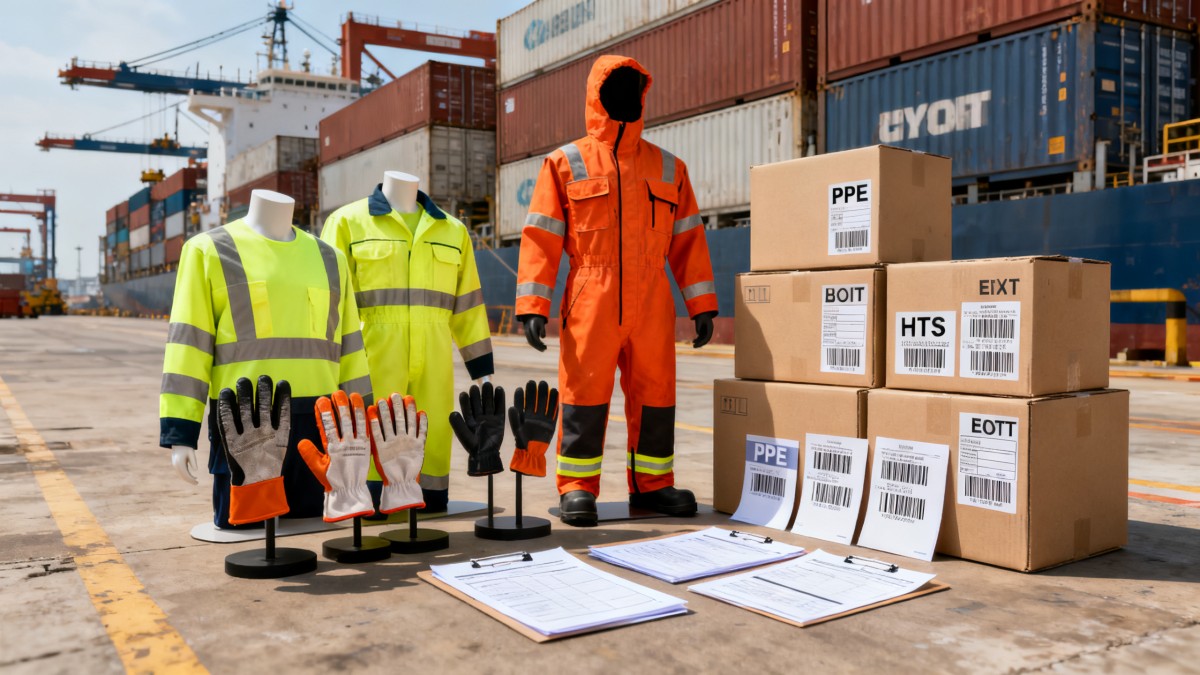
The scope specifically includes PPE and workwear categories such as flame-resistant garments, cut-resistant gloves, and high-visibility apparel. The stated enforcement consequence is also clear: non-compliant ISF filings will trigger automatic hold-and-inspect orders at U.S. ports, adding an estimated 5 to 7 business days to clearance time.
Where the operational pressure is likely to appear
Import-side compliance teams face a narrower margin for error
From an industry perspective, importers and the teams responsible for customs data submission are the first group likely to feel the impact. The reason is straightforward: the rule directly targets filing quality, especially product classification depth and origin verification. In practice, the pressure point is the accuracy of pre-arrival documentation rather than only the physical shipment itself.
What deserves closer attention is whether internal product mapping is detailed enough to support 8-digit HTS reporting across PPE and workwear lines. For companies moving mixed assortments, the risk is that classification ambiguity in one shipment could affect release timing.
Manufacturers and exporters may see more documentation requests
Analysis shows that overseas manufacturers and exporters are also closely tied to this change because import filings depend on upstream product and origin data. If the importer must verify country of origin more rigorously, suppliers may need to provide clearer supporting information for each covered item category.
The likely effect is not a new demand category in itself, but a higher standard for consistency between commercial documents, product descriptions, and origin-related records used in the filing process.
Logistics and customs service providers may absorb timing risk
For brokers, freight forwarders, and other supply chain service providers, the main issue is execution risk around port clearance. The confirmed 5 to 7 business day delay for non-compliant filings can affect scheduling, customer communication, and exception handling.
Observably, this makes pre-submission data review more important for service providers involved in ISF preparation or document coordination, especially when handling PPE and workwear products with similar descriptions but different tariff treatment.
What companies should review now
Check whether SKU-level classification can support 8-digit reporting
Companies involved in PPE and workwear shipments should pay attention to whether current product classification practices are detailed enough for the required 8-digit HTS subheading level. This is a practical issue, not just a policy-reading exercise, because the enforcement trigger is tied to filing compliance.
Reconfirm how country-of-origin information is collected and validated
Another immediate focus is origin verification. Businesses should examine how origin data is obtained from suppliers, how it is recorded internally, and whether that information is consistently reflected across shipment documents used for ISF preparation.
Separate rule wording from real clearance exposure
It is more appropriate to understand this development through the lens of enforcement exposure. The headline requirement concerns classification and origin verification, but the direct commercial consequence in the provided information is the automatic hold-and-inspect response for non-compliant filings. That means the operational question is not only what the rule says, but how quickly a filing defect can interrupt delivery timelines.
Prepare customer and delivery communications around delay risk
For businesses supplying time-sensitive PPE and workwear orders, the stated 5 to 7 business day clearance delay deserves practical planning. Analysis shows that sales, procurement, and logistics teams may need aligned communication language for customers and internal stakeholders where U.S.-bound shipments are involved.
Why this looks like more than a routine filing update
Analysis shows that this development is best read as a targeted enforcement signal rather than a minor procedural reminder. The reason is the combination of narrower filing expectations and a predefined consequence at the port level. That shifts the issue from technical customs compliance into shipment reliability and lead-time management.
At the same time, it would be premature to overstate the broader market outcome based only on the provided information. What is confirmed today is the enforcement framework, the product scope, and the stated delay risk for non-compliant filings. Wider trade or sourcing effects still require continued observation.
How to interpret the current signal
At this stage, the industry significance lies in execution discipline. For companies shipping PPE and workwear into the United States, this is not simply a documentation refinement; it is a clear reminder that product classification detail and origin verification now sit closer to actual clearance performance. It is more appropriate to understand the update as an immediate operational change with potential longer-tail compliance implications, rather than as a one-day policy headline or a fully settled long-term market outcome.
Basis of this article and points still to verify
This article is based on the user-provided news title, event date, and event summary. For developments of this type, relevant source categories typically include official notices, company statements, industry association updates, authoritative media reporting, and standards-related documents. No specific official source link was provided in the input, so the exact underlying notice should continue to be verified.
Further observation should focus on whether CBP issues additional clarification on filing practice, product scope interpretation, or enforcement details related to PPE and workwear shipments after the 2026-07-15 effective date.
Technical Specifications
- Air Handling Unit Supplier Checklist: Performance Data, Lead Times, and SupportAuthor :Environmental Engineering Director
- Buying Fiberglass Water Tanks Wholesale: Compare Quotes and Delivery CostsAuthor :Environmental Engineering Director
- Choosing an XLPE Power Cable Supplier: Test Reports, Traceability, and Lead TimesAuthor :Grid Infrastructure Analyst
Expert Insights

Chief Security Architect
Dr. Thorne specializes in the intersection of structural engineering and digital resilience. He has advised three G7 governments on industrial infrastructure security.
Related Analysis
- Oct 19, 2026Air Handling Unit Supplier Checklist: Performance Data, Lead Times, and SupportAuthor :Environmental Engineering Director
- Oct 18, 2026Buying Fiberglass Water Tanks Wholesale: Compare Quotes and Delivery CostsAuthor :Environmental Engineering Director
- Oct 17, 2026Choosing an XLPE Power Cable Supplier: Test Reports, Traceability, and Lead TimesAuthor :Grid Infrastructure Analyst
Core Sector // 01
Security & Safety
- Can One Supplier Provide Both IEC- and ATEX-Certified Safety Equipment?Author :Safety Compliance Lead

- Are Dual IEC and NEC Safety Certifications Worth the Cost?Author :Safety Compliance Lead

- What Is the Difference Between Class I and Class II PPE?Author :Safety Compliance Lead

- Which Oil and Gas Safety Standards Should Contractors Meet Before Site Mobilization?Author :Safety Compliance Lead

- EU REACH Adds PFAS Cap for PPE WorkwearAuthor :Safety Compliance Lead

- How to Evaluate a Chemical Resistant Suit Supplier for Industrial Safety ProcurementAuthor :Safety Compliance Lead

- EU REACH Sets 50 ppb PFAS Cap for PPE WorkwearAuthor :Safety Compliance Lead

- EU Tightens PFOA Limit for PPE and Industrial Filter MediaAuthor :Safety Compliance Lead