How to Evaluate a Chemical Resistant Suit Supplier for Industrial Safety Procurement
Author
Date Published
Reading Time
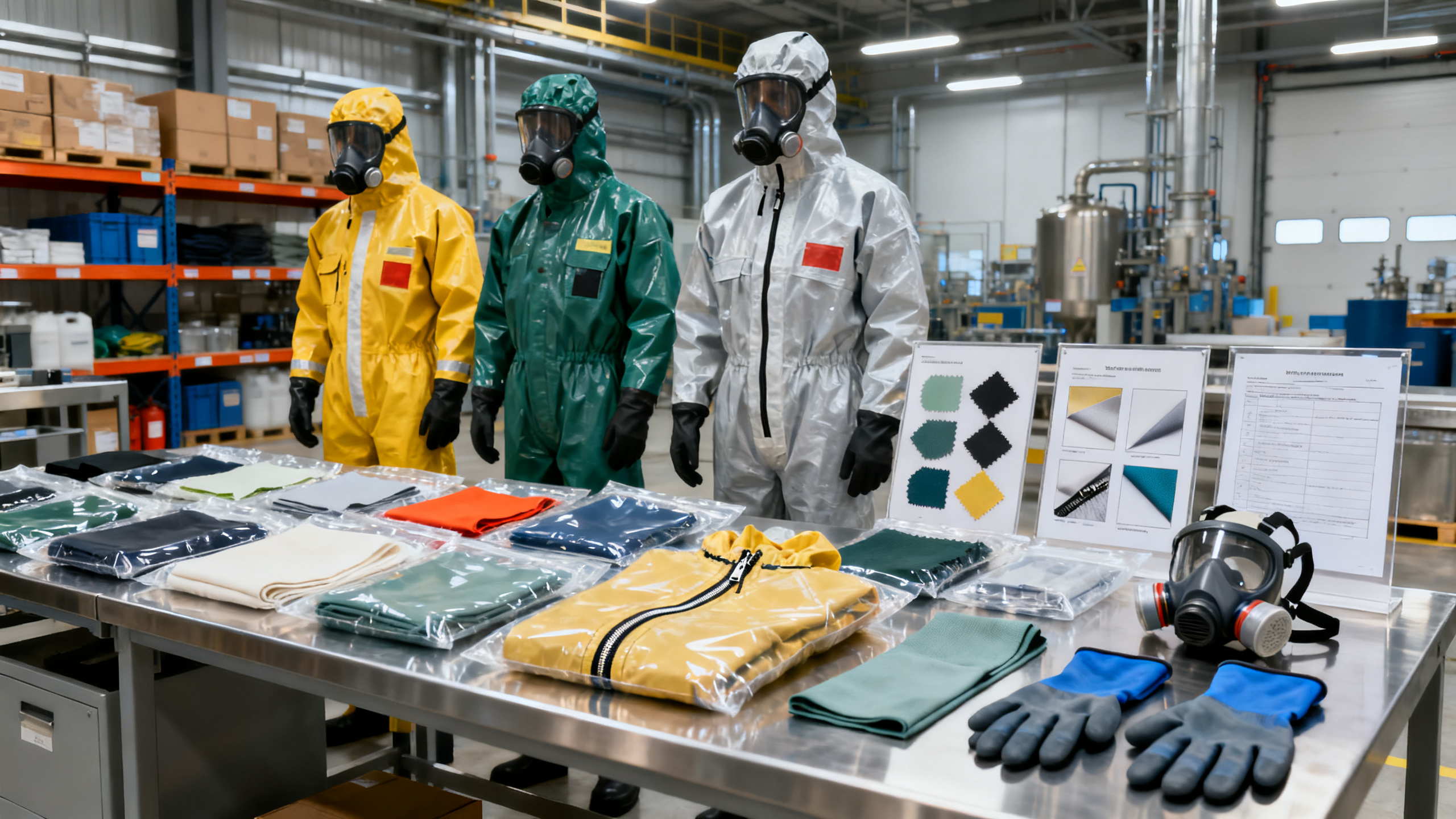
What should procurement teams look at first when screening a chemical resistant suit supplier?
Start with fit-for-use evidence, not the catalog. A supplier may offer many suit models, but that does not tell you whether their products match the chemicals, exposure duration, work conditions, and movement demands in your facility. In industrial safety procurement, the first question is simple: can this supplier prove that the suit selected is appropriate for the actual hazard?
That means asking for the technical data behind the garment, including material information, chemical permeation or degradation test references where available, seam construction details, closure design, and limitations of use. If the supplier immediately shifts the conversation to price or lead time without clarifying your exposure scenario, that is usually a weak sign. A capable supplier asks what chemicals are involved, whether exposure is splash or continuous, whether the job is emergency response or routine maintenance, and what other PPE must interface with the suit.
For buyers, this early stage is less about choosing a brand and more about eliminating suppliers who sell broadly but support narrowly.
Which certifications and documents actually matter?
Procurement teams often get overloaded with paperwork, but only a few document groups really help you judge a chemical resistant suit supplier.
- Product compliance documents: declarations of conformity, applicable standard references, and product test documentation tied to the exact suit model being quoted.
- Material or performance data: information showing how the suit material performs against relevant chemical exposure conditions.
- Quality system records: evidence of controlled manufacturing and lot consistency, such as quality management documentation where applicable.
- Traceability documents: batch numbers, labeling format, and packaging information that allow incoming inspection and later incident review.
One practical rule: the document must match the quoted item exactly. A supplier may send a certificate for a similar suit, a different fabric weight, or an older version. That is not enough. Check the model code, revision, and intended protection type against the quotation and product datasheet.
If your organization sells or operates across multiple markets, also verify whether the supplier understands the destination market requirements rather than simply attaching generic paperwork.
How can you tell whether a supplier understands real chemical exposure risk?
Listen to the questions they ask back. A serious chemical resistant suit supplier will want details such as chemical name, concentration, temperature, contact time, phase of the substance, and whether the worker may kneel, climb, or work in confined spaces. Those factors affect material selection more than many buyers expect.
A common buying mistake is to treat “chemical resistant” as a universal claim. It is not. Suit performance depends on the specific chemical and the exposure profile. A supplier that cannot explain the difference between splash protection and sustained contact, or between a disposable barrier garment and a higher-duty reusable option, is not giving you procurement support. They are moving boxes.
This is also where field practicality matters. Some suits protect well on paper but create heat stress, mobility issues, or poor compatibility with gloves and respirators. Procurement decisions fail when the selected suit is technically compliant but operationally rejected by the site team.
Is the cheapest quote usually the wrong choice?
Very often, yes, especially when the comparison is made on unit price alone. The better cost question is: what is the total cost of safe use?
A lower-priced suit can become the more expensive option if it causes overconsumption, sizing failures, worker refusal, excess training time, damaged stock, or repeated urgent replenishment. It can also increase exposure risk if teams substitute models in the field because the approved suit is uncomfortable or unavailable.
When comparing suppliers, build cost around these points:
What questions should you ask before approving a new supplier?
A short, targeted supplier review usually tells you more than a long generic questionnaire. Focus on the decisions that affect risk, continuity, and claim defensibility.
- Which suit model do you recommend for our specific chemical exposure scenario, and why?
- What documents support that recommendation for this exact model?
- What are the known use limitations, including temperature, wear duration, and movement constraints?
- How do you control batch consistency and product traceability?
- What is your standard lead time, and what happens if demand spikes?
- Can you support wear trials, sizing evaluation, and user training materials?
- How do you handle complaints, field failures, or suspected nonconformity?
The goal is not to catch the supplier out. It is to see whether their answers stay consistent across technical, commercial, and after-sales topics. Gaps usually appear there.
How important are sizing, comfort, and compatibility with other PPE?
They matter more than many procurement teams expect. A suit can meet the required protection level and still fail on site if workers cannot move, seal gloves properly, fit respiratory equipment, or complete the task within heat and fatigue limits.
This is where supplier quality shows up in practical terms. Strong suppliers can explain cuff interfaces, hood design, zipper or flap protection, seam placement, and size availability across your workforce profile. Weak suppliers usually respond with a size chart only.
For procurement, compatibility issues become hidden cost drivers. If teams need additional taping, improvised adjustments, or multiple suit changes during one shift, the approved item may not be the right item.
How do you compare lead time and supply stability between suppliers?
Do not stop at the quoted lead time. Ask how the supplier delivers that lead time. Is stock held locally? Are core sizes always available? Is production dedicated or shared across distributors? Can they support urgent replacement after an incident or shutdown event?
A supplier with a slightly higher price but predictable replenishment often creates less operational risk than a lower-cost source with inconsistent availability. For plants with turnaround schedules or hazardous maintenance windows, delayed delivery is not just an inconvenience. It can trigger schedule slips, temporary substitutions, or emergency buys outside contract terms.
Procurement teams should also check pack size, minimum order quantity, shelf-life handling where relevant, and whether the supplier can maintain the same model over the contract period. Mid-contract product changes can create approval and training problems.
What are the warning signs that a chemical resistant suit supplier is not reliable?
Some warning signs show up early.
- They use broad claims like “suitable for chemical industry” without linking the statement to a defined exposure condition.
- The quoted model and the supplied documents do not match.
- They cannot explain differences between similar-looking suits.
- They avoid questions about complaints, returns, or field performance.
- Their commercial team promises fast delivery, while technical support answers slowly or vaguely.
Another red flag is overconfidence. In this category, honest limitations are a positive sign. A supplier who clearly states where a suit should not be used is usually more dependable than one who says yes to every scenario.
Should you request samples or trials before awarding a contract?
In many cases, yes. A paper review can narrow the field, but a controlled wear trial helps uncover issues that never appear in quotations. Users may find that visibility is poor, glove overlap is awkward, mobility is limited during ladder work, or the donning process takes too long for the task.
The trial should be structured. Define the task type, duration, climate conditions, other PPE used, and the observations you want from supervisors and wearers. That gives procurement something more reliable than general impressions. It also prevents a trial from becoming a popularity contest between brands.
Where site exposure conditions are severe, include EHS and operations in the review. Supplier selection should not sit with purchasing alone when the consequence of a bad choice is worker exposure.
How should a buyer make the final decision when two suppliers look similar?
Use a weighted decision matrix tied to operational risk, not a simple price ranking. If two suppliers both meet the basic technical requirement, the decision usually comes down to consistency: documentation quality, response quality, lead-time credibility, traceability, and how clearly each supplier defines the suit’s proper use.
The supplier that is easier to audit, easier to hold accountable, and easier to integrate into site practice is usually the better long-term choice. Cheap ambiguity becomes expensive later.
A practical buying sequence is to validate hazard fit, confirm model-specific documents, test field usability, compare supply stability, and only then negotiate price. That order keeps cost discipline in place without letting cost erase the safety purpose of the purchase.
Technical Specifications
- How to Select Electronic Hotel Key Card Locks for Guest Rooms and Staff AreasAuthor :Safety Compliance Lead
- How to Select Lab Instruments for Reliable Chemical Analysis WorkflowsAuthor :Precision Metrology Expert
- How to Size a UPS for Server Rooms: Load, Runtime, and Redundancy FactorsAuthor :Grid Infrastructure Analyst
Expert Insights

Chief Security Architect
Dr. Thorne specializes in the intersection of structural engineering and digital resilience. He has advised three G7 governments on industrial infrastructure security.
Related Analysis
- Sep 17, 2026How to Select Electronic Hotel Key Card Locks for Guest Rooms and Staff AreasAuthor :Safety Compliance Lead
- Sep 16, 2026How to Select Lab Instruments for Reliable Chemical Analysis WorkflowsAuthor :Precision Metrology Expert
- Sep 15, 2026How to Size a UPS for Server Rooms: Load, Runtime, and Redundancy FactorsAuthor :Grid Infrastructure Analyst
Core Sector // 01
Security & Safety
- Can One Supplier Provide Both IEC- and ATEX-Certified Safety Equipment?Author :Safety Compliance Lead

- Are Dual IEC and NEC Safety Certifications Worth the Cost?Author :Safety Compliance Lead

- What Is the Difference Between Class I and Class II PPE?Author :Safety Compliance Lead

- Which Oil and Gas Safety Standards Should Contractors Meet Before Site Mobilization?Author :Safety Compliance Lead

- EU REACH Adds PFAS Cap for PPE WorkwearAuthor :Safety Compliance Lead

- How to Evaluate a Chemical Resistant Suit Supplier for Industrial Safety ProcurementAuthor :Safety Compliance Lead

- EU REACH Sets 50 ppb PFAS Cap for PPE WorkwearAuthor :Safety Compliance Lead

- EU Tightens PFOA Limit for PPE and Industrial Filter MediaAuthor :Safety Compliance Lead