FDA Tightens Import Rules for Nano-Coated PPE
Author
Date Published
Reading Time

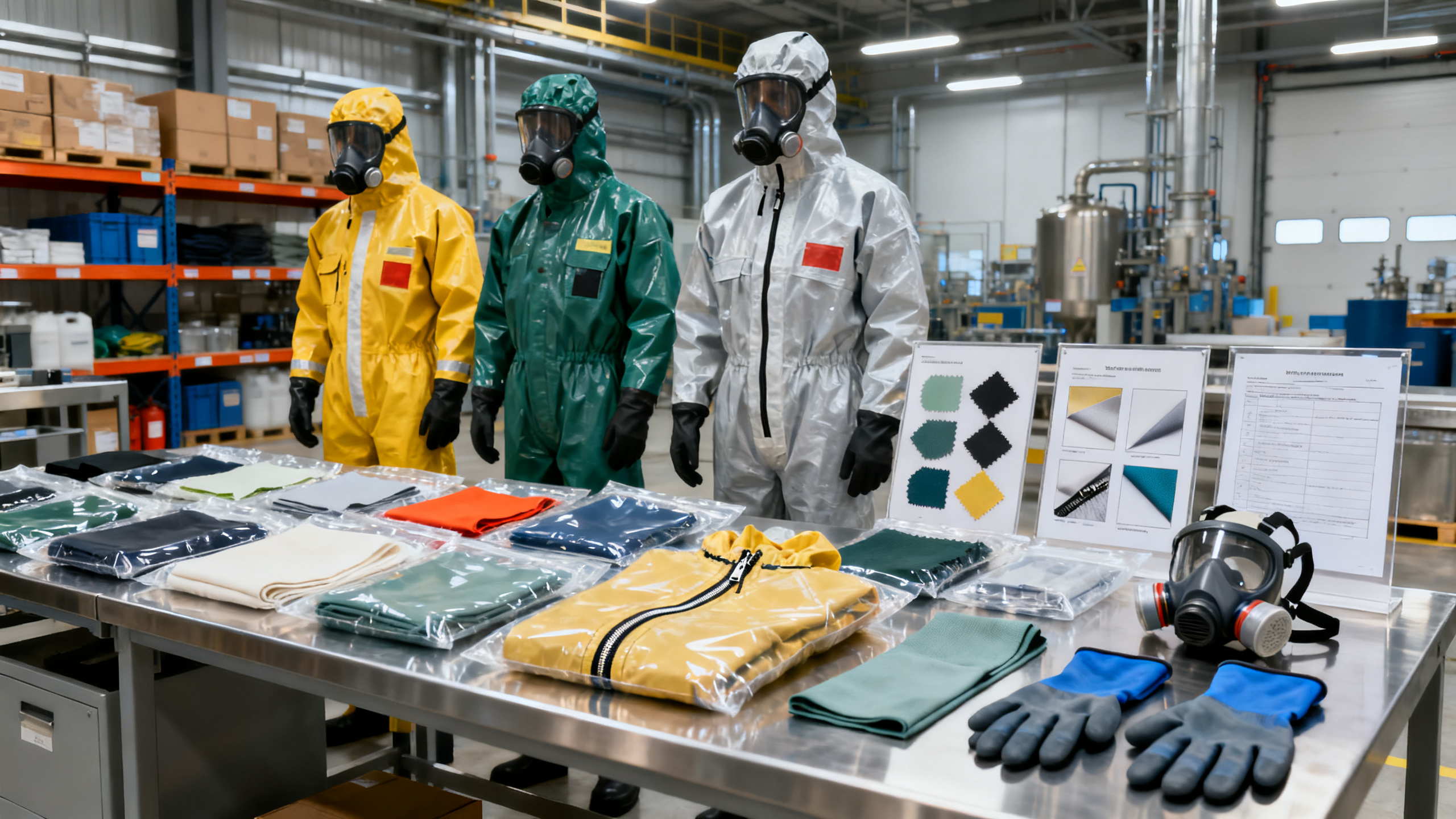
On June 5, 2026, the U.S. Food and Drug Administration updated its import compliance guidance for personal protective equipment, adding two required tests for industrial protective clothing that uses nano-coatings. With the rule taking effect on June 30, the change is immediately relevant to PPE manufacturers shipping to the U.S., as well as buyers, compliance teams, and supply chain partners involved in CCTV installation protective suits, firefighting and rescue garments, and workwear used in industrial inspection settings.

What the revised FDA guidance now requires
According to the information provided, the FDA issued a revised version of its Personal Protective Equipment Import Compliance Guidance on June 5, 2026. Under the update, industrial-grade protective clothing containing nano-coatings must pass two added tests: respiratory resistance under ASTM F2299 and skin sensitization under OECD TG 442D.
The requirement applies to all PPE manufacturers exporting to the U.S. market. The scope explicitly includes protective sets used for CCTV installation, garments for firefighting and rescue operations, and specialized workwear designed for industrial inspection scenarios. The new requirement is scheduled to take effect on June 30.
Where the impact is likely to be felt first
Export-facing manufacturers may need to reassess product readiness
From an industry perspective, the most direct effect falls on manufacturers already supplying nano-coated industrial PPE to the U.S. Their exposure is concentrated in product compliance, pre-shipment review, and technical documentation, because the updated guidance adds testing expectations tied to both breathing resistance and skin sensitization.
Procurement and sourcing teams may need closer material verification
Analysis shows that procurement functions are also likely to be affected where nano-coated fabrics or finished garments are involved. What deserves closer attention is whether coated materials used in existing product lines align with the added testing pathway, especially for products intended for U.S.-bound orders.
Importers, distributors, and service partners may face timing and coordination pressure
For trading companies, channel operators, and supply chain service providers, the main issue is less about product design and more about shipment continuity. The short gap between the June 5 announcement and the June 30 effective date means coordination around testing status, compliance files, and customer communication may become a practical pressure point.
End-use buyers may review supplier qualification more carefully
Buyers of industrial PPE for firefighting, rescue, CCTV installation, or inspection work may also need to pay closer attention to supplier qualification and document completeness. Observably, the rule change matters not only for manufacturers but also for customers that rely on uninterrupted import compliance and stable delivery schedules.
What companies should watch now
Identify whether nano-coated products fall within the rule
A practical first focus is product screening. Companies exporting industrial protective clothing to the U.S. should clarify which SKUs use nano-coatings and whether those products are sold into the application areas mentioned in the update.
Check test documentation against the added requirements
Another immediate priority is document readiness. The new rule specifically adds ASTM F2299 and OECD TG 442D as required tests for the affected products, so firms should review whether existing files, test reports, and supporting materials match the revised guidance.
Prepare for customer and shipment communication before June 30
Because the effective date is close, commercial and logistics teams may need a coordinated communication plan. Analysis shows that the operational issue is not only passing the tests, but also ensuring customers, import counterparts, and internal teams are aligned on compliance status before shipment windows are affected.
Keep tracking how the rule is interpreted in practice
What deserves closer attention is the difference between the published requirement and day-to-day implementation. Companies should continue monitoring whether further official wording, supporting explanations, or market-side documentation expectations emerge as the effective date approaches.
Why this matters beyond a single rule update
Observably, this development is more than a routine wording change because it adds two specific testing thresholds for a defined category of PPE materials. At the same time, based on the information provided, it is more appropriate to understand this as a concrete compliance update with broader signaling value, rather than as a complete reset of the PPE import framework.
From an industry perspective, the immediate significance lies in execution: affected companies do not have much time between announcement and enforcement. The longer-term significance still requires observation, particularly around whether testing requirements tied to material characteristics become a more common feature in cross-border PPE compliance.
How to read the development at this stage
At this stage, the FDA update is best understood as a near-term compliance change with direct operational consequences for nano-coated industrial PPE entering the U.S. market. It does not, on its own, confirm wider policy expansion beyond the scope described in the provided information, but it does indicate that material-specific testing expectations deserve closer attention in affected product categories.
Basis of this article
This article is generated from the user-provided news title, event date, and event summary. The information available for this piece is limited to the stated FDA guidance update, its effective date, the added ASTM F2299 and OECD TG 442D testing requirements, and the listed product application scenarios.
For developments of this kind, relevant source types usually include official agency notices, company compliance notices, industry association updates, authoritative media reports, and standards organization documents. A specific official source link was not provided in the input, so the exact source document should continue to be verified. Follow-up attention should focus on any additional official clarification, implementation wording, or documentation expectations related to the June 30 effective date.
Technical Specifications
- How to Select Electronic Hotel Key Card Locks for Guest Rooms and Staff AreasAuthor :Safety Compliance Lead
- How to Select Lab Instruments for Reliable Chemical Analysis WorkflowsAuthor :Precision Metrology Expert
- How to Size a UPS for Server Rooms: Load, Runtime, and Redundancy FactorsAuthor :Grid Infrastructure Analyst
Expert Insights

Chief Security Architect
Dr. Thorne specializes in the intersection of structural engineering and digital resilience. He has advised three G7 governments on industrial infrastructure security.
Related Analysis
- Sep 17, 2026How to Select Electronic Hotel Key Card Locks for Guest Rooms and Staff AreasAuthor :Safety Compliance Lead
- Sep 16, 2026How to Select Lab Instruments for Reliable Chemical Analysis WorkflowsAuthor :Precision Metrology Expert
- Sep 15, 2026How to Size a UPS for Server Rooms: Load, Runtime, and Redundancy FactorsAuthor :Grid Infrastructure Analyst
Core Sector // 01
Security & Safety
- Can One Supplier Provide Both IEC- and ATEX-Certified Safety Equipment?Author :Safety Compliance Lead

- Are Dual IEC and NEC Safety Certifications Worth the Cost?Author :Safety Compliance Lead

- What Is the Difference Between Class I and Class II PPE?Author :Safety Compliance Lead

- Which Oil and Gas Safety Standards Should Contractors Meet Before Site Mobilization?Author :Safety Compliance Lead

- EU REACH Adds PFAS Cap for PPE WorkwearAuthor :Safety Compliance Lead

- How to Evaluate a Chemical Resistant Suit Supplier for Industrial Safety ProcurementAuthor :Safety Compliance Lead

- EU REACH Sets 50 ppb PFAS Cap for PPE WorkwearAuthor :Safety Compliance Lead

- EU Tightens PFOA Limit for PPE and Industrial Filter MediaAuthor :Safety Compliance Lead