How to Choose Custom High Visibility Clothing for Rail, Road, and Site Work
Author
Date Published
Reading Time
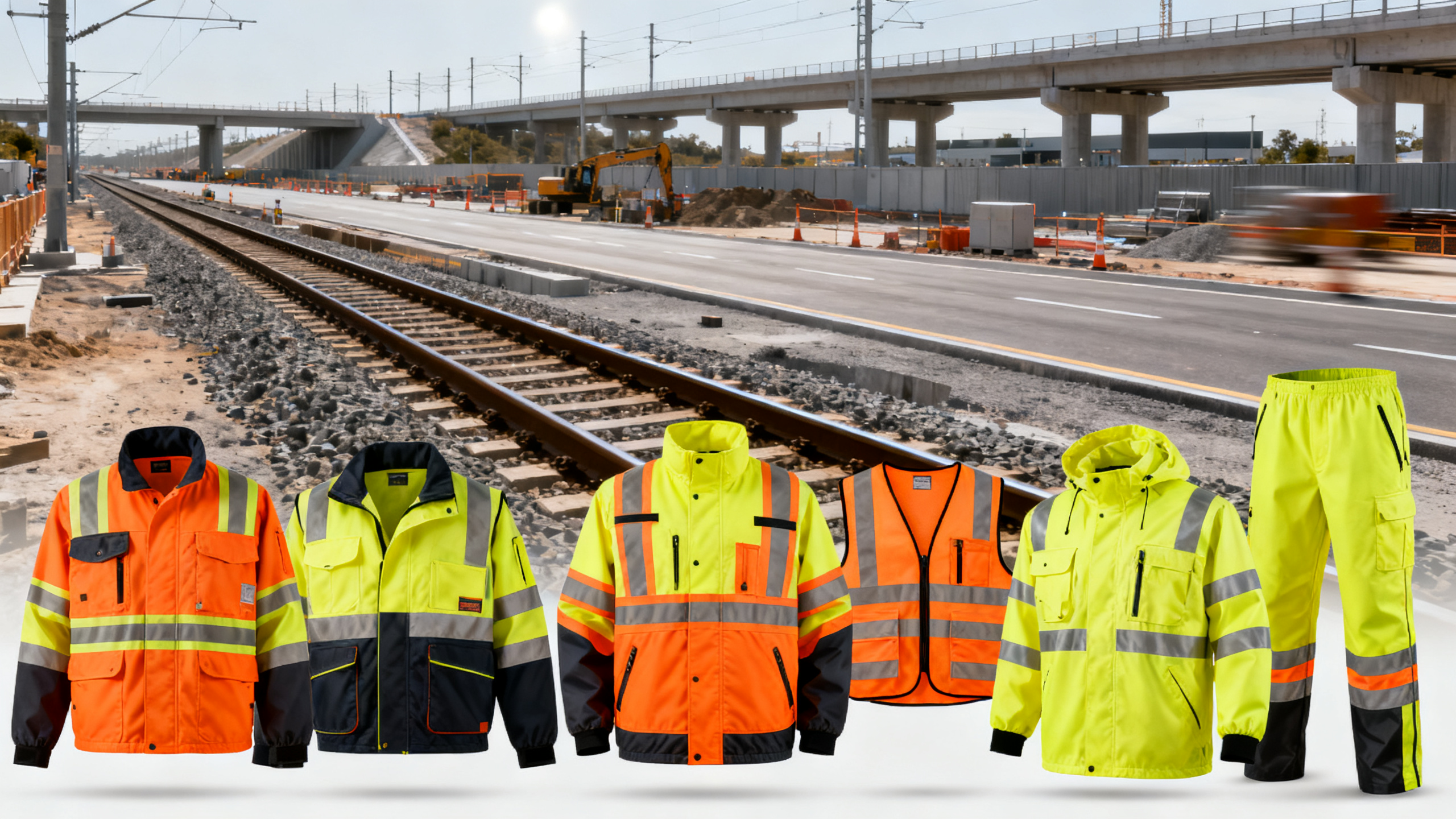
Choosing custom high visibility clothing for rail, road, and site work starts with a simple reality: visibility is a control measure, not a branding exercise.
On active corridors and mixed-use worksites, poor garment selection can weaken compliance, reduce recognition distance, and create avoidable variation across crews and contractors.
That is why custom high visibility clothing deserves the same disciplined review applied to tools, barriers, and electrical isolation systems.
From a broader industrial perspective, the issue sits squarely within the safety and reliability priorities emphasized by Global Industrial Core, where procurement decisions are judged by certified performance and operational resilience.
What custom high visibility clothing really includes
In practice, custom high visibility clothing means more than adding a logo to a standard vest.
It covers the full combination of fluorescent background material, retroreflective tape, garment design, weather suitability, branding layout, and the compliance markings that prove conformity.
For rail, road, and site work, customization often involves role-specific color choices, flame-resistant options, waterproof shells, arc-rated layers, and trim placements that preserve visibility after modification.
A good garment is not only seen in daylight. It must also remain conspicuous under headlights, in rain, beside machinery, and during tasks that twist, crouch, climb, or require harnesses.
Why selection has become more demanding
Worksites are busier, subcontracting chains are longer, and many operations run across changing light conditions and seasonal extremes.
At the same time, companies are under greater scrutiny to show documented compliance with standards such as ISO 20471, RIS-3279-TOM, EN 343, and related PPE requirements.
The challenge is that custom elements can unintentionally reduce compliant surface area or interfere with reflective performance.
A large printed logo, a poorly placed pocket, or an incompatible fabric panel can turn a compliant sample into a weaker field garment.
That risk matters because visibility clothing is often specified once, then used across multiple projects, suppliers, and laundering cycles.
Start with standards before style
The most reliable way to assess custom high visibility clothing is to begin with the governing exposure conditions, not the garment catalog.
Rail maintenance, highway operations, and general construction may share visibility needs, but the standard pathway is rarely identical.
This approach avoids a common mistake: buying one style for every task, then trying to manage the exceptions later.
Key features that affect real-world performance
Certified fabric and tape matter, but field performance depends on how the garment behaves during use, storage, and maintenance.
Visibility after movement
Look at tape configuration when arms are raised, jackets are zipped open, or waterproof trousers are worn over boots.
Some garments test well when flat, yet lose recognizability once layered with harnesses, radios, or tool belts.
Fabric durability
Road grit, ballast dust, oil, cement, and repeated washing all degrade visibility clothing.
Custom high visibility clothing should be reviewed for color fastness, seam strength, tape adhesion, and wash-life claims supported by test data.
Weather adaptability
A vest may satisfy a basic requirement, yet fail in cold rain, crosswinds, or heat stress conditions.
Many programs benefit from modular systems, such as breathable polo shirts, insulated jackets, and waterproof outer shells built to maintain class compliance.
Compatibility with other PPE
The garment should work with helmets, fall protection, hearing protection, gloves, and respiratory equipment.
If workers constantly remove or alter a garment to complete a task, the clothing system is not properly matched to the job.
Where customization helps, and where it can go wrong
Customization is useful when it improves identification, supports contractor control, or aligns garments with task-specific hazards.
It becomes risky when visual branding overrides functional layout.
- Printed logos should not cover reflective tape or reduce fluorescent background below the required area.
- Extra pockets, vents, and reinforced panels should be checked against certification scope.
- Color changes must match the approved standard for the intended environment, especially on rail networks.
- Embroidery should be reviewed carefully because needle perforation can weaken waterproof membranes and reflective zones.
A strong supplier will explain which modifications remain within certification boundaries and which require retesting or a different base garment.
A practical evaluation process for consistent selection
In actual operations, clothing decisions are strongest when they follow a repeatable review path rather than personal preference.
Map the hazard profile
Separate tasks by traffic exposure, lighting conditions, weather, contamination risk, and interaction with machinery or power systems.
Check the certification chain
Review declarations of conformity, garment labeling, wash limits, and any secondary standards, including waterproofing or flame resistance where relevant.
Validate the customized sample
Approve the final decorated garment, not only the blank stock item.
This detail is often missed when orders move quickly between distributor, decorator, and end user.
Run a wear trial
A short field trial can reveal overheating, poor fit over winter layers, limited pocket access, or reflective tape wear in high-friction zones.
Define replacement criteria
Set clear triggers for garment retirement, including fading, delamination, tears, or contamination that cannot be safely removed.
Procurement signals worth paying attention to
Not every supplier of custom high visibility clothing is equipped for industrial-grade programs.
The stronger indicator is not product range alone, but the quality of technical documentation and control over repeatability.
- Consistent test references tied to each garment code
- Clear statements on how customization affects compliance
- Traceable fabric and tape specifications
- Stable sizing across replenishment orders
- Laundering guidance matched to the actual material system
This is also where GIC’s broader sourcing lens becomes useful.
In critical infrastructure supply chains, dependable PPE selection increasingly depends on evidence, certification discipline, and supplier transparency rather than lowest initial price.
Making the next decision easier
The best custom high visibility clothing program usually begins with fewer assumptions and better questions.
Which tasks require the highest recognition distance? Which garments fail most often after washing? Which custom elements add clarity, and which only add visual noise?
By documenting those answers, comparing certified garment options, and reviewing final customized samples under real use conditions, clothing selection becomes easier to standardize and defend.
For rail, road, and site work, that is the real objective: not simply to order visible garments, but to build a visibility system that remains compliant, wearable, and dependable throughout its service life.
Technical Specifications
- How to Select Electronic Hotel Key Card Locks for Guest Rooms and Staff AreasAuthor :Safety Compliance Lead
- How to Select Lab Instruments for Reliable Chemical Analysis WorkflowsAuthor :Precision Metrology Expert
- How to Size a UPS for Server Rooms: Load, Runtime, and Redundancy FactorsAuthor :Grid Infrastructure Analyst
Expert Insights

Chief Security Architect
Dr. Thorne specializes in the intersection of structural engineering and digital resilience. He has advised three G7 governments on industrial infrastructure security.
Related Analysis
- Sep 17, 2026How to Select Electronic Hotel Key Card Locks for Guest Rooms and Staff AreasAuthor :Safety Compliance Lead
- Sep 16, 2026How to Select Lab Instruments for Reliable Chemical Analysis WorkflowsAuthor :Precision Metrology Expert
- Sep 15, 2026How to Size a UPS for Server Rooms: Load, Runtime, and Redundancy FactorsAuthor :Grid Infrastructure Analyst
Core Sector // 01
Security & Safety
- Can One Supplier Provide Both IEC- and ATEX-Certified Safety Equipment?Author :Safety Compliance Lead

- Are Dual IEC and NEC Safety Certifications Worth the Cost?Author :Safety Compliance Lead

- What Is the Difference Between Class I and Class II PPE?Author :Safety Compliance Lead

- Which Oil and Gas Safety Standards Should Contractors Meet Before Site Mobilization?Author :Safety Compliance Lead

- EU REACH Adds PFAS Cap for PPE WorkwearAuthor :Safety Compliance Lead

- How to Evaluate a Chemical Resistant Suit Supplier for Industrial Safety ProcurementAuthor :Safety Compliance Lead

- EU REACH Sets 50 ppb PFAS Cap for PPE WorkwearAuthor :Safety Compliance Lead

- EU Tightens PFOA Limit for PPE and Industrial Filter MediaAuthor :Safety Compliance Lead