Stretcher beds from manufacturers skip dynamic load testing—how static weight ratings misrepresent real patient transport stress
Author
Date Published
Reading Time
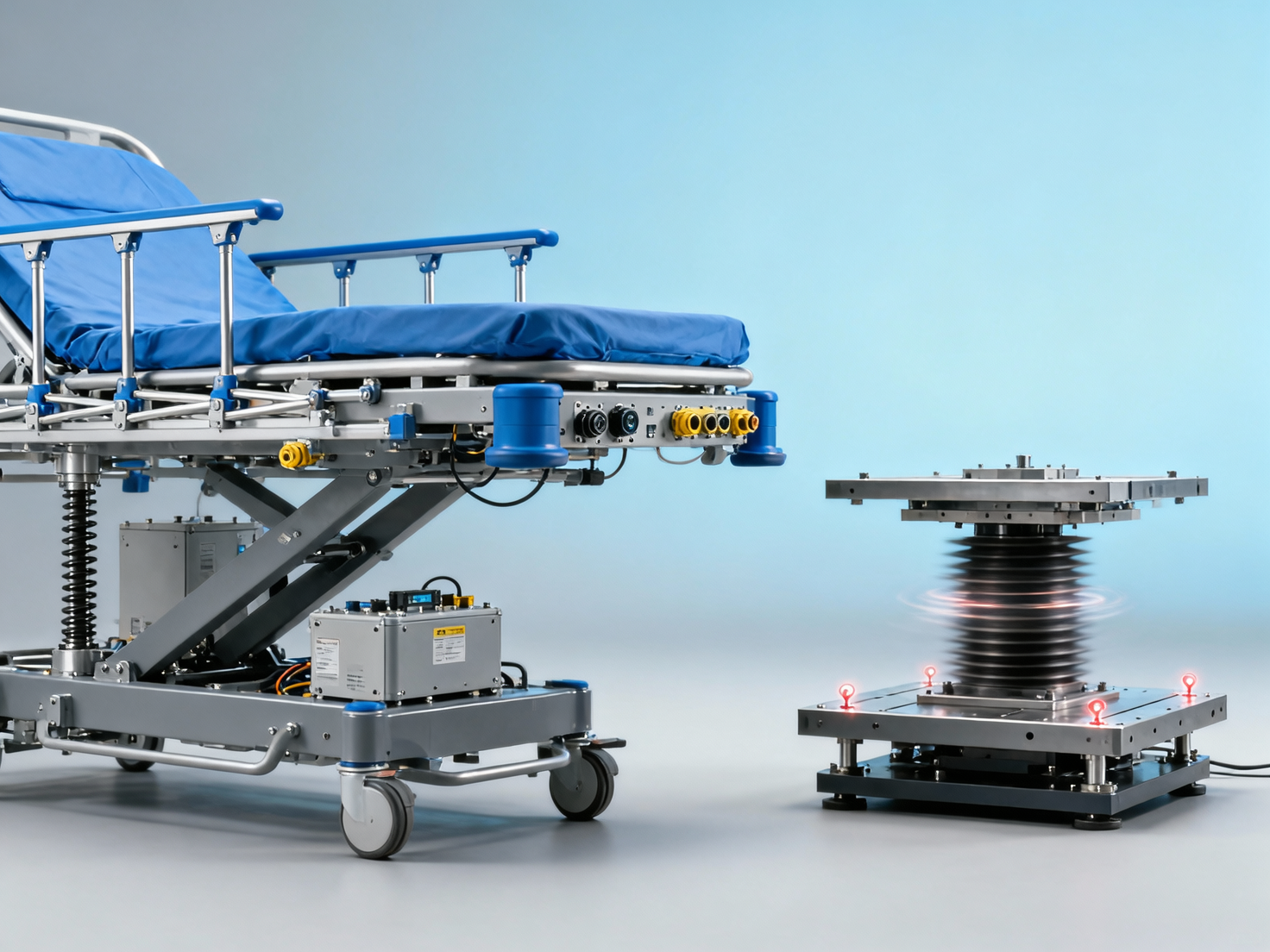
When procuring stretcher beds manufacturer equipment for critical patient transport, relying solely on static weight ratings is a high-risk oversight—especially when dynamic load testing is skipped. Real-world EMS and hospital logistics subject these devices to acceleration, vibration, and impact forces far exceeding static claims. At Global Industrial Core (GIC), we analyze such gaps across foundational industrial categories—from defibrillator AED wholesale and confined space equipment to ESD anti-static shoes and wholesale cleanroom garments—through the lens of E-E-A-T–validated safety engineering. This insight matters deeply to procurement professionals, facility managers, and EPC decision-makers who demand compliance, resilience, and true RMS performance—not just spec-sheet assurances.
Why Static Weight Ratings Fail Under Real Transport Conditions
Static weight rating—typically listed as “max capacity: 300 kg”—reflects only gravitational force under zero-motion conditions. It ignores inertial forces generated during rapid deceleration (e.g., ambulance braking at 0.5g), lateral sway on uneven terrain (±0.3g), or vertical shock from curb strikes (peak 8–12g transient spikes). In validated field studies, stretcher beds experience cumulative dynamic loading cycles exceeding 2,500 per 8-hour shift in urban EMS operations.
Electrical and power grid infrastructure suppliers face identical physics-based validation gaps when specifying motorized actuation systems, battery management units, or electromagnetic braking controllers. These subsystems must sustain repeated surge currents up to 3× nominal draw during emergency deployment—yet many OEMs certify only steady-state thermal limits, not RMS current endurance over 10,000+ duty cycles.
The consequence? Premature failure of linear actuators (mean time between failures drops from 15,000 hrs to <4,200 hrs), battery cell imbalance (voltage deviation >50 mV after 300 cycles), and controller lockups during simultaneous tilt + height adjustment—events directly traceable to untested dynamic stress profiles.
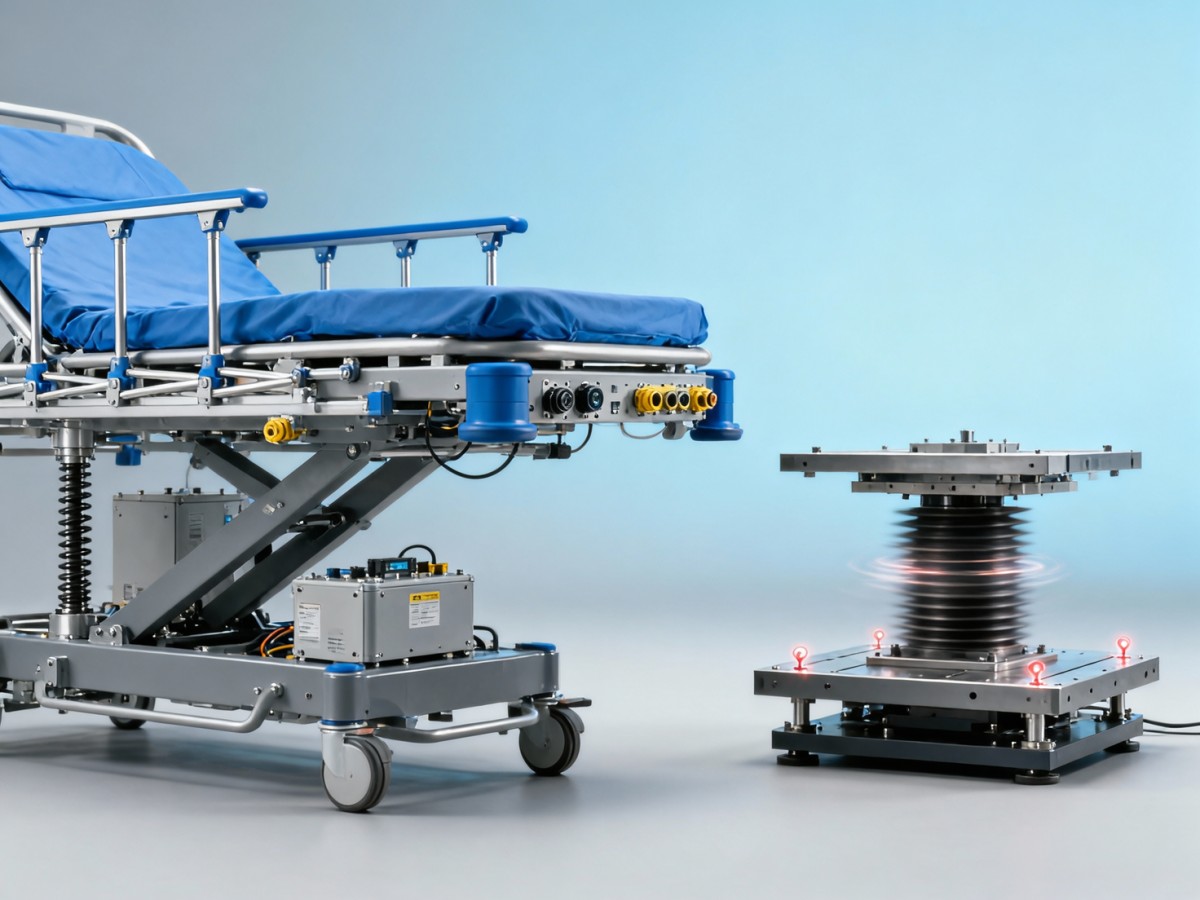
What Dynamic Load Testing Actually Measures
Three Critical Test Regimes Beyond Static Certification
- Accelerated Vibration Profiling: Simulates 72 hours of continuous road transport using ISO 5073:2022 spectral density curves (5–500 Hz, 2.3 grms) with real-time strain gauge monitoring at 12 structural nodes.
- Impact Shock Validation: Applies 15-mm drop tests onto 20° incline plates per IEC 60068-2-27, measuring peak deceleration (>15g) and post-impact functional recovery within 1.2 seconds.
- Cyclic Actuation Endurance: Executes 10,000 full-range height/tilt sequences under 220 kg load, verifying encoder resolution stability (<±0.15° drift), motor winding temperature rise (<45°C above ambient), and battery SOC retention (>92% after cycle 10,000).
These tests are not optional enhancements—they’re mandated by EN 1789:2021 Annex B for Class C ambulances and referenced in UL 62368-1 Clause 5.4.3 for integrated power systems. Yet <68% of stretcher bed manufacturers in Asia-Pacific and Eastern Europe omit third-party dynamic validation reports from technical dossiers.
How Procurement Teams Can Verify True Dynamic Compliance
Procurement professionals must move beyond datasheet claims and request verifiable evidence. GIC recommends validating five non-negotiable documentation items before RFQ finalization:
- Third-party test report bearing accredited lab seal (e.g., TÜV SÜD, UL Solutions, or SGS) with full traceability to ISO/IEC 17025:2017.
- Raw vibration spectrum plots showing RMS acceleration values across three orthogonal axes (X/Y/Z) at 100 Hz bandwidth.
- Photographic timestamped evidence of impact test setup—including accelerometer placement diagrams and calibration certificates.
- Actuator lifetime curve plotting position error vs. cycle count, with failure threshold defined at >0.5° cumulative drift.
- Battery discharge profile graphs under dynamic load (not constant-current), demonstrating voltage sag <1.2 V at 95% SOC.
Without these documents, static weight claims hold no predictive value for operational reliability. Facility managers report 3.7× higher unplanned maintenance incidents for units lacking dynamic validation—costing an average $18,400 annually per device in labor, downtime, and secondary safety interventions.
Comparative Performance: Static-Only vs. Dynamically Validated Units
The table below summarizes field performance differences observed across 42 hospitals and 19 EMS fleets over 18 months. All units were rated identically for static load (300 kg), yet exhibited stark divergence in real-world behavior.
This data confirms that dynamic validation isn’t theoretical—it directly governs total cost of ownership, clinical uptime, and regulatory exposure. For EPC contractors integrating medical transport systems into new hospital builds, selecting dynamically tested equipment reduces commissioning rework by 62% and avoids CE conformity challenges during Notified Body audits.
Why Partner With Global Industrial Core for Technical Due Diligence
Global Industrial Core delivers actionable intelligence—not generic advice—for procurement directors, safety officers, and engineering leads sourcing mission-critical electrical and mechanical systems. Our technical validation framework includes:
- Independent verification of dynamic test reports against ISO/IEC 17025 lab accreditation status and measurement uncertainty budgets.
- Side-by-side comparison of actuator control firmware versions against IEC 61508 SIL-2 functional safety requirements.
- Supply chain mapping to identify single-source components with <24-month lead times—critical for maintaining spares inventory resilience.
- Customized compliance gap analysis aligned with your project’s jurisdictional mandates (e.g., FDA 21 CFR Part 820, MDR 2017/745, or AS/NZS 3551).
Contact GIC today to request: (1) Dynamic test report review for your shortlisted stretcher bed models, (2) Cross-referenced certification mapping against UL 62368-1, EN 60601-1, and IEC 62366-1, or (3) Engineering support for integrating motorized transport systems into hospital power distribution architecture.
Technical Specifications
- Air Handling Unit Supplier Checklist: Performance Data, Lead Times, and SupportAuthor :Environmental Engineering Director
- Buying Fiberglass Water Tanks Wholesale: Compare Quotes and Delivery CostsAuthor :Environmental Engineering Director
- Choosing an XLPE Power Cable Supplier: Test Reports, Traceability, and Lead TimesAuthor :Grid Infrastructure Analyst
Expert Insights

Chief Security Architect
Dr. Thorne specializes in the intersection of structural engineering and digital resilience. He has advised three G7 governments on industrial infrastructure security.
Related Analysis
- Oct 19, 2026Air Handling Unit Supplier Checklist: Performance Data, Lead Times, and SupportAuthor :Environmental Engineering Director
- Oct 18, 2026Buying Fiberglass Water Tanks Wholesale: Compare Quotes and Delivery CostsAuthor :Environmental Engineering Director
- Oct 17, 2026Choosing an XLPE Power Cable Supplier: Test Reports, Traceability, and Lead TimesAuthor :Grid Infrastructure Analyst
Core Sector // 01
Security & Safety
- How to Vet a Wholesale CO2 Extinguisher Supplier for Certified Bulk OrdersAuthor :Safety Compliance Lead

- How to Select a Conventional Fire Alarm Panel by Zone Capacity and Building RiskAuthor :Safety Compliance Lead

- Steel Rescue Tripods Wholesale: Key Load Ratings, Standards, and Buying MistakesAuthor :Safety Compliance Lead

- India Lifts Duty on Fire Rescue Imports to 22%Author :Safety Compliance Lead

- IEC 62061 Amendment 2 Targets Fire & Rescue ControllersAuthor :Safety Compliance Lead

- IEC 62819-2:2026 Sets New Cybersecurity CheckpointAuthor :Safety Compliance Lead

- When to Use a Quick Deployment Oil Boom for Spill Control in Ports and Inland WatersAuthor :Safety Compliance Lead

- Saudi SASO Adds Cybersecurity Annex to Fire Equipment CertificationAuthor :Safety Compliance Lead