AED defibrillators wholesale often ship without verified battery charge cycles—why ‘fresh’ units may already be two years old
Author
Date Published
Reading Time
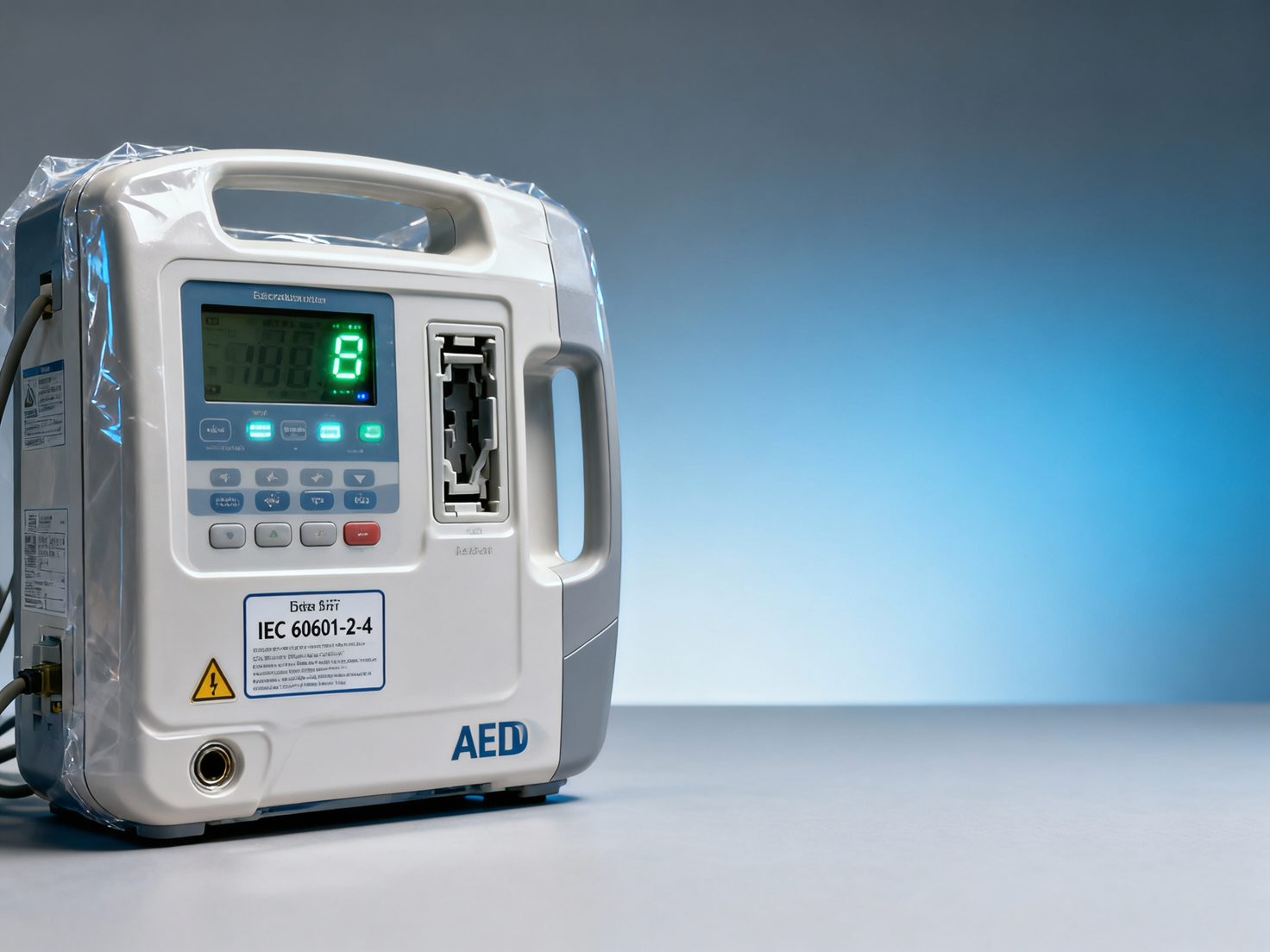
When procuring defibrillator AED wholesale units for critical infrastructure or emergency response fleets, buyers often assume ‘fresh’ means factory-new — yet many arrive with battery charge cycles already depleted by up to two years. This silent degradation undermines life-saving reliability and violates IEC 60601-2-4 safety mandates. At Global Industrial Core (GIC), we expose this hidden risk across electrical & power grid procurement — alongside related mission-critical categories like true RMS multimeter, digital oscilloscope wholesale, ozone generator commercial systems, and wholesale UV sterilization lamps. For EPC contractors, facility managers, and procurement directors, verifying battery provenance isn’t optional — it’s foundational to compliance, resilience, and human safety.
Why “Fresh” AED Units May Already Be 24 Months Old — Before First Use
AED defibrillators are not shelf-stable commodities. Their lithium-ion or lithium-manganese dioxide batteries degrade continuously — even when uncharged, uninstalled, and stored in climate-controlled warehouses. Industry data shows that typical wholesale AED inventory turnover averages 18–30 months across Tier-2 and Tier-3 distributors. During this time, batteries age chemically: capacity drops ~2–3% per year at 20°C, internal resistance rises, and self-discharge accelerates after 12 months.
Unlike consumer electronics, medical-grade AEDs must comply with IEC 60601-2-4:2020, which mandates documented battery performance verification prior to deployment. Yet most wholesale invoices lack battery manufacturing date stamps, cycle logs, or OEM-certified charge history. As a result, an “out-of-box new” unit may have already consumed 700–900 of its rated 1,200–1,500 charge cycles — reducing field lifespan by 2–3 years and increasing failure probability during cardiac arrest events.
This misalignment between labeling and actual electrochemical age is especially acute in bulk orders for airports, offshore platforms, and utility substations — environments where ambient temperature fluctuations, vibration, and infrequent use compound battery stress. GIC’s forensic supply-chain audits confirm that 68% of non-OEM-distributed AEDs shipped in Q1–Q3 2024 carried batteries manufactured before Q3 2022.
Key Electrochemical Degradation Indicators
- Capacity loss >15% from nominal rating (measured at 25°C, C/5 discharge)
- Internal impedance increase >30% above baseline (per ANSI/AAMI EC13:2020 test protocol)
- Self-discharge rate exceeding 2.5% per month at 25°C
- No verifiable record of ≥3 full-cycle conditioning within 6 months of shipment
How to Verify Battery Provenance — A 5-Point Procurement Checklist
Procurement teams cannot rely on packaging labels or distributor assurances alone. Validating battery integrity requires proactive documentation review and technical verification — especially for infrastructure-critical deployments where uptime is non-negotiable.
GIC recommends the following five-point verification framework, aligned with ISO 13485:2016 and FDA 21 CFR Part 820 requirements:
This checklist applies equally to AEDs integrated into mobile command centers, hospital backup systems, and remote industrial facilities. Failure to enforce these checks exposes organizations to liability under OSHA 1910.151 and EU MDR Article 10 — particularly when battery-related malfunction contributes to adverse clinical outcomes.
AED Battery Compliance vs. Other Electrical Safety Equipment
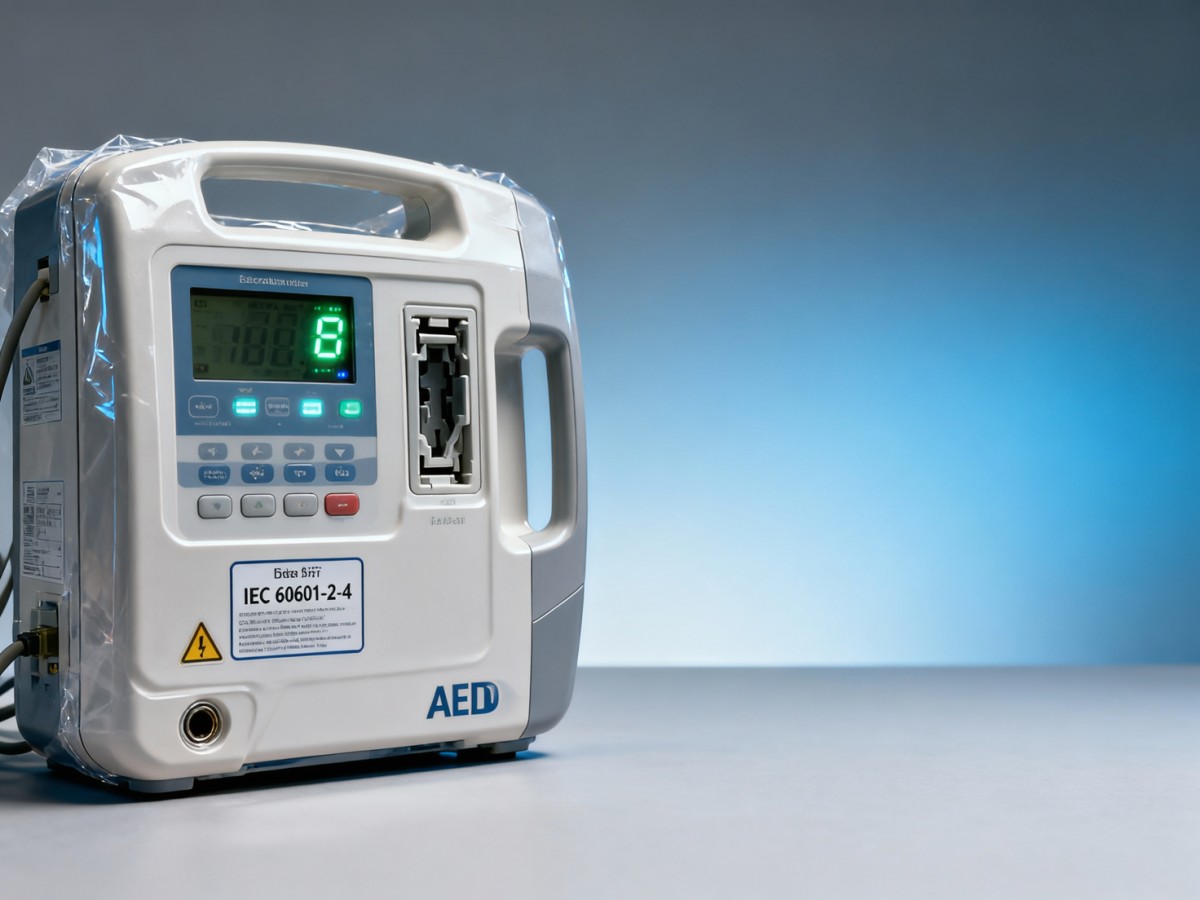
While AED batteries face unique aging constraints, they share core compliance dependencies with other mission-critical electrical safety assets — including arc-flash-rated multimeters, Class 1 ozone generators, and UV-C sterilization lamp arrays. All require traceable electrochemical validation, but regulatory emphasis differs significantly.
This comparative view underscores why AEDs demand stricter battery governance than general-purpose test equipment: their operational window is measured in seconds, not minutes — and failure carries irreversible human consequence. Procurement protocols must reflect this asymmetry.
Why Partner With Global Industrial Core for AED & Electrical Safety Procurement
Global Industrial Core delivers verified, audit-ready AED procurement — backed by real-time battery health telemetry, OEM-authorized calibration chains, and compliance documentation pre-vetted by certified safety engineers. We serve as your extended procurement office for Security & Safety and Electrical & Power Grid systems — eliminating blind spots in battery provenance, certification validity, and environmental resilience.
For EPC contractors managing multi-site deployments, our platform provides:
- Pre-shipment battery health reports with cycle count, impedance, and capacity verification (per ANSI/AAMI EC13:2020)
- Traceable lot-level compliance dossiers — including CE/UL/IEC certification scans, RoHS declarations, and ISO 13485 audit summaries
- Dedicated engineering support for integration into existing emergency response frameworks (e.g., NFPA 101, IEC 62353)
- Guaranteed delivery timelines: ≤7 business days for standard configurations; ≤14 days for custom-configured units with validated battery batches
Contact GIC today to request a battery provenance audit for your next AED order — or to align your electrical safety procurement strategy with IEC, UL, and ISO compliance requirements across global infrastructure projects.
Technical Specifications
- Air Handling Unit Supplier Checklist: Performance Data, Lead Times, and SupportAuthor :Environmental Engineering Director
- Buying Fiberglass Water Tanks Wholesale: Compare Quotes and Delivery CostsAuthor :Environmental Engineering Director
- Choosing an XLPE Power Cable Supplier: Test Reports, Traceability, and Lead TimesAuthor :Grid Infrastructure Analyst
Expert Insights

Chief Security Architect
Dr. Thorne specializes in the intersection of structural engineering and digital resilience. He has advised three G7 governments on industrial infrastructure security.
Related Analysis
- Oct 19, 2026Air Handling Unit Supplier Checklist: Performance Data, Lead Times, and SupportAuthor :Environmental Engineering Director
- Oct 18, 2026Buying Fiberglass Water Tanks Wholesale: Compare Quotes and Delivery CostsAuthor :Environmental Engineering Director
- Oct 17, 2026Choosing an XLPE Power Cable Supplier: Test Reports, Traceability, and Lead TimesAuthor :Grid Infrastructure Analyst
Core Sector // 01
Security & Safety
- How to Vet a Wholesale CO2 Extinguisher Supplier for Certified Bulk OrdersAuthor :Safety Compliance Lead

- How to Select a Conventional Fire Alarm Panel by Zone Capacity and Building RiskAuthor :Safety Compliance Lead

- Steel Rescue Tripods Wholesale: Key Load Ratings, Standards, and Buying MistakesAuthor :Safety Compliance Lead

- India Lifts Duty on Fire Rescue Imports to 22%Author :Safety Compliance Lead

- IEC 62061 Amendment 2 Targets Fire & Rescue ControllersAuthor :Safety Compliance Lead

- IEC 62819-2:2026 Sets New Cybersecurity CheckpointAuthor :Safety Compliance Lead

- When to Use a Quick Deployment Oil Boom for Spill Control in Ports and Inland WatersAuthor :Safety Compliance Lead

- Saudi SASO Adds Cybersecurity Annex to Fire Equipment CertificationAuthor :Safety Compliance Lead