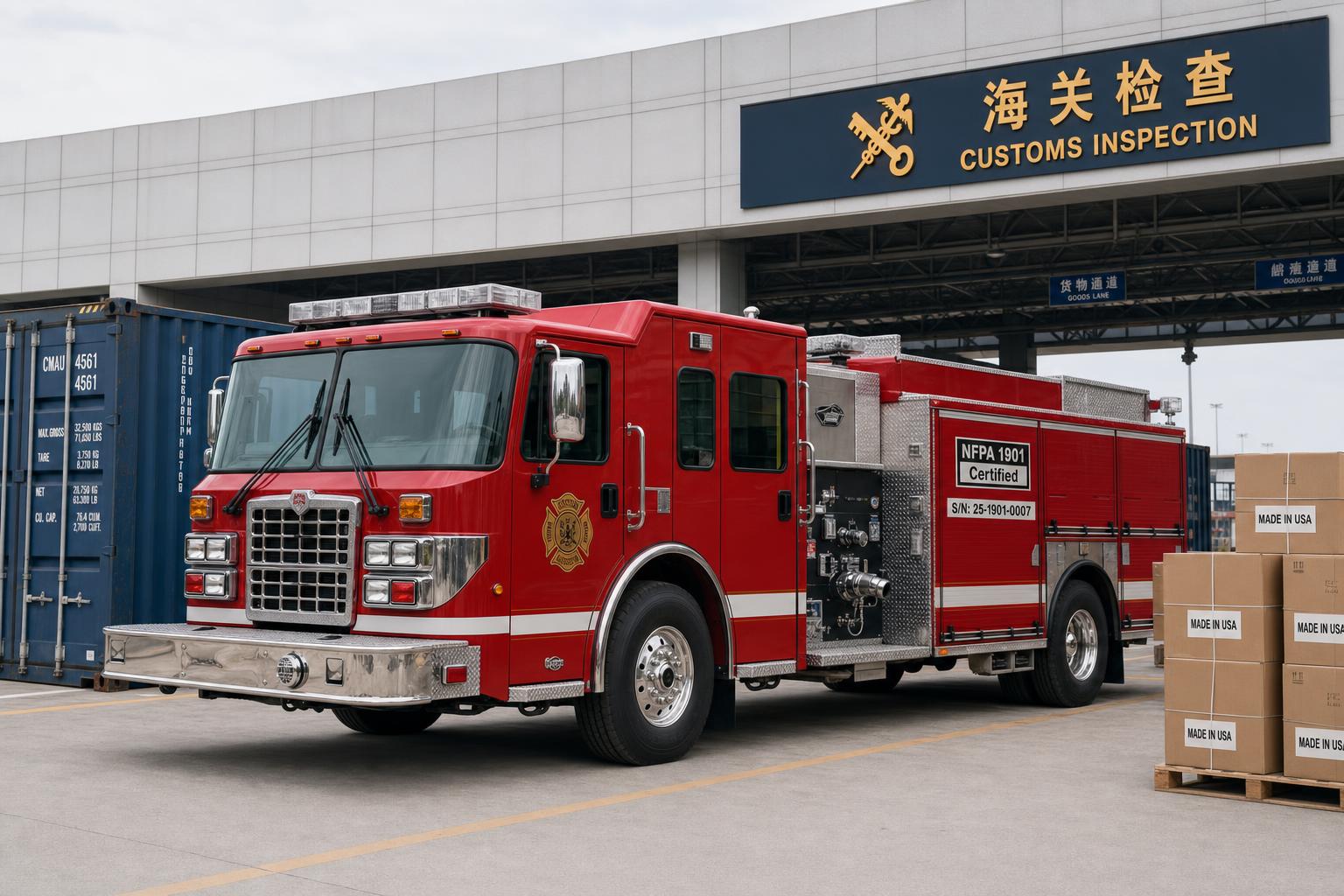
CPSC Alert: Industrial Laser Rangefinders Must Add UL 8750 Class 2M Labels
Author
Date Published
Reading Time
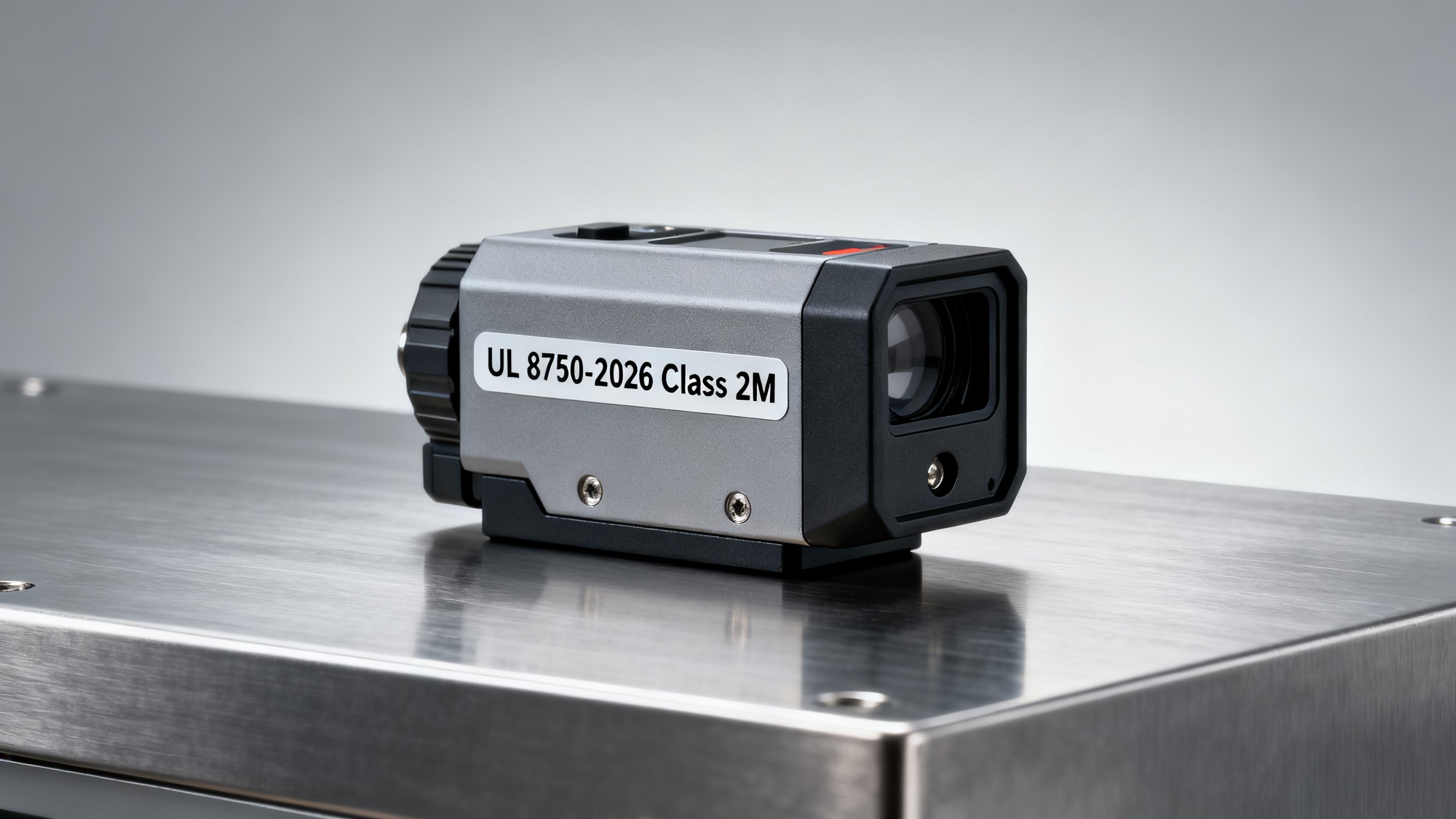
On May 7, 2026, the U.S. Consumer Product Safety Commission (CPSC) issued Safety Alert #SA-2026-043 mandating permanent UL 8750-2026 Class 2M warning labels on all industrial laser rangefinders with output power exceeding 1 mW — including handheld, tripod-mounted, and units integrated into security pan-tilt-zoom (PTZ) systems or firefighting robots. This requirement directly affects key export categories from China, such as CCTV-integrated distance modules and fire-rescue positioning terminals, and warrants close attention from manufacturers, exporters, and compliance officers in optical instrumentation, smart infrastructure, and public safety equipment sectors.
Event Overview
The U.S. Consumer Product Safety Commission (CPSC) published Safety Alert #SA-2026-043 on May 7, 2026. The alert requires that all industrial laser rangefinders emitting more than 1 mW of optical power — regardless of form factor (handheld, tripod-based, or embedded in安防 PTZ systems or firefighting robots) — bear a permanent warning label compliant with UL 8750-2026’s Class 2M classification. Affected products must also be accompanied by an English-language laser hazard information manual. The scope explicitly includes CCTV-integrated rangefinding modules and fire-rescue positioning terminals — two major Chinese export product categories.
Industries Affected by Segment
Direct Exporters & OEM/ODM Manufacturers
These entities are directly responsible for labeling compliance and documentation before shipment to the U.S. market. Non-compliant units risk detention at U.S. ports, rejection by importers, or post-import enforcement actions including recalls or penalties under CPSC jurisdiction.
Embedded System Integrators
Firms integrating laser rangefinders into larger platforms — such as security PTZ cameras or autonomous firefighting robots — must now verify label placement and manual inclusion at the subsystem level. Integration does not exempt the final product from the labeling requirement if the embedded laser module exceeds 1 mW.
Component Suppliers & Module Producers
Suppliers of laser ranging modules (e.g., TOF or phase-shift-based units) must ensure their datasheets, packaging, and shipping documentation reflect Class 2M compliance status. Buyers may now require UL 8750-2026 test reports or declarations of conformity as part of procurement due diligence.
Distribution & Import Agents
U.S.-based importers and distributors handling these devices are subject to CPSC’s ‘responsible party’ obligations. They must retain records of labeling implementation, manual distribution, and supplier attestations — and may face liability if non-compliant units enter commerce.
What Relevant Enterprises or Practitioners Should Focus On Now
Monitor CPSC’s official guidance updates and enforcement timelines
The alert states the requirement applies “effective immediately”, but CPSC has not yet published a formal rulemaking notice or enforcement schedule. Observably, this alert functions as a pre-enforcement signal — enterprises should track CPSC’s Federal Register notices and updates to Safety Alert #SA-2026-043 for any revision or clarification.
Identify and isolate affected SKUs by optical output specification
Not all laser rangefinders fall under this requirement — only those exceeding 1 mW. Analysis shows many industrial-grade models (especially those used for long-range outdoor measurement or robotic navigation) operate above this threshold. Firms should cross-reference existing laser class certifications (e.g., IEC 60825-1) and confirm whether re-classification per UL 8750-2026 is needed.
Distinguish between labeling requirements and full UL certification
The alert mandates label compliance with UL 8750-2026 Class 2M — not necessarily full UL listing. However, label design, durability, placement, and accompanying manual content must meet UL 8750’s specific provisions. Current practice suggests verification via qualified third-party labs is advisable before mass application.
Prepare updated labeling assets and bilingual documentation workflows
Labels must be permanent (e.g., etched, molded-in, or high-adhesion printed), legible, and positioned per UL 8750-2026 Section 7.3. English-language hazard manuals must be shipped with each unit or made digitally accessible via QR code — with physical backup upon request. Firms should initiate internal alignment across production, QA, and logistics teams now.
Editorial Perspective / Industry Observation
This CPSC alert is better understood as an early-stage regulatory signal rather than an already enforced mandate with penalties. While labeled “effective immediately”, it lacks the procedural weight of a final rule — no statutory citation, no comment period, and no stated enforcement date. Observably, it reflects growing CPSC scrutiny of embedded lasers in consumer-adjacent professional equipment, especially where human exposure risk exists outside controlled industrial settings. From an industry perspective, this aligns with broader global trends toward harmonizing laser safety labeling (e.g., IEC 60825-1:2014 + A1:2020 adoption), but introduces a U.S.-specific UL-based classification layer. Continued monitoring is warranted, particularly for revisions to UL 8750 itself and CPSC’s upcoming FY2027 enforcement priorities.
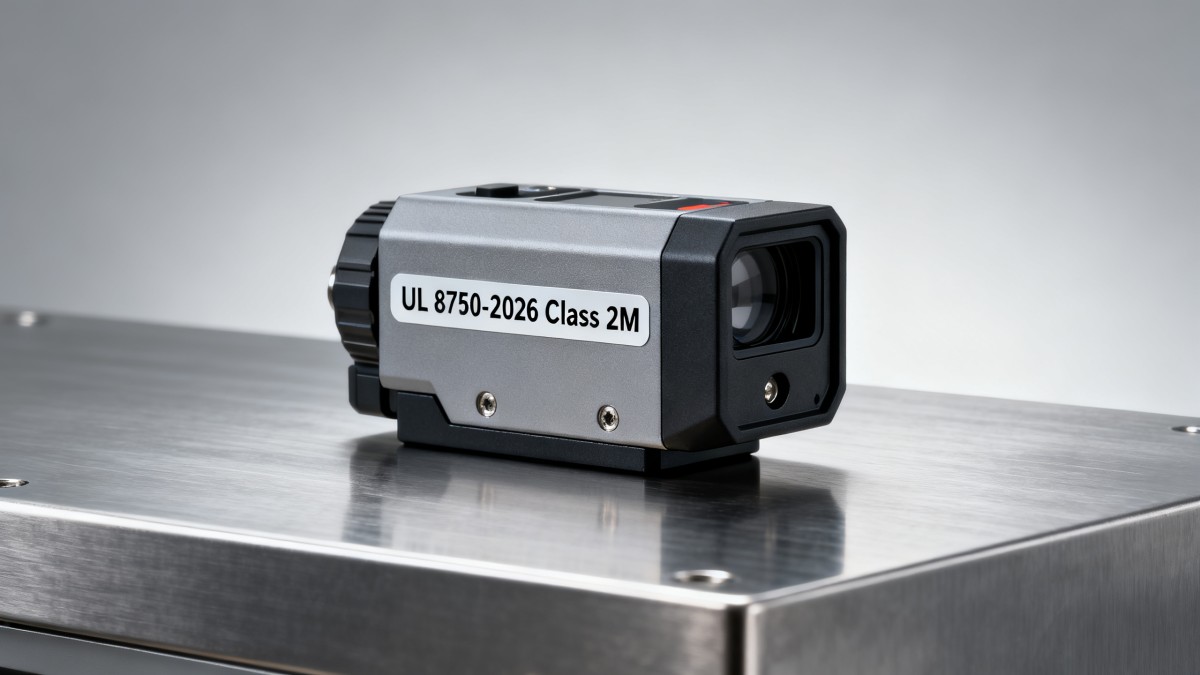
In summary, this CPSC alert marks a targeted compliance inflection point for exporters of higher-power industrial laser rangefinders to the U.S. It does not broadly ban products, but introduces a mandatory labeling and documentation obligation tied to a specific safety standard. Its current significance lies less in immediate penalties and more in its role as a precursor to stricter oversight — making proactive alignment with UL 8750-2026 Class 2M requirements a prudent operational step, not just a regulatory checkbox.
Source: U.S. Consumer Product Safety Commission (CPSC), Safety Alert #SA-2026-043, issued May 7, 2026.
Note: CPSC has not yet published supplementary guidance, test protocols, or enforcement thresholds related to this alert. These remain subjects of ongoing observation.
Technical Specifications
- How to Select an Emissions Monitoring System Analyzer for Compliance ReportingAuthor :Precision Metrology Expert
- How to Select an Access Control Management System for Multi-Site FacilitiesAuthor :Safety Compliance Lead
- Portable Gas Monitor Calibration: How Often Is It Needed for Safe Confined-Space Work?Author :Precision Metrology Expert
Expert Insights

Chief Security Architect
Dr. Thorne specializes in the intersection of structural engineering and digital resilience. He has advised three G7 governments on industrial infrastructure security.
Related Analysis
- Sep 21, 2026How to Select an Emissions Monitoring System Analyzer for Compliance ReportingAuthor :Precision Metrology Expert
- Sep 20, 2026How to Select an Access Control Management System for Multi-Site FacilitiesAuthor :Safety Compliance Lead
- Sep 19, 2026Portable Gas Monitor Calibration: How Often Is It Needed for Safe Confined-Space Work?Author :Precision Metrology Expert
Core Sector // 01
Security & Safety
- Steel Rescue Tripods Wholesale: Key Load Ratings, Standards, and Buying MistakesAuthor :Safety Compliance Lead

- India Lifts Duty on Fire Rescue Imports to 22%Author :Safety Compliance Lead

- IEC 62061 Amendment 2 Targets Fire & Rescue ControllersAuthor :Safety Compliance Lead

- IEC 62819-2:2026 Sets New Cybersecurity CheckpointAuthor :Safety Compliance Lead

- When to Use a Quick Deployment Oil Boom for Spill Control in Ports and Inland WatersAuthor :Safety Compliance Lead

- Saudi SASO Adds Cybersecurity Annex to Fire Equipment CertificationAuthor :Safety Compliance Lead

- CBP Pre-Arrival Portal Raises Import Checks for Fire EquipmentAuthor :Safety Compliance Lead

- UAE Sets Cybersecurity Gate for Fire Control PanelsAuthor :Safety Compliance Lead