Safety standards for nuclear power plants that often get missed
Author
Date Published
Reading Time

Many teams focus on major compliance frameworks, yet some of the most costly risks come from overlooked details. Understanding safety standards for nuclear power plants means going beyond headline regulations to examine maintenance routines, instrumentation accuracy, emergency preparedness, supplier traceability, and human-factor controls. This article highlights the commonly missed requirements that quality control and safety managers must address to strengthen plant reliability, audit readiness, and long-term operational safety.
Why do safety standards for nuclear power plants still fail at the detail level?
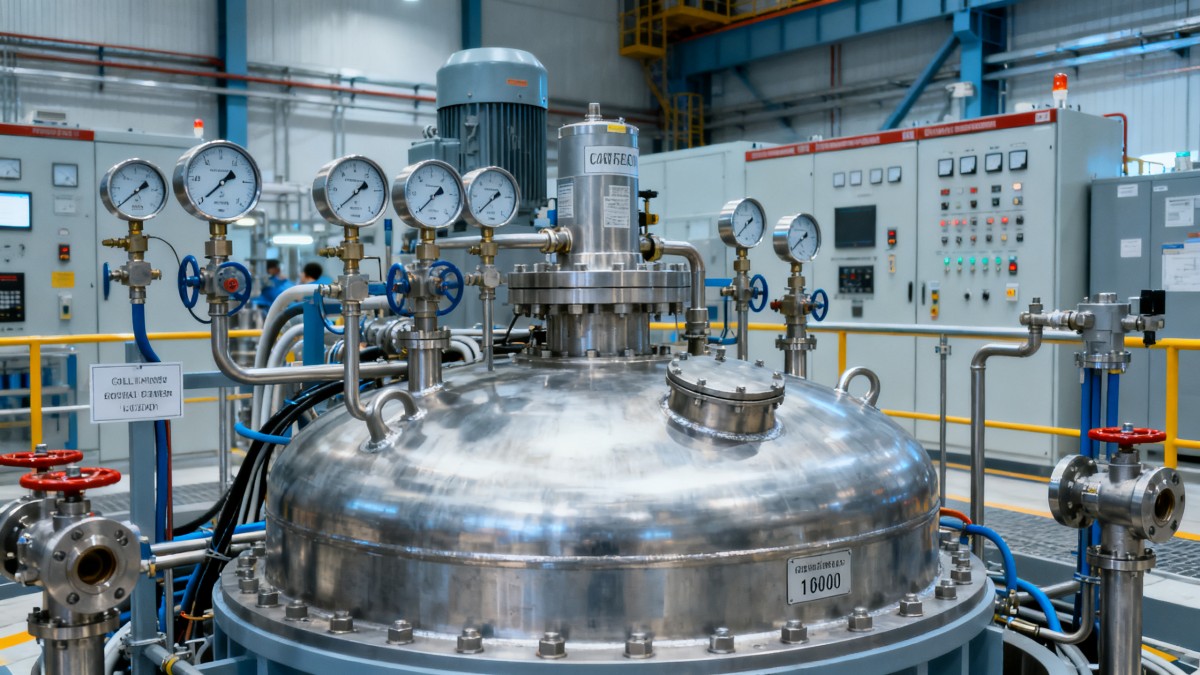
For quality control personnel and safety managers, the hardest part is rarely identifying the top-level regulatory framework. The real challenge is controlling the gap between documented compliance and daily execution. In nuclear environments, a missed calibration window, incomplete material traceability record, weak contractor induction, or poorly validated alarm logic can become a serious operational exposure long before a regulator notices it.
This is why safety standards for nuclear power plants must be managed as a living system rather than a checklist. International guidance from bodies such as the IAEA, along with plant-specific requirements, typically covers design basis, redundancy, radiation protection, fire safety, quality assurance, emergency planning, and maintenance. However, many findings during internal audits or outage reviews come from interface failures between engineering, procurement, operations, and inspection teams.
For industrial decision-makers, the practical question is simple: where are the hidden failure points that look compliant on paper but remain weak in operation?
- Instrument loops are installed correctly, but reference standards used for calibration do not maintain an unbroken traceability chain.
- Safety-related spare parts meet dimensional specifications, yet supplier document packages lack heat numbers, batch records, or environmental qualification evidence.
- Emergency drills are performed on schedule, but scenarios do not reflect multi-failure events, communication loss, or contractor presence during maintenance outages.
- Procedures exist for lockout-tagout and confined space work, but field verification shows inconsistent behavioral adherence across shifts.
Global Industrial Core supports this level of scrutiny by connecting safety, metrology, electrical integrity, environmental controls, and mechanical reliability into one sourcing and intelligence perspective. For teams responsible for high-consequence assets, that cross-functional visibility matters more than generic compliance summaries.
Which overlooked requirements create the biggest audit and reliability risks?
The most missed elements within safety standards for nuclear power plants often sit below the headline categories. They are operationally narrow, but financially and safety-wise significant. The table below summarizes common blind spots that repeatedly affect inspections, outage execution, and supplier acceptance decisions.
These gaps are not abstract. They directly affect outage duration, nonconformance handling, rework cost, and safety case defensibility. A plant may satisfy broad compliance expectations while still carrying latent vulnerabilities in measurement control, documentation quality, or task execution discipline.
Instrumentation accuracy is often treated as routine, not strategic
In many facilities, calibration is managed as a scheduled maintenance activity rather than a core safety standard. That mindset is risky. Nuclear operations rely on trustworthy pressure, temperature, level, flow, and radiation data to support interlocks, alarms, trending, and emergency response. If uncertainty budgets are poorly understood, acceptance criteria may be too loose for safety-related service.
Quality teams should verify more than the calibration label. They need to review reference standard validity, as-found versus as-left data, environmental conditions during calibration, and whether any drift trend requires a shortened interval or replacement decision.
Documentation control breaks down at supplier and subcontractor level
A frequent weakness in safety standards for nuclear power plants appears during procurement. Core engineering documents may be strong, but lower-tier suppliers often provide inconsistent record packages. Missing weld maps, incomplete coating data, absent torque records, and weak change history can delay acceptance or create long-term traceability problems.
This issue becomes more serious when projects involve international sourcing, compressed schedules, or refurbishment of legacy systems. Procurement managers need a document acceptance matrix that defines what must be submitted before shipment, before installation, and before final turnover.
How should quality and safety managers audit safety standards for nuclear power plants in practice?
A practical audit approach must translate high-level standards into field-verifiable checkpoints. Instead of asking whether a program exists, ask whether it works under real operating conditions, across shifts, vendors, outage windows, and abnormal events.
- Map critical systems first. Prioritize systems that protect reactivity control, cooling integrity, electrical continuity, radiation barriers, and emergency response capability.
- Verify document-to-field alignment. Compare drawings, tagging, calibration status, material identification, and installed orientation against actual field conditions.
- Audit the data chain. Review how test results, maintenance findings, vendor certificates, and corrective actions are recorded, approved, retained, and retrievable.
- Stress-test emergency assumptions. Examine whether drills include simultaneous failures, communication delays, shift handover complications, and contractor coordination.
- Review human performance tools. Check pre-job brief quality, independent verification steps, peer checks, labeling clarity, and fatigue management controls.
This method is especially useful in mixed industrial environments where nuclear-grade expectations intersect with conventional utility systems, civil works, electrical infrastructure, and third-party maintenance services. GIC’s cross-pillar perspective helps teams judge where a component is technically acceptable but operationally weak in lifecycle support or documentation quality.
What should procurement teams check before approving suppliers and components?
When safety standards for nuclear power plants are translated into procurement decisions, unit price becomes a secondary issue. Approval should depend on whether the supplier can sustain compliance, traceability, and repeatability under high-consequence conditions. The following table provides a structured screening model for procurement, QC, and safety functions.
This table is useful because it shifts sourcing conversations away from generic claims. If a supplier cannot provide coherent evidence on calibration control, document retention, or packaging for sensitive components, the risk is not theoretical. It will likely emerge during receiving inspection, commissioning, or future maintenance work.
Procurement red flags that deserve escalation
- Certificates reference standards vaguely but do not identify the actual test method or acceptance basis.
- The supplier can send a sample quickly but cannot explain change control for raw material or sub-suppliers.
- Inspection plans omit witness points for safety-relevant dimensions, coatings, electrical insulation, or pressure integrity.
- Lead times look attractive because final documentation is scheduled after shipment rather than before release.
In nuclear and adjacent heavy-industry projects, the cheapest procurement path can easily become the costliest if acceptance is delayed by missing evidence.
Where do human factors and emergency readiness get underestimated?
Technical barriers receive attention because they are visible, engineered, and easier to document. Human performance controls are often less tangible, which is exactly why they are missed. Yet safety standards for nuclear power plants depend heavily on how operators, technicians, supervisors, and contractors act under pressure.
Common weak points in field execution
- Pre-job briefings are completed formally, but they do not identify error-likely steps, simultaneous operations, or recovery actions if indications conflict.
- Alarm rationalization is outdated, causing nuisance alarms that reduce operator attention during abnormal conditions.
- Temporary modifications, jumpers, lifted leads, or bypasses are tracked inconsistently during outages.
- Contractors understand general site rules but not the plant-specific safety significance of housekeeping, contamination control, or independent verification.
Emergency preparedness also deserves a more critical review. A compliant drill schedule does not automatically prove readiness. Teams should test scenario realism, backup communication methods, availability of portable instruments, access control during concurrent maintenance work, and how quickly decision-makers can confirm instrument reliability during a confusing event.
How can facilities strengthen implementation without creating excessive cost?
Improving safety standards for nuclear power plants does not always require major capital spending. In many cases, the biggest gains come from sharper controls around information, verification, and prioritization. The goal is to reduce hidden failure paths before they turn into outage extensions or regulatory findings.
The table below compares practical improvement levers that QC and safety leaders can implement with procurement, maintenance, and engineering teams.
These actions are cost-conscious because they focus on control points rather than broad program expansion. They also help safety managers justify budget requests with concrete risk reduction logic instead of generic compliance language.
FAQ: what do teams usually ask about safety standards for nuclear power plants?
How often should safety-related instrumentation be recalibrated?
There is no single interval that fits every loop. The right interval depends on service criticality, historical drift, environmental conditions, and the consequences of measurement error. A fixed annual cycle may be too conservative for stable devices and too loose for instruments exposed to heat, vibration, radiation, or process cycling. Trend-based review is usually more defensible than calendar-only scheduling.
What procurement mistake most often weakens nuclear safety compliance?
A common mistake is approving a supplier based on product specification alone while treating documentation as an administrative follow-up. In reality, traceability, calibration evidence, inspection records, and preservation controls are part of the product. If they arrive late or incomplete, the component may be physically present but operationally unusable.
Are international standards like ISO enough on their own?
No. General standards such as ISO can support the management framework, but safety standards for nuclear power plants require additional plant-specific, regulatory, and technical controls. Nuclear applications demand deeper scrutiny of environmental qualification, conservative design assumptions, independent verification, and failure consequence management.
What should safety managers do first if budget is limited?
Start with high-consequence gaps: critical instrumentation traceability, supplier document completeness, temporary modification control, and realistic emergency drill content. These areas often produce a better risk-reduction return than broad awareness campaigns or non-prioritized audits.
Why work with GIC when reviewing compliance, sourcing, and implementation risk?
Global Industrial Core is built for industrial buyers and technical teams that cannot afford weak links between compliance requirements and procurement execution. In complex asset environments, safety standards for nuclear power plants intersect with metrology discipline, electrical reliability, environmental controls, materials integrity, and vendor qualification. GIC helps connect those domains so decisions are based on operational evidence, not isolated paperwork.
If your team is reviewing a supplier package, planning an outage purchase, comparing alternative components, or preparing for an internal or customer audit, GIC can support discussions around:
- Parameter confirmation for instruments, electrical items, mechanical parts, and safety-related accessories
- Product selection based on service condition, traceability expectation, and inspection requirement
- Delivery schedule review for outage-critical or long-lead industrial items
- Custom documentation expectations, including certificates, inspection records, and turnover packages
- Certification and compliance requirement alignment for international projects
- Sample support or quotation communication for evaluation before large-volume commitment
For quality control and safety managers, the value is practical: fewer sourcing surprises, better audit readiness, clearer acceptance criteria, and stronger control over the details that often get missed until they become expensive. If you are tightening your review process around safety standards for nuclear power plants, GIC can help you assess the technical, documentation, and supply-chain questions before they disrupt operations.
Technical Specifications
- How to Select an Emissions Monitoring System Analyzer for Compliance ReportingAuthor :Precision Metrology Expert
- How to Select an Access Control Management System for Multi-Site FacilitiesAuthor :Safety Compliance Lead
- Portable Gas Monitor Calibration: How Often Is It Needed for Safe Confined-Space Work?Author :Precision Metrology Expert
Expert Insights

Chief Security Architect
Dr. Thorne specializes in the intersection of structural engineering and digital resilience. He has advised three G7 governments on industrial infrastructure security.
Related Analysis
- Sep 21, 2026How to Select an Emissions Monitoring System Analyzer for Compliance ReportingAuthor :Precision Metrology Expert
- Sep 20, 2026How to Select an Access Control Management System for Multi-Site FacilitiesAuthor :Safety Compliance Lead
- Sep 19, 2026Portable Gas Monitor Calibration: How Often Is It Needed for Safe Confined-Space Work?Author :Precision Metrology Expert
Core Sector // 01
Security & Safety
- Steel Rescue Tripods Wholesale: Key Load Ratings, Standards, and Buying MistakesAuthor :Safety Compliance Lead

- India Lifts Duty on Fire Rescue Imports to 22%Author :Safety Compliance Lead

- IEC 62061 Amendment 2 Targets Fire & Rescue ControllersAuthor :Safety Compliance Lead

- IEC 62819-2:2026 Sets New Cybersecurity CheckpointAuthor :Safety Compliance Lead

- When to Use a Quick Deployment Oil Boom for Spill Control in Ports and Inland WatersAuthor :Safety Compliance Lead

- Saudi SASO Adds Cybersecurity Annex to Fire Equipment CertificationAuthor :Safety Compliance Lead

- CBP Pre-Arrival Portal Raises Import Checks for Fire EquipmentAuthor :Safety Compliance Lead

- UAE Sets Cybersecurity Gate for Fire Control PanelsAuthor :Safety Compliance Lead