What changes the real Security & Safety price over time
Author
Date Published
Reading Time
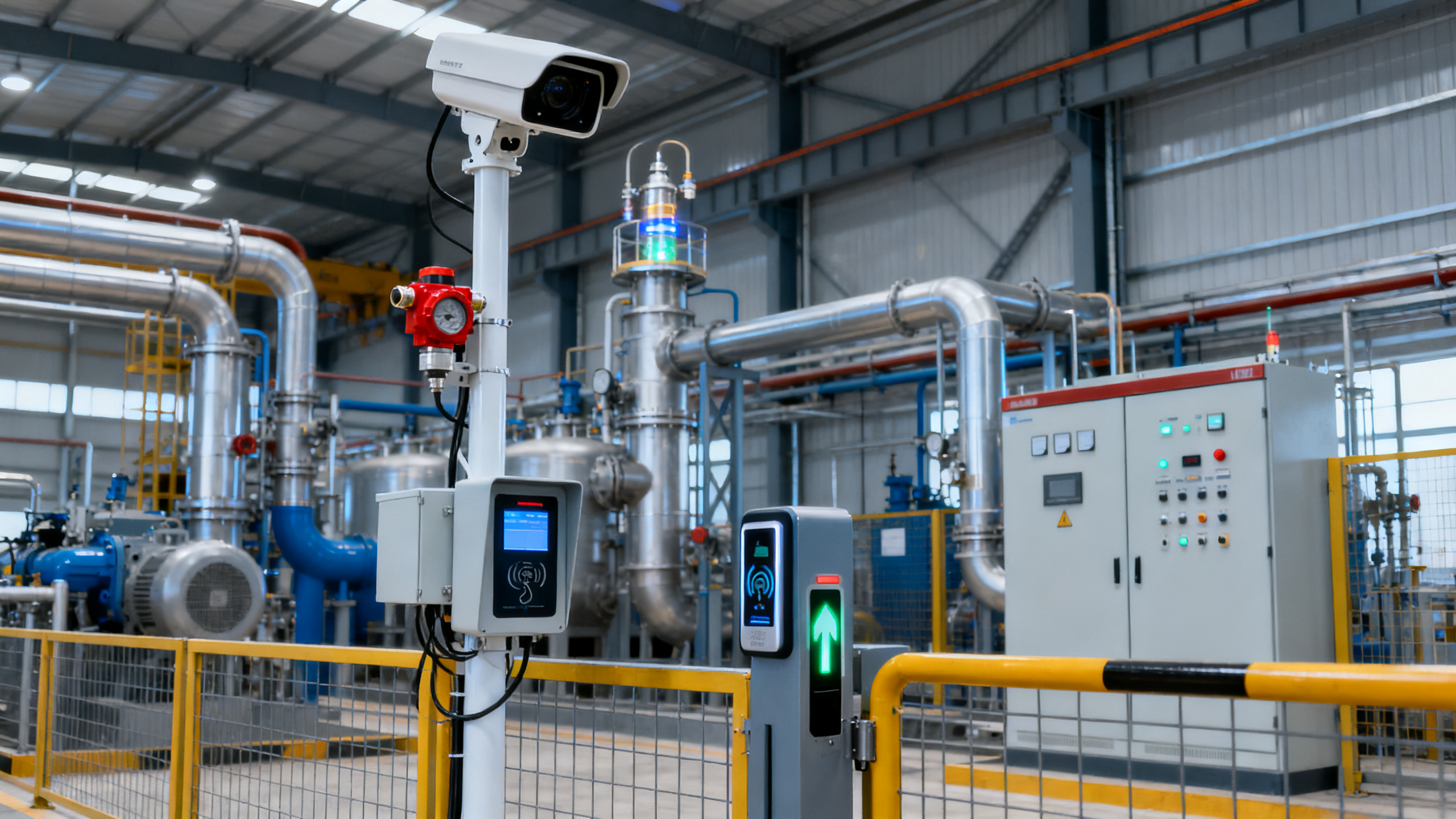
The real Security & Safety price rarely stays fixed. For financial approvers, total cost shifts over time with compliance updates, product lifespan, maintenance demands, risk exposure, and supplier reliability. Understanding these hidden cost drivers is essential for making budget decisions that protect both operational continuity and long-term capital efficiency.
Why does the Security & Safety price change even after the initial purchase?
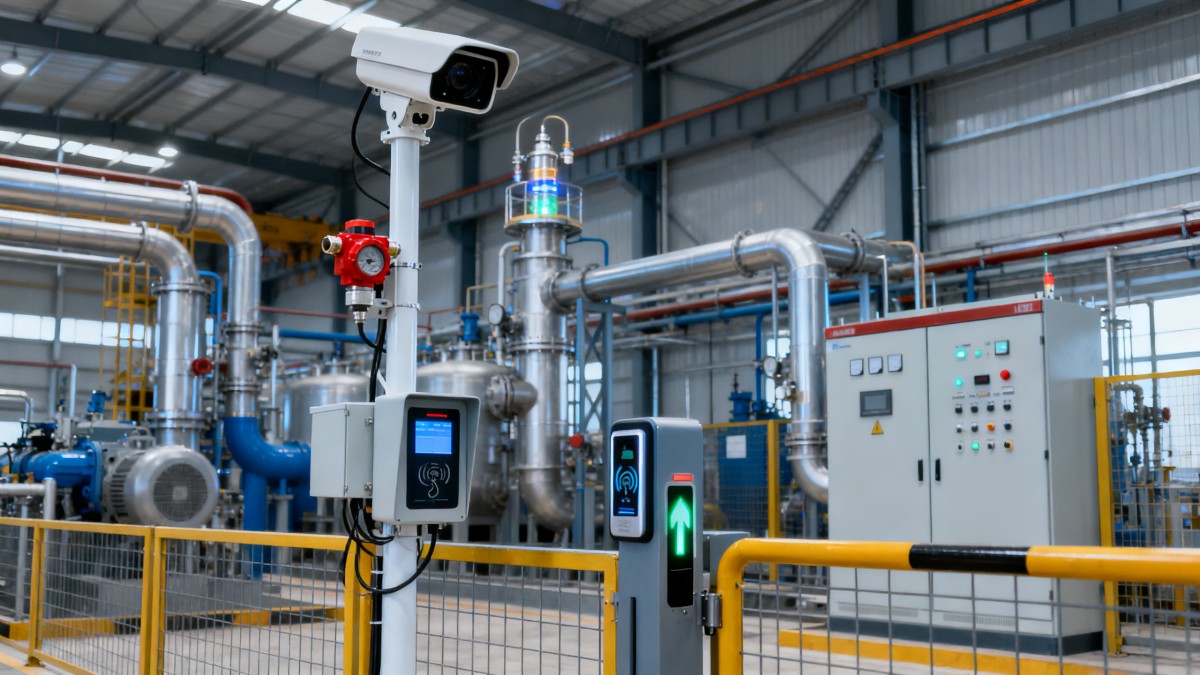
The quoted Security & Safety price on day one is only the visible part of the investment. In industrial, commercial, logistics, utility, and infrastructure environments, the real cost evolves because the solution must keep performing under changing regulations, operating conditions, and asset risks. A low entry price can become expensive when certifications expire, replacement parts are scarce, or installation complexity was underestimated.
This is especially true across the broader industrial ecosystem, where Security & Safety systems include fire detection, access control, surveillance, emergency shutdown devices, protective barriers, alarms, personal protective equipment integration, and monitoring instruments. The Security & Safety price may rise over time because products require recalibration, software updates, sensor replacement, re-certification, and compatibility upgrades with power, environmental, or mechanical systems already in use.
Another common reason is scope expansion. A site may start with basic perimeter control but later require intrusion analytics, hazardous-area compliance, redundant communication paths, or integration with building management and industrial control platforms. In such cases, the original Security & Safety price no longer reflects the operational reality. The long-term figure includes deployment, training, lifecycle support, and failure prevention costs.
Which factors have the biggest impact on long-term Security & Safety price?
Several cost drivers consistently reshape the long-term Security & Safety price, and they should be evaluated together rather than in isolation.
1. Compliance and certification updates
International and regional standards such as CE, UL, ISO, and sector-specific safety rules can change over the lifespan of a system. When requirements tighten, older components may need replacement or validation testing. That means the actual Security & Safety price includes future compliance adaptation, not just present approval status.
2. Product durability and operating environment
Dust, vibration, moisture, corrosive chemicals, temperature swings, and UV exposure can shorten service life. A cheaper device installed in an aggressive environment may fail early and raise the cumulative Security & Safety price through repeated replacement, downtime, and emergency labor.
3. Maintenance intensity
Some systems need frequent inspection, battery changes, firmware patches, detector cleaning, or calibration. If maintenance intervals are short or service access is difficult, the Security & Safety price can increase significantly over five to ten years.
4. Integration complexity
The more interfaces a solution has with electrical infrastructure, instrumentation, alarms, environmental controls, and plant automation, the greater the implementation risk. Protocol conversion, engineering redesign, cybersecurity hardening, and commissioning time all influence the real Security & Safety price.
5. Supplier support quality
A lower quote from an unstable supplier may lead to higher long-term cost if spare parts disappear, documentation is weak, or technical support is delayed. In contrast, a higher upfront Security & Safety price may deliver better value when backed by reliable service, traceable testing records, and long product availability.
How do hidden costs affect Security & Safety price in real operating scenarios?
Hidden costs usually appear after installation, when the system is expected to work continuously and support safety-critical decisions. These costs often matter more than the initial invoice.
One major hidden cost is downtime exposure. If a camera network fails in a distribution center, or a gas detection device gives false alarms in a processing area, operations may slow, stop, or require manual workarounds. The resulting labor inefficiency, delayed output, and inspection pressure can exceed the original Security & Safety price by a wide margin.
Another hidden cost comes from poor system fit. A product may be technically compliant but poorly suited to real site conditions. For example, a standard enclosure may not withstand washdown cycles, or an entry control unit may not handle peak traffic volumes. In those cases, retrofit spending increases the effective Security & Safety price through redesign, reinstallation, and repeat validation.
Training is also underestimated. Security & Safety systems often require operators to understand alarm prioritization, testing procedures, emergency responses, and software workflows. If training is minimal, human error rises. That can lead to false activations, delayed response, or improper maintenance, all of which increase lifecycle cost.
Cybersecurity is another growing cost layer. Modern Security & Safety solutions increasingly rely on connected devices, cloud dashboards, and remote diagnostics. Patching, network segmentation, access management, and audit trails are now part of the real Security & Safety price, particularly in critical infrastructure and regulated facilities.
What is the best way to compare Security & Safety price between options?
The best comparison method is to move from unit price to lifecycle value. Instead of asking which option is cheapest today, ask which one delivers compliant protection, stable performance, and manageable support cost over the intended service period.
A practical way to evaluate Security & Safety price is to score each option across six dimensions: compliance, durability, maintainability, integration effort, support reliability, and risk reduction. This makes comparisons more objective and helps prevent low-price bias.
This approach reveals why two offers with similar specifications can lead to very different Security & Safety price outcomes over time. The better option is often the one with clearer documentation, stronger testing evidence, and lower operational friction.
What mistakes make the Security & Safety price more expensive than expected?
The first mistake is treating all compliant products as equivalent. Compliance is a baseline, not a guarantee of equal lifecycle value. A compliant but lightly built product may still increase the Security & Safety price through shorter service life and higher maintenance frequency.
The second mistake is underestimating installation realities. Cable routes, mounting conditions, hazardous zones, power quality, and existing network limitations can all add cost after a contract is signed. If those site variables are not assessed early, the final Security & Safety price can exceed budget assumptions.
The third mistake is ignoring software and support terms. Some systems appear affordable until license renewals, cloud subscriptions, update packages, or proprietary accessories are added. These recurring items can quietly reshape the total Security & Safety price over several years.
The fourth mistake is failing to assign a cost to risk. A solution with a lower purchase price may expose a facility to greater accident probability, slower incident response, or weak audit readiness. When risk-adjusted cost is considered, the cheapest Security & Safety price may no longer be the most economical decision.
How should future planning account for changes in Security & Safety price?
Future planning starts with a realistic lifecycle model. Instead of budgeting only for procurement, build a five-year or ten-year view that includes inspection, maintenance, training, software, compliance review, and likely replacement cycles. This provides a more accurate forecast of Security & Safety price under real operating conditions.
It is also wise to use scenario planning. Consider what happens if standards change, expansion is required, or a critical supplier exits the market. These scenarios help test whether the current Security & Safety price is resilient or only attractive under ideal conditions.
Documentation quality should be part of planning as well. Well-documented systems are easier to inspect, service, and upgrade. Clear manuals, certification files, maintenance procedures, and test histories reduce uncertainty and help control Security & Safety price over time.
The real Security & Safety price is not just a procurement figure. It is a moving cost shaped by compliance, durability, support quality, maintenance workload, and operational risk. Better decisions come from asking how the system will perform over time, what hidden cost layers may appear, and how easily it can adapt to future requirements.
For stronger budget control, evaluate Security & Safety price through lifecycle analysis, verify technical and certification evidence, and pressure-test each option against real site conditions. That next step turns pricing from a short-term quote into a reliable long-term investment decision.
Technical Specifications
- How to Select an Emissions Monitoring System Analyzer for Compliance ReportingAuthor :Precision Metrology Expert
- How to Select an Access Control Management System for Multi-Site FacilitiesAuthor :Safety Compliance Lead
- Portable Gas Monitor Calibration: How Often Is It Needed for Safe Confined-Space Work?Author :Precision Metrology Expert
Expert Insights

Chief Security Architect
Dr. Thorne specializes in the intersection of structural engineering and digital resilience. He has advised three G7 governments on industrial infrastructure security.
Related Analysis
- Sep 21, 2026How to Select an Emissions Monitoring System Analyzer for Compliance ReportingAuthor :Precision Metrology Expert
- Sep 20, 2026How to Select an Access Control Management System for Multi-Site FacilitiesAuthor :Safety Compliance Lead
- Sep 19, 2026Portable Gas Monitor Calibration: How Often Is It Needed for Safe Confined-Space Work?Author :Precision Metrology Expert
Core Sector // 01
Security & Safety
- Steel Rescue Tripods Wholesale: Key Load Ratings, Standards, and Buying MistakesAuthor :Safety Compliance Lead

- India Lifts Duty on Fire Rescue Imports to 22%Author :Safety Compliance Lead

- IEC 62061 Amendment 2 Targets Fire & Rescue ControllersAuthor :Safety Compliance Lead

- IEC 62819-2:2026 Sets New Cybersecurity CheckpointAuthor :Safety Compliance Lead

- When to Use a Quick Deployment Oil Boom for Spill Control in Ports and Inland WatersAuthor :Safety Compliance Lead

- Saudi SASO Adds Cybersecurity Annex to Fire Equipment CertificationAuthor :Safety Compliance Lead

- CBP Pre-Arrival Portal Raises Import Checks for Fire EquipmentAuthor :Safety Compliance Lead

- UAE Sets Cybersecurity Gate for Fire Control PanelsAuthor :Safety Compliance Lead