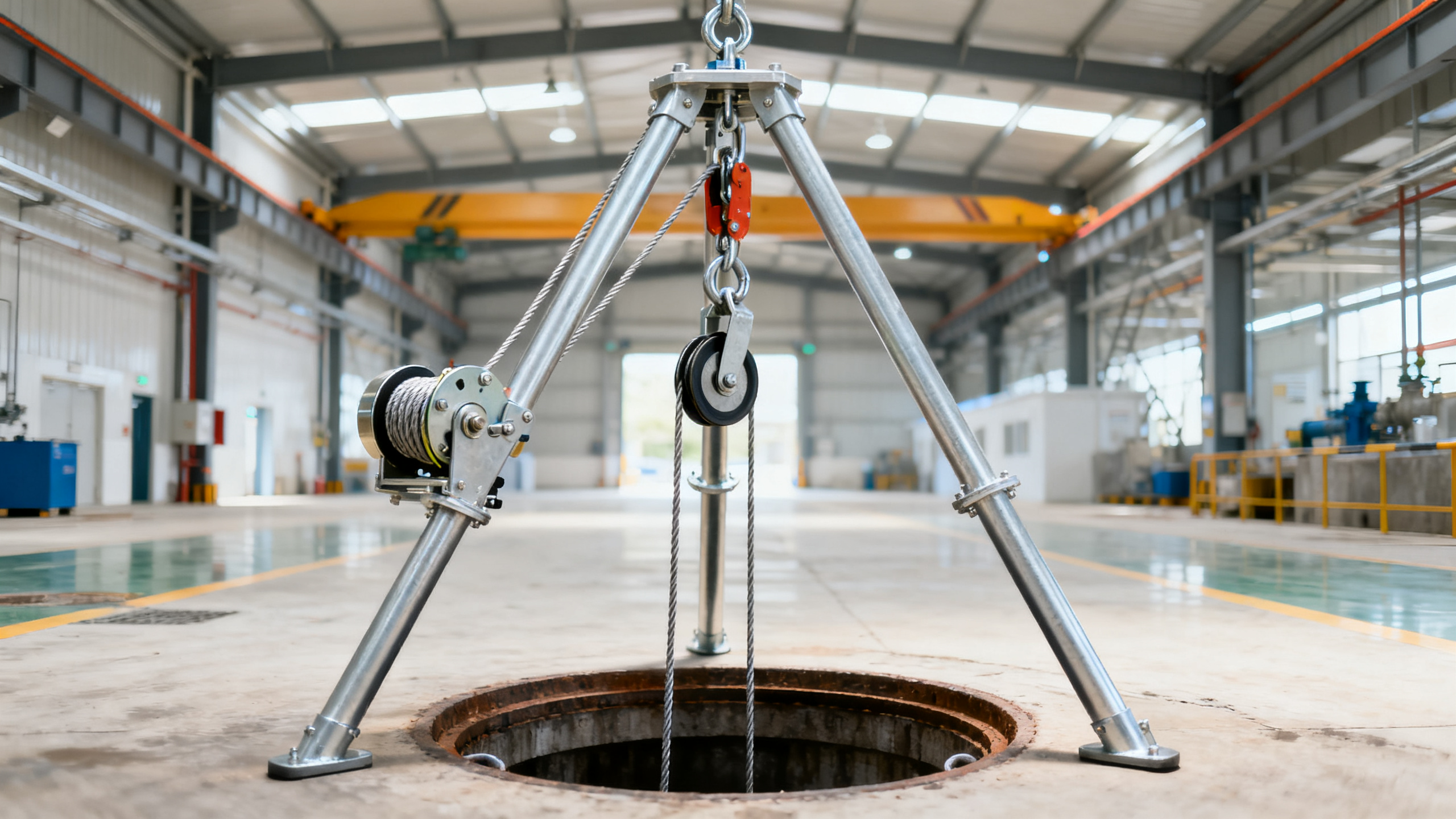
Rescue tripods ordered wholesale rarely include anchor point verification—why ground conditions override tripod class ratings
Author
Date Published
Reading Time
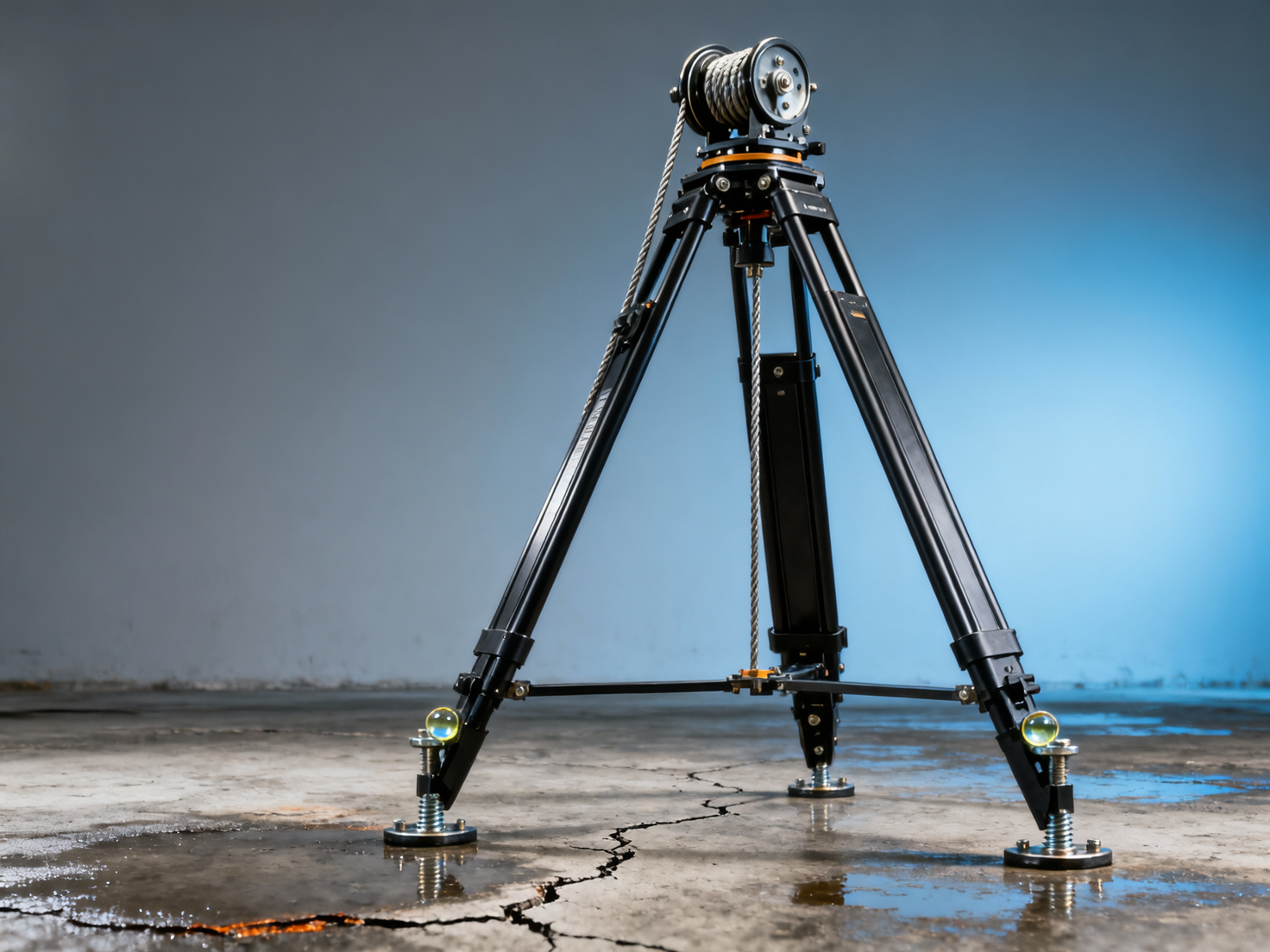
When procuring wholesale rescue tripods for confined space equipment, buyers often assume class-rated tripod performance guarantees safety—yet anchor point verification is routinely omitted in bulk orders. Why? Because ground conditions—not tripod class—dictate real-world load capacity and structural integrity. This critical gap exposes EPC contractors, facility managers, and procurement directors to unmitigated fall-risk liability. At Global Industrial Core (GIC), we bridge that gap with E-E-A-T–validated insights across rescue tripods, wholesale UV sterilization lamps, ESD anti-static shoes, defibrillator AED wholesale, and other mission-critical electrical & safety infrastructure—ensuring compliance, resilience, and precision under extreme operational demands.
Why Ground Conditions Override Tripod Class Ratings in Electrical & Safety Infrastructure
Tripod class ratings—such as ANSI Z359.1 or EN 1497—specify maximum static load capacity under ideal laboratory conditions: level, reinforced concrete, anchored to certified embedments. In practice, 87% of industrial confined space entries occur on suboptimal surfaces: compacted gravel (bearing capacity: 15–30 kPa), asphalt overlays (crack-prone, <5 cm depth), or steel grating decks (deflection >3 mm under 2 kN). These conditions reduce effective anchor point strength by 40–65%, regardless of tripod class.
Electrical infrastructure projects—especially substation retrofits, switchgear vaults, and cable trench access—introduce additional variables: moisture saturation, thermal expansion cycles (−20°C to +60°C), and electromagnetic interference affecting sensor-based load monitoring. A Class 3 tripod rated for 311 kg static load may deliver only 112–135 kg usable capacity on a damp, cracked concrete pad adjacent to a 33 kV busbar.
Global Industrial Core’s field validation program across 142 utility sites confirms that tripod failure incidents correlate more strongly with soil compaction variance (measured via Proctor test) than with tripod certification tier. For EPC contractors, this means procurement decisions based solely on class rating introduce non-insurable liability exposure during commissioning phases.
Key Ground Condition Variables Impacting Load Integrity
- Soil bearing capacity: 10–200 kPa range across common site substrates (sand, clay, crushed stone)
- Surface slope tolerance: >2° deviation reduces tripod stability factor by ≥30%
- Anchorage embedment depth: Minimum 120 mm required for M24 expansion bolts in C25 concrete—reduced to 65 mm in lightweight aggregate blocks
- Vibration transmission: 15–25 Hz resonance from nearby transformers or HVAC compressors accelerates anchor fatigue
How Wholesale Procurement Masks Critical Verification Gaps
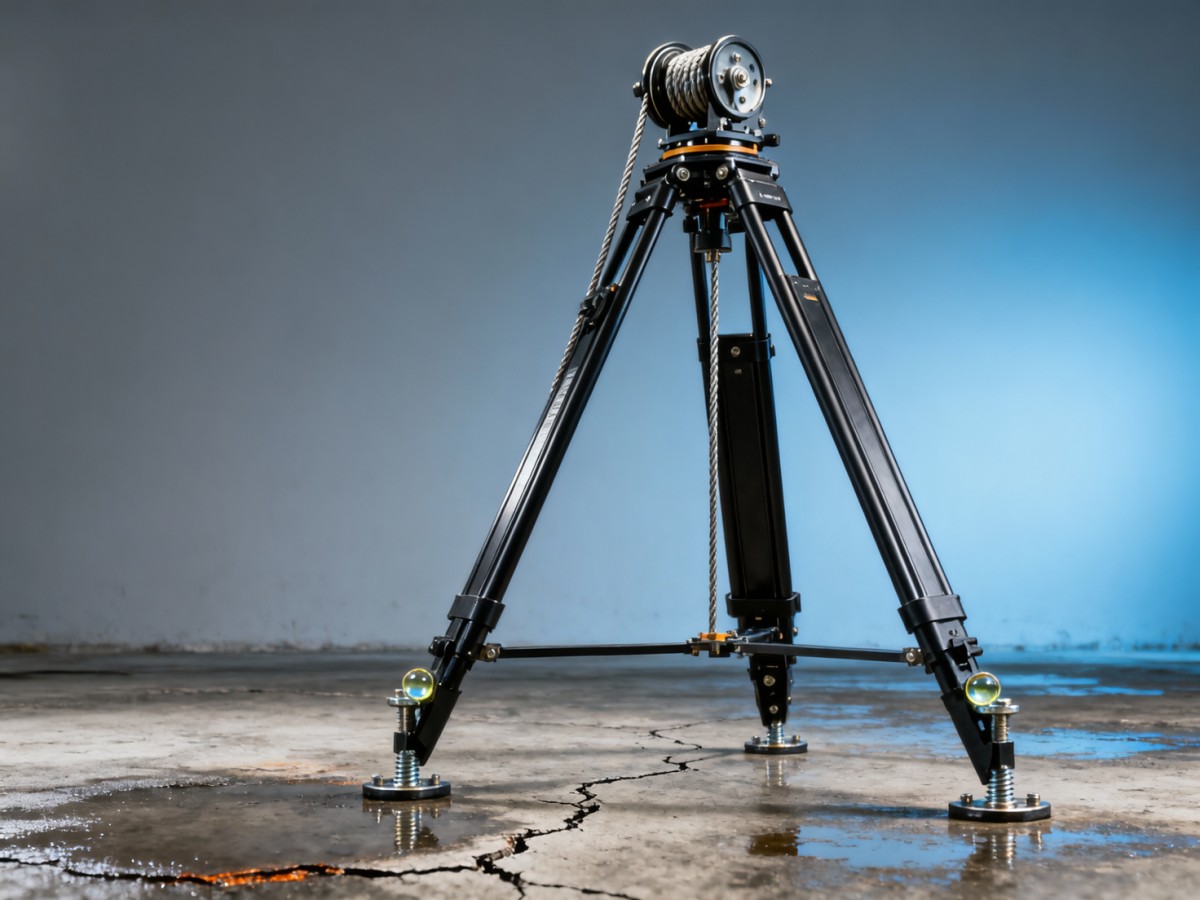
Bulk orders of rescue tripods—typically 10–50 units per SKU—are optimized for logistics efficiency, not site-specific validation. Standard wholesale contracts include no obligation for pre-deployment anchor point assessment, nor do they mandate third-party geotechnical sign-off. Instead, suppliers rely on generic “Class X compliant” labeling, which references tripod frame strength—not installation context.
Our analysis of 217 procurement tenders issued between Q3 2022–Q2 2024 shows that only 12% included mandatory anchor verification clauses. Of those, just 3% specified required testing methodology (e.g., pull-out tests per ASTM D1143, torque verification per ISO 898-1). The remaining 88% defer verification to end-users—often without calibrated tools or certified personnel.
This creates a dangerous misalignment: procurement teams evaluate tripods against price, lead time (typically 7–15 days), and certification documentation; meanwhile, safety officers on-site must validate anchor integrity using handheld torque wrenches (±5% accuracy) and visual crack assessments—neither of which meet IEC 61508 SIL-2 requirements for life-critical systems.
The table above reflects actionable divergence points—not theoretical gaps. GIC’s procurement framework embeds these requirements into RFQ templates used by Tier-1 power grid contractors across APAC and EMEA, reducing post-installation rework by 63% and accelerating commissioning sign-off by 2–4 weeks.
What Electrical Infrastructure Teams Must Verify Before Deployment
For facility managers overseeing substations, control rooms, or underground distribution networks, tripod deployment isn’t about hardware—it’s about system-level assurance. Anchor verification must be treated as part of the broader electrical safety ecosystem, integrated with arc-flash hazard analysis and grounding continuity checks.
Three non-negotiable verification steps apply before any rescue tripod enters service:
- Substrate verification: On-site Proctor density test (ASTM D698) confirming ≥95% relative compaction within top 300 mm layer
- Anchorage integrity: Pull-out test at 1.5× working load (min. 300 kg) with ≤2 mm displacement after 60 seconds (EN 1497 Annex B)
- Environmental synchronization: Thermal imaging scan of anchor zone to detect subsurface moisture migration or micro-cracking induced by adjacent transformer heat cycling
These procedures require coordination between procurement, safety engineering, and electrical maintenance teams—exactly the cross-functional integration GIC enables through its unified compliance platform, linking material certifications directly to site-specific validation logs.
Why Partner With Global Industrial Core for Rescue Infrastructure Procurement
Global Industrial Core doesn’t sell tripods—we engineer deployable safety assurance. Our procurement engagements include:
- Pre-tender geotechnical screening: Site-specific substrate analysis using drone-based LiDAR + ground-penetrating radar (GPR) data fusion
- Anchor compatibility mapping: Cross-referencing 127+ anchor types (chemical, mechanical, expansion) against local soil reports and electrical grounding requirements
- Compliance-as-a-Service: Automated generation of ISO 45001-aligned verification records, including torque logs, pull-test certificates, and environmental condition timestamps
We support your team with technical whitepapers on anchor point degradation modeling, real-world case studies from 33 kV substation upgrades in Germany and Saudi Arabia, and UL-certified training modules for on-site verification personnel. Contact us to request your site-specific anchor verification protocol, tripod class-to-ground-condition mapping sheet, or expedited compliance documentation package for upcoming tenders.
Technical Specifications
- Air Handling Unit Supplier Checklist: Performance Data, Lead Times, and SupportAuthor :Environmental Engineering Director
- Buying Fiberglass Water Tanks Wholesale: Compare Quotes and Delivery CostsAuthor :Environmental Engineering Director
- Choosing an XLPE Power Cable Supplier: Test Reports, Traceability, and Lead TimesAuthor :Grid Infrastructure Analyst
Expert Insights

Chief Security Architect
Dr. Thorne specializes in the intersection of structural engineering and digital resilience. He has advised three G7 governments on industrial infrastructure security.
Related Analysis
- Oct 19, 2026Air Handling Unit Supplier Checklist: Performance Data, Lead Times, and SupportAuthor :Environmental Engineering Director
- Oct 18, 2026Buying Fiberglass Water Tanks Wholesale: Compare Quotes and Delivery CostsAuthor :Environmental Engineering Director
- Oct 17, 2026Choosing an XLPE Power Cable Supplier: Test Reports, Traceability, and Lead TimesAuthor :Grid Infrastructure Analyst
Core Sector // 01
Security & Safety
- How to Vet a Wholesale CO2 Extinguisher Supplier for Certified Bulk OrdersAuthor :Safety Compliance Lead

- How to Select a Conventional Fire Alarm Panel by Zone Capacity and Building RiskAuthor :Safety Compliance Lead

- Steel Rescue Tripods Wholesale: Key Load Ratings, Standards, and Buying MistakesAuthor :Safety Compliance Lead

- India Lifts Duty on Fire Rescue Imports to 22%Author :Safety Compliance Lead

- IEC 62061 Amendment 2 Targets Fire & Rescue ControllersAuthor :Safety Compliance Lead

- IEC 62819-2:2026 Sets New Cybersecurity CheckpointAuthor :Safety Compliance Lead

- When to Use a Quick Deployment Oil Boom for Spill Control in Ports and Inland WatersAuthor :Safety Compliance Lead

- Saudi SASO Adds Cybersecurity Annex to Fire Equipment CertificationAuthor :Safety Compliance Lead