How to Choose a Three Phase Soft Starter for Pumps, Fans, and Conveyors
Author
Date Published
Reading Time
How to Choose a Three Phase Soft Starter for Pumps, Fans, and Conveyors
If you are evaluating a three phase soft starter for a pump, fan, or conveyor, the main question is not simply “Will it start the motor?” Most units will. The real question is whether it will start that specific load smoothly, protect the motor and driven equipment, fit your power system, and stay reliable under your site conditions. That is where many selections go wrong. A soft starter that looks acceptable on paper can still cause water hammer, belt shock, nuisance trips, or poor thermal performance once it is installed.
For technical evaluators, the best choice usually comes from matching the starter to the load profile first, then checking current capacity, control features, bypass arrangement, protection functions, and compliance requirements. Price matters, but in most industrial settings, unplanned downtime, maintenance labor, and premature equipment wear cost more than the gap between two starter models.
A short answer, if you need one quickly: choose a three phase soft starter based on motor full-load current, starting duty, load type, available line voltage, required protections, and how often the machine starts per hour. Pumps, fans, and conveyors do not impose the same starting behavior, so they should not be sized or configured the same way.
Start with the load, not the catalog
This is the first place many teams lose time. They compare brand A and brand B, or focus on horsepower labels, before getting clear on what the motor is actually driving.
Pumps, fans, and conveyors may all use induction motors, but their startup demands are different:
- Centrifugal pumps often need smooth acceleration to reduce hydraulic shock, pressure surges, and stress on couplings and pipes.
- Fans, especially centrifugal fans, usually have lower breakaway torque demand but longer acceleration time because of rotating inertia.
- Conveyors can be the most sensitive mechanically. A loaded belt or material-handling line may need controlled torque to avoid jerks, spillage, belt slip, or gearbox shock.
If you start with the load behavior, the selection becomes much clearer. If you start with motor kW alone, you may pick a unit that is electrically adequate but operationally wrong.
How to size a three phase soft starter correctly
The basic sizing reference is the motor nameplate full-load current at the actual system voltage. That sounds obvious, yet many evaluations still begin with horsepower tables and stop there. Use the manufacturer’s selection chart, but only after confirming the application duty.
In practice, sizing usually depends on five things:
- Motor rated current
- Supply voltage and frequency
- Starting time required
- Starts per hour
- Load category, including whether the conveyor starts loaded or unloaded
A pump with light starting duty may allow a standard rating. A conveyor with high breakaway torque or repeated starts may need derating review or a larger frame size. This is one of the most common mistakes in soft starter selection: people size to nominal motor power but ignore duty cycle and thermal stress inside the starter.
When in doubt, evaluate against current rather than marketing labels. A motor replacement, voltage variation, or site-specific load increase can make a “matching kW” choice unreliable.
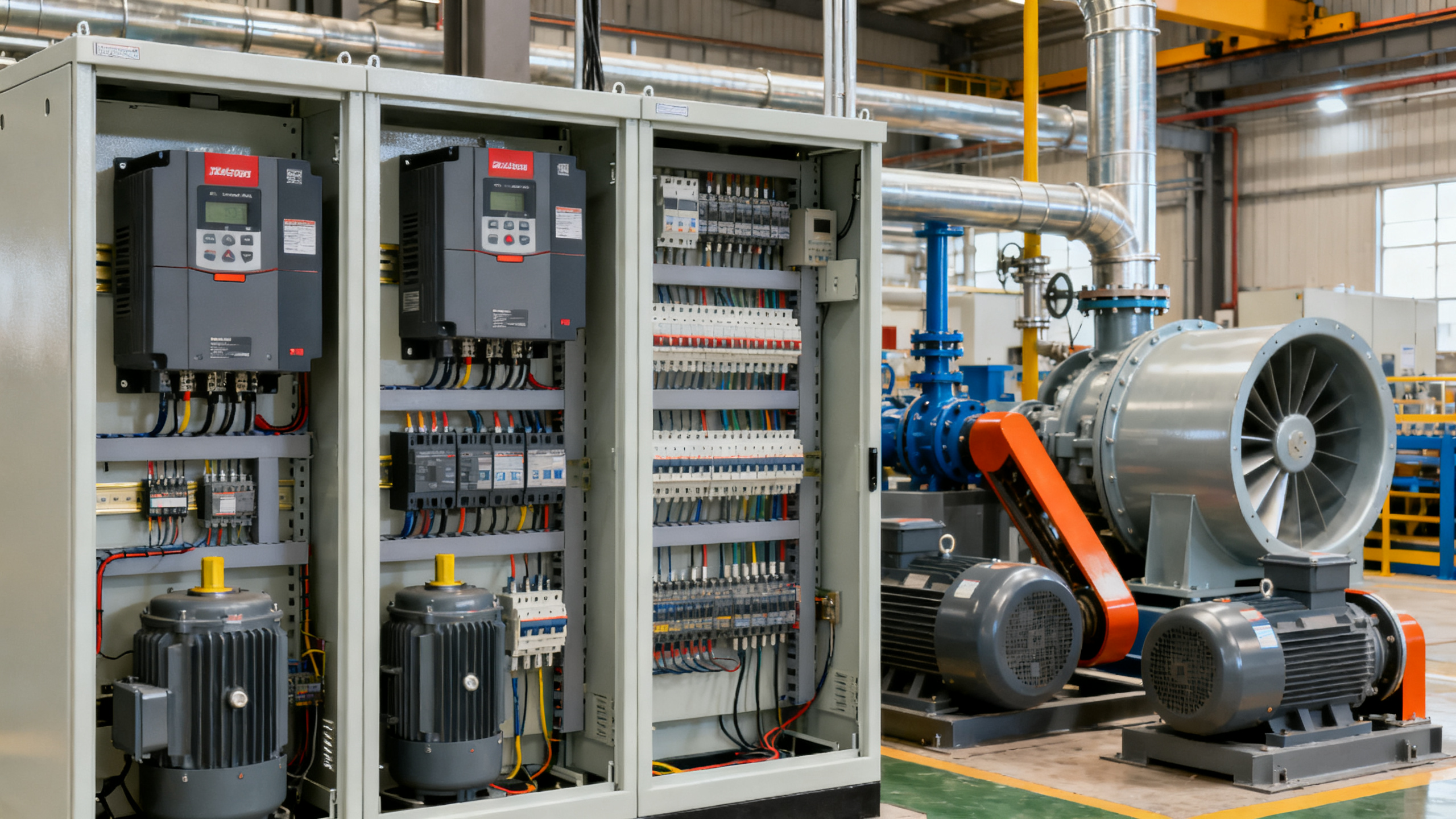
[图片占位符1:技术人员在工业配电柜前查看泵、风机和输送机电机回路及软启动器选型参数,alt="three phase soft starter selection for pump fan and conveyor motors"]
Pumps, fans, and conveyors need different settings priorities
Not every application needs the same control philosophy, and that matters when you compare models.
For pumps
Look for features that help reduce hydraulic stress: soft start ramp, soft stop, current limit, and pump-specific control modes where available. Soft stop is often more valuable on pumps than buyers expect, because it can reduce water hammer during shutdown. If the system includes long piping runs, pressure-sensitive valves, or frequent stop/start cycles, this becomes more important.
For fans
Acceleration control and thermal margin matter more than fancy pump functions. Fans often coast with high inertia, so starting time may be longer than expected. A starter that trips during a long ramp is not necessarily undersized in a simple sense; it may be incorrectly configured for the real fan load, or the duty rating may not suit the application.
For conveyors
Pay close attention to starting torque behavior. Conveyors can expose weak assumptions very quickly. If the belt starts loaded, if material distribution is inconsistent, or if the process needs gentle take-up to avoid shock, you need a starter with stable torque control and protection coordination. A basic low-cost unit may work on an empty light-duty conveyor, but not on a heavily loaded aggregate, packaging, or bulk handling line.
One practical rule: the more your process is affected by sudden movement, pressure shock, or mechanical backlash, the more carefully you should evaluate the starter’s control functions instead of treating it as a commodity device.
Voltage, bypass, and installation conditions are where hidden problems show up
Many shortlist decisions are made in meeting rooms. Many failures happen on the plant floor.
Check the incoming line voltage range, control voltage requirements, enclosure environment, altitude, cooling conditions, and panel space before you approve a model. A three phase soft starter installed in a hot, dusty, poorly ventilated MCC can behave very differently from the same unit tested in clean lab conditions.
Bypass design also deserves attention. Some starters use an internal bypass contactor, while others rely on external bypass arrangements. Internal bypass can reduce heat after the motor reaches full speed and simplify panel design. External bypass may still make sense in some engineered systems, but it adds design and wiring considerations. What matters is not which approach sounds better in a brochure, but how it affects heat dissipation, serviceability, and panel layout in your actual installation.
If your site has unstable voltage, high ambient temperature, or frequent starts, verify derating guidance from the official technical documentation. This is not an area to guess.
Protection features should match failure modes you actually see
A long feature list is not automatically useful. Focus on the protections that address real operational risk.
For most pump, fan, and conveyor applications, common evaluation points include:
- Overload protection
- Phase loss and phase imbalance detection
- Overcurrent or locked-rotor protection
- Undervoltage and overvoltage alarms where relevant
- Overtemperature protection
- Motor thermistor input, if your motor design uses it
- Jam or stall detection for conveyor duty
- Underload detection for pumps, where dry run or abnormal process condition is a concern
It is better to have a starter that can detect the faults your site actually experiences than one that offers a long specification sheet with functions no one configures. In real evaluations, simpler equipment with clearer diagnostics is sometimes the better engineering choice, especially where maintenance teams need fast fault identification.
Do not confuse a soft starter with a VFD
This comes up often, especially when teams are trying to reduce cost. A soft starter controls motor voltage during start and stop. A variable frequency drive controls speed continuously by varying frequency and voltage.
If your goal is mainly to reduce inrush current, mechanical shock, and startup stress, a soft starter is often the right fit. If the process needs continuous speed control, energy optimization across varying load points, or precise flow adjustment, a VFD may be the better answer.
For example, a fixed-speed conveyor that only needs smoother starts is a strong soft starter candidate. A fan system that must modulate airflow all day may justify a different approach. This distinction saves a lot of bad procurement decisions.
Questions technical evaluators should ask before approving a model
When a team gets stuck, it is usually because one of these questions has not been answered clearly enough:
- Is the motor started under load, partially loaded, or unloaded?
- How many starts per hour are expected in normal and upset conditions?
- Is soft stop needed, or only soft start?
- What is the acceptable starting time before process risk or thermal risk increases?
- Does the site require specific certifications such as CE, UL, or other project-level compliance documents?
- Will this unit be integrated into PLC, SCADA, or a broader motor control architecture?
- Who will troubleshoot it at 2 a.m., and what diagnostic information will they actually need?
That last question is more important than it sounds. A technically advanced starter with poor local support or confusing fault data can become a maintenance burden. For EPC firms and industrial operators working across multiple facilities, documentation quality and compliance traceability are not side issues. They are part of the selection.
This is also where an intelligence-led sourcing approach helps. Platforms such as Global Industrial Core (GIC), which focus on critical industrial systems and compliance-sensitive procurement, are useful when evaluators need broader context on standards, supplier positioning, and infrastructure-grade selection criteria rather than just product marketing.
Common mistakes that lead to the wrong choice
Some mistakes show up again and again:
- Choosing by motor power only and ignoring starting current duty
- Assuming pumps, fans, and conveyors can use the same settings or same model family without review
- Skipping thermal and starts-per-hour checks
- Ignoring panel temperature and ventilation
- Paying attention to purchase price but not downtime risk or maintenance effort
- Selecting a soft starter where variable speed control is actually required
Another one is overbuying. A larger unit is not always the smarter unit. Oversizing can increase cost and panel footprint without solving the real issue if the problem is poor settings, wrong protection logic, or a mismatch between application and control method.
What a good decision usually looks like
A sound selection process is fairly disciplined. First, confirm motor and load data. Then map the load to the required start/stop behavior. After that, check current rating, duty cycle, protection functions, bypass method, environmental limits, and integration needs. Only then does model comparison become meaningful.
For a pump system, a good choice often means stable acceleration and controlled stopping with protections relevant to hydraulic operation. For a fan, it often means enough thermal margin for inertia-heavy starts and reliable fault handling. For a conveyor, it usually means careful torque management and fault logic that protects both motor and mechanical train.
By the end of the evaluation, you should be able to explain not just which three phase soft starter you selected, but why it fits that load, that site, and that maintenance reality. If that explanation is still vague, the selection probably is too.
FAQ
Can I size a soft starter by motor horsepower alone?
It is a weak starting point. Use motor full-load current, system voltage, and application duty. Horsepower alone misses thermal and starting behavior differences.
Is a soft starter enough for all pump applications?
No. It works well when the pump runs at fixed speed and the main goal is smoother starting and stopping. If the process needs continuous flow control, another drive method may be more appropriate.
Do conveyors usually need a larger margin than fans?
Often yes, especially if they start loaded or see variable material load. Conveyor duty can demand more careful torque and protection review than fan duty.
Does internal bypass always make a soft starter better?
Not always. It can reduce heat and simplify installation, but the better choice depends on panel design, maintenance preferences, and the overall control architecture.
Image Placeholder List
- Placeholder 1: Place after the section on sizing and before the application-specific settings discussion. Content: a technical evaluator reviewing motor starter parameters in an industrial control panel serving pump, fan, and conveyor circuits. Alt: "three phase soft starter selection for pump fan and conveyor motors"
Internal Link Anchor Text Suggestions
- Motor starting methods for industrial equipment: guide page comparing DOL, star-delta, soft starters, and VFDs
- Pump motor protection best practices: technical article on dry run, overload, and water hammer risk
- How to read motor nameplate data for equipment selection: educational resource
- MCC panel design considerations for soft starters: application note or engineering guide
- CE, UL, and ISO checks for industrial electrical procurement: compliance-focused page
External Authority Source Suggestions
- Brand official technical manuals and application guides for soft starters
- Industrial standards organizations or electrical safety bodies covering motor control and installation practices
- Motor manufacturer documentation on starting current, thermal limits, and application duty
Technical Specifications
- How to Select an Emissions Monitoring System Analyzer for Compliance ReportingAuthor :Precision Metrology Expert
- How to Select an Access Control Management System for Multi-Site FacilitiesAuthor :Safety Compliance Lead
- Portable Gas Monitor Calibration: How Often Is It Needed for Safe Confined-Space Work?Author :Precision Metrology Expert
Expert Insights

Chief Security Architect
Dr. Thorne specializes in the intersection of structural engineering and digital resilience. He has advised three G7 governments on industrial infrastructure security.
Related Analysis
- Sep 21, 2026How to Select an Emissions Monitoring System Analyzer for Compliance ReportingAuthor :Precision Metrology Expert
- Sep 20, 2026How to Select an Access Control Management System for Multi-Site FacilitiesAuthor :Safety Compliance Lead
- Sep 19, 2026Portable Gas Monitor Calibration: How Often Is It Needed for Safe Confined-Space Work?Author :Precision Metrology Expert
Core Sector // 01
Security & Safety
- Does Power Transmission Maintenance Differ in Desert and Arctic Sites?Author :Heavy Industry Strategist

- Can Industrial Engineering Solutions Reduce Petrochemical Downtime?Author :Heavy Industry Strategist

- What Drives Industrial Roller Chains Price: Material, Pitch, Load, and Supplier FactorsAuthor :Heavy Industry Strategist

- How to Choose a Three Phase Soft Starter for Pumps, Fans, and ConveyorsAuthor :Heavy Industry Strategist

- How to Evaluate a Conveyor Roller Belts Manufacturer for Load, Speed, and Service LifeAuthor :Heavy Industry Strategist

- Power Transmission Systems Pricing: 7 Cost Drivers Buyers Should CompareAuthor :Heavy Industry Strategist

- India Expands BIS ISI Rule for Imported Belts and ChainsAuthor :Heavy Industry Strategist

- Zero Backlash Jaw Coupling Selection Guide: Torque, Misalignment, and Servo PerformanceAuthor :Heavy Industry Strategist