SAMR Launches Joint Enforcement on Used EV Battery Recycling
Author
Date Published
Reading Time
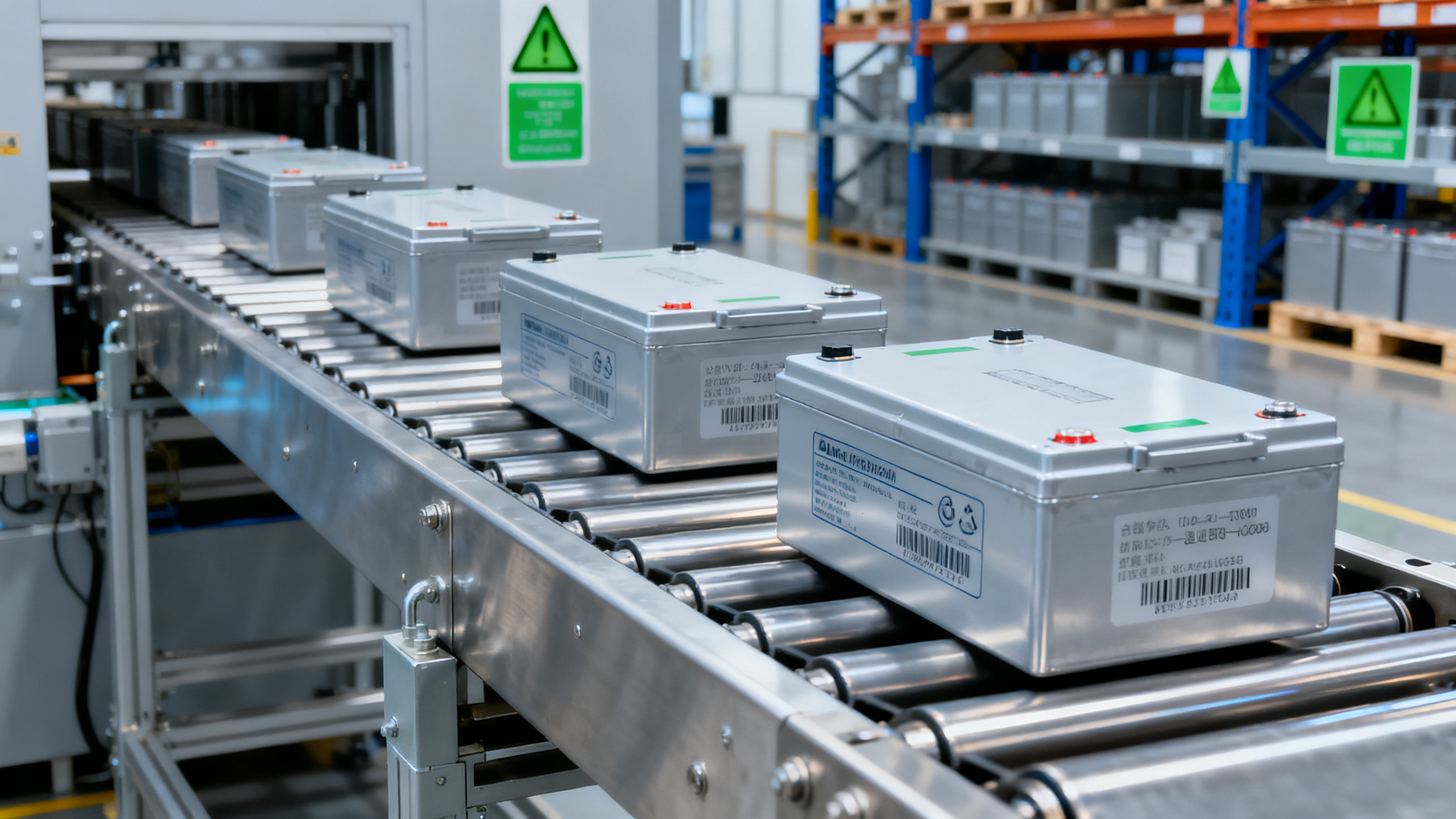
On April 28, 2026, China’s State Administration for Market Regulation (SAMR), together with the Ministry of Industry and Information Technology (MIIT), the Ministry of Ecology and Environment, and three other departments, launched a joint enforcement campaign targeting unauthorized disassembly and refurbishment of used lithium-ion traction batteries. The initiative directly affects global supply chains for cordless power tools, security backup power systems (e.g., CCTV UPS), and fire & rescue equipment — particularly where such batteries enter end-use applications without verified qualification.
Event Overview
On April 28, 2026, five Chinese government departments jointly issued the Notice on Launching a Special Joint Enforcement Campaign to Standardize the Recycling and Utilization of Used Power Batteries. The action focuses on curbing unlicensed dismantling, reconditioning, and downstream deployment of battery packs repurposed from electric vehicles — especially those entering fire emergency power supplies, CCTV backup power systems, and industrial uninterruptible power supplies (UPS). Global distributors sourcing lithium-ion-powered personal protective equipment (PPE), fire & rescue equipment, or power transmission components must now verify that their Chinese suppliers hold inclusion in the official ‘List of Qualified Enterprises for Traction Battery Grading Utilization’ (commonly referred to as the ‘Graded Battery White List’).
Industries Affected
Direct Trading Enterprises
Export-oriented trading firms handling finished battery-integrated devices (e.g., portable UPS units, smoke alarm clusters, or handheld thermal imagers) are required to validate supplier white-list status before shipment. Non-compliant shipments may face customs holds or rejection at destination ports under new due diligence obligations.
Raw Material Procurement Enterprises
Companies procuring battery cells, modules, or pre-assembled battery packs for integration into safety-critical equipment must now assess upstream supplier eligibility. Absence of white-list certification introduces compliance risk in procurement contracts and product liability assessments.
Contract Manufacturing & Assembly Firms
OEM/ODM manufacturers producing battery-backed security or emergency hardware (e.g., network video recorders with built-in UPS, portable gas detectors) may face revised bill-of-materials (BOM) requirements. Use of non-white-listed graded batteries could invalidate type approvals or CE/UL certifications reliant on traceable cell provenance.
Distribution & Channel Partners
Global distributors and regional logistics providers managing inventory of power tool batteries, fire alarm control panels, or telecom backup units must implement verification workflows for Chinese-origin battery-containing SKUs. Documentation gaps may delay warehouse releases or trigger audit escalations by local market regulators.
Supply Chain Service Providers
Third-party logistics (3PL), customs brokers, and compliance consultants supporting cross-border battery trade will see increased demand for white-list verification services, origin tracing documentation, and classification support under updated battery recycling regulations.
Key Focus Areas and Recommended Actions
Monitor Official Updates on White-List Implementation
The initial notice does not publish the full list of qualified enterprises nor specify the exact technical or operational criteria for inclusion. Companies should track SAMR and MIIT announcements over Q2–Q3 2026 for list publication timelines, application procedures, and potential grandfathering provisions for existing contracts.
Prioritize Verification for High-Risk End-Use Categories
Focus verification efforts first on products deployed in life-safety or critical infrastructure contexts — specifically fire emergency power supplies, CCTV backup systems, and industrial UPS units — as these are explicitly named in the notice as enforcement priorities.
Distinguish Between Policy Signal and Operational Enforcement
This is a multi-departmental coordination directive, not yet accompanied by published inspection protocols or penalty schedules. While formal audits are expected to begin in late 2026, current emphasis remains on self-reporting and documentation readiness rather than immediate field inspections.
Update Supplier Onboarding and Contract Clauses
Procurement teams should revise supplier questionnaires and master agreements to require white-list eligibility declarations, retain supporting evidence (e.g., certificate numbers, issuance dates), and include contractual remedies for misrepresentation or loss of qualification during contract term.
Editorial Perspective / Industry Observation
Observably, this action signals a structural shift from voluntary guidance to enforceable supply chain accountability for battery grading utilization. It does not ban graded batteries outright but introduces traceability as a prerequisite for market access in regulated verticals. Analysis shows the notice functions primarily as a regulatory staging mechanism: it establishes inter-agency coordination capacity and sets groundwork for future technical standards (e.g., battery health reporting, module-level serial traceability), rather than delivering immediate operational constraints. From an industry perspective, this reflects growing alignment between environmental compliance and product safety governance — particularly where reused energy storage intersects with public safety infrastructure.
Consequently, stakeholders should treat this as an early-stage signal requiring procedural preparation, not a fully activated restriction. Its long-term significance lies less in near-term disruption and more in its role as a precedent for extending similar traceability mandates to other high-risk recycled components across electronics and industrial equipment sectors.
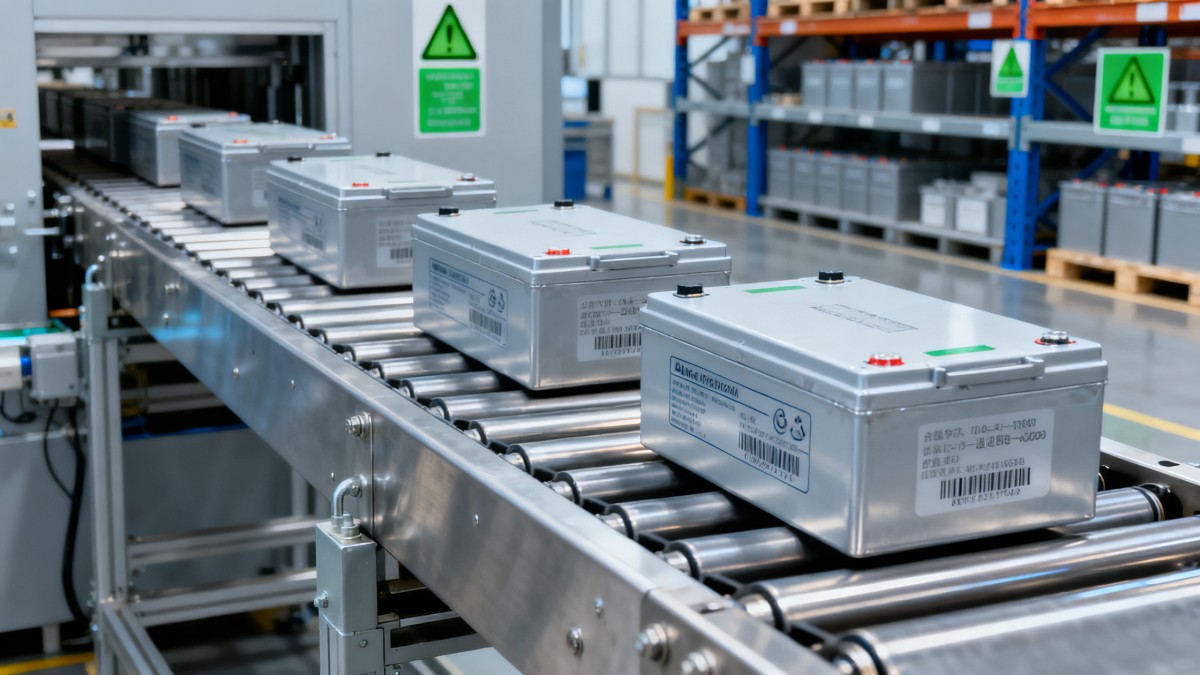
Conclusion: This enforcement initiative marks a formal institutionalization of supply chain due diligence for graded lithium-ion batteries in safety-relevant applications. It does not redefine technical reuse standards, but elevates documentation, traceability, and supplier qualification to mandatory prerequisites for market participation. Currently, it is more accurately understood as a preparatory framework than an active compliance barrier — one that prioritizes verifiability over prohibition, and process alignment over product restriction.
Source Disclosure:
Primary source: Joint Notice issued by SAMR, MIIT, Ministry of Ecology and Environment, and two additional departments on April 28, 2026 — title translated as Notice on Launching a Special Joint Enforcement Campaign to Standardize the Recycling and Utilization of Used Power Batteries.
Points under observation: Publication timeline and scope of the official ‘Graded Battery White List’; detailed enforcement protocols; applicability to non-China-exported but China-manufactured goods sold via third-country distribution hubs.
Technical Specifications
- How to Select Electronic Hotel Key Card Locks for Guest Rooms and Staff AreasAuthor :Safety Compliance Lead
- How to Select Lab Instruments for Reliable Chemical Analysis WorkflowsAuthor :Precision Metrology Expert
- How to Size a UPS for Server Rooms: Load, Runtime, and Redundancy FactorsAuthor :Grid Infrastructure Analyst
Expert Insights

Chief Security Architect
Dr. Thorne specializes in the intersection of structural engineering and digital resilience. He has advised three G7 governments on industrial infrastructure security.
Related Analysis
- Sep 17, 2026How to Select Electronic Hotel Key Card Locks for Guest Rooms and Staff AreasAuthor :Safety Compliance Lead
- Sep 16, 2026How to Select Lab Instruments for Reliable Chemical Analysis WorkflowsAuthor :Precision Metrology Expert
- Sep 15, 2026How to Size a UPS for Server Rooms: Load, Runtime, and Redundancy FactorsAuthor :Grid Infrastructure Analyst
Core Sector // 01
Security & Safety
- Steel Rescue Tripods Wholesale: Key Load Ratings, Standards, and Buying MistakesAuthor :Safety Compliance Lead

- India Lifts Duty on Fire Rescue Imports to 22%Author :Safety Compliance Lead

- IEC 62061 Amendment 2 Targets Fire & Rescue ControllersAuthor :Safety Compliance Lead

- IEC 62819-2:2026 Sets New Cybersecurity CheckpointAuthor :Safety Compliance Lead

- When to Use a Quick Deployment Oil Boom for Spill Control in Ports and Inland WatersAuthor :Safety Compliance Lead

- Saudi SASO Adds Cybersecurity Annex to Fire Equipment CertificationAuthor :Safety Compliance Lead

- CBP Pre-Arrival Portal Raises Import Checks for Fire EquipmentAuthor :Safety Compliance Lead

- UAE Sets Cybersecurity Gate for Fire Control PanelsAuthor :Safety Compliance Lead