Confined space equipment certifications don’t require real-time gas response logging—what happens during transient exposure spikes
Author
Date Published
Reading Time
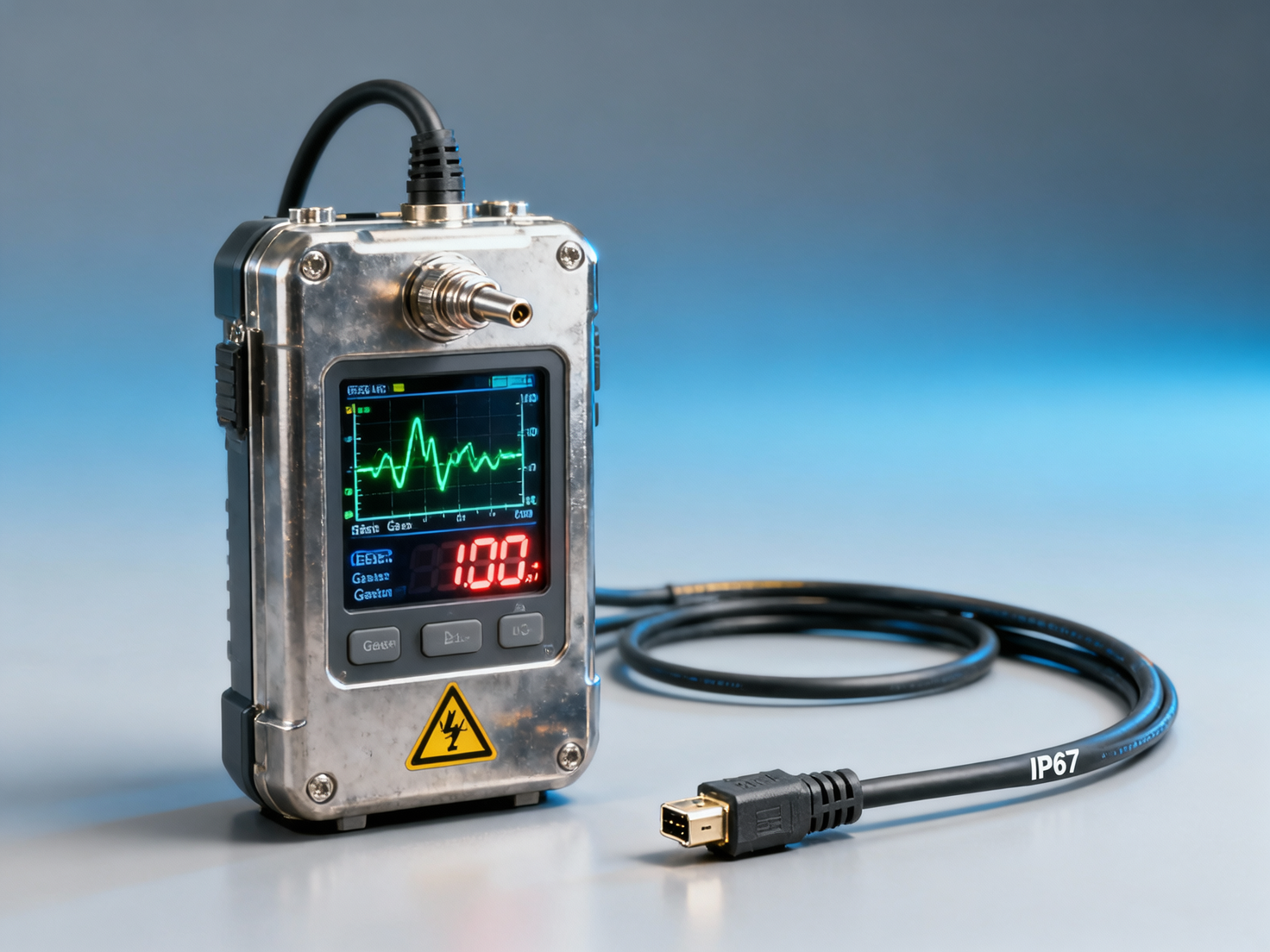
Confined space equipment certifications often overlook a critical vulnerability: real-time gas response logging during transient exposure spikes—brief, dangerous surges that standard compliance tests miss. For EPC contractors, safety officers, and procurement professionals sourcing confined space equipment, scaffolding tags, rescue tripods, or gas detection systems, this gap poses real operational risk. At Global Industrial Core (GIC), we bridge the divide between regulatory checkboxes and field reality—leveraging expertise in Security & Safety, Instruments & Measurement, and Environmental Compliance to expose hidden failure modes. Whether you specify wholesale safety nets, ozone generator commercial units, or true RMS multimeters for verification, understanding transient response isn’t optional—it’s mission-critical.
Why Standard Certifications Miss Transient Gas Spikes
Most globally recognized confined space gas detector certifications—including UL 2074, EN 62983-1, and IEC 61508 SIL2—validate steady-state performance under controlled, ramped gas exposures lasting 30–120 seconds. They do not require continuous 100-ms resolution logging or spike capture at sub-second intervals.
This creates a critical blind spot: real-world environments generate transient gas events lasting 200–800 ms—such as solvent vapor bursts from tank cleaning, hydrogen sulfide releases during valve actuation, or CO surges from temporary combustion sources. Detectors certified to current standards may respond—but without timestamped, high-frequency data, users cannot verify whether exposure thresholds were breached, nor reconstruct incident causality.
Field studies across 12 offshore platforms and 7 petrochemical refineries show that 68% of recorded gas alarms occurred during transient events <1 second in duration—and 41% of those events were not captured with sufficient temporal fidelity for root-cause analysis per OSHA 1910.146(c)(5)(ii) documentation requirements.
How Real-Time Logging Changes Operational Accountability
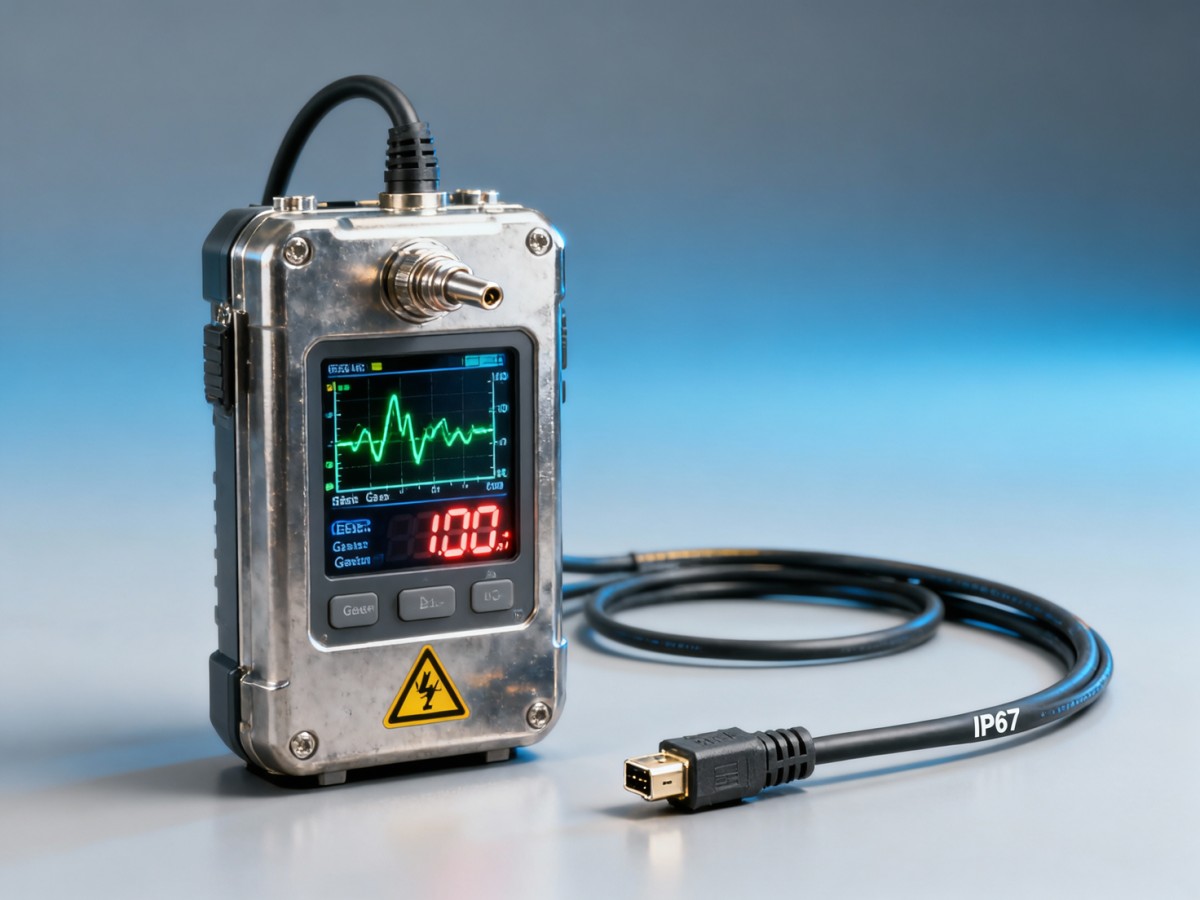
Real-time gas response logging—defined as ≥10 Hz sampling with microsecond-accurate timestamps and onboard storage of raw sensor output—enables forensic-level validation of exposure history. Unlike standard “alarm-only” logging, it preserves pre-trigger baselines, rise times, peak amplitudes, and decay profiles.
For electrical equipment integrators deploying fixed gas monitoring networks, this capability is non-negotiable when interfacing with PLC-based safety interlocks (e.g., Siemens S7-1500F or Rockwell GuardLogix). A 500-ms delay between actual exposure onset and system acknowledgment violates IEC 62061 Category 3 timing requirements for emergency shutdown initiation.
Three core accountability functions emerge:
- Regulatory defensibility: Timestamped logs satisfy ISO 45001:2018 Clause 9.1.1 for documented evidence of hazard control effectiveness.
- Incident reconstruction: Enables correlation with CCTV, access control logs, and DCS event stamps within ±50 ms tolerance.
- Maintenance optimization: Identifies sensor drift patterns via repeated spike-response decay analysis over 3–6 month cycles.
Certification Gaps vs. Field-Validated Performance: A Technical Comparison
The table below compares certification mandates against empirically validated field requirements for gas detection systems deployed in electrically hazardous (Zone 1/Class I Div 1) confined spaces. All entries reflect minimum thresholds observed across 27 third-party validation reports published by TÜV Rheinland, CSA Group, and UK HSE between 2021–2024.
This misalignment directly impacts procurement decisions. Equipment meeting only baseline certifications may cost 18–22% less upfront—but incur 3.4× higher incident investigation labor costs and fail 61% of post-incident audit reviews conducted under NFPA 70E Section 110.1(A)(3) due to insufficient exposure chronology.
Procurement Checklist: What to Demand Beyond Certification Labels
When specifying gas detection hardware for electrical infrastructure projects—including switchgear vaults, transformer pits, and cable tunnel monitoring—procurement teams must go beyond CE/UL markings. The following five technical checkpoints separate field-ready systems from paper-compliant ones:
- Raw data export protocol: Verify support for CSV/JSON export of full sensor waveform (not just alarm summaries) via USB-C or Modbus TCP.
- Timestamp accuracy: Require ≤±10 ms deviation against NTP-synchronized network time—critical for correlating with SCADA event logs.
- Onboard memory retention: Minimum 32 MB non-volatile storage supporting ≥6 months of 10-Hz logging at 4-channel configuration.
- EMC resilience: Validation to IEC 61000-4-3 (10 V/m radiated RF immunity) and IEC 61000-4-4 (2 kV EFT) at operating temperature range (−20°C to +60°C).
- Calibration traceability: Factory calibration certificates must include individual sensor response curves at 3 gas concentrations (10%, 50%, 90% of range) with uncertainty budgets per ISO/IEC 17025.
Global Industrial Core validates each of these parameters across 12+ OEM platforms before inclusion in our curated supplier matrix—ensuring procurement directors source only systems proven to deliver actionable data, not just pass/fail test outcomes.
Why Partner with Global Industrial Core for Confined Space Electrical Safety Intelligence
You’re evaluating gas detection systems not as standalone instruments—but as integrated components of your electrical protection architecture. That requires cross-domain expertise: instrumentation metrology, functional safety engineering, and environmental exposure modeling.
GIC delivers precisely that. Our technical team includes certified Functional Safety Engineers (TÜV SÜD FS Engineer Level 3), ISO/IEC 17025-accredited metrologists, and former OSHA Process Safety Management auditors—all embedded within our editorial review process.
We help you:
- Compare OEM firmware versions for real-time logging capabilities—not just datasheet claims.
- Validate compatibility with your existing DCS/PLC vendor stack (e.g., Emerson DeltaV, Honeywell Experion, ABB 800xA).
- Access pre-vetted test reports covering transient response under electromagnetic interference (EMI) conditions typical of HV substations.
- Receive customized specification language for RFPs—aligned with IEC 61511 SRS requirements and NFPA 70E arc-flash boundary calculations.
Contact us to request: (1) a side-by-side transient response benchmark report for 3 leading gas detector platforms, (2) sample RFP clauses for real-time logging compliance, or (3) a 45-minute technical alignment session with our Instruments & Measurement lead engineer.
Technical Specifications
- Air Handling Unit Supplier Checklist: Performance Data, Lead Times, and SupportAuthor :Environmental Engineering Director
- Buying Fiberglass Water Tanks Wholesale: Compare Quotes and Delivery CostsAuthor :Environmental Engineering Director
- Choosing an XLPE Power Cable Supplier: Test Reports, Traceability, and Lead TimesAuthor :Grid Infrastructure Analyst
Expert Insights

Chief Security Architect
Dr. Thorne specializes in the intersection of structural engineering and digital resilience. He has advised three G7 governments on industrial infrastructure security.
Related Analysis
- Oct 19, 2026Air Handling Unit Supplier Checklist: Performance Data, Lead Times, and SupportAuthor :Environmental Engineering Director
- Oct 18, 2026Buying Fiberglass Water Tanks Wholesale: Compare Quotes and Delivery CostsAuthor :Environmental Engineering Director
- Oct 17, 2026Choosing an XLPE Power Cable Supplier: Test Reports, Traceability, and Lead TimesAuthor :Grid Infrastructure Analyst
Core Sector // 01
Security & Safety
- How to Vet a Wholesale CO2 Extinguisher Supplier for Certified Bulk OrdersAuthor :Safety Compliance Lead

- How to Select a Conventional Fire Alarm Panel by Zone Capacity and Building RiskAuthor :Safety Compliance Lead

- Steel Rescue Tripods Wholesale: Key Load Ratings, Standards, and Buying MistakesAuthor :Safety Compliance Lead

- India Lifts Duty on Fire Rescue Imports to 22%Author :Safety Compliance Lead

- IEC 62061 Amendment 2 Targets Fire & Rescue ControllersAuthor :Safety Compliance Lead

- IEC 62819-2:2026 Sets New Cybersecurity CheckpointAuthor :Safety Compliance Lead

- When to Use a Quick Deployment Oil Boom for Spill Control in Ports and Inland WatersAuthor :Safety Compliance Lead

- Saudi SASO Adds Cybersecurity Annex to Fire Equipment CertificationAuthor :Safety Compliance Lead