Hydrogen Power Module for Industrial Drones Launched, Doubling Flight Time
Author
Date Published
Reading Time
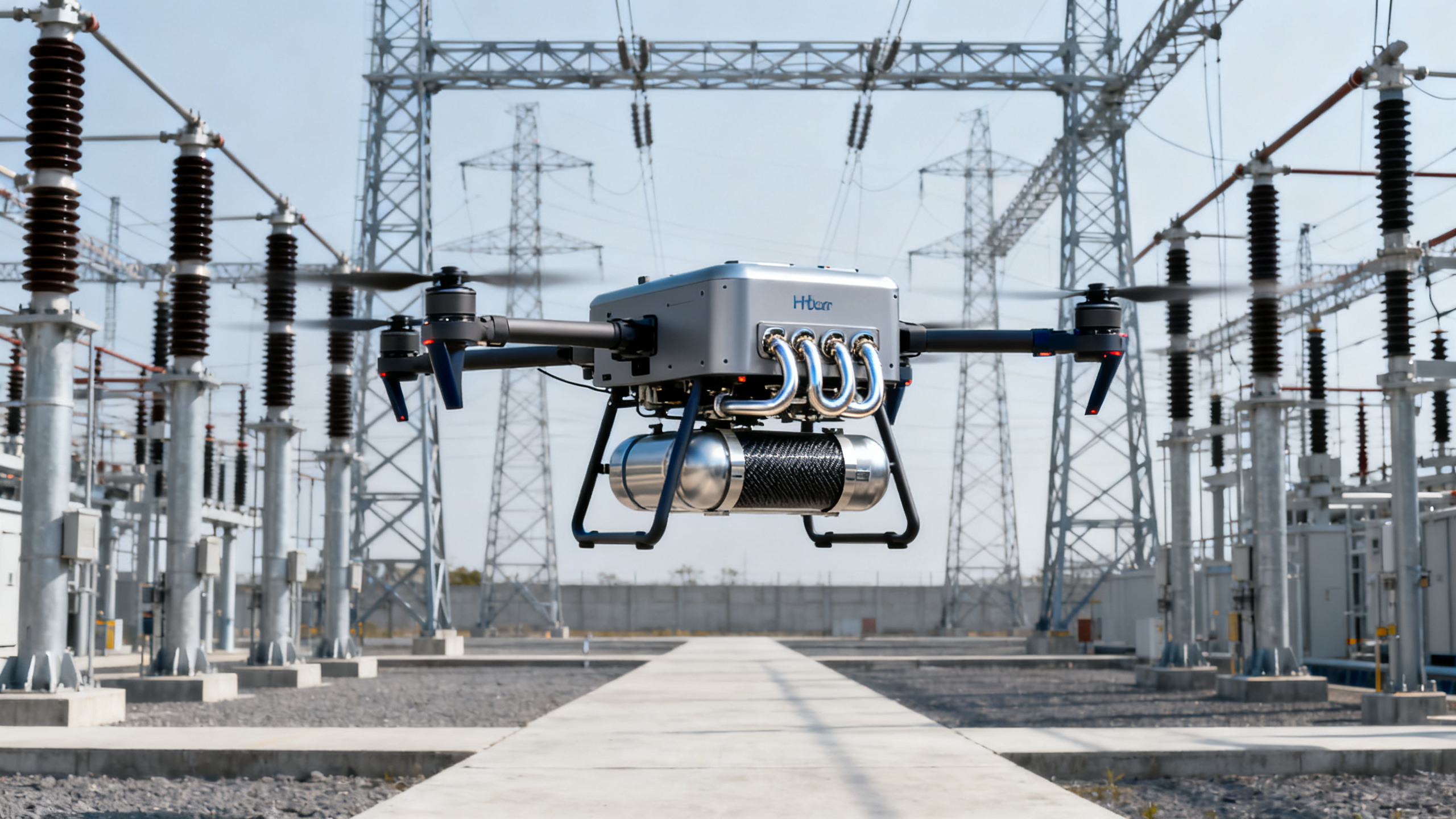
On May 11, a domestically developed hydrogen-powered propulsion system—dubbed the 'hydrogen heart' for industrial drones—was officially launched in China. With autonomous intellectual property rights and a 100% increase in endurance, the module is already deployed in power grid inspection (transformers and switchgears), fire and rescue reconnaissance, and environmental monitoring (e.g., air quality and dust tracking). This development warrants close attention from stakeholders in energy infrastructure, emergency response systems, and environmental technology sectors—particularly those engaged in international markets where long-duration, zero-emission aerial operations are operationally constrained by battery limitations.
Event Overview
On May 11, a hydrogen-based power module for industrial drones, developed with full domestic intellectual property rights, was publicly launched. The module doubles drone flight time (a 100% increase in endurance) compared to conventional battery systems. It has been applied in three verified use cases: power transmission and distribution asset inspection (focusing on transformers and switchgears), fire and rescue equipment support (for situational awareness and hazard mapping), and environmental monitoring (including airborne particulate and air purification–related measurements). No further technical specifications, certification status, or commercial deployment scale were disclosed in the initial announcement.
Impact on Specific Industry Segments
The introduction of this hydrogen power module affects distinct segments along the industrial drone value chain—not as a broad industry trend, but through concrete operational and procurement implications.
Drone Manufacturers Serving Critical Infrastructure Markets
Manufacturers supplying drones to electric utilities, fire departments, and environmental agencies face immediate integration decisions. Because the module is designed for industrial-grade platforms—not consumer models—original equipment manufacturers (OEMs) must assess compatibility, thermal management, and regulatory pathways for hydrogen integration. Impact manifests in engineering timelines, certification requirements, and potential shifts in platform architecture.
Export-Oriented Drone System Integrators
Integrators targeting high-temperature, long-distance operational environments—especially in the Middle East and Australia—are directly affected. These regions experience elevated ambient temperatures that accelerate lithium-ion battery degradation and reduce effective range. A hydrogen solution mitigates that constraint, potentially altering competitive positioning in tenders for grid patrol, wildfire surveillance, or mining site monitoring. Impact centers on proposal differentiation, after-sales service infrastructure (e.g., hydrogen refueling logistics), and compliance with local aviation and hazardous materials regulations.
Specialized Component Suppliers (Fuel Cells, Lightweight Tanks, Thermal Management)
Suppliers focused on proton exchange membrane (PEM) fuel cells, composite hydrogen storage vessels, or compact heat dissipation systems may see renewed demand signals. However, no supply chain partnerships or volume commitments were announced. Impact is currently limited to early-stage opportunity scanning—not confirmed procurement activity.
What Relevant Enterprises or Practitioners Should Focus On Now
Monitor official technical documentation and certification milestones
Current public information lacks details on safety certifications (e.g., CAAC or EASA type acceptance), hydrogen storage pressure ratings, or refueling cycle specifications. Stakeholders should track subsequent releases from the developer or third-party validation bodies—not just press statements.
Assess applicability to priority overseas markets—notably high-heat, low-infrastructure regions
Given explicit mention of the Middle East and Australia, companies active in those markets should benchmark current battery-operated drone performance against local operational profiles (e.g., average mission distance, ambient temperature ranges, refueling access). This helps determine whether hydrogen adoption would yield measurable ROI before broader rollout.
Distinguish between field trials and scalable deployment readiness
The announcement confirms application in three use cases—but does not specify whether these are pilot deployments or commercially sustained operations. Enterprises should avoid assuming immediate scalability; instead, treat this as an early signal requiring verification of maintenance protocols, spare parts availability, and hydrogen logistics support.
Review internal hydrogen handling capabilities and partner readiness
Organizations considering integration must audit existing capacity for safe hydrogen storage, transport, and ground-handling procedures. Where gaps exist, initiating dialogue with certified gas suppliers or hydrogen infrastructure providers—rather than waiting for full product launch—is a pragmatic next step.
Editorial Perspective / Industry Observation
Observably, this launch functions primarily as a technological signal—not yet an operational inflection point. It confirms domestic R&D progress in adapting hydrogen propulsion to demanding industrial drone applications, but does not indicate widespread commercial availability or regulatory harmonization across target export markets. Analysis shows the emphasis on zero-carbon, long-endurance operation aligns with tightening sustainability mandates in public-sector procurement—especially in EU-aligned and Australian environmental agencies. However, the absence of data on unit cost, service intervals, or cold-weather performance means its near-term impact remains confined to select pilot engagements and strategic planning cycles. The sector should treat this as a credible milestone warranting watchful evaluation—not as an imminent replacement for battery-electric systems.
Conclusion
While the hydrogen drone power module represents a meaningful advancement in extending operational endurance and reducing emissions for industrial aerial platforms, its current significance lies in strategic signaling rather than immediate market transformation. For industry participants, it is more appropriately understood as a catalyst for scenario planning—particularly around infrastructure-readiness, cross-border certification pathways, and long-duration mission economics—rather than a trigger for wholesale platform redesign or supply chain reconfiguration at this stage.
Information Source Statement
Main source: Official announcement released on May 11 (no publisher or organization name provided in input).
Items requiring ongoing observation: Certification status (civil aviation authority approvals), export licensing status, commercial deployment scale, and hydrogen refueling infrastructure dependencies.
Technical Specifications
- How to Select Electronic Hotel Key Card Locks for Guest Rooms and Staff AreasAuthor :Safety Compliance Lead
- How to Select Lab Instruments for Reliable Chemical Analysis WorkflowsAuthor :Precision Metrology Expert
- How to Size a UPS for Server Rooms: Load, Runtime, and Redundancy FactorsAuthor :Grid Infrastructure Analyst
Expert Insights

Chief Security Architect
Dr. Thorne specializes in the intersection of structural engineering and digital resilience. He has advised three G7 governments on industrial infrastructure security.
Related Analysis
- Sep 17, 2026How to Select Electronic Hotel Key Card Locks for Guest Rooms and Staff AreasAuthor :Safety Compliance Lead
- Sep 16, 2026How to Select Lab Instruments for Reliable Chemical Analysis WorkflowsAuthor :Precision Metrology Expert
- Sep 15, 2026How to Size a UPS for Server Rooms: Load, Runtime, and Redundancy FactorsAuthor :Grid Infrastructure Analyst
Core Sector // 01
Security & Safety
- Steel Rescue Tripods Wholesale: Key Load Ratings, Standards, and Buying MistakesAuthor :Safety Compliance Lead

- India Lifts Duty on Fire Rescue Imports to 22%Author :Safety Compliance Lead

- IEC 62061 Amendment 2 Targets Fire & Rescue ControllersAuthor :Safety Compliance Lead

- IEC 62819-2:2026 Sets New Cybersecurity CheckpointAuthor :Safety Compliance Lead

- When to Use a Quick Deployment Oil Boom for Spill Control in Ports and Inland WatersAuthor :Safety Compliance Lead

- Saudi SASO Adds Cybersecurity Annex to Fire Equipment CertificationAuthor :Safety Compliance Lead

- CBP Pre-Arrival Portal Raises Import Checks for Fire EquipmentAuthor :Safety Compliance Lead

- UAE Sets Cybersecurity Gate for Fire Control PanelsAuthor :Safety Compliance Lead