China's MNR Reports New Medium-to-Large Oil & Gas Fields
Author
Date Published
Reading Time
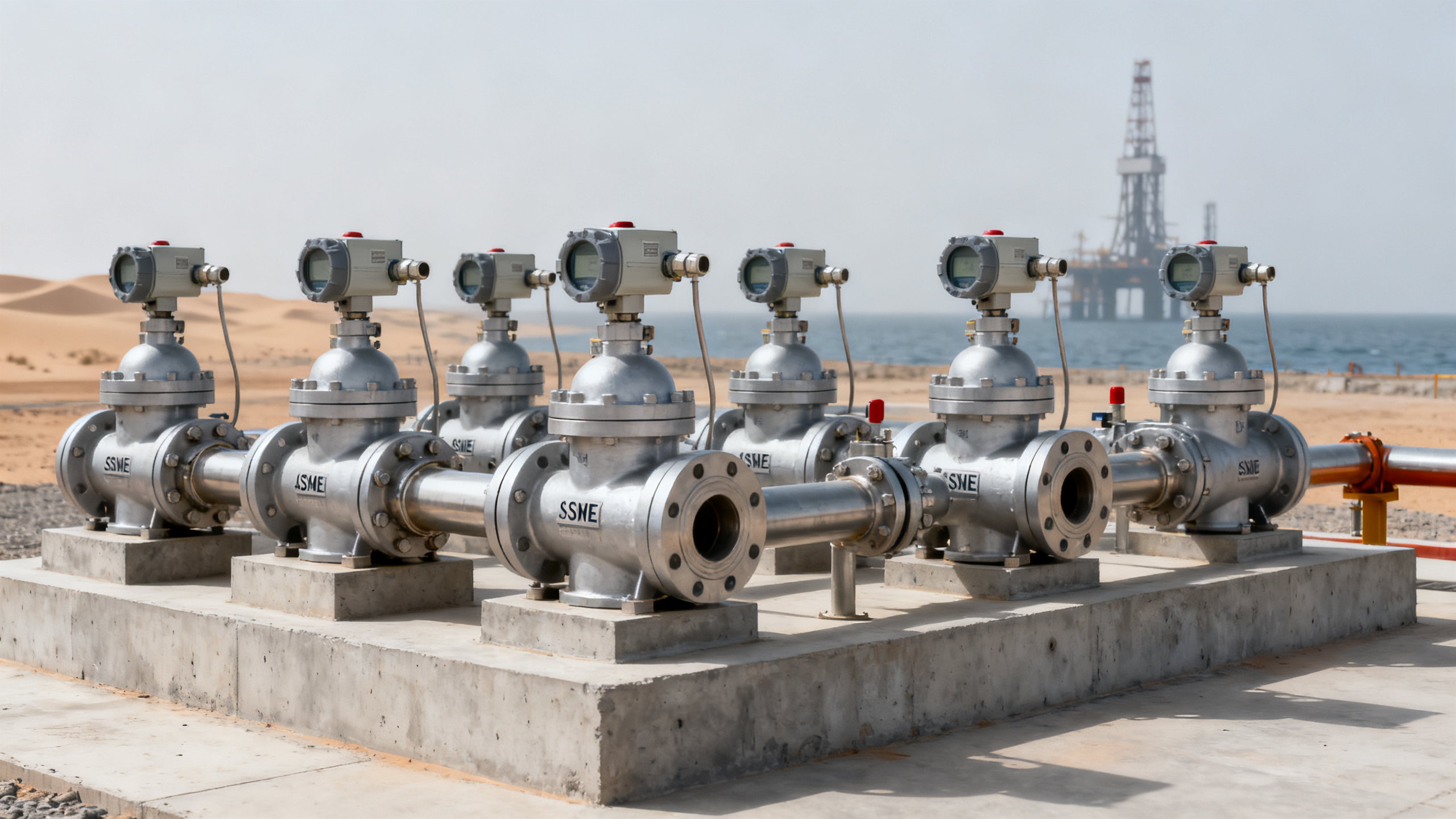
On April 29, the Ministry of Natural Resources (MNR) of China announced the discovery of six new medium-to-large oil and gas fields in the Tarim Basin, Sichuan Basin, and offshore areas during Q1 2026—projected to add over 200 million tonnes of recoverable reserves (oil-equivalent). This development is relevant for industrial valve manufacturers, pipeline sealing component suppliers, explosion-proof instrumentation producers, and fire & rescue equipment providers serving upstream and midstream oil & gas projects—particularly those supporting EPC localization procurement in resource-rich countries across the Middle East, Latin America, and Africa.
Event Overview
According to the MNR’s official bulletin released on April 29, 2026, six new medium-to-large oil and gas fields were discovered in the first quarter of 2026 in the Tarim Basin, Sichuan Basin, and maritime zones. The total estimated recoverable reserves exceed 200 million tonnes of oil-equivalent. No further technical details—including geological parameters, field names, or operator affiliations—were disclosed in the initial announcement.
Industries Affected
Industrial Valve Manufacturers
These companies supply critical flow control equipment for drilling, production, and processing infrastructure. The discovery signals potential near- to mid-term demand growth for high-pressure, sour-service, and API-certified valves used in new field development. Impact may appear first in tender activity and long-lead item planning cycles for domestic and export-oriented EPC contractors.
Pipeline Sealing Component Suppliers
Seals, gaskets, and flange kits compliant with ASME B16.20, API 6A, or ISO 20816 standards are essential for integrity-critical pipeline systems. With new fields entering front-end engineering design (FEED) phases, procurement timelines for qualified sealing solutions may tighten—especially where local content requirements apply.
Explosion-Proof Instrumentation Producers
Manufacturers of hazardous-area-rated pressure transmitters, level sensors, and control systems face increased specification scrutiny as new fields require compliance with IECEx/ATEX and China’s GB 3836 standards. Demand may shift toward modular, digitally enabled devices supporting remote monitoring and predictive maintenance.
Fire & Rescue Equipment Providers
Suppliers of fixed fire suppression systems, portable extinguishers, and personal protective equipment (PPE) aligned with NFPA 59A, API RP 2001, or SY/T 10044 will likely see expanded qualification pathways for field-specific hazard assessments—particularly in offshore and high-H2S environments.
What Relevant Enterprises or Practitioners Should Monitor and Do Now
Track official follow-up disclosures from MNR and CNPC/PetroChina
The April 29 announcement is preliminary. Subsequent updates—including field names, reserve breakdowns (oil vs. gas), and planned development timelines—will inform realistic lead-time planning and capacity allocation. Monitor MNR bulletins and state-owned oil company investor briefings for Q2 2026.
Review current product certifications and regional compliance readiness
Given the emphasis on EPC localization in Middle Eastern, Latin American, and African markets, verify whether existing certifications (e.g., API Q1, ISO 9001:2015, IECEx, or national equivalents like SASO or INMETRO) cover target export jurisdictions—and whether documentation supports bilingual (English + local language) technical submittals.
Engage early with domestic EPC contractors on FEED-stage material requisitions
New field development typically triggers material take-off (MTO) lists 6–12 months before construction. Proactive engagement with Chinese EPC firms active in overseas projects—especially those with established local partnerships—may help align technical specifications and delivery schedules ahead of formal tenders.
Assess supply chain exposure to long-lead raw materials
Stainless steels (e.g., UNS S32750), nickel alloys (e.g., Inconel 625), and specialized elastomers (e.g., FKM, FFPM) are commonly required for upstream-grade components. Review inventory levels and supplier lead times for these inputs, particularly if current contracts lack price adjustment clauses tied to commodity index fluctuations.
Editorial Perspective / Industry Observation
Observably, this announcement functions primarily as a forward-looking signal—not yet an operational trigger. It reflects progress in exploration execution but does not confirm sanctioned investment decisions, final investment approvals (FIAs), or contracted equipment orders. From an industry perspective, it signals growing upstream momentum in geologically complex and offshore domains, which tends to raise technical and regulatory bar for supporting equipment. Analysis shows that such discoveries often precede 12–24 months of detailed engineering, permitting, and procurement ramp-up—making Q3–Q4 2026 the more consequential window for tangible commercial impact. Current relevance lies less in immediate order intake and more in strategic alignment: verifying compliance pathways, updating technical documentation, and calibrating capacity planning against anticipated project phasing.
Conclusion: This discovery underscores China’s continued upstream exploration commitment and indirectly reinforces demand visibility for specialized oil & gas equipment suppliers serving international EPC localization programs. However, it remains an early-stage indicator—not a confirmed procurement catalyst. It is more appropriately understood as a validation of sustained exploration capability, with downstream commercial implications still subject to subsequent development approvals and market execution.
Source: Ministry of Natural Resources (MNR) of the People’s Republic of China – Official Bulletin, April 29, 2026.
Noted for ongoing observation: Field-specific development timelines, operator-level investment announcements, and EPC contractor procurement calendars beyond Q1 2026.
Technical Specifications
- How to Select Electronic Hotel Key Card Locks for Guest Rooms and Staff AreasAuthor :Safety Compliance Lead
- How to Select Lab Instruments for Reliable Chemical Analysis WorkflowsAuthor :Precision Metrology Expert
- How to Size a UPS for Server Rooms: Load, Runtime, and Redundancy FactorsAuthor :Grid Infrastructure Analyst
Expert Insights

Chief Security Architect
Dr. Thorne specializes in the intersection of structural engineering and digital resilience. He has advised three G7 governments on industrial infrastructure security.
Related Analysis
- Sep 17, 2026How to Select Electronic Hotel Key Card Locks for Guest Rooms and Staff AreasAuthor :Safety Compliance Lead
- Sep 16, 2026How to Select Lab Instruments for Reliable Chemical Analysis WorkflowsAuthor :Precision Metrology Expert
- Sep 15, 2026How to Size a UPS for Server Rooms: Load, Runtime, and Redundancy FactorsAuthor :Grid Infrastructure Analyst
Core Sector // 01
Security & Safety
- Steel Rescue Tripods Wholesale: Key Load Ratings, Standards, and Buying MistakesAuthor :Safety Compliance Lead

- India Lifts Duty on Fire Rescue Imports to 22%Author :Safety Compliance Lead

- IEC 62061 Amendment 2 Targets Fire & Rescue ControllersAuthor :Safety Compliance Lead

- IEC 62819-2:2026 Sets New Cybersecurity CheckpointAuthor :Safety Compliance Lead

- When to Use a Quick Deployment Oil Boom for Spill Control in Ports and Inland WatersAuthor :Safety Compliance Lead

- Saudi SASO Adds Cybersecurity Annex to Fire Equipment CertificationAuthor :Safety Compliance Lead

- CBP Pre-Arrival Portal Raises Import Checks for Fire EquipmentAuthor :Safety Compliance Lead

- UAE Sets Cybersecurity Gate for Fire Control PanelsAuthor :Safety Compliance Lead