EU Draft Raises Local Content Bar for Fire Gear
Author
Date Published
Reading Time

Image Placement Plan
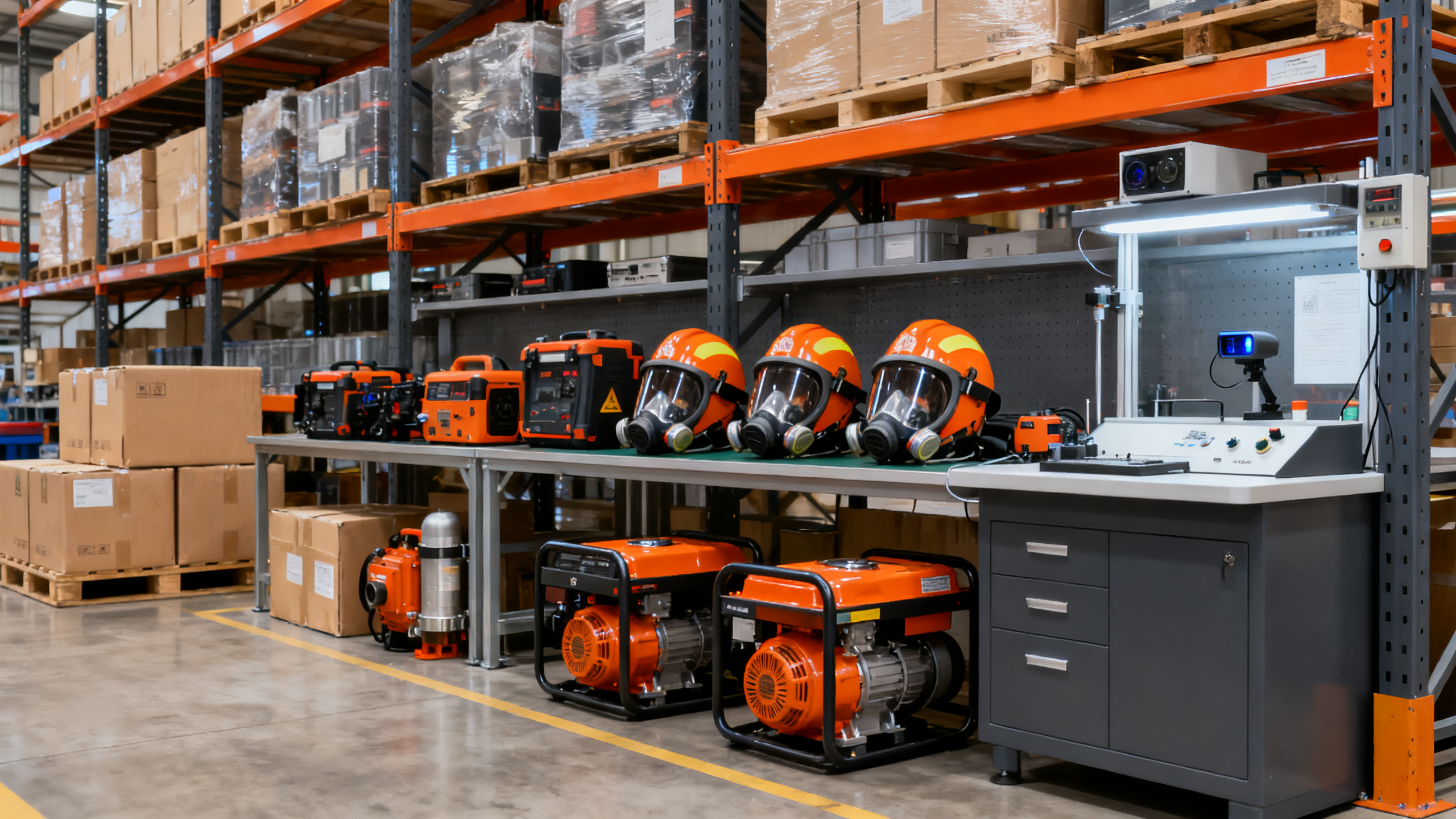
Place one visual near the opening section to illustrate EU public procurement requirements for fire and rescue equipment, with emphasis on respirators, thermal imaging devices, smart alarm systems, component localization, and software hosting compliance.

On May 14, 2026, the European Commission proposed a draft public procurement framework that could affect the fire and rescue equipment sector by introducing stricter local-content and software-hosting conditions for core equipment purchased by public authorities.
What the Draft Procurement Framework Says
The confirmed information indicates that the European Commission presented a new procurement framework draft on May 14, 2026. The draft applies to public-sector purchases of core fire and rescue equipment, including firefighting respirators, thermal imaging cameras, and smart alarm systems.
According to the event summary, the draft includes two mandatory conditions: key components must have a European-made share of at least 65%, and software source code must be hosted on EU cloud platforms.
The draft has not yet become legislation. However, the summary states that several municipal tenders in Germany and France have already introduced similar clauses in advance. It also states that manufacturers from China without local assembly or joint development arrangements may effectively lose bidding eligibility under such tender conditions.
How the Rule Shift Could Affect Market Participants
Direct trading companies facing tender access pressure
From an industry perspective, direct trading companies may be affected first because they usually manage bidding participation, contract negotiation, and customer communication. If municipal tenders require a 65% European-made share for key components, trading firms will need to verify whether the products they offer can meet the stated localization threshold.
The impact may appear in bid screening, eligibility confirmation, documentation preparation, and client communication. Companies should pay close attention to whether future tender documents treat local assembly, joint development, or component origin as mandatory qualification requirements.
Raw material and component procurement teams under closer origin review
Analysis shows that procurement teams responsible for raw materials and components may need to strengthen origin traceability. The draft requirement is focused on the European-made share of key components, which means procurement decisions could directly influence tender eligibility.
Business impacts may include supplier selection, component classification, origin documentation, and internal compliance review. Companies should monitor whether tenders define key components, calculation methods, acceptable proof of origin, and audit expectations.
Manufacturers needing alignment between production and compliance
Processing and manufacturing enterprises may face a more direct operational challenge. If public procurement tenders adopt similar clauses, production location, assembly arrangements, and development partnerships could become part of bid qualification rather than only cost or delivery considerations.
The effect may be seen in manufacturing planning, local assembly evaluation, bill-of-materials review, software development governance, and technical file preparation. Manufacturers without EU-based assembly or joint development arrangements may need to reassess whether their current operating model can support public-sector bids.
Supply chain service providers drawn into documentation and hosting controls
Supply chain service companies may also be affected because customs support, logistics coordination, software delivery, technical documentation, and after-sales traceability can all be connected to tender compliance.
What deserves closer attention is the requirement that software source code be hosted on EU cloud platforms. Service providers involved in digital product delivery, lifecycle support, or data-related processes may need to coordinate with manufacturers to ensure that hosting, access control, and documentation match the requirements written into tender documents.
Compliance Priorities for Companies Preparing EU Bids
Check whether products can prove the 65% European-made share
Companies should review component lists for firefighting respirators, thermal imaging cameras, smart alarm systems, and other core fire and rescue equipment. The key question is whether component origin, assembly records, and supplier declarations can support the required European-made share if a tender requests such proof.
Review software source-code hosting arrangements
Because the draft condition refers to source code hosted on EU cloud platforms, companies offering intelligent or connected fire and rescue products should examine where source code is stored, who controls access, and whether current hosting practices can be documented for procurement review.
Align technical bids with early municipal tender clauses
Although the draft has not yet been enacted, the reported use of similar clauses in German and French municipal tenders means bid teams should read tender specifications carefully. Technical bid alignment may need to cover component origin, software hosting, local assembly status, and any joint development structure relevant to the offered equipment.
Assess export and delivery risks before committing to bids
Manufacturers and exporters should avoid treating the draft as only a future legislative issue. If similar clauses are already appearing in tenders, companies may need to evaluate eligibility before quoting, adjust delivery planning where local assembly is involved, and prepare clearer quality traceability documents for after-sales obligations.
Industry Observation: Procurement Compliance Is Becoming a Market Filter
Analysis shows that this development is more appropriately understood as a procurement-access issue rather than only a manufacturing-location issue. The proposed conditions connect physical component origin with digital software governance, which may raise the compliance burden for suppliers of advanced fire and rescue equipment.
From an industry perspective, the most important signal is that public buyers may increasingly use tender specifications to shape supply-chain structure before formal legislation is completed. This does not confirm the final legal outcome, but it suggests that companies relying on public-sector demand may need longer preparation cycles for documentation, local partnerships, and technical bid coordination.
Observably, the requirement for EU cloud hosting of software source code could be especially relevant for smart alarm systems and digitally enabled rescue equipment. This may require closer cooperation among hardware teams, software teams, compliance officers, and bidding departments.
Measured Outlook
The proposed framework highlights a possible shift in EU public procurement for fire and rescue equipment toward stronger localization and software-control requirements. The draft has not yet become law, so the final scope and enforcement approach remain uncertain.
For companies serving public-sector buyers in Europe, the rational response is to monitor tender documents, test product eligibility against localization and hosting requirements, and prepare compliance evidence before bidding. The impact should not be overstated, but it should be treated as a material procurement-rule development for the sector.
Information Basis and Follow-up Monitoring
This article is based on the user-provided news title, event date, and event summary concerning the European Commission draft procurement framework dated May 14, 2026.
Relevant source types for continued verification may include European Commission communications, public procurement notices, municipal tender documents, certification guidance, and official procurement rule updates. Specific official source links were not provided in the input and should be verified continuously.
Further attention should be paid to the final policy text, implementation details, certification interpretation, tender-document changes, treatment of local assembly and joint development arrangements, software hosting requirements, and industry feedback.
Technical Specifications
- How to Select Electronic Hotel Key Card Locks for Guest Rooms and Staff AreasAuthor :Safety Compliance Lead
- How to Select Lab Instruments for Reliable Chemical Analysis WorkflowsAuthor :Precision Metrology Expert
- How to Size a UPS for Server Rooms: Load, Runtime, and Redundancy FactorsAuthor :Grid Infrastructure Analyst
Expert Insights

Chief Security Architect
Dr. Thorne specializes in the intersection of structural engineering and digital resilience. He has advised three G7 governments on industrial infrastructure security.
Related Analysis
- Sep 17, 2026How to Select Electronic Hotel Key Card Locks for Guest Rooms and Staff AreasAuthor :Safety Compliance Lead
- Sep 16, 2026How to Select Lab Instruments for Reliable Chemical Analysis WorkflowsAuthor :Precision Metrology Expert
- Sep 15, 2026How to Size a UPS for Server Rooms: Load, Runtime, and Redundancy FactorsAuthor :Grid Infrastructure Analyst
Core Sector // 01
Security & Safety
- Steel Rescue Tripods Wholesale: Key Load Ratings, Standards, and Buying MistakesAuthor :Safety Compliance Lead

- India Lifts Duty on Fire Rescue Imports to 22%Author :Safety Compliance Lead

- IEC 62061 Amendment 2 Targets Fire & Rescue ControllersAuthor :Safety Compliance Lead

- IEC 62819-2:2026 Sets New Cybersecurity CheckpointAuthor :Safety Compliance Lead

- When to Use a Quick Deployment Oil Boom for Spill Control in Ports and Inland WatersAuthor :Safety Compliance Lead

- Saudi SASO Adds Cybersecurity Annex to Fire Equipment CertificationAuthor :Safety Compliance Lead

- CBP Pre-Arrival Portal Raises Import Checks for Fire EquipmentAuthor :Safety Compliance Lead

- UAE Sets Cybersecurity Gate for Fire Control PanelsAuthor :Safety Compliance Lead