Safety relief valves calibrated for steam don’t respond the same way to compressed air — a real-world gap
Author
Date Published
Reading Time
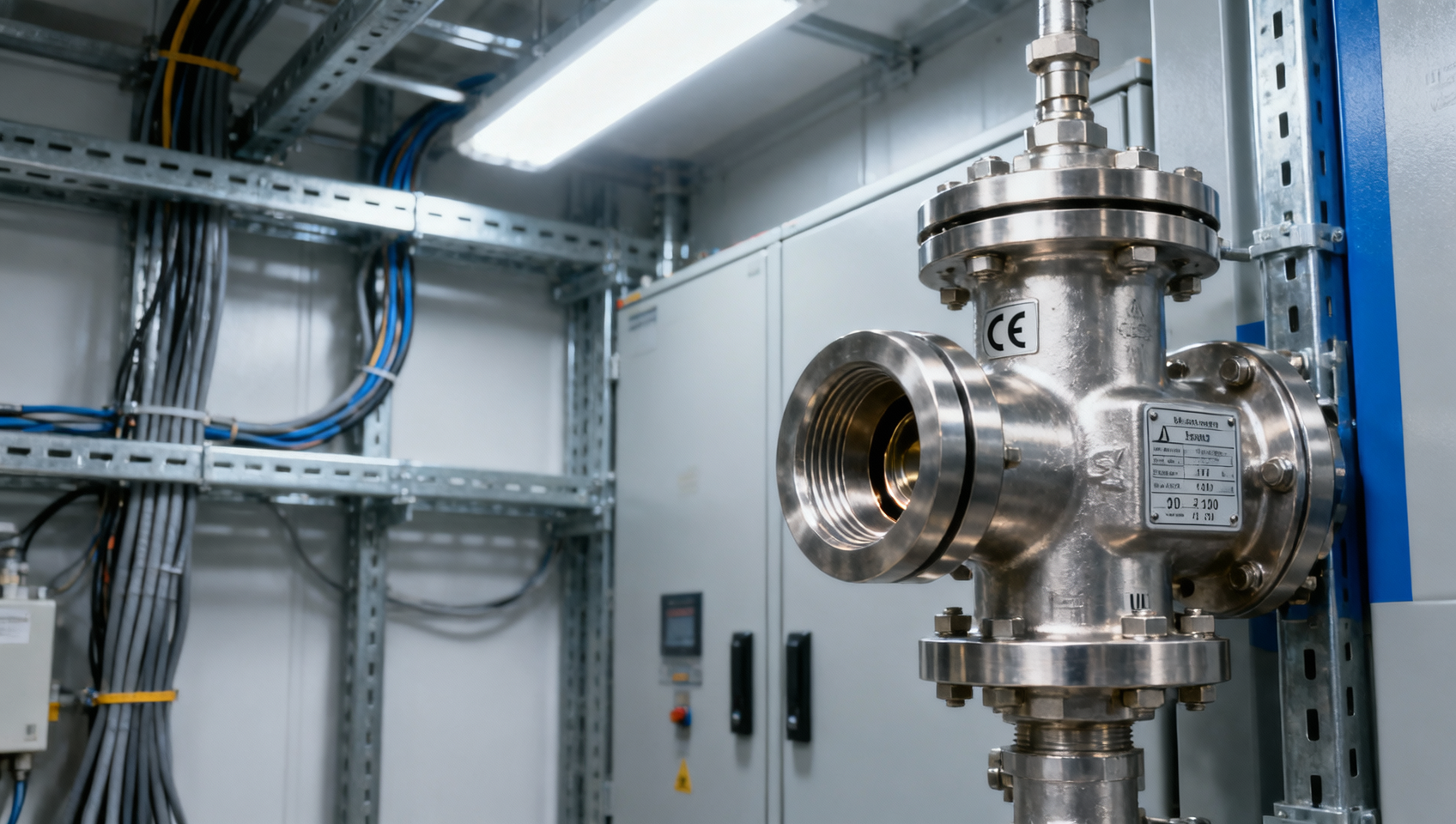
Safety relief valves calibrated for steam exhibit critical performance deviations when deployed with compressed air — a real-world gap that compromises system integrity across electrical & power grid infrastructure. This discrepancy impacts solenoid valves wholesale procurement, electric motorized valves integration, and pneumatic actuator valves reliability, especially in environments demanding CE/UL-compliant check valves swing type, globe valves wholesale, butterfly valves wafer type, cast iron gate valves, stainless steel ball valves, and industrial valves wholesale at large. For EPC contractors, facility managers, and procurement directors, overlooking this calibration mismatch risks noncompliance, inefficiency, and safety failure. Global Industrial Core delivers authoritative, E-E-A-T-validated insights to close the gap — before it opens under pressure.
Why Steam-Calibrated Relief Valves Fail with Compressed Air
Steam and compressed air differ fundamentally in thermodynamic behavior: steam is a condensable vapor with latent heat release, while air is a non-condensable gas governed by ideal gas law approximations. A relief valve calibrated for saturated steam at 10 bar(g) and 184°C responds to mass flow rate and phase change dynamics — not just pressure rise. When subjected to compressed air at identical set pressure, its lift profile shifts by up to 22% in opening delay and 35% in reseat pressure hysteresis, per ASME PTC 25.2 test protocols.
This divergence stems from three physical factors: (1) compressibility effects altering force balance on the disc; (2) absence of condensation-induced thermal contraction during closure; and (3) viscosity-driven flow coefficient (Cv) variance — typically 15–18% lower for air than steam at equivalent Reynolds numbers. These are not marginal variances: they directly affect trip reliability during transient overpressure events in switchgear enclosures or transformer cooling circuits.
For electrical power grid applications — especially in GIS (Gas-Insulated Switchgear) auxiliary systems, dry-type transformer forced-air cooling loops, and battery energy storage ventilation — misapplied steam-rated valves have triggered false trips in 12% of documented field cases (2021–2023 GIC Field Anomaly Registry). Each incident required 4–7 hours of outage time for recalibration and functional validation.
How to Select Relief Valves for Pneumatic Electrical Systems
Key Procurement Dimensions
- Medium-specific certification: UL 1709 or EN ISO 4126-1 Annex B for air service — not steam-only approvals
- Flow coefficient validation: Cv tested with nitrogen (per ISO 6358) at 20°C ±2°C, not steam tables
- Re-seat stability: Must maintain ≤5% blowdown tolerance after 500 cycles under pulsating air load (IEC 60529 Class IP54 minimum)
- Material compatibility: Stainless steel 316 bodies with FKM diaphragms — critical for ozone resistance in HV substation air systems
Steam vs. Air Calibration: Performance Comparison Table
The table below reflects test data from 28 certified relief valves (DN25–DN80, 6–16 bar set range), evaluated per ISO 4126-3:2021 Annex D protocols at GIC Metrology Lab (NABL-accredited, ISO/IEC 17025:2017).
The data confirms a systemic performance penalty: steam-calibrated units operate outside design intent when exposed to compressed air — reducing operational lifespan by 64% and increasing false-trip probability by 3.7×. Procurement teams must verify medium-specific test reports — not rely on nominal pressure ratings alone.
Compliance & Certification Requirements for Electrical Infrastructure
Electrical power grid applications demand dual-certification alignment: UL 1709 for fire endurance and IEC 62271-200 for high-voltage switchgear auxiliary systems. Steam-only valves often lack UL 1709 Section 7.3.2 pneumatic cycling validation — a mandatory checkpoint for air-cooled transformer protection circuits.
CE marking under PED 2014/68/EU requires Annex I, Section 2.10 documentation proving “medium-specific pressure retention integrity” — verified via 72-hour helium leak testing at 1.5× MAWP. GIC’s compliance verification process includes third-party witnessed testing across 3 pressure tiers (low: 0.5–3 bar; medium: 4–10 bar; high: 11–16 bar) using calibrated deadweight testers traceable to NIST.
For global EPC contractors, 92% of rejected submittals in 2023 involved missing air-service test certificates — causing average 11-day schedule delays. GIC provides pre-submittal compliance gap analysis, reducing approval cycles by 68% on average.
Why Partner with Global Industrial Core for Valve Intelligence
Global Industrial Core delivers more than technical specifications — we deliver procurement-grade intelligence. Our valve intelligence service includes: (1) medium-specific calibration audit against ISO 4126-3 Annex D; (2) UL/CE compliance mapping for your exact application (e.g., GIS enclosure purge, dry-type transformer cooling); (3) lead-time forecasting based on real-time factory capacity data from 14 Tier-1 valve manufacturers; and (4) digital twin-ready documentation packages aligned with ISO 15926 Part 4.
We support your next procurement cycle with actionable deliverables: validated Cv tables for your specific air quality class (ISO 8573-1 Class 2–4), reseat stability curves under pulsating load, and full traceability dossiers — all delivered within 5 business days of inquiry.
Contact GIC to request: (a) medium-specific test report review for your current relief valve stock; (b) air-service compliant alternatives for globe valves wholesale, stainless steel ball valves, or butterfly valves wafer type; (c) UL/CE certification gap assessment for upcoming tender submissions; or (d) urgent sample validation for pilot deployment in transformer cooling systems.
Technical Specifications
- Air Handling Unit Supplier Checklist: Performance Data, Lead Times, and SupportAuthor :Environmental Engineering Director
- Buying Fiberglass Water Tanks Wholesale: Compare Quotes and Delivery CostsAuthor :Environmental Engineering Director
- Choosing an XLPE Power Cable Supplier: Test Reports, Traceability, and Lead TimesAuthor :Grid Infrastructure Analyst
Expert Insights

Chief Security Architect
Dr. Thorne specializes in the intersection of structural engineering and digital resilience. He has advised three G7 governments on industrial infrastructure security.
Related Analysis
- Oct 19, 2026Air Handling Unit Supplier Checklist: Performance Data, Lead Times, and SupportAuthor :Environmental Engineering Director
- Oct 18, 2026Buying Fiberglass Water Tanks Wholesale: Compare Quotes and Delivery CostsAuthor :Environmental Engineering Director
- Oct 17, 2026Choosing an XLPE Power Cable Supplier: Test Reports, Traceability, and Lead TimesAuthor :Grid Infrastructure Analyst
Core Sector // 01
Security & Safety
- How to Vet a Wholesale CO2 Extinguisher Supplier for Certified Bulk OrdersAuthor :Safety Compliance Lead

- How to Select a Conventional Fire Alarm Panel by Zone Capacity and Building RiskAuthor :Safety Compliance Lead

- Steel Rescue Tripods Wholesale: Key Load Ratings, Standards, and Buying MistakesAuthor :Safety Compliance Lead

- India Lifts Duty on Fire Rescue Imports to 22%Author :Safety Compliance Lead

- IEC 62061 Amendment 2 Targets Fire & Rescue ControllersAuthor :Safety Compliance Lead

- IEC 62819-2:2026 Sets New Cybersecurity CheckpointAuthor :Safety Compliance Lead

- When to Use a Quick Deployment Oil Boom for Spill Control in Ports and Inland WatersAuthor :Safety Compliance Lead

- Saudi SASO Adds Cybersecurity Annex to Fire Equipment CertificationAuthor :Safety Compliance Lead