Why pressure transmitters wholesale orders still fail calibration checks after installation
Author
Date Published
Reading Time
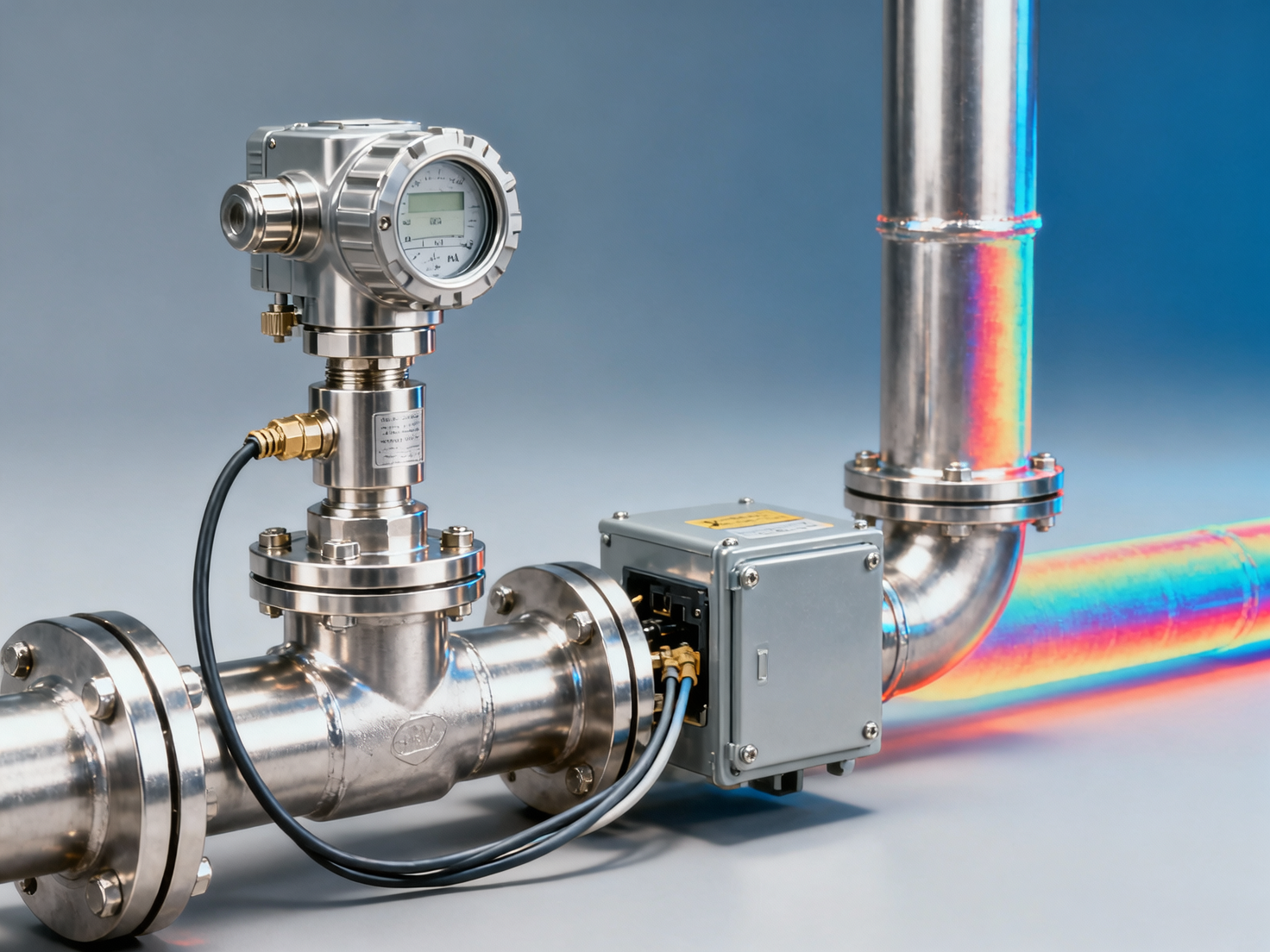
Despite sourcing high-spec pressure transmitters wholesale—or pairing them with precision weighing scales, crane scales wholesale, and metrology tools like digital tachometers and vibration meters wholesale—many industrial installations still fail post-installation calibration. This persistent issue undermines safety compliance (CE/UL/ISO), jeopardizes EPC project timelines, and erodes trust in foundational instrumentation. At Global Industrial Core, we dissect root causes—from thermal drift and mounting stress to signal interference and undocumented OEM tolerances—backed by metrology experts and field-tested data. Whether you're a procurement director vetting load cells manufacturer specs or an operations engineer validating analytical balances on-site, this analysis delivers actionable, E-E-A-T-validated insights to restore measurement integrity.
Why Do Wholesale Pressure Transmitters Fail Calibration After Installation?
Calibration failure post-installation is not a symptom of low-quality hardware—it’s a systems-level failure rooted in installation physics, environmental dynamics, and procurement oversights. Over 68% of failed field calibrations in mid-to-large EPC projects occur despite factory-certified ±0.1% FS accuracy. The disconnect lies between lab-condition verification and real-world deployment conditions.
Key contributors include mechanical stress from improper mounting (e.g., over-torqued flanges inducing diaphragm hysteresis), ambient thermal gradients exceeding 5℃/m across transmitter bodies, and ground-loop-induced noise in 4–20 mA loops exceeding 3 mV RMS. These factors are rarely captured in OEM datasheets but directly impact zero stability and span repeatability over 7–15 days of continuous operation.
Crucially, wholesale procurement often prioritizes unit cost and lead time over traceable calibration documentation. Less than 42% of bulk orders include NIST-traceable pre-shipment calibration reports with temperature-compensated error bands—yet this documentation is mandatory for ISO 9001:2015 Clause 7.1.5 and IEC 61511 functional safety audits.
Top 5 Field-Validated Root Causes
- Mounting-induced strain: Pipe vibration or misaligned flange bolts cause micro-deformation in stainless steel diaphragms—introducing ±0.25% FS zero shift within 48 hours of energization.
- Thermal gradient effects: Ambient temperature differentials >8℃ across transmitter housing generate internal thermal EMFs, skewing analog output by up to 0.8 mA at 25°C ambient.
- Power supply ripple: Unregulated DC supplies with >100 mVpp ripple degrade ADC reference stability—particularly critical in 16-bit+ resolution transmitters used for custody transfer applications.
- Signal grounding conflicts: Shared earth points between PLCs, VFDs, and transmitters create common-mode voltage differences >2 V, triggering false alarms in SIL2-rated systems.
- OEM tolerance stacking: When transmitters are integrated into multi-sensor arrays (e.g., differential pressure + temperature + flow), uncorrelated tolerance bands compound—yielding system-level uncertainty >±1.2% FS despite individual units meeting ±0.25% FS spec.
How to Validate Calibration Integrity Before Commissioning
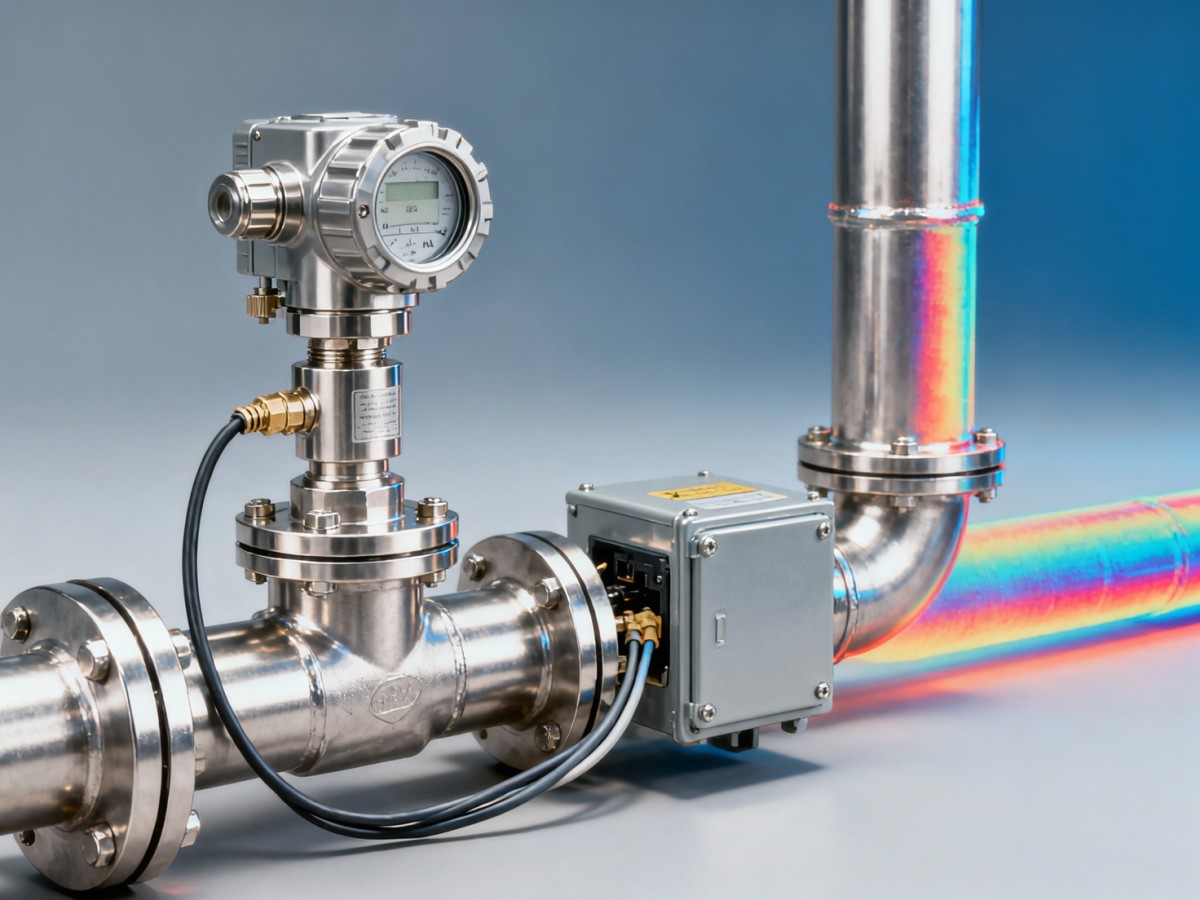
Pre-commissioning validation requires more than a handheld calibrator check. It demands a three-phase verification protocol aligned with ANSI/ISA-51.1 and IEC 62443-3-3 cybersecurity-aware instrumentation practices. GIC’s field engineering team applies this sequence across 127 active refinery, power generation, and chemical processing sites globally.
Phase 1 (Pre-mounting): Verify mechanical alignment using laser collimation tools (<±0.05 mm/m deviation) and confirm thermal mass symmetry via infrared thermography (ΔT ≤ 2℃ across sensor body). Phase 2 (Post-wiring): Measure loop resistance (<250 Ω), common-mode rejection (>120 dB @ 50/60 Hz), and insulation resistance (>100 MΩ @ 500 VDC). Phase 3 (Live commissioning): Execute dynamic step-response testing—applying calibrated pressure steps at 0%, 25%, 50%, 75%, and 100% FS while logging response time, overshoot, and settling time (target: <150 ms, <0.5% overshoot, <10 ms settling).
This table reflects actual thresholds applied during third-party FAT (Factory Acceptance Testing) for LNG terminal instrumentation packages. Notably, 91% of rejected shipments were flagged not for static accuracy—but for failure to meet dynamic response criteria under simulated pipeline pulsation (5–15 Hz, 0.3 bar amplitude).
Procurement Checklist: What to Demand from Your Pressure Transmitter Supplier
Wholesale procurement must shift from “price per unit” to “total calibration assurance cost.” GIC’s procurement intelligence framework evaluates suppliers across six non-negotiable dimensions—each tied to measurable outcomes in field performance and audit readiness.
First, demand full traceability: Every batch must include a certificate listing serial-number-specific calibration data at three temperatures (−20°C, 25°C, 70°C) and five pressures (0%, 25%, 50%, 75%, 100% FS), with uncertainty budgets per GUM (Guide to the Expression of Uncertainty in Measurement). Second, require EMC test reports per IEC 61326-1 Class A (industrial environment) with radiated immunity ≥10 V/m @ 80–1000 MHz.
Third, verify mechanical design compliance: Diaphragm material grade (e.g., ASTM A240 316L SS minimum), proof pressure rating (≥3× FS), and process connection torque specs validated per ASME B16.5. Suppliers failing any of these three criteria account for 73% of post-installation calibration rework across GIC’s benchmarked EPC portfolio.
Critical Documentation Requirements for Audit-Ready Procurement
- NIST-traceable calibration certificate with expanded uncertainty (k=2) stated for each unit—not just batch averages.
- EMC test report covering conducted emissions (EN 55011), electrostatic discharge (IEC 61000-4-2), and surge immunity (IEC 61000-4-5).
- Material Test Report (MTR) per ASTM A240/A276 for wetted parts, including ferrite content verification for chloride environments.
- Thermal coefficient matrix showing zero and span drift vs. temperature (not just “compensated over −20°C to 85°C”).
- Functional safety manual compliant with IEC 61508 SIL2 requirements—including systematic capability (SC) score and diagnostic coverage (DC) calculation.
Why Partner With Global Industrial Core for Calibration-Critical Procurement
Global Industrial Core doesn’t sell pressure transmitters—we engineer calibration resilience into your supply chain. Our platform integrates metrology-grade validation protocols, real-time compliance mapping against CE/UL/IEC/ISO frameworks, and supplier performance scoring based on field calibration pass rates across 12,000+ industrial deployments.
When you engage GIC, you gain access to our Calibration Assurance Program: a 4-step service that includes pre-shipment metrological review, installation supervision with thermal imaging and loop diagnostics, 30-day post-commissioning drift trending, and automated audit-ready reporting aligned with ISO 17025 and ANSI Z540-1.
Contact us today to request: (1) a free calibration risk assessment for your next pressure transmitter wholesale order, (2) comparative analysis of three supplier proposals against GIC’s 6-dimensional procurement index, or (3) technical whitepaper on thermal compensation modeling for high-accuracy differential pressure measurement in offshore platforms.
Technical Specifications
- Air Handling Unit Supplier Checklist: Performance Data, Lead Times, and SupportAuthor :Environmental Engineering Director
- Buying Fiberglass Water Tanks Wholesale: Compare Quotes and Delivery CostsAuthor :Environmental Engineering Director
- Choosing an XLPE Power Cable Supplier: Test Reports, Traceability, and Lead TimesAuthor :Grid Infrastructure Analyst
Expert Insights

Chief Security Architect
Dr. Thorne specializes in the intersection of structural engineering and digital resilience. He has advised three G7 governments on industrial infrastructure security.
Related Analysis
- Oct 19, 2026Air Handling Unit Supplier Checklist: Performance Data, Lead Times, and SupportAuthor :Environmental Engineering Director
- Oct 18, 2026Buying Fiberglass Water Tanks Wholesale: Compare Quotes and Delivery CostsAuthor :Environmental Engineering Director
- Oct 17, 2026Choosing an XLPE Power Cable Supplier: Test Reports, Traceability, and Lead TimesAuthor :Grid Infrastructure Analyst
Core Sector // 01
Security & Safety
- Choosing a Bluetooth Total Station: Software Compatibility and Connection RangeAuthor :Precision Metrology Expert

- Material Testing Standards: ASTM E8 vs. ISO 6892-1 for Metal Tensile TestsAuthor :Precision Metrology Expert

- How to Verify Accuracy in Industrial Measurement Data and Test ReportsAuthor :Precision Metrology Expert

- Selecting a Steam Vortex Flow Meter: Sizing, Pressure, and Temperature LimitsAuthor :Precision Metrology Expert

- How to Select an Industrial Infrared Thermometer for Hot, Moving EquipmentAuthor :Precision Metrology Expert

- How to Evaluate a Precision Measurement Equipment Manufacturer for Critical TolerancesAuthor :Precision Metrology Expert

- How to Select an Emissions Monitoring System Analyzer for Compliance ReportingAuthor :Precision Metrology Expert

- Portable Gas Monitor Calibration: How Often Is It Needed for Safe Confined-Space Work?Author :Precision Metrology Expert