China Mobile Unveils National Integrated Computing Power Network
Author
Date Published
Reading Time

On May 8, China Mobile launched its ‘National Integrated Computing Power Network Technology Innovation System’, a foundational infrastructure initiative aimed at strengthening real-time industrial AI capabilities and cross-border deployment readiness for high-precision test & measurement equipment. The move directly impacts global export competitiveness in industrial analytics, particularly for manufacturers targeting Southeast Asia, Latin America, and the Middle East.
Event Overview
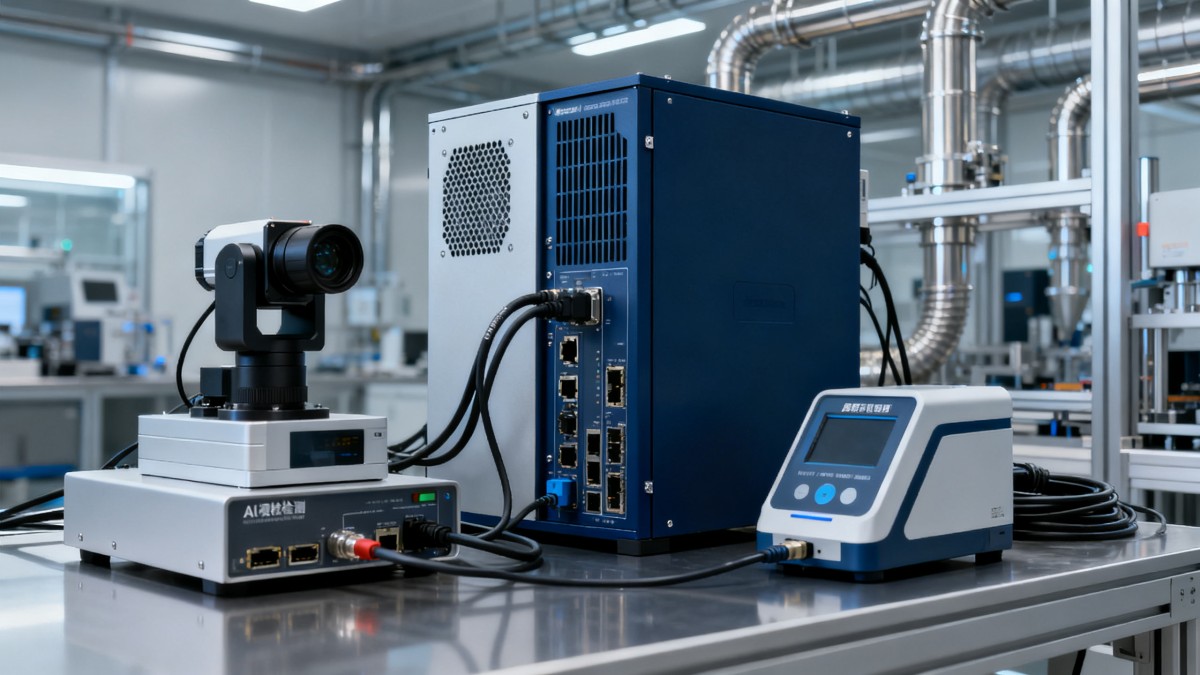
On May 8, China Mobile released the ‘National Integrated Computing Power Network Technology Innovation System’. Key technical breakthroughs include low-latency coordination among edge intelligent nodes, native integration of industrial communication protocols (e.g., Modbus, OPC UA, EtherCAT), and compatibility with domestically developed computing chips. This system has already been integrated into AI vision inspection systems, portable spectrometers, and remote digital calibration platforms supplied by multiple Lab & Analytics equipment vendors.
Industries Affected
Direct Export Enterprises
Export-oriented test & measurement equipment manufacturers benefit from improved on-site deployment performance abroad. The system reduces latency in AI inference at factory edges and enhances protocol-level interoperability with legacy industrial control systems overseas — directly shortening commissioning cycles and lowering after-sales support costs in emerging markets.
Raw Material Procurement Enterprises
Suppliers of optical sensors, precision analog-to-digital converters, and embedded modules face revised demand signals. As device vendors adopt standardized edge-computing interfaces and国产 chip-based hardware stacks, procurement strategies must shift toward components certified for low-latency industrial edge environments — not just general-purpose specs.
Contract Manufacturing & OEM Enterprises
OEMs producing AI-enabled inspection or calibration hardware now confront tighter integration requirements. Their firmware and hardware abstraction layers must support dynamic protocol adaptation and chip-agnostic inference runtime — increasing validation overhead but also creating differentiation opportunities for those investing early in modular edge software design.
Supply Chain Service Providers
Logistics and compliance service providers supporting high-tech exports must expand capabilities in regional regulatory alignment — especially around data residency, edge-device cybersecurity certifications (e.g., IEC 62443), and local calibration traceability standards. The rise of remote digital calibration platforms implies growing need for secure over-the-air update management and audit-ready device lifecycle documentation.
Key Considerations and Recommended Actions
Align product architecture with edge-native protocol stacks
Vendors should verify compatibility with the system’s native industrial protocol abstraction layer — particularly for Modbus TCP, PROFINET, and CANopen — to avoid retrofitting delays when entering pilot deployments in target regions.
Evaluate domestic chip ecosystem readiness for overseas use cases
While domestic AI acceleration chips are now supported, their thermal behavior, long-term reliability under tropical humidity, and vendor-specific SDK maturity outside mainland China require field validation — especially before committing to large-scale production runs.
Update technical documentation for remote calibration workflows
Manufacturers must revise user manuals, API references, and cybersecurity white papers to reflect new remote verification capabilities enabled by the computing power network — including time-stamped calibration logs, encrypted OTA updates, and audit trails compliant with ISO/IEC 17025 Annex A.
Editorial Insight / Industry Observation
Analysis shows this is less a standalone telecom rollout and more a coordinated industrial policy enabler: it lowers the technical barrier for Chinese test equipment to meet functional safety and deterministic timing expectations previously dominated by European and Japanese incumbents. Observably, the emphasis on ‘protocol-native’ rather than ‘cloud-first’ architecture signals a pragmatic pivot toward brownfield factory integration — where retrofitting cloud-dependent AI often fails due to legacy PLC constraints. From an industry perspective, this may accelerate consolidation among mid-tier analytics hardware vendors who lack edge-software depth.
Conclusion
The National Integrated Computing Power Network does not replace existing infrastructure — rather, it adds a deterministic, protocol-aware edge layer that bridges AI capability and industrial reality. Its true significance lies not in raw compute scale, but in standardizing how intelligence reaches the machine level. A rational interpretation is that this represents the first nationally coordinated attempt to decouple industrial AI adoption from vendor lock-in — making interoperability, not just performance, the new benchmark for global competitiveness.
Source Attribution
Official announcement: China Mobile Group Co., Ltd., May 8, 2024. Technical specifications referenced from publicly released white paper ‘Technical Framework of the National Integrated Computing Power Network’ (v1.0). Further implementation details — including certification pathways for overseas deployments and timeline for open-source edge runtime release — remain pending and are under continuous observation.
Technical Specifications
- Air Handling Unit Supplier Checklist: Performance Data, Lead Times, and SupportAuthor :Environmental Engineering Director
- Buying Fiberglass Water Tanks Wholesale: Compare Quotes and Delivery CostsAuthor :Environmental Engineering Director
- Choosing an XLPE Power Cable Supplier: Test Reports, Traceability, and Lead TimesAuthor :Grid Infrastructure Analyst
Expert Insights

Chief Security Architect
Dr. Thorne specializes in the intersection of structural engineering and digital resilience. He has advised three G7 governments on industrial infrastructure security.
Related Analysis
- Oct 19, 2026Air Handling Unit Supplier Checklist: Performance Data, Lead Times, and SupportAuthor :Environmental Engineering Director
- Oct 18, 2026Buying Fiberglass Water Tanks Wholesale: Compare Quotes and Delivery CostsAuthor :Environmental Engineering Director
- Oct 17, 2026Choosing an XLPE Power Cable Supplier: Test Reports, Traceability, and Lead TimesAuthor :Grid Infrastructure Analyst
Core Sector // 01
Security & Safety
- Choosing a Bluetooth Total Station: Software Compatibility and Connection RangeAuthor :Precision Metrology Expert

- Material Testing Standards: ASTM E8 vs. ISO 6892-1 for Metal Tensile TestsAuthor :Precision Metrology Expert

- How to Verify Accuracy in Industrial Measurement Data and Test ReportsAuthor :Precision Metrology Expert

- Selecting a Steam Vortex Flow Meter: Sizing, Pressure, and Temperature LimitsAuthor :Precision Metrology Expert

- How to Select an Industrial Infrared Thermometer for Hot, Moving EquipmentAuthor :Precision Metrology Expert

- How to Evaluate a Precision Measurement Equipment Manufacturer for Critical TolerancesAuthor :Precision Metrology Expert

- How to Select an Emissions Monitoring System Analyzer for Compliance ReportingAuthor :Precision Metrology Expert

- Portable Gas Monitor Calibration: How Often Is It Needed for Safe Confined-Space Work?Author :Precision Metrology Expert