India BIS Updates Import Requirements for Industrial Water Quality Meters
Author
Date Published
Reading Time
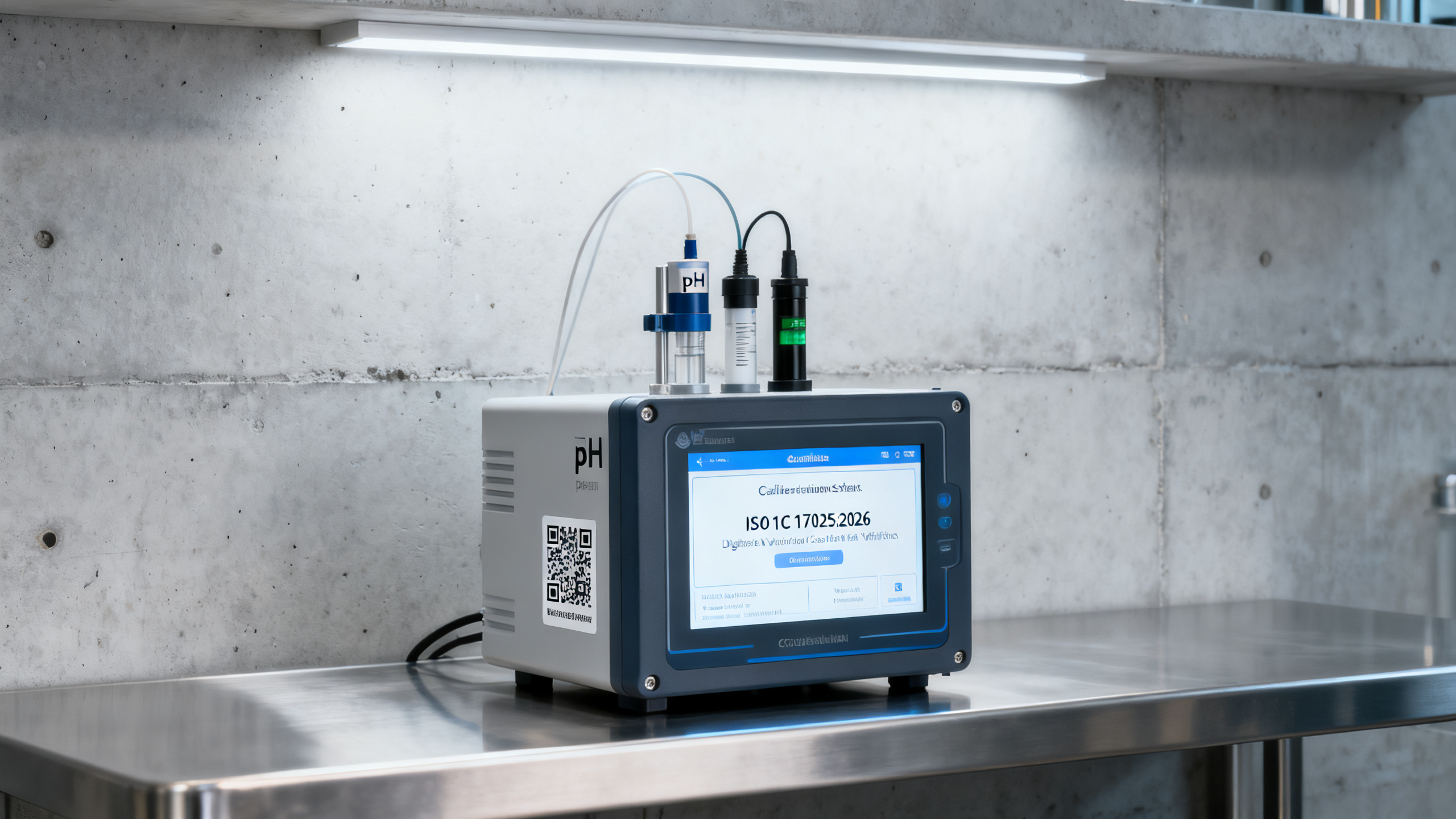
On May 10, 2026, the Bureau of Indian Standards (BIS) updated the implementation rules for IS 17892:2026, mandating that all imported industrial water quality monitoring instruments—including pH, dissolved oxygen (DO), turbidity, and heavy metal analyzers—must be pre-installed with a digital calibration certificate module compliant with ISO/IEC 17025:2026. This requirement enables QR-code-based verification of authenticity and validity, directly impacting hardware-software co-design for testing and measurement equipment exported to India.
Event Overview
The Bureau of Indian Standards (BIS) issued an update to the implementation guidelines for IS 17892:2026 on May 10, 2026. The update specifies that imported industrial-grade water quality monitoring instruments must incorporate an embedded digital calibration certificate module conforming to ISO/IEC 17025:2026. The module must support real-time verification of certificate authenticity and expiration status via QR code scanning. The scope explicitly covers pH meters, dissolved oxygen (DO) analyzers, turbidity meters, and heavy metal analyzers intended for industrial use.
Industries Affected
Exporters of Testing & Measurement Equipment
Manufacturers and exporters of industrial water quality monitoring devices are directly affected because compliance now requires integrated firmware and hardware design—not just external documentation. The requirement shifts certification from a post-import administrative step to a built-in functional feature, affecting product architecture, firmware development cycles, and pre-shipment validation protocols.
OEMs and Contract Manufacturers
OEMs supplying white-label or private-label instruments to Indian importers face revised technical specifications. Since the digital calibration module must be pre-installed at the factory level, contract manufacturers must verify compatibility with ISO/IEC 17025:2026-compliant certificate generation systems—and ensure secure, tamper-evident storage and QR rendering within device firmware.
Distribution and Channel Partners in India
Indian importers, distributors, and authorized service providers must now validate not only physical conformity but also software-level compliance before customs clearance. Inventory planning, after-sales calibration traceability, and customer-facing verification workflows will require new internal procedures and staff training on QR-based certificate validation.
Calibration Service Providers and Accredited Labs
Labs accredited under ISO/IEC 17025:2026—particularly those issuing calibration certificates for export-bound instruments—must adapt their digital issuance infrastructure. Certificates must be generated in a format embeddable into device firmware and compatible with BIS’s expected verification interface, implying potential updates to certificate templates, signing mechanisms, and metadata fields.
Key Considerations and Recommended Actions
Monitor official BIS communications for technical implementation guidance
While the requirement is confirmed, BIS has not yet published detailed specifications for the digital certificate module (e.g., data schema, encryption standards, QR payload structure, or firmware integration protocols). Exporters and OEMs should track BIS circulars and stakeholder consultations scheduled for Q3 2026.
Prioritize compliance assessment for high-volume instrument categories
Given limited lead time for firmware revision and re-certification, focus initial efforts on pH, DO, and turbidity meters—categories most widely deployed in Indian industrial water treatment, pharmaceutical, and food processing facilities. These represent both high shipment volumes and relatively standardized calibration intervals.
Distinguish between policy announcement and operational enforcement timelines
Analysis shows the May 10, 2026 update reflects a formal amendment to IS 17892:2026 implementation rules—but BIS has not yet announced a mandatory compliance date. Enforcement may follow a phased rollout, potentially aligned with the next BIS registration renewal cycle (typically 12–18 months after standard revision). Companies should treat this as a preparatory signal, not an immediate clearance barrier.
Initiate cross-functional alignment between R&D, regulatory affairs, and supply chain teams
Firmware updates, secure certificate embedding, and QR rendering require coordination across engineering, quality assurance, and logistics. Current more suitable actions include mapping existing calibration certificate workflows, auditing firmware modularity, and identifying third-party digital certificate issuance partners capable of ISO/IEC 17025:2026-aligned outputs.
Editorial Perspective / Industry Observation
Observably, this update signals BIS’s strategic shift toward embedding metrological traceability directly into measuring instruments—not just relying on paper or PDF-based certificates. It reflects growing emphasis on anti-counterfeiting, real-time compliance verification, and interoperability with India’s emerging digital regulatory infrastructure. From an industry perspective, it is better understood as a forward-looking regulatory signal than an immediately enforceable mandate—its significance lies less in near-term clearance delays and more in its implications for long-term product architecture and regional certification strategy. Continued attention is warranted as BIS develops supporting technical documents and clarifies enforcement sequencing.
This development underscores how national standards bodies are increasingly integrating digital trust mechanisms into traditional conformity assessment frameworks. For exporters and manufacturers, it highlights the need to treat metrological compliance not as a standalone documentation task—but as an integral part of device-level software design and lifecycle management. At present, the requirement is best interpreted as a structural indicator of evolving regulatory expectations—not yet a binding operational constraint.
Source: Bureau of Indian Standards (BIS), IS 17892:2026 Implementation Guidelines Update, effective May 10, 2026.
Note: Technical specifications for the digital calibration certificate module (e.g., data format, cryptographic requirements, firmware interface) remain pending and are subject to further BIS publication.
Technical Specifications
- Air Handling Unit Supplier Checklist: Performance Data, Lead Times, and SupportAuthor :Environmental Engineering Director
- Buying Fiberglass Water Tanks Wholesale: Compare Quotes and Delivery CostsAuthor :Environmental Engineering Director
- Choosing an XLPE Power Cable Supplier: Test Reports, Traceability, and Lead TimesAuthor :Grid Infrastructure Analyst
Expert Insights

Chief Security Architect
Dr. Thorne specializes in the intersection of structural engineering and digital resilience. He has advised three G7 governments on industrial infrastructure security.
Related Analysis
- Oct 19, 2026Air Handling Unit Supplier Checklist: Performance Data, Lead Times, and SupportAuthor :Environmental Engineering Director
- Oct 18, 2026Buying Fiberglass Water Tanks Wholesale: Compare Quotes and Delivery CostsAuthor :Environmental Engineering Director
- Oct 17, 2026Choosing an XLPE Power Cable Supplier: Test Reports, Traceability, and Lead TimesAuthor :Grid Infrastructure Analyst
Core Sector // 01
Security & Safety
- Choosing a Bluetooth Total Station: Software Compatibility and Connection RangeAuthor :Precision Metrology Expert

- Material Testing Standards: ASTM E8 vs. ISO 6892-1 for Metal Tensile TestsAuthor :Precision Metrology Expert

- How to Verify Accuracy in Industrial Measurement Data and Test ReportsAuthor :Precision Metrology Expert

- Selecting a Steam Vortex Flow Meter: Sizing, Pressure, and Temperature LimitsAuthor :Precision Metrology Expert

- How to Select an Industrial Infrared Thermometer for Hot, Moving EquipmentAuthor :Precision Metrology Expert

- How to Evaluate a Precision Measurement Equipment Manufacturer for Critical TolerancesAuthor :Precision Metrology Expert

- How to Select an Emissions Monitoring System Analyzer for Compliance ReportingAuthor :Precision Metrology Expert

- Portable Gas Monitor Calibration: How Often Is It Needed for Safe Confined-Space Work?Author :Precision Metrology Expert