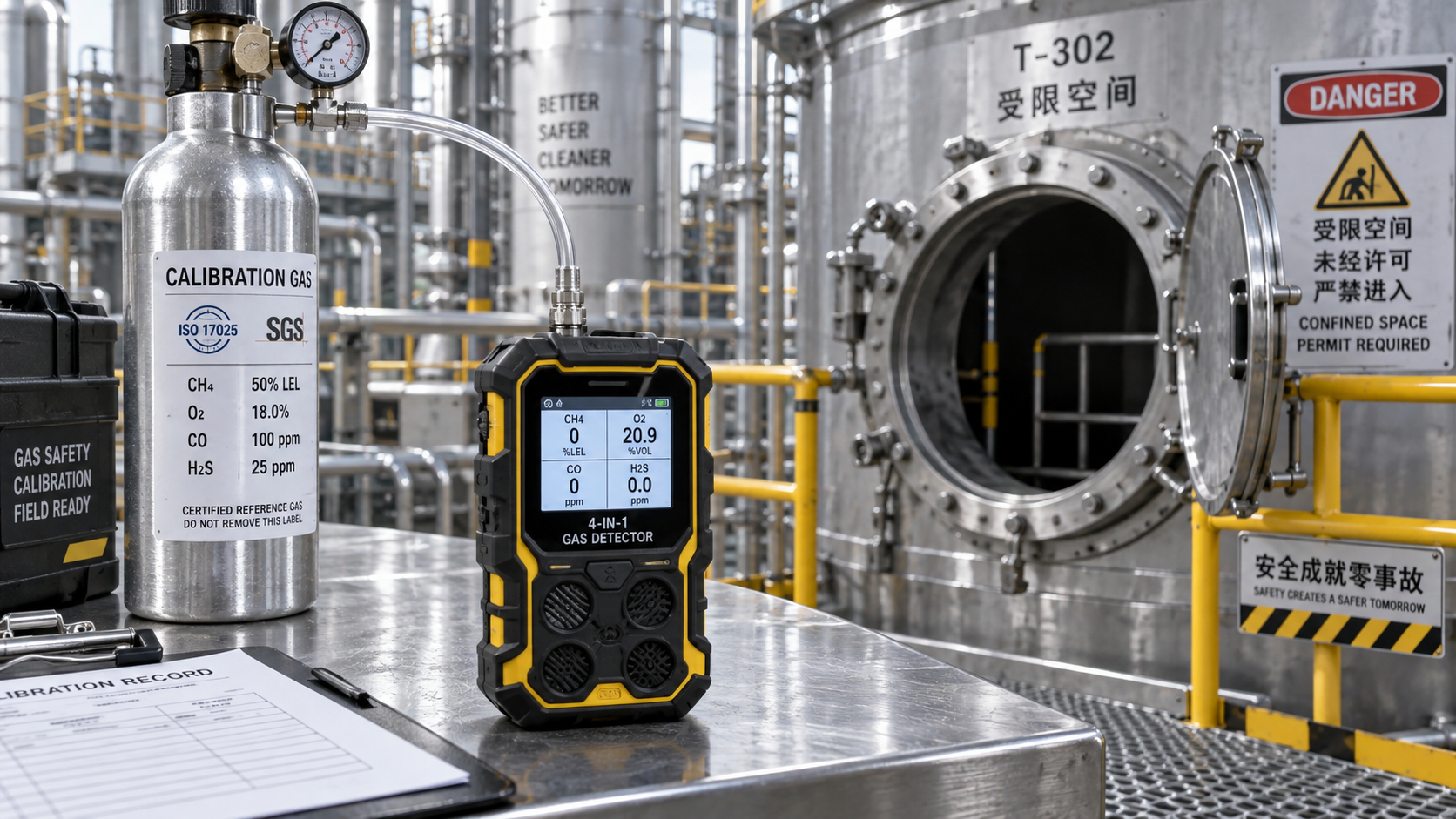
FDA Expands eSTAR to Require UL 2075:2026 for Industrial Gas Detectors
Author
Date Published
Reading Time
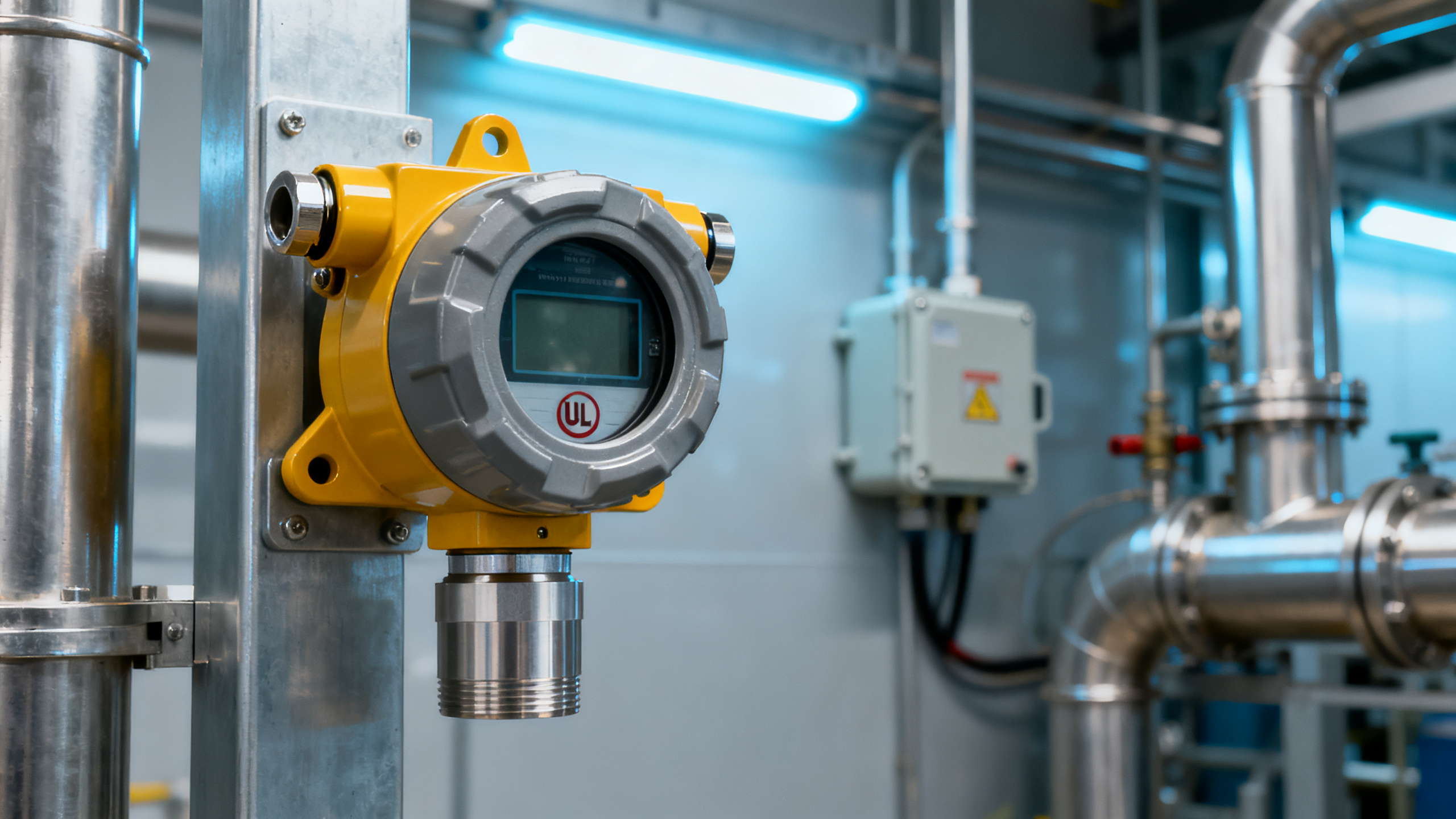
On May 8, 2026, the U.S. Food and Drug Administration (FDA) updated its electronic Submission Tracking and Reporting (eSTAR) system guidance to include industrial-grade fixed and portable gas detection instruments — including those detecting H2S, CO, CH4, Cl2, and other hazardous gases — within the mandatory electronic submission scope. Crucially, applicants must now concurrently upload certification to UL 2075:2026, the latest standard for combustible gas sensors. This change directly affects export timelines for Chinese-made gas detectors entering U.S. chemical, pharmaceutical, and semiconductor manufacturing facilities.
Event Overview
On May 8, 2026, the FDA issued an update to its eSTAR system guidance. The revision formally extends mandatory electronic premarket submissions via eSTAR to industrial-grade fixed and portable gas detection instruments used for monitoring hydrogen sulfide (H2S), carbon monoxide (CO), methane (CH4), chlorine (Cl2), and related gases. The update further specifies that applicants must submit UL 2075:2026 certification for combustible gas sensors as part of the eSTAR filing package. No additional implementation timeline, grandfathering provisions, or transitional allowances were announced in the initial guidance.
Industries Affected
Direct Exporters (U.S.-bound Trade Enterprises)
Companies exporting industrial gas detectors from China to U.S. end-users face immediate registration timeline extension. Because UL 2075:2026 is a newly published standard (2026 edition), existing UL certifications under prior versions (e.g., UL 2075:2019 or UL 2075:2022) are not accepted per the updated guidance. This requires retesting and recertification before eSTAR submission, potentially adding 8–12 weeks to clearance cycles.
Manufacturers (OEM/ODM Producers)
Gas detector manufacturers supplying to export-oriented brands must verify sensor-level compliance with UL 2075:2026 — not just final-device safety standards like UL 1042 or UL 61010. Since sensor modules are often sourced from third-party suppliers, this triggers supply chain verification obligations. Non-compliant sensor components may delay full-system certification even if the instrument’s enclosure and electronics meet other requirements.
Downstream End-User Facilities (U.S. Chemical, Pharma & Semiconductor Plants)
Facilities procuring gas detectors for workplace safety or process monitoring must now confirm that incoming devices carry valid eSTAR acceptance documentation referencing UL 2075:2026. Procurement teams may need to revise vendor qualification checklists and request updated FDA submission IDs — especially for devices installed in classified hazardous locations where sensor reliability is critical.
Key Actions for Affected Entities
Monitor official FDA communications for clarification on transition provisions
The May 8, 2026 guidance does not specify whether previously submitted applications or devices already under review will be subject to retroactive UL 2075:2026 requirements. Stakeholders should track FDA’s eSTAR FAQ updates and any forthcoming Federal Register notices for transitional language or enforcement discretion statements.
Verify sensor-level certification status — not just device-level UL marks
UL 2075:2026 applies specifically to combustible gas sensors (e.g., catalytic bead, infrared, or electrochemical elements), not entire instruments. Companies should obtain written confirmation from sensor suppliers indicating active UL 2075:2026 listing, including the UL File Number and effective date — not generic references to “UL certified” or “complies with UL standards.”
Assess impact on current procurement and inventory planning
For buyers maintaining safety-critical spares, newly ordered units shipped after May 8, 2026 may require longer lead times due to recertification. Firms should audit existing stock against expected installation dates and flag units without UL 2075:2026 alignment for potential replacement scheduling.
Coordinate early with U.S. regulatory agents or authorized representatives
Non-U.S. manufacturers must designate a U.S. Agent for eSTAR submissions. Given the technical specificity of UL 2075:2026 documentation, early engagement ensures the agent can validate certificate authenticity, confirm correct eSTAR data field entries (e.g., proper classification under 21 CFR Part 892 or Part 868), and avoid resubmission delays.
Editorial Perspective / Industry Observation
Observably, this update signals a tightening of FDA’s oversight at the component level — shifting focus from end-product functionality toward foundational sensor performance and traceability. Analysis shows the FDA is treating certain industrial gas detectors not merely as environmental monitors but as risk-mitigating medical-adjacent devices when deployed in settings affecting worker health outcomes (e.g., pharmaceutical cleanrooms or semiconductor fab ambient air systems). It is more accurately understood as a regulatory signal than an isolated procedural update: it reflects increasing alignment between FDA expectations and OSHA/NRTL safety frameworks, particularly where gas exposure thresholds intersect with occupational health reporting obligations. Continued attention is warranted as UL 2075:2026 adoption may inform future revisions to IEC 60079-29-1 or ISO 28000-related supply chain protocols.
In summary, the FDA’s May 2026 eSTAR expansion introduces a new compliance checkpoint rooted in sensor-specific certification — one that reshapes timelines, responsibilities, and documentation expectations across the industrial gas detection value chain. It does not represent a broad-based market access restriction, but rather a targeted elevation of evidentiary requirements for devices operating in high-consequence environments. Currently, it is best understood as a procedural calibration — requiring operational adjustments, not strategic pivots.
Source: U.S. Food and Drug Administration (FDA), eSTAR System Guidance Update, issued May 8, 2026.
Note: Transitional implementation details, enforcement start date, and applicability to legacy devices remain under observation and are not yet publicly confirmed by the FDA.
Technical Specifications
- Air Handling Unit Supplier Checklist: Performance Data, Lead Times, and SupportAuthor :Environmental Engineering Director
- Buying Fiberglass Water Tanks Wholesale: Compare Quotes and Delivery CostsAuthor :Environmental Engineering Director
- Choosing an XLPE Power Cable Supplier: Test Reports, Traceability, and Lead TimesAuthor :Grid Infrastructure Analyst
Expert Insights

Chief Security Architect
Dr. Thorne specializes in the intersection of structural engineering and digital resilience. He has advised three G7 governments on industrial infrastructure security.
Related Analysis
- Oct 19, 2026Air Handling Unit Supplier Checklist: Performance Data, Lead Times, and SupportAuthor :Environmental Engineering Director
- Oct 18, 2026Buying Fiberglass Water Tanks Wholesale: Compare Quotes and Delivery CostsAuthor :Environmental Engineering Director
- Oct 17, 2026Choosing an XLPE Power Cable Supplier: Test Reports, Traceability, and Lead TimesAuthor :Grid Infrastructure Analyst
Core Sector // 01
Security & Safety
- Choosing a Bluetooth Total Station: Software Compatibility and Connection RangeAuthor :Precision Metrology Expert

- Material Testing Standards: ASTM E8 vs. ISO 6892-1 for Metal Tensile TestsAuthor :Precision Metrology Expert

- How to Verify Accuracy in Industrial Measurement Data and Test ReportsAuthor :Precision Metrology Expert

- Selecting a Steam Vortex Flow Meter: Sizing, Pressure, and Temperature LimitsAuthor :Precision Metrology Expert

- How to Select an Industrial Infrared Thermometer for Hot, Moving EquipmentAuthor :Precision Metrology Expert

- How to Evaluate a Precision Measurement Equipment Manufacturer for Critical TolerancesAuthor :Precision Metrology Expert

- How to Select an Emissions Monitoring System Analyzer for Compliance ReportingAuthor :Precision Metrology Expert

- Portable Gas Monitor Calibration: How Often Is It Needed for Safe Confined-Space Work?Author :Precision Metrology Expert