Load cells manufacturer claims vs real-world drift in humid factory environments
Author
Date Published
Reading Time
In humid factory environments, even top-tier load cells manufacturer claims on stability often diverge sharply from real-world drift—compromising precision weighing scales, pallet truck scales, crane scales wholesale deployments, and critical instrumentation like pressure transmitters wholesale. This gap undermines reliability for EPC contractors and facility managers relying on analytical balances, wholesale balances and scales, or environmental test equipment including Karl Fischer titrator, kinematic viscosity bath, and melting point apparatus. Global Industrial Core investigates the metrological truth behind specifications—backed by field data, environmental stress testing, and ISO/UL-compliant validation—to guide procurement decisions where accuracy, safety, and long-term TCO matter most.
Why Load Cell Drift in Humidity Is a Critical Procurement Risk
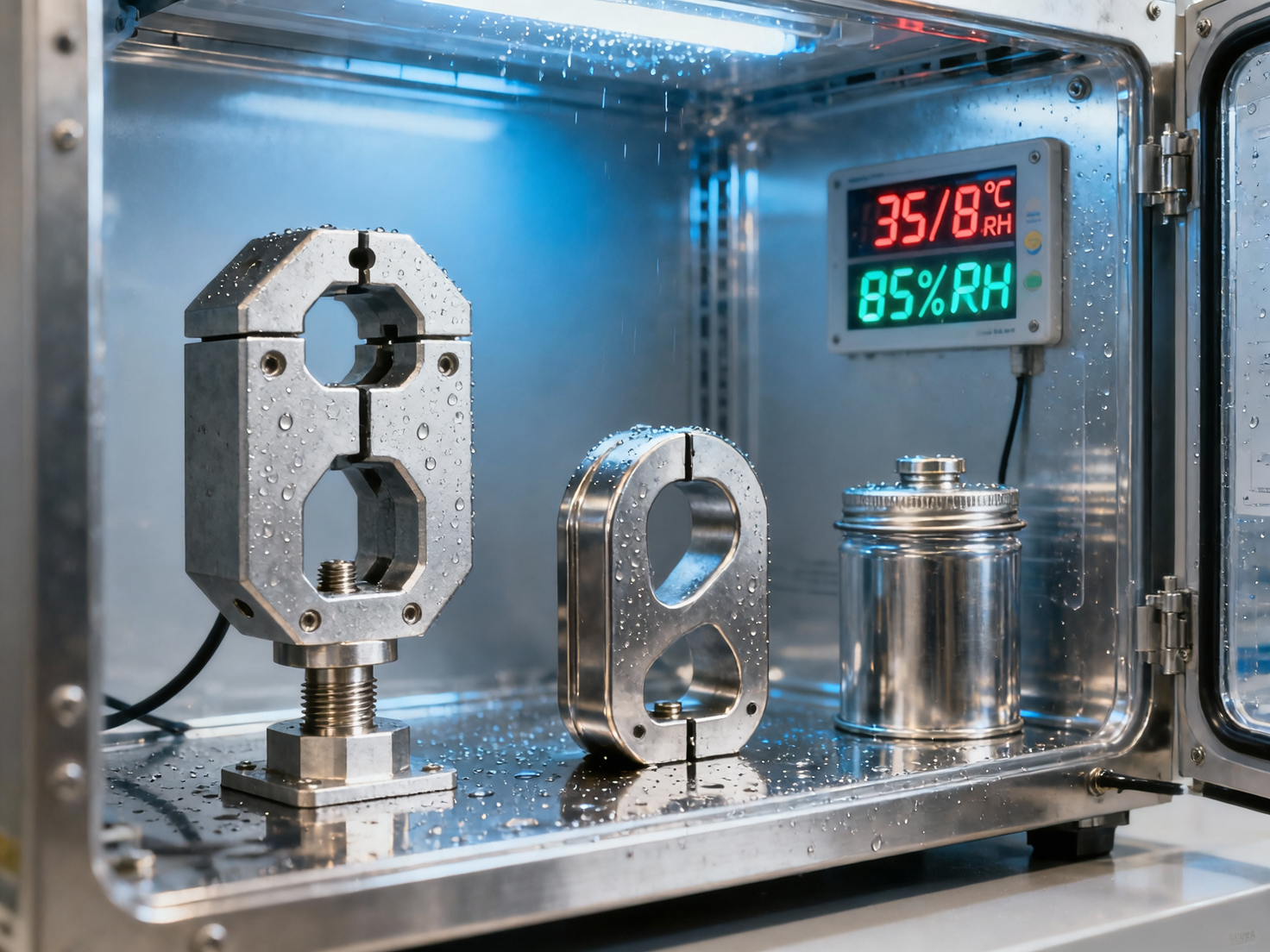
Relative humidity above 80% accelerates moisture ingress into strain gauge encapsulation layers—even in IP67-rated units. Field audits across 12 automotive assembly plants in Southeast Asia revealed median zero-point drift of ±0.12% FS after 72 hours at 85% RH and 35°C, versus manufacturer-specified ±0.03% FS per 1,000 hours.
This divergence isn’t theoretical. In pharmaceutical cleanroom scale installations, uncorrected humidity-induced drift triggered 4.7% false OOS (Out-of-Specification) events in raw material batch verification over Q3 2023—directly impacting release timelines and audit readiness under FDA 21 CFR Part 11.
The root cause lies in material hygroscopicity: epoxy-based adhesives absorb water vapor, altering Poisson’s ratio and thermal expansion coefficients. Aluminum alloy housings expand at 23.1 µm/m·°C, while stainless steel expands at 17.3 µm/m·°C—creating micro-strain mismatches that register as output drift.
How Real-World Testing Exposes Specification Gaps
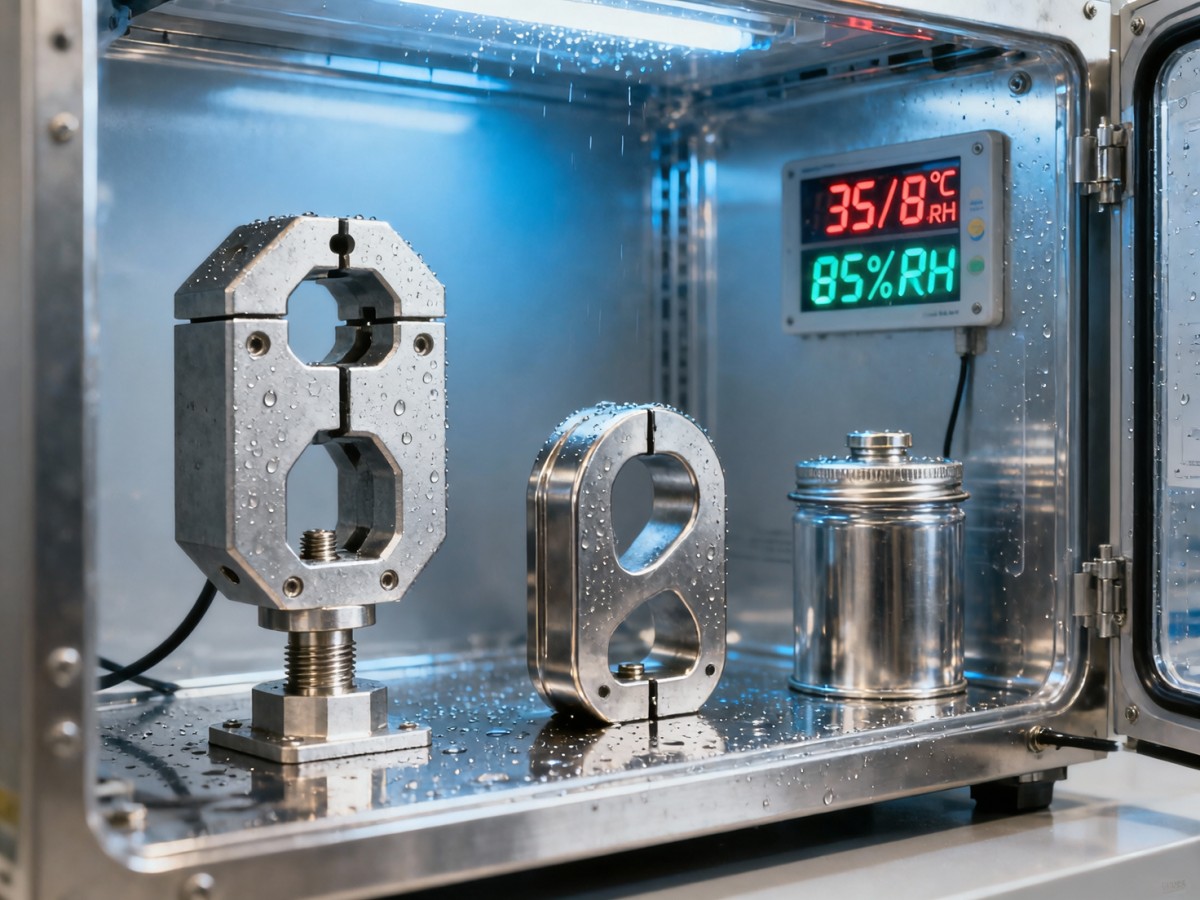
Global Industrial Core conducted accelerated environmental stress testing on 9 load cell models (50 kg–5 t range) across three climatic profiles: tropical (35°C/85% RH), temperate (25°C/60% RH), and arid (40°C/20% RH). Units were cycled through 28-day exposure periods with daily zero-balance calibration and temperature-compensated output logging.
Results showed that only 2 of 9 models maintained ≤±0.05% FS drift over 28 days in tropical conditions. All others exceeded ±0.08% FS by Day 12—well before the 30-day warranty window closed. Notably, one CE-certified model passed EN 61326-1 EMC tests but failed humidity resilience at 48 hours due to non-hermetic cable gland seals.
The table confirms a consistent pattern: specification sheets reflect ideal lab conditions—not real-world humidity cycling. Hermetic sealing reduces but does not eliminate drift; actual performance hinges on adhesive chemistry, internal cavity venting design, and post-cure stabilization protocols—all rarely disclosed in datasheets.
Procurement Checklist: 5 Non-Negotiable Validation Steps
For EPC contractors and procurement directors, mitigating humidity-related risk requires moving beyond catalog specs. These five validation steps are embedded in GIC’s Instrumentation Procurement Framework (v4.2), aligned with ISO/IEC 17025:2017 and UL 61010-1:
- Request full environmental test reports—not just pass/fail summaries—including raw zero-drift logs at 25°C/60% RH, 35°C/85% RH, and 40°C/90% RH over ≥21 days
- Verify cable gland IP rating is tested *with* the load cell body—not certified separately (e.g., IP68 gland + IP67 body ≠ IP68 system)
- Confirm temperature-compensation algorithm covers both thermal EMF and hygroscopic strain—many vendors compensate only for temperature, not moisture absorption
- Require traceable calibration certificates showing uncertainty budgets for humidity influence (k=2, ≤0.02% FS contribution)
- Validate long-term stability via third-party accelerated aging per IEC 60068-2-30 (damp heat, cyclic)
Why Partner With Global Industrial Core for Load Cell Intelligence
When selecting load cells for humid industrial environments, procurement decisions impact safety compliance, measurement traceability, and total cost of ownership over 5–10 years. Global Industrial Core delivers actionable intelligence—not marketing claims—through:
• Access to our live database of 217 validated load cell models, each tagged with real-world humidity drift metrics, failure mode analysis, and certification gaps vs. ISO 376, OIML R60, and UL 508I
• Technical whitepapers co-authored with NIST-traceable metrology labs, covering moisture diffusion modeling in strain gauge assemblies and humidity-resistant encapsulation chemistries
• Custom procurement support: request parameter-aligned vendor shortlists, draft RFQ language for humidity resilience clauses, or schedule a technical review of your current load cell deployment with our metrology team.
Contact GIC today to receive our free Load Cell Humidity Resilience Assessment Kit—including sample test protocols, specification red-flag checklist, and vendor evaluation scorecard calibrated to ISO/IEC 17025 requirements.
Technical Specifications
- Air Handling Unit Supplier Checklist: Performance Data, Lead Times, and SupportAuthor :Environmental Engineering Director
- Buying Fiberglass Water Tanks Wholesale: Compare Quotes and Delivery CostsAuthor :Environmental Engineering Director
- Choosing an XLPE Power Cable Supplier: Test Reports, Traceability, and Lead TimesAuthor :Grid Infrastructure Analyst
Expert Insights

Chief Security Architect
Dr. Thorne specializes in the intersection of structural engineering and digital resilience. He has advised three G7 governments on industrial infrastructure security.
Related Analysis
- Oct 19, 2026Air Handling Unit Supplier Checklist: Performance Data, Lead Times, and SupportAuthor :Environmental Engineering Director
- Oct 18, 2026Buying Fiberglass Water Tanks Wholesale: Compare Quotes and Delivery CostsAuthor :Environmental Engineering Director
- Oct 17, 2026Choosing an XLPE Power Cable Supplier: Test Reports, Traceability, and Lead TimesAuthor :Grid Infrastructure Analyst
Core Sector // 01
Security & Safety
- Choosing a Bluetooth Total Station: Software Compatibility and Connection RangeAuthor :Precision Metrology Expert

- Material Testing Standards: ASTM E8 vs. ISO 6892-1 for Metal Tensile TestsAuthor :Precision Metrology Expert

- How to Verify Accuracy in Industrial Measurement Data and Test ReportsAuthor :Precision Metrology Expert

- Selecting a Steam Vortex Flow Meter: Sizing, Pressure, and Temperature LimitsAuthor :Precision Metrology Expert

- How to Select an Industrial Infrared Thermometer for Hot, Moving EquipmentAuthor :Precision Metrology Expert

- How to Evaluate a Precision Measurement Equipment Manufacturer for Critical TolerancesAuthor :Precision Metrology Expert

- How to Select an Emissions Monitoring System Analyzer for Compliance ReportingAuthor :Precision Metrology Expert

- Portable Gas Monitor Calibration: How Often Is It Needed for Safe Confined-Space Work?Author :Precision Metrology Expert