Tianzhou-10 Cargo Mission Successfully Completed
Author
Date Published
Reading Time
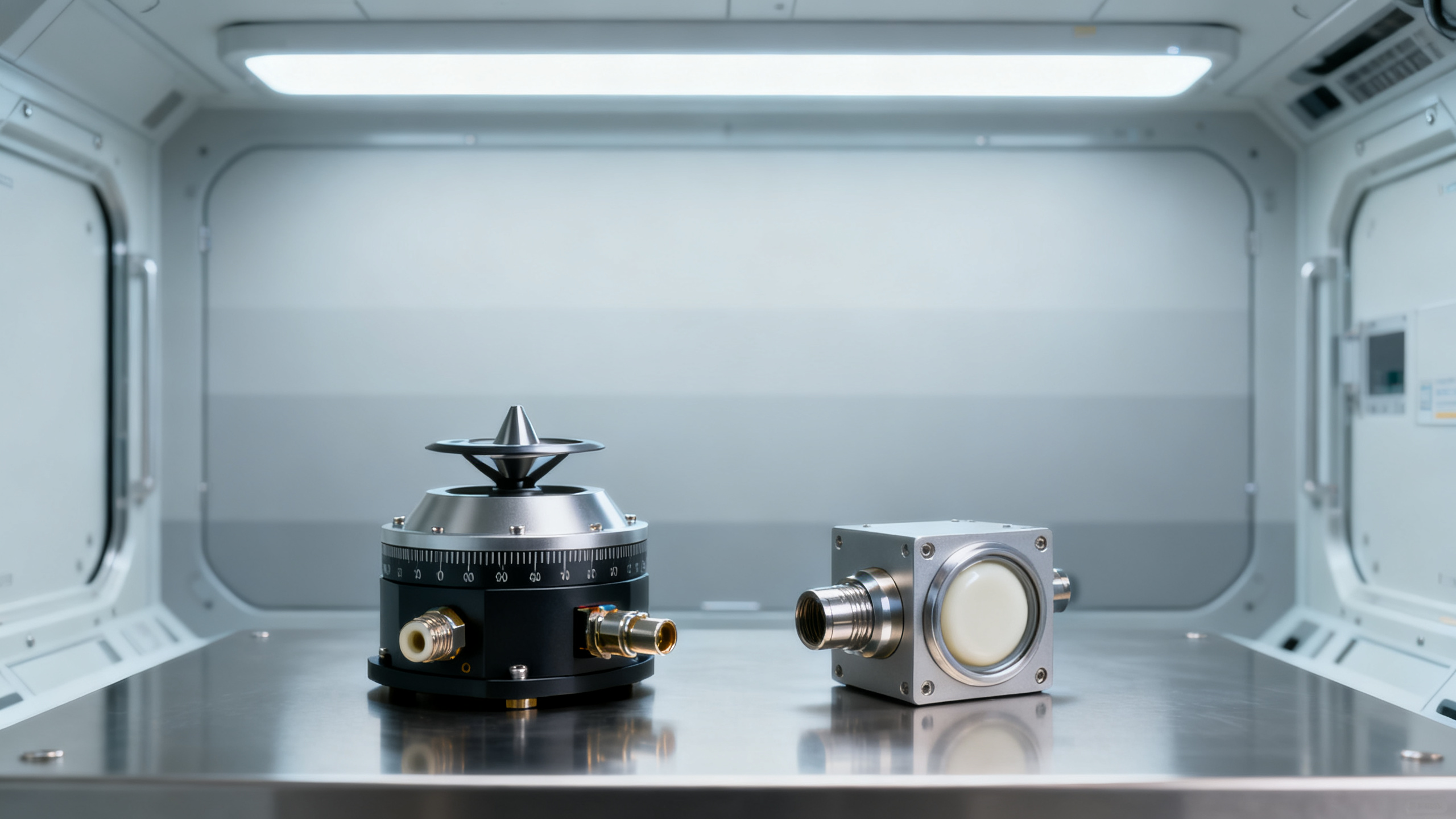
On May 12, 2026, China’s Tianzhou-10 cargo spacecraft successfully docked with the Tiangong Space Station, delivering critical payloads including high-precision gyroscopes, vacuum environment simulation sensors, and space radiation monitoring modules. The mission demonstrates enhanced reliability and long-term stability of Chinese-made precision measurement and laboratory analytics equipment under extreme operational conditions—reinforcing international buyer confidence in such systems for nuclear power, aerospace, and deep-sea applications.
Event Overview
On May 12, 2026, the Tianzhou-10 cargo spacecraft completed its orbital rendezvous and docking with the Tiangong Space Station. It carried a payload comprising high-precision gyroscopes, vacuum environment simulation sensors, and space radiation monitoring modules. All mission objectives—including on-orbit functional verification of payload performance under microgravity and high-radiation conditions—were confirmed as achieved by the China Manned Space Agency (CMSA).
Industries Affected
Direct Export Enterprises
Exporters of test & measurement (T&M) instruments and laboratory analytics platforms face strengthened market credibility in high-assurance sectors. The successful in-orbit validation serves as de facto third-party technical endorsement—potentially shortening qualification timelines for procurement by overseas nuclear regulators or space agencies. However, this effect is contingent on transparent, publicly accessible performance data from the mission.
Raw Material Suppliers
Suppliers of specialty materials—including radiation-hardened quartz, ultra-low-outgassing alloys, and vacuum-compatible ceramics—may experience modest demand uplift. The mission highlights sustained R&D investment in material-level resilience, but no immediate volume increase is evident; procurement cycles in upstream aerospace-grade materials remain multi-year and project-specific.
Equipment Manufacturing Firms
Manufacturers of precision inertial sensors, environmental simulators, and radiation-detection hardware benefit from enhanced perception of domestic technological maturity. Analysis shows that export-oriented firms may see improved access to joint-development opportunities with international system integrators—particularly where co-certification pathways (e.g., ISO/IEC 17025 + ECSS standards) are now more readily pursued.
Supply Chain Service Providers
Certification consultants, calibration laboratories, and logistics specialists handling Class 8–9 cleanroom transport or radiation-sensitive cargo may observe increased inquiry volume. Observably, demand is shifting toward services aligned with dual-use compliance frameworks (e.g., EAR, ITAR alignment support), rather than generic freight coordination.
Key Considerations and Recommended Actions
Verify Mission-Specific Performance Data Release Schedules
Stakeholders should monitor official CMSA and China Academy of Space Technology (CAST) announcements for public telemetry reports or white papers on sensor drift rates, thermal cycling endurance, and vacuum outgassing measurements—these metrics directly inform qualification dossiers for export markets.
Assess Alignment with International Certification Pathways
Firms supplying to regulated industries (e.g., nuclear, aviation) should cross-map their existing quality management systems against ECSS-Q-ST-60C (space product assurance) and IEC 61508 SIL-2 requirements—especially where mission-validated components serve as reference designs.
Evaluate Dual-Use Compliance Readiness
Given heightened global scrutiny of space-qualified T&M exports, companies must ensure documented controls over technology transfer, end-user verification, and encryption-related firmware—even for civilian-labeled hardware with inherent high-precision capabilities.
Editorial Perspective / Industry Observation
This mission is better understood not as a standalone technical milestone, but as an inflection point in perception-driven market access. Current evidence suggests international procurement decisions increasingly weigh *demonstrated field performance* over specification sheets alone—particularly in safety-critical domains. From an industry perspective, the greater strategic implication lies in how China’s space infrastructure now functions as a sovereign validation platform, reducing reliance on foreign testbeds. That shift alters competitive dynamics—not just for exporters, but for global standard-setting bodies evaluating equivalence recognition.
Conclusion
The Tianzhou-10 mission reinforces the role of national space programs as enablers of industrial credibility beyond launch services. For the test & measurement and laboratory analytics sector, it signals growing capacity to meet—and substantiate—performance claims under the most demanding real-world conditions. A rational interpretation is that market impact will accrue gradually, mediated by transparency, certification agility, and responsiveness to evolving dual-use governance norms—not by the mission itself.
Source Attribution
Primary sources: China Manned Space Agency (CMSA) Mission Bulletin No. 2026-05-12; CAST Technical Summary Report (TSR-TZ10-2026); Public telemetry archive hosted by National Space Science Data Center (NSSDC-CN). Note: Payload-level calibration traceability records and radiation exposure logs remain pending public release—continued observation recommended.
Technical Specifications
- Air Handling Unit Supplier Checklist: Performance Data, Lead Times, and SupportAuthor :Environmental Engineering Director
- Buying Fiberglass Water Tanks Wholesale: Compare Quotes and Delivery CostsAuthor :Environmental Engineering Director
- Choosing an XLPE Power Cable Supplier: Test Reports, Traceability, and Lead TimesAuthor :Grid Infrastructure Analyst
Expert Insights

Chief Security Architect
Dr. Thorne specializes in the intersection of structural engineering and digital resilience. He has advised three G7 governments on industrial infrastructure security.
Related Analysis
- Oct 19, 2026Air Handling Unit Supplier Checklist: Performance Data, Lead Times, and SupportAuthor :Environmental Engineering Director
- Oct 18, 2026Buying Fiberglass Water Tanks Wholesale: Compare Quotes and Delivery CostsAuthor :Environmental Engineering Director
- Oct 17, 2026Choosing an XLPE Power Cable Supplier: Test Reports, Traceability, and Lead TimesAuthor :Grid Infrastructure Analyst
Core Sector // 01
Security & Safety
- Choosing a Bluetooth Total Station: Software Compatibility and Connection RangeAuthor :Precision Metrology Expert

- Material Testing Standards: ASTM E8 vs. ISO 6892-1 for Metal Tensile TestsAuthor :Precision Metrology Expert

- How to Verify Accuracy in Industrial Measurement Data and Test ReportsAuthor :Precision Metrology Expert

- Selecting a Steam Vortex Flow Meter: Sizing, Pressure, and Temperature LimitsAuthor :Precision Metrology Expert

- How to Select an Industrial Infrared Thermometer for Hot, Moving EquipmentAuthor :Precision Metrology Expert

- How to Evaluate a Precision Measurement Equipment Manufacturer for Critical TolerancesAuthor :Precision Metrology Expert

- How to Select an Emissions Monitoring System Analyzer for Compliance ReportingAuthor :Precision Metrology Expert

- Portable Gas Monitor Calibration: How Often Is It Needed for Safe Confined-Space Work?Author :Precision Metrology Expert