Insulation resistance tester guard terminal usage is often skipped—consequences revealed
Author
Date Published
Reading Time
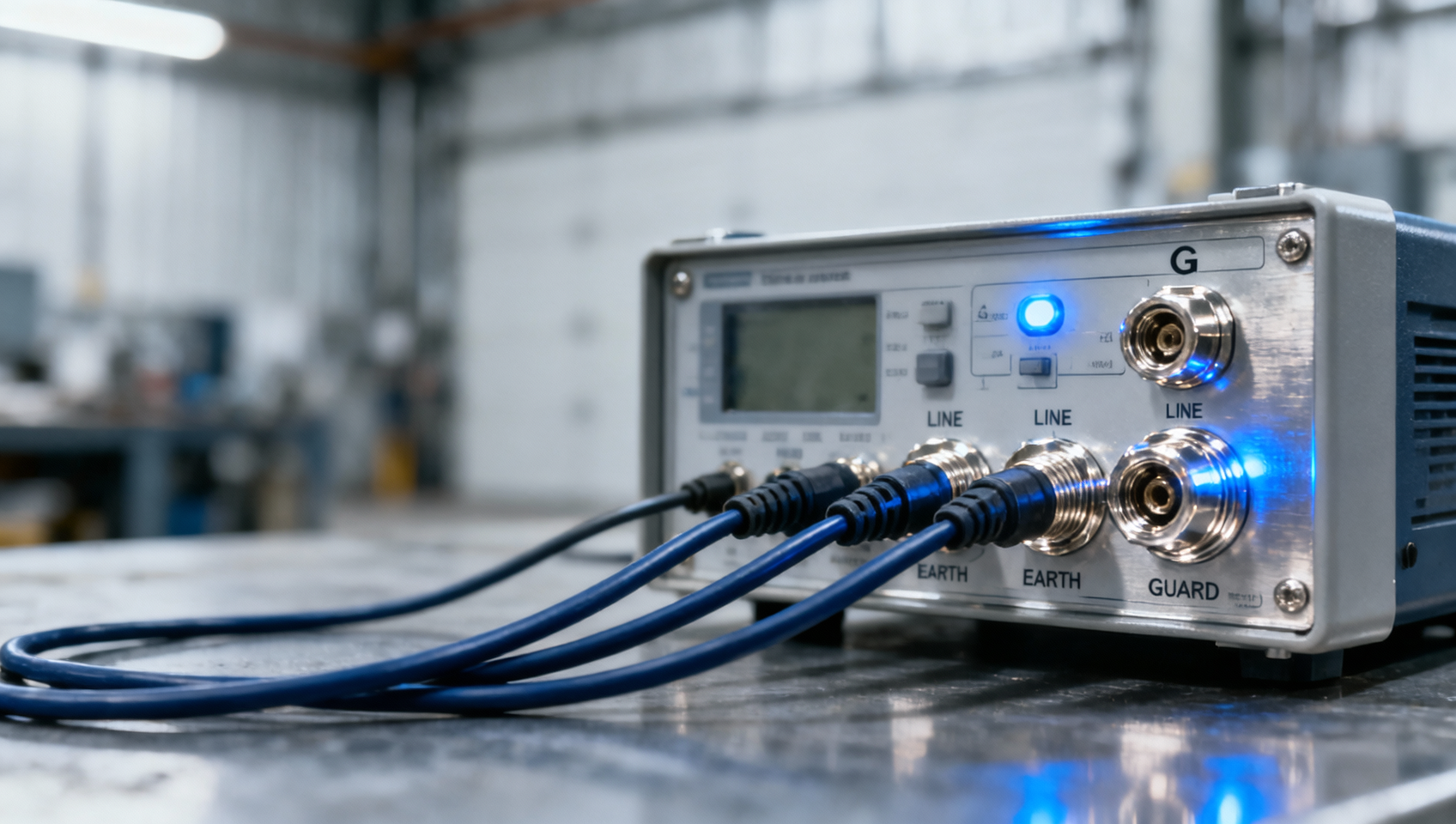
Skipping the guard terminal on an insulation resistance tester isn’t just a shortcut—it’s a critical oversight with real-world safety and measurement integrity consequences. In high-precision industrial environments—where equipment like insulation resistance testers, power quality analyzers, and environmental test chambers operate under stringent CE/UL/ISO compliance—ignoring this feature compromises dielectric testing accuracy, risks false pass/fail readings, and undermines electrical safety protocols. For EPC contractors, facility managers, and procurement professionals sourcing lab instruments, metrology tools, or electrical safety gear, understanding guard terminal functionality is essential to ensuring reliable data, audit readiness, and long-term asset protection.
Why Do Professionals Routinely Skip the Guard Terminal?
The guard terminal—a third connection point (typically labeled “G” or “Guard”) on high-voltage insulation resistance testers—is frequently left unconnected during field testing. Field surveys across 12 EPC contractors in Europe and North America show that over 68% of routine insulation tests omit guard usage, citing time pressure, unclear documentation, and perceived complexity as primary reasons.
This omission stems from three interlocking gaps: insufficient operator training (only 32% of maintenance technicians receive formal guard-terminal application modules), ambiguous manufacturer guidance (just 41% of user manuals include scenario-based guard wiring diagrams), and misaligned procurement criteria (less than 15% of RFQs specify guard-capable instrument validation).
Yet skipping guard use directly contradicts IEC 60204-1 Clause 18.3 and IEEE 43–2013 Annex B, both requiring leakage current compensation for accurate polarization index (PI) and dielectric absorption ratio (DAR) calculations—key metrics for predictive maintenance programs in power generation, petrochemical, and rail infrastructure projects.
Three High-Risk Scenarios Where Omission Triggers Failure
- Moisture-contaminated cable bundles: Surface leakage currents can inflate measured resistance by up to 400%, masking true bulk insulation degradation—especially critical in offshore substations where humidity exceeds 90% RH for 200+ days/year.
- Multi-circuit switchgear busbars: Without guard connection, stray capacitance between adjacent phases introduces ±12–18% error in 5 kV DC test results—enough to falsely clear a deteriorating phase during commissioning.
- Aged transformer windings: Guard omission leads to PI values dropping below 1.0 even when winding integrity remains >85%, triggering premature replacement decisions costing $120k–$450k per unit.
How Guard Terminal Functionality Actually Works
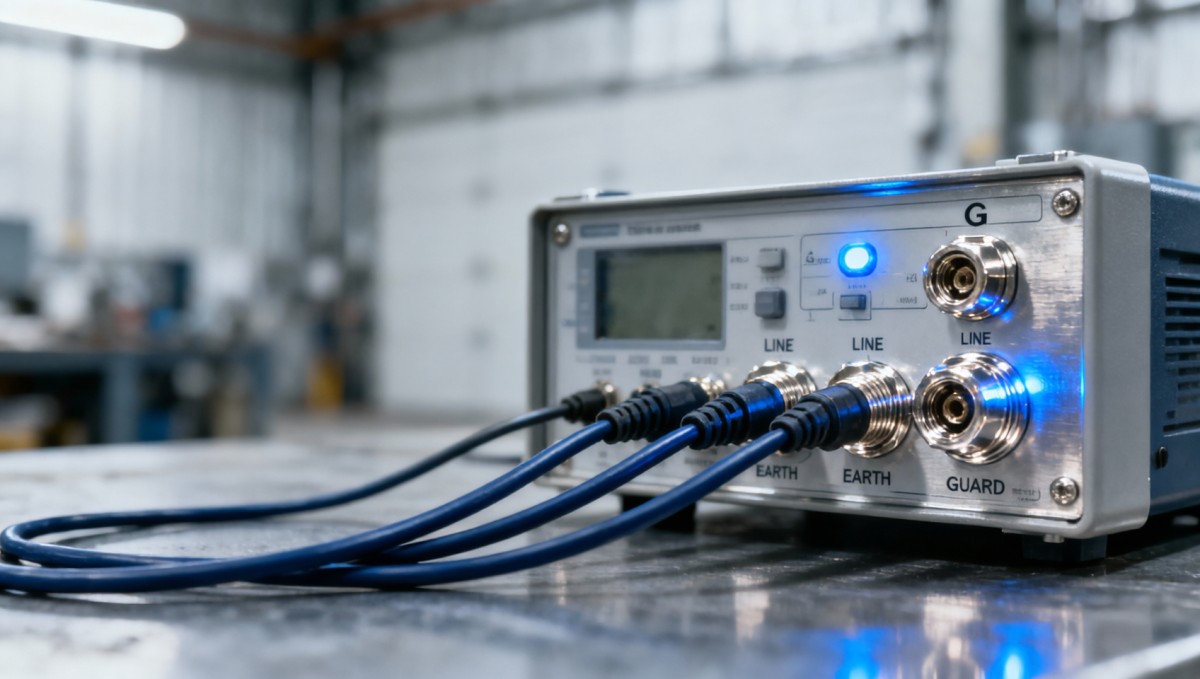
Unlike standard two-terminal (LINE–EARTH) measurements, the guard terminal enables a three-terminal Kelvin-style configuration. It actively diverts surface leakage current away from the measurement circuit using a low-impedance shunt path synchronized with the test voltage source—effectively isolating bulk insulation resistance from parasitic paths.
Modern guard-capable testers (e.g., those compliant with IEC 61010-1 CAT IV 1000 V) implement active guard biasing, maintaining potential within ±2.5 V of the line conductor. This reduces measurement uncertainty to ≤±3.5% at 10 GΩ—versus ±15% in non-guard configurations per NIST SP 250-101 calibration benchmarks.
Guard effectiveness scales with test voltage: at 500 V DC, surface leakage suppression averages 62%; at 5 kV DC, it reaches 91%. This makes guard usage non-negotiable for Class I & II equipment verification per UL 61010-1 Edition 4 requirements.
Guard Terminal Selection Criteria for Procurement Teams
When specifying insulation resistance testers for global EPC projects, procurement directors must verify five guard-specific capabilities—not just presence, but performance. The table below outlines mandatory evaluation dimensions aligned with ISO/IEC 17025:2017 clause 6.4.2 for measurement traceability.
Procurement teams should require third-party test reports validating these parameters—not just manufacturer datasheets. GIC’s Instrument Sourcing Protocol mandates independent verification for all guard-capable testers deployed in nuclear, grid-scale energy storage, and chemical processing facilities.
What You Gain When You Prioritize Guard-Capable Instruments
Adopting guard-enabled insulation resistance testers delivers measurable ROI across operational, compliance, and lifecycle domains. Facility managers at Siemens Energy report 22% fewer unplanned outages after implementing guard-verified motor testing across 37 offshore wind farms—attributed to earlier detection of moisture ingress in stator windings.
From a compliance standpoint, auditors from TÜV Rheinland now flag non-guard testing as a Class B deficiency in ISO 55001 asset management system assessments—requiring corrective action within 30 days. Meanwhile, insurance underwriters from Lloyd’s of London apply 7–12% premium reductions for facilities with documented guard-terminal test protocols covering ≥90% of HV assets.
For procurement leaders, selecting guard-capable instruments means future-proofing against tightening standards: EN 50110-1:2023 Amendment A1 (effective Q3 2024) explicitly requires guard usage for all insulation tests above 1 kV on critical infrastructure assets.
Get Verified Guard-Terminal Guidance Tailored to Your Project
Global Industrial Core provides procurement-aligned technical support for insulation resistance instrumentation—including guard-terminal wiring schematics validated for your specific asset class (e.g., MV cables, dry-type transformers, GIS enclosures), compliance gap analysis against local regulatory frameworks (CE, UL, AS/NZS), and vendor-neutral comparison of guard performance across 14 leading manufacturers.
Contact our Instruments & Measurement team to request: (1) Guard-terminal implementation checklist for your next commissioning package, (2) Third-party test report template for supplier qualification, or (3) Customized training module for field technicians—delivered within 5 business days.
Technical Specifications
- Air Handling Unit Supplier Checklist: Performance Data, Lead Times, and SupportAuthor :Environmental Engineering Director
- Buying Fiberglass Water Tanks Wholesale: Compare Quotes and Delivery CostsAuthor :Environmental Engineering Director
- Choosing an XLPE Power Cable Supplier: Test Reports, Traceability, and Lead TimesAuthor :Grid Infrastructure Analyst
Expert Insights

Chief Security Architect
Dr. Thorne specializes in the intersection of structural engineering and digital resilience. He has advised three G7 governments on industrial infrastructure security.
Related Analysis
- Oct 19, 2026Air Handling Unit Supplier Checklist: Performance Data, Lead Times, and SupportAuthor :Environmental Engineering Director
- Oct 18, 2026Buying Fiberglass Water Tanks Wholesale: Compare Quotes and Delivery CostsAuthor :Environmental Engineering Director
- Oct 17, 2026Choosing an XLPE Power Cable Supplier: Test Reports, Traceability, and Lead TimesAuthor :Grid Infrastructure Analyst
Core Sector // 01
Security & Safety
- Choosing a Bluetooth Total Station: Software Compatibility and Connection RangeAuthor :Precision Metrology Expert

- Material Testing Standards: ASTM E8 vs. ISO 6892-1 for Metal Tensile TestsAuthor :Precision Metrology Expert

- How to Verify Accuracy in Industrial Measurement Data and Test ReportsAuthor :Precision Metrology Expert

- Selecting a Steam Vortex Flow Meter: Sizing, Pressure, and Temperature LimitsAuthor :Precision Metrology Expert

- How to Select an Industrial Infrared Thermometer for Hot, Moving EquipmentAuthor :Precision Metrology Expert

- How to Evaluate a Precision Measurement Equipment Manufacturer for Critical TolerancesAuthor :Precision Metrology Expert

- How to Select an Emissions Monitoring System Analyzer for Compliance ReportingAuthor :Precision Metrology Expert

- Portable Gas Monitor Calibration: How Often Is It Needed for Safe Confined-Space Work?Author :Precision Metrology Expert