How accurate are drug testing kits in daily use?
Author
Date Published
Reading Time
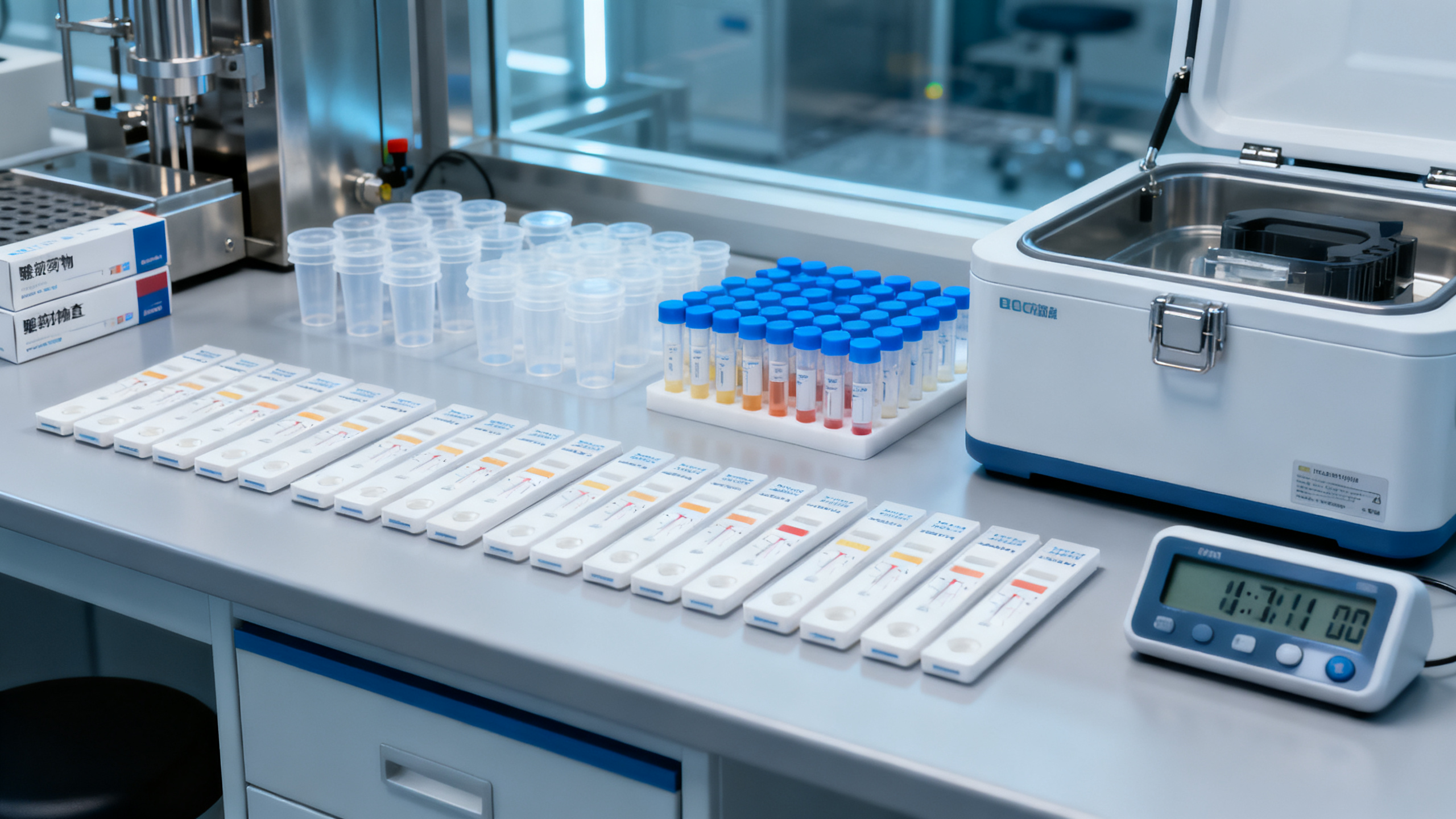
In daily workplace, clinical, and safety-sensitive environments, the accuracy of drug testing kits can directly affect operational decisions, compliance outcomes, and personal trust.
While modern kits are designed for fast screening, real-world results depend on sample quality, operator technique, storage, detection thresholds, and confirmation procedures.
Understanding what drug testing kits can and cannot reliably indicate is essential before any result becomes a disciplinary, medical, or operational decision.
Accuracy Depends on the Scenario, Not Only the Kit
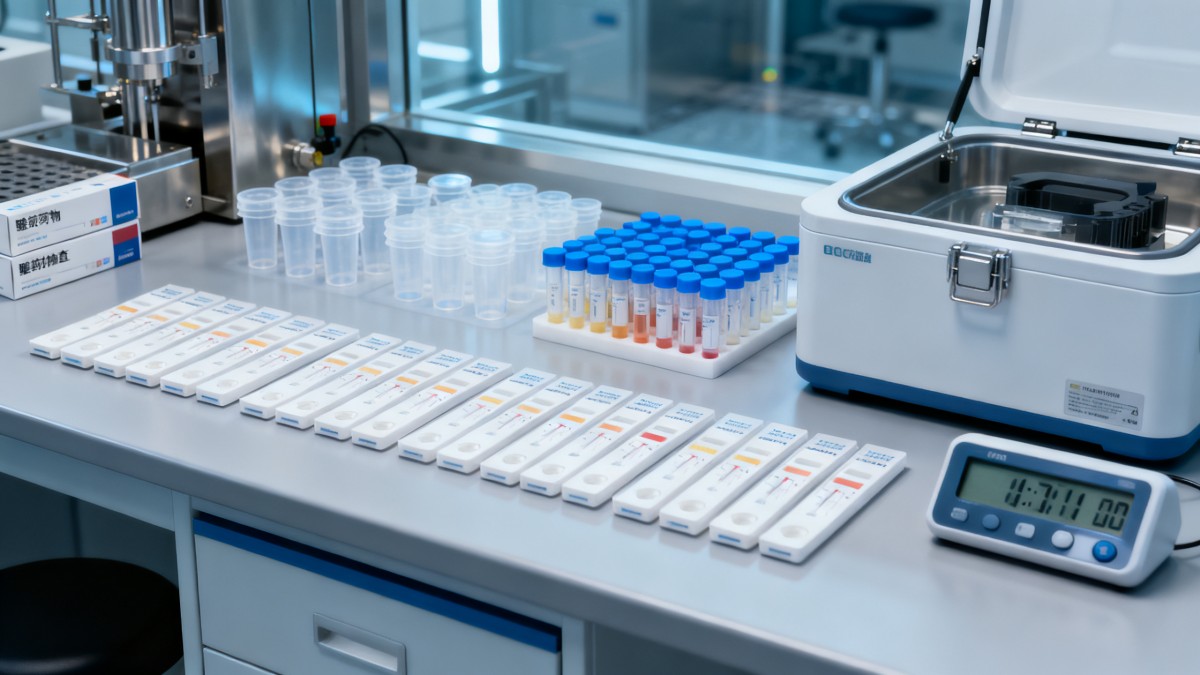
Drug testing kits are usually screening tools, not final proof of drug use. Their value lies in speed, consistency, and early risk indication.
In controlled settings, drug testing kits can perform very well. In daily use, accuracy may shift because conditions are rarely perfect.
A kit may have strong laboratory validation, yet still produce questionable results if storage, timing, or sample handling is poor.
For safety-sensitive operations, this distinction matters. Screening accuracy must be supported by documented procedures and confirmatory testing pathways.
What “accurate” means in daily testing
Accuracy is not a single number. It includes sensitivity, specificity, cutoff design, and the chance of false-positive or false-negative results.
- Sensitivity indicates how well drug testing kits detect a target substance when it is present.
- Specificity indicates how well the kit avoids reacting to unrelated substances.
- Cutoff level defines the minimum concentration needed for a positive screen.
- Confirmation testing verifies a screen through a more precise laboratory method.
Workplace Screening: Fast Decisions Need Controlled Procedures
In workplace screening, drug testing kits are often used to support site access, post-incident review, or reasonable-suspicion procedures.
The main requirement is not only detecting substances. The result must also be traceable, repeatable, and fair under policy rules.
Urine drug testing kits are common because samples are easy to collect and detection windows are practical for routine programs.
However, urine screening can reflect prior exposure, not current impairment. This creates important limits for immediate safety decisions.
Saliva drug testing kits may better support recent-use screening. They are useful where on-site collection and rapid turnaround are priorities.
Still, oral fluid samples can be affected by eating, drinking, dry mouth, contamination, or insufficient sample volume.
Core workplace judgment points
- Use drug testing kits within the stated temperature and storage range.
- Document sample identity, collection time, lot number, and expiry date.
- Train personnel to read results only within the approved time window.
- Send non-negative screens for confirmatory analysis before final action.
Clinical and Community Use: Screening Must Fit the Care Context
In clinical and community settings, drug testing kits can support monitoring, triage, recovery programs, or medication safety checks.
Here, accuracy is tied to interpretation. A result should be considered alongside history, medication lists, and expected detection windows.
Some prescription medications may trigger cross-reactivity. Certain cold medicines, antidepressants, or pain treatments can complicate screening results.
That does not mean drug testing kits are unreliable. It means screening must be interpreted with appropriate clinical caution.
In recovery monitoring, consistency may matter more than one isolated result. Repeated testing under the same protocol improves trend interpretation.
For clinical decisions, a positive screen should not replace laboratory confirmation when treatment, custody, employment, or legal consequences may follow.
When clinical screening can be misleading
- The patient took a legitimate medication with possible cross-reactivity.
- The sample was diluted, adulterated, or collected too late.
- The kit’s cutoff does not match the clinical question.
- The test panel does not include the suspected substance.
Safety-Sensitive Operations: Confirmation Is Part of Accuracy
In transport, energy, logistics, construction, and heavy industry, drug testing kits are often connected to operational risk control.
A fast negative result may support workflow continuity. A non-negative result requires escalation, not instant judgment.
The safest model treats drug testing kits as the first layer in a controlled decision chain.
That chain should include collection control, documented custody, supervisor review, and laboratory confirmation for disputed or high-impact outcomes.
In regulated environments, the kit must also align with applicable standards, internal policy, and legally defensible procedures.
Global Industrial Core emphasizes this systems approach across safety and measurement topics. Reliable tools require reliable operating conditions.
Operational decision rule
Drug testing kits are most accurate as screening instruments when procedures prevent avoidable variation.
They are least reliable when used casually, stored poorly, read late, or treated as standalone forensic evidence.
Comparing Daily Use Scenarios and Accuracy Needs
Different settings place different demands on drug testing kits. The best choice depends on detection window, speed, sample type, and consequence level.
The table shows why no single accuracy statement fits every use case. Drug testing kits must match the operational question.
Key Factors That Change Real-World Accuracy
Daily accuracy is shaped by both the kit design and the environment around it.
Sample quality
Drug testing kits need adequate sample volume and proper collection. Diluted, contaminated, or poorly collected samples reduce confidence.
Urine samples may be diluted intentionally or unintentionally. Oral fluid samples may fail if collection time is too short.
Detection window
A negative result does not always mean no prior use. The substance may be outside the kit’s detection window.
A positive result does not always mean current impairment. Some substances remain detectable after acute effects have passed.
Storage and expiry
Heat, humidity, freezing, or expired components can affect drug testing kits. Storage logs are simple but valuable safeguards.
Operator technique
Reading the strip too early or too late can create errors. Lighting, interpretation training, and clear instructions reduce variation.
Choosing Drug Testing Kits for the Right Application
Selection should begin with the scenario. The substance panel, sample type, cutoff, and confirmation route must match the decision risk.
- Define whether the purpose is deterrence, screening, monitoring, or incident response.
- Select drug testing kits with panels relevant to the local risk profile.
- Check validation data, claimed sensitivity, specificity, and cutoff levels.
- Confirm storage requirements match the actual operating environment.
- Build a confirmation process before the first test is performed.
For remote, mobile, or industrial sites, rugged packaging and readable instructions are not minor details. They support result reliability.
For clinical or recovery settings, interpretive support and documented limitations may be more important than maximum panel size.
Common Misjudgments in Daily Testing
Many accuracy problems come from interpretation mistakes rather than defective drug testing kits.
- Treating a screening positive as a confirmed positive.
- Using expired kits because packaging appears intact.
- Ignoring faint lines or reading them outside the approved window.
- Assuming every negative result rules out all relevant substances.
- Selecting broad panels without understanding local substance risks.
- Skipping documentation because the test appears simple.
Another common error is confusing detection with impairment. Drug testing kits detect substances or metabolites, not functional performance.
This distinction is critical when results influence workplace access, medical decisions, or safety-sensitive assignments.
A Practical Accuracy Checklist Before Use
A short pre-use checklist improves daily reliability and creates a defensible record.
- Verify the lot number, expiry date, and storage history.
- Confirm the kit detects the substance category of concern.
- Review the collection method before sample collection starts.
- Use timers instead of estimating result windows.
- Record negative, invalid, and non-negative outcomes consistently.
- Refer non-negative or disputed screens for laboratory confirmation.
When these controls are followed, drug testing kits become more dependable in daily programs.
When they are ignored, even high-quality kits can generate results that are difficult to defend.
Bottom Line: Reliable Screening Requires a Reliable System
So, how accurate are drug testing kits in daily use? They can be highly useful screening tools under controlled conditions.
Their practical accuracy depends on sample integrity, correct timing, proper storage, appropriate cutoff levels, and confirmation for high-impact results.
The best approach is not to rely on the kit alone. Build a complete testing process around it.
Before expanding any testing program, review the scenario, decision consequence, required detection window, and confirmation pathway.
For dependable daily screening, choose drug testing kits that match the application, then support them with documented procedures and trained execution.
Technical Specifications
- How to Select Electronic Hotel Key Card Locks for Guest Rooms and Staff AreasAuthor :Safety Compliance Lead
- How to Select Lab Instruments for Reliable Chemical Analysis WorkflowsAuthor :Precision Metrology Expert
- How to Size a UPS for Server Rooms: Load, Runtime, and Redundancy FactorsAuthor :Grid Infrastructure Analyst
Expert Insights

Chief Security Architect
Dr. Thorne specializes in the intersection of structural engineering and digital resilience. He has advised three G7 governments on industrial infrastructure security.
Related Analysis
- Sep 17, 2026How to Select Electronic Hotel Key Card Locks for Guest Rooms and Staff AreasAuthor :Safety Compliance Lead
- Sep 16, 2026How to Select Lab Instruments for Reliable Chemical Analysis WorkflowsAuthor :Precision Metrology Expert
- Sep 15, 2026How to Size a UPS for Server Rooms: Load, Runtime, and Redundancy FactorsAuthor :Grid Infrastructure Analyst
Core Sector // 01
Security & Safety
- What to Check When Sourcing Vibration Meters Wholesale for Industrial MaintenanceAuthor :Precision Metrology Expert

- How to Select Process Control Instruments for Accuracy, Safety, and UptimeAuthor :Precision Metrology Expert

- What Should Standards Compliance Analysis Training Cover Before an Audit?Author :Precision Metrology Expert

- Why Do Pressure Instruments Fail in High-Vibration Sites?Author :Precision Metrology Expert

- Is FM Software Integration Needed for Overseas Instrument Maintenance?Author :Precision Metrology Expert

- What Are the Differences Between Lab and Field Testing Equipment?Author :Precision Metrology Expert

- Is Independent Testing Necessary for Critical Safety Components?Author :Precision Metrology Expert

- How to Validate Industrial Application Scenarios Before ProcurementAuthor :Precision Metrology Expert