China Expands Controls on Precision Test Sensors
Author
Date Published
Reading Time

On 11 July 2026, China’s Ministry of Industry and Information Technology (MIIT) moved high-precision testing and measurement equipment further into the export-control framework by adding several sensor-related categories to the Dual-Use Export Control List. The change takes effect quickly, on 15 July 2026, and it is especially relevant for exporters, procurement teams, calibration labs, and metrology service providers dealing with regulated destinations, because licensing status now becomes a practical checkpoint in ordering, shipment planning, and supplier verification.
What the Notice Formally Changes
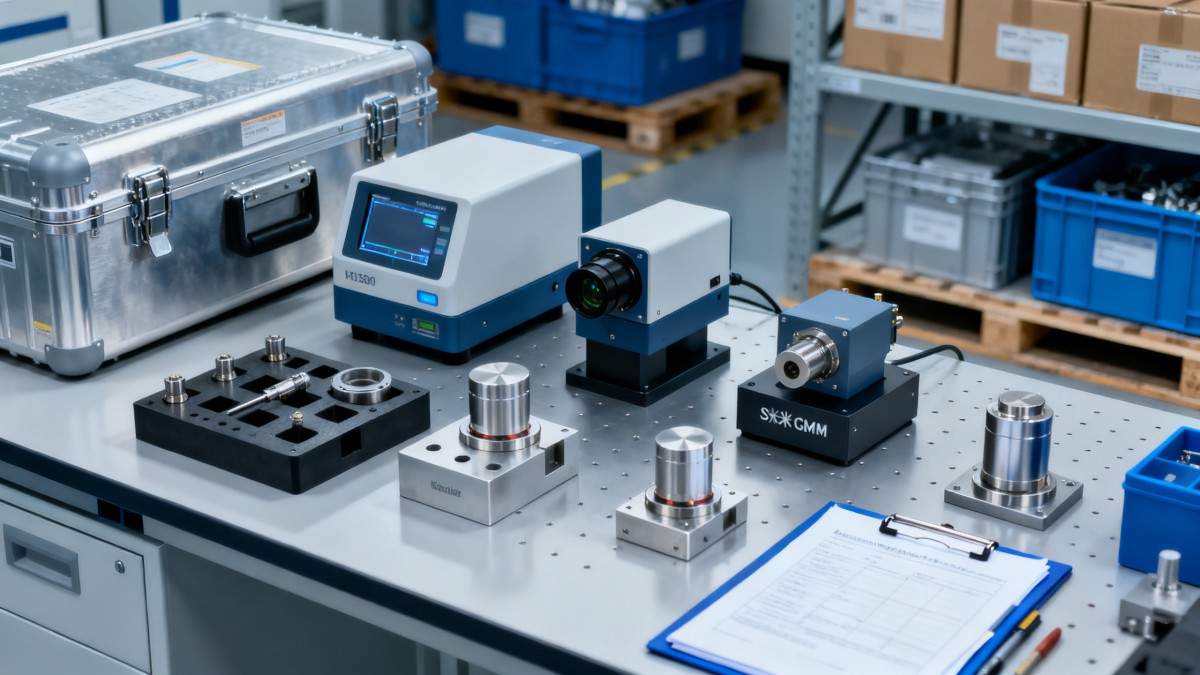
According to the information provided, MIIT issued Notice No. 2026-78 on 11 July 2026. The notice adds laser interferometers, quantum-gravity accelerometers, and sub-micron coordinate measuring machine (CMM) sensors to the Dual-Use Export Control List.
The same notice introduces an export-license requirement for consignments above $50,000 when shipments are destined for Russia, Iran, Belarus, and Myanmar. The effective date stated in the provided information is 15 July 2026.
The provided summary also states that global calibration labs and metrology service providers must confirm supplier license status before procurement.
Where the Immediate Business Pressure May Appear
Trade and shipment teams face a narrower execution window
From an industry perspective, exporters and trading entities may be affected first because the new rule connects product category, shipment value, destination market, and timing. The practical impact is likely to show up in shipment screening, order review, and documentation readiness for consignments that cross the stated threshold and involve the named destinations.
Procurement functions need tighter supplier checks
Analysis shows that buyers of regulated testing and measurement components may need to treat supplier license status as part of normal procurement due diligence, not as a later-stage shipping issue. This is particularly relevant where procurement teams source precision sensors or related metrology equipment for delivery into affected markets or for projects tied to those markets.
Calibration and metrology service providers may see compliance move upstream
What deserves closer attention is the explicit reference to global calibration labs and metrology service providers. That shifts part of the operational burden upstream into supplier validation before purchase, which may affect quotation timelines, purchase approvals, and customer commitments where regulated items are involved.
Customer-facing teams may need clearer transaction scoping
For sales, account management, and delivery coordination roles, the main issue is not only whether a product is technical enough to fall under review, but whether a specific consignment structure, destination, and value trigger licensing obligations. This can influence how orders are split, documented, and communicated internally, even before a shipment is booked.
What Companies Should Monitor Now
Check whether affected product lines match the listed categories
Companies handling precision measurement products should first map their relevant items against the categories named in the notice: laser interferometers, quantum-gravity accelerometers, and sub-micron CMM sensors. The practical question is whether internal product classification and external commercial descriptions are aligned closely enough for compliance review.
Review destination and consignment-value controls together
The licensing requirement in the provided information is tied to shipments above $50,000 per consignment and to four named destinations. Businesses should therefore watch not only product scope, but also how consignment value is defined and applied in actual transactions, since the operational trigger is not product type alone.
Prepare supplier and document checks before purchase approval
Observably, the notice turns supplier license status into a procurement-stage issue for calibration labs and metrology service providers. That means companies may need earlier document collection, supplier confirmation, and internal sign-off before placing orders, especially where delivery timing is tight.
Separate policy wording from execution details
It is more appropriate to understand this as both a regulatory change and an execution challenge. The rule text, as summarized in the provided information, sets the basic control direction, but day-to-day business impact will depend on how companies interpret scope, prepare records, and manage transactions around effective dates and destination screening.
Why This Reads as More Than a Routine Product Update
Analysis shows that this development is not just about adding technical items to a list. It also signals that high-precision measurement and sensing components are being treated with greater control sensitivity in cross-border trade when specific destinations and shipment values are involved.
At the same time, it would be premature to describe this as a fully settled long-term industry outcome based on the provided information alone. The confirmed facts establish a concrete rule change with a near-term compliance effect, while the broader commercial consequences still need to be observed through procurement behavior, licensing practice, and supplier response.
How the Industry May Best Read This for Now
The most balanced reading is that this is an immediate operational change with broader signaling value. In the short term, affected businesses need to focus on classification, destination review, consignment thresholds, and supplier license validation. In a wider industry sense, the notice is more appropriately understood as a compliance signal that could reshape how precision metrology-related transactions are screened and approved, rather than as a definitive statement about market outcomes.
Basis of This Article and What Still Needs Verification
This article is based on the user-provided news title, event date, and event summary concerning MIIT Notice No. 2026-78 and the export-control changes described there. For this type of industry update, source categories typically relevant to ongoing verification include official notices, company disclosures, industry association updates, authoritative media reporting, and standard-setting or regulatory documents.
No specific official source link was provided in the input, so the exact official publication link still needs to be verified on an ongoing basis. Areas that warrant further attention include any later official clarification on scope, implementation wording, and compliance practice affecting procurement and cross-border delivery.
Technical Specifications
- How to Select Electronic Hotel Key Card Locks for Guest Rooms and Staff AreasAuthor :Safety Compliance Lead
- How to Select Lab Instruments for Reliable Chemical Analysis WorkflowsAuthor :Precision Metrology Expert
- How to Size a UPS for Server Rooms: Load, Runtime, and Redundancy FactorsAuthor :Grid Infrastructure Analyst
Expert Insights

Chief Security Architect
Dr. Thorne specializes in the intersection of structural engineering and digital resilience. He has advised three G7 governments on industrial infrastructure security.
Related Analysis
- Sep 17, 2026How to Select Electronic Hotel Key Card Locks for Guest Rooms and Staff AreasAuthor :Safety Compliance Lead
- Sep 16, 2026How to Select Lab Instruments for Reliable Chemical Analysis WorkflowsAuthor :Precision Metrology Expert
- Sep 15, 2026How to Size a UPS for Server Rooms: Load, Runtime, and Redundancy FactorsAuthor :Grid Infrastructure Analyst
Core Sector // 01
Security & Safety
- What to Check When Sourcing Vibration Meters Wholesale for Industrial MaintenanceAuthor :Precision Metrology Expert

- How to Select Process Control Instruments for Accuracy, Safety, and UptimeAuthor :Precision Metrology Expert

- What Should Standards Compliance Analysis Training Cover Before an Audit?Author :Precision Metrology Expert

- Why Do Pressure Instruments Fail in High-Vibration Sites?Author :Precision Metrology Expert

- Is FM Software Integration Needed for Overseas Instrument Maintenance?Author :Precision Metrology Expert

- What Are the Differences Between Lab and Field Testing Equipment?Author :Precision Metrology Expert

- Is Independent Testing Necessary for Critical Safety Components?Author :Precision Metrology Expert

- How to Validate Industrial Application Scenarios Before ProcurementAuthor :Precision Metrology Expert