Why a wood moisture tester can prevent costly defects
Author
Date Published
Reading Time
Why a wood moisture tester can prevent costly defects
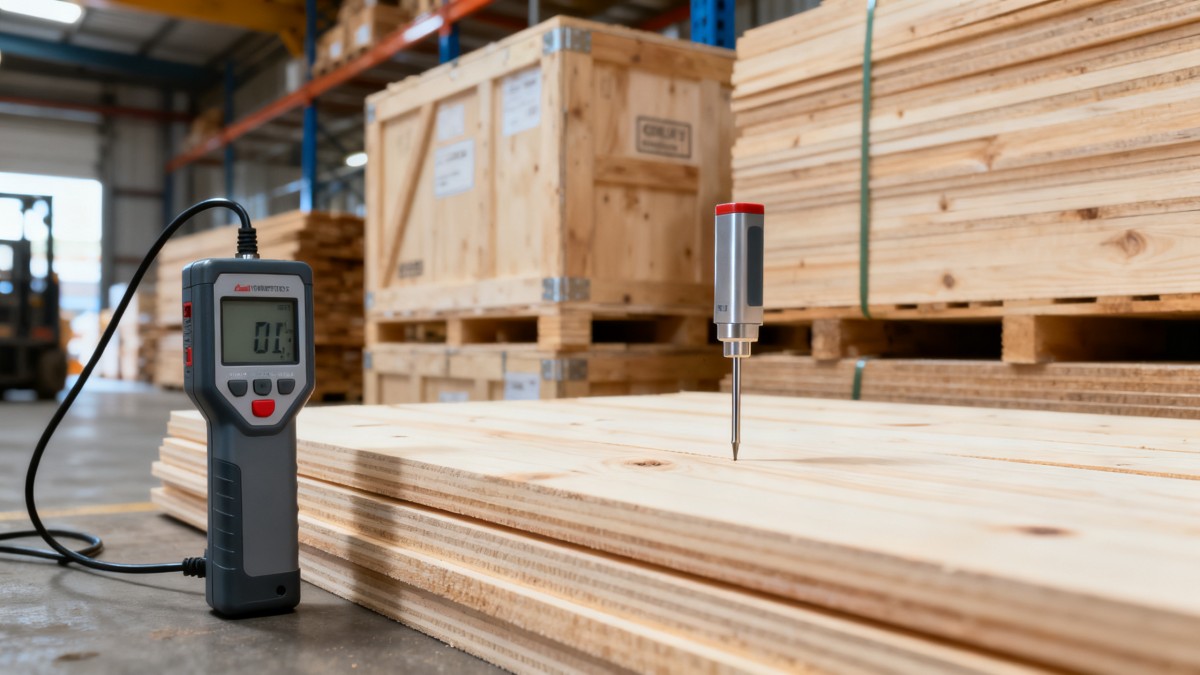
In industrial wood processing, construction materials, and packaging supply chains, moisture is more than a quality variable.
It is a hidden risk factor behind warping, mold, adhesive failure, rejected batches, and safety concerns.
A wood moisture tester provides fast, data-driven verification before production, shipment, installation, or long-term storage.
By detecting moisture risk early, operations can reduce defects, improve compliance, and protect product performance.
Why checklist-based moisture control matters
Wood defects rarely begin at the visible surface.
They often begin when moisture content exceeds the safe range for processing, bonding, coating, or installation.
A wood moisture tester turns a subjective inspection into a measurable checkpoint.
That checkpoint supports incoming inspection, production release, supplier qualification, and claim prevention.
Without a checklist, readings may be taken too late, too rarely, or at unrepresentative locations.
With a structured method, each wood moisture tester reading becomes traceable evidence for quality decisions.
Core checklist for using a wood moisture tester effectively
Use this checklist before accepting, machining, bonding, finishing, packing, or installing wood-based materials.
- Confirm the material species, density, and board type before testing, because each factor can affect wood moisture tester accuracy.
- Calibrate or verify the wood moisture tester against a reference block before critical inspections or high-value batch release.
- Measure multiple locations across the board, including edges, centers, ends, and suspect areas near stains or checks.
- Record ambient temperature and humidity, especially when materials have moved between storage, kiln, workshop, or jobsite conditions.
- Compare results with the target moisture range for the intended process, not only with general wood standards.
- Separate wet, borderline, and approved stock immediately, using labels that prevent accidental mixing during production.
- Retest after conditioning, drying, or acclimation, because surface readings alone may not reflect internal moisture balance.
- Keep digital or written inspection records that link each wood moisture tester reading to batch, supplier, date, and operator.
This checklist improves repeatability.
It also prevents rushed decisions based on visual appearance alone.
Choosing the right wood moisture tester method
Different inspection points require different measurement methods.
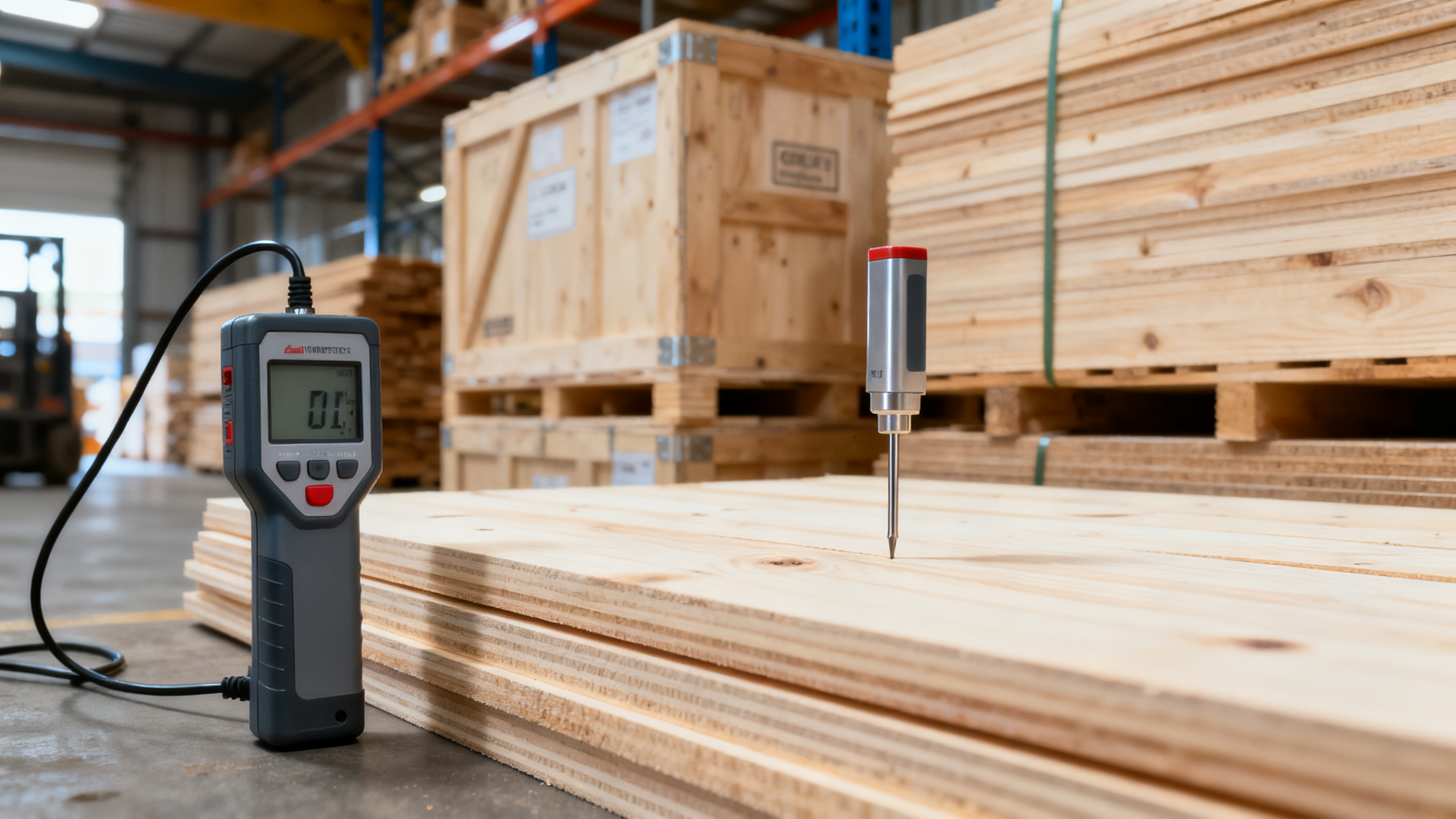
A pin-type wood moisture tester reads electrical resistance between probes.
It is useful when depth, gradients, or internal moisture are concerns.
A pinless wood moisture meter scans below the surface without leaving puncture marks.
It suits finished panels, flooring, veneers, and materials where appearance matters.
The best wood moisture tester is not always the most complex device.
It is the instrument that fits the material, process risk, and inspection frequency.
Application scenarios where defects can be avoided
Lumber receiving and warehouse storage
Incoming lumber can look acceptable while carrying excessive internal moisture.
A wood moisture tester helps identify unstable stock before it enters production or storage racks.
Stored wood also absorbs moisture when ventilation, packaging, or floor clearance is poor.
Routine moisture checks reduce mold, swelling, and inventory loss.
Furniture, panels, and engineered wood
Moisture variation affects machining accuracy, lamination strength, and surface finishing.
A wood moisture tester confirms that boards, veneers, MDF, plywood, or laminated parts are ready for processing.
Incorrect moisture content can cause open joints, raised grain, delamination, or coating defects.
Testing before adhesive application is especially important for bonded assemblies.
Construction timber and flooring installation
Wood used in buildings must adapt to site conditions.
A wood moisture tester supports acclimation checks before fastening, gluing, or sealing materials in place.
Flooring failures often trace back to installation at the wrong moisture level.
Cupping, gaps, buckling, and callbacks are easier to prevent than repair.
Export packaging, pallets, and crates
Packaging wood can become a compliance and logistics risk when moisture supports mold growth.
A wood moisture tester helps verify dryness before packing machinery, electronics, tools, or industrial components.
For long transit routes, moisture control reduces cargo damage and dispute risk.
It also strengthens shipment documentation when claims arise.
Common overlooked risks in moisture testing
Testing only one location. Moisture is rarely uniform across a board, panel, pallet, or bundled load.
A single wood moisture tester reading may miss wet ends, damp cores, or poorly dried sections.
Ignoring species correction. Dense hardwoods and softwoods can produce different electrical responses.
Use the species setting or correction chart supplied with the wood moisture tester.
Testing immediately after movement. Wood needs time to acclimate after transport between climates.
Premature readings may show surface conditions rather than actual equilibrium moisture content.
Skipping battery and probe checks. Weak batteries, dirty pins, or damaged sensors can distort results.
Inspect the wood moisture tester before important measurements to avoid false approval or unnecessary rejection.
Failing to define acceptance limits. Readings only matter when compared with a process-specific range.
Set limits for receiving, machining, gluing, finishing, installation, and packaging separately.
Practical execution plan for reliable moisture control
A wood moisture tester works best when integrated into a documented inspection routine.
The following steps create a simple but defensible process.
- Define acceptable moisture ranges for each material and operation before inspections begin.
- Create a sampling plan based on batch size, supplier history, and defect severity.
- Assign inspection points at receiving, pre-production, post-drying, pre-finishing, and pre-shipment.
- Use one approved wood moisture tester model for comparable readings across locations.
- Train operators to apply consistent pressure, depth, orientation, and recording habits.
- Review rejected or borderline batches monthly to identify supplier, storage, or process patterns.
Documentation matters as much as measurement.
Records should include material description, batch number, test location, reading, date, and corrective action.
When defects occur, wood moisture tester logs can confirm whether moisture contributed to the failure.
Decision guide before purchasing a wood moisture tester
Selection should reflect inspection risk, not only purchase price.
A low-cost wood moisture tester may be suitable for screening but inadequate for critical release decisions.
- Check measurement range and resolution against expected moisture levels in your materials.
- Verify available correction settings for common species, panel products, or density groups.
- Consider data hold, memory, Bluetooth, or export functions for traceable quality records.
- Evaluate ruggedness, probe replacement, display readability, and service support for industrial use.
- Confirm calibration procedures and reference accessories before using the tester for acceptance control.
For high-volume operations, digital logging can reduce transcription errors.
For field inspections, durability and quick readings may be more important.
Summary and action guidance
Moisture-related defects are expensive because they often appear after value has already been added.
A wood moisture tester helps detect risk before cutting, bonding, coating, packing, or installation.
The most effective approach is checklist-based, documented, and matched to material behavior.
Start by defining target moisture ranges for each critical process.
Then standardize sampling locations, testing frequency, calibration checks, and rejection actions.
When used consistently, a wood moisture tester becomes more than a handheld instrument.
It becomes a practical control point for reducing defects, protecting compliance, and strengthening industrial reliability.
Technical Specifications
- How to Select Electronic Hotel Key Card Locks for Guest Rooms and Staff AreasAuthor :Safety Compliance Lead
- How to Select Lab Instruments for Reliable Chemical Analysis WorkflowsAuthor :Precision Metrology Expert
- How to Size a UPS for Server Rooms: Load, Runtime, and Redundancy FactorsAuthor :Grid Infrastructure Analyst
Expert Insights

Chief Security Architect
Dr. Thorne specializes in the intersection of structural engineering and digital resilience. He has advised three G7 governments on industrial infrastructure security.
Related Analysis
- Sep 17, 2026How to Select Electronic Hotel Key Card Locks for Guest Rooms and Staff AreasAuthor :Safety Compliance Lead
- Sep 16, 2026How to Select Lab Instruments for Reliable Chemical Analysis WorkflowsAuthor :Precision Metrology Expert
- Sep 15, 2026How to Size a UPS for Server Rooms: Load, Runtime, and Redundancy FactorsAuthor :Grid Infrastructure Analyst
Core Sector // 01
Security & Safety
- What to Check When Sourcing Vibration Meters Wholesale for Industrial MaintenanceAuthor :Precision Metrology Expert

- How to Select Process Control Instruments for Accuracy, Safety, and UptimeAuthor :Precision Metrology Expert

- What Should Standards Compliance Analysis Training Cover Before an Audit?Author :Precision Metrology Expert

- Why Do Pressure Instruments Fail in High-Vibration Sites?Author :Precision Metrology Expert

- Is FM Software Integration Needed for Overseas Instrument Maintenance?Author :Precision Metrology Expert

- What Are the Differences Between Lab and Field Testing Equipment?Author :Precision Metrology Expert

- Is Independent Testing Necessary for Critical Safety Components?Author :Precision Metrology Expert

- How to Validate Industrial Application Scenarios Before ProcurementAuthor :Precision Metrology Expert