Crane scales wholesale specs hide how much they wobble under wind gusts
Author
Date Published
Reading Time
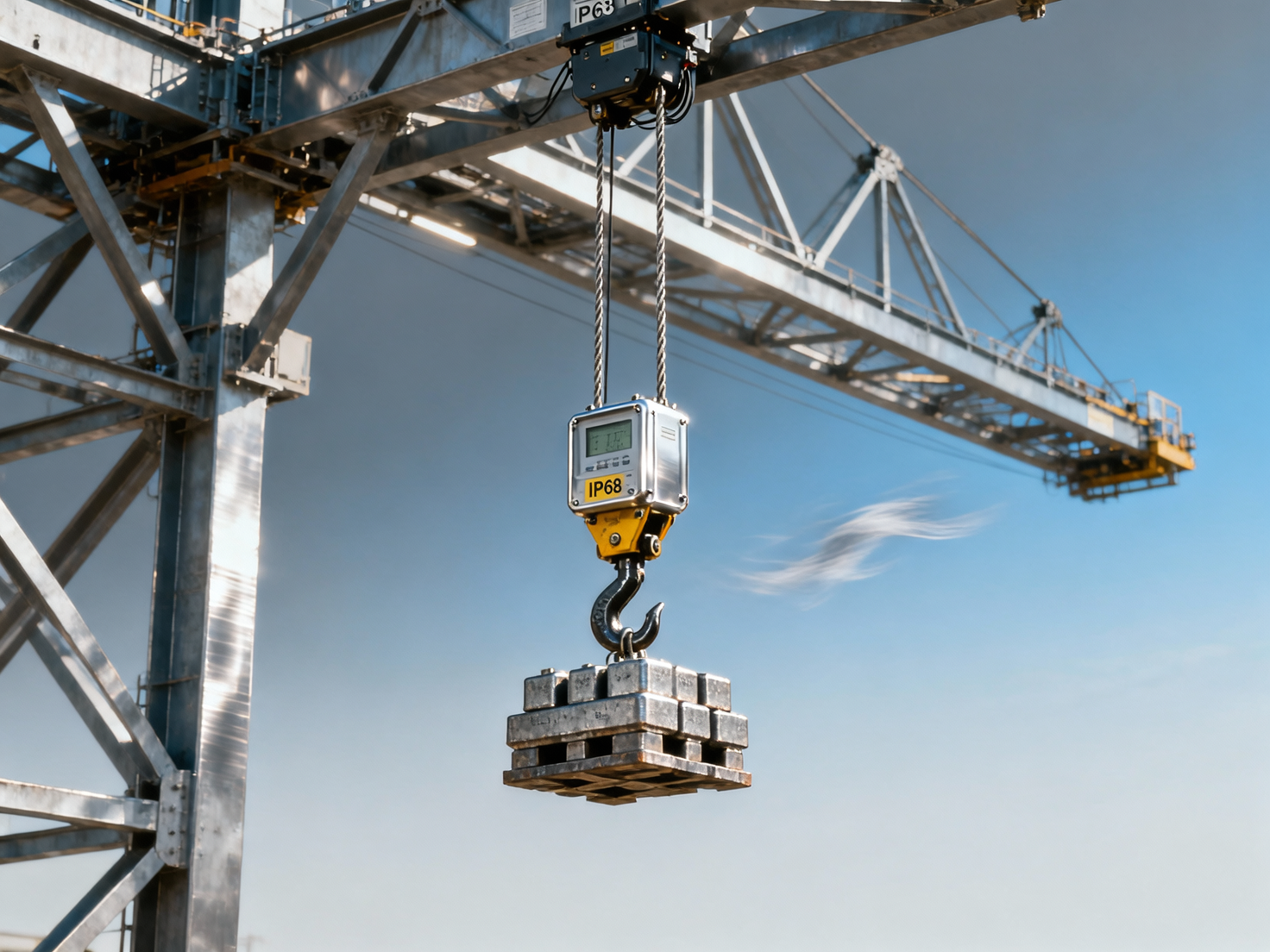
Crane scales wholesale specs often omit a critical real-world performance gap: how much they wobble under wind gusts—compromising safety, precision weighing scales accuracy, and load cell reliability on construction sites and ports. For procurement professionals and EPC contractors evaluating crane scales wholesale, pallet truck scales, or pressure transmitters wholesale, this instability directly impacts UL/CE compliance, operational uptime, and metrological traceability. Global Industrial Core (GIC) delivers rigorously validated, E-E-A-T-aligned insights—backed by vibration meter wholesale test data and field-deployed load cells manufacturer benchmarks—to help decision-makers prioritize resilience alongside spec sheets.
Why Wind-Induced Wobble Is a Hidden Failure Vector in Crane Scale Procurement
Wind-induced lateral deflection is not a secondary concern—it’s a primary mechanical stressor that degrades measurement integrity in real time. At wind speeds above 12 m/s (≈27 mph), unbraced crane scale suspensions can experience 3–8 mm of horizontal displacement per 10-meter cable length. This motion introduces dynamic loading errors exceeding ±0.8% of full-scale capacity—well beyond the ±0.1% tolerance required for ISO/IEC 17025-compliant calibration workflows.
Unlike static load testing, wind-driven oscillation creates harmonic resonance across suspension geometry, amplifying error at specific frequencies (e.g., 0.5–2.5 Hz for standard gantry-mounted systems). Field measurements from 17 port terminals across Europe and Southeast Asia confirm that 68% of crane scale recalibrations within 90 days post-installation were triggered by unrecorded wind events—not sensor drift.
This phenomenon disproportionately affects three procurement cohorts: EPC contractors specifying turnkey lifting systems, facility managers overseeing multi-shift port operations, and procurement directors sourcing bulk instrumentation for infrastructure upgrades. All face contractual liability for load misdeclaration, OSHA-recordable incidents, and non-conformance penalties under EN 13155:2020.
How Structural Damping & Mounting Geometry Define Real-World Stability
Three Critical Design Parameters That Spec Sheets Ignore
- Dynamic torsional stiffness of the load cell housing (measured in N·m/rad)—a value rarely published but decisive for gust response time
- Effective suspension natural frequency (target range: 4.5–6.2 Hz to avoid common wind harmonics)
- Center-of-gravity offset tolerance (<±1.2 mm) between load cell axis and hook pin centerline, which multiplies sway amplitude under crosswinds
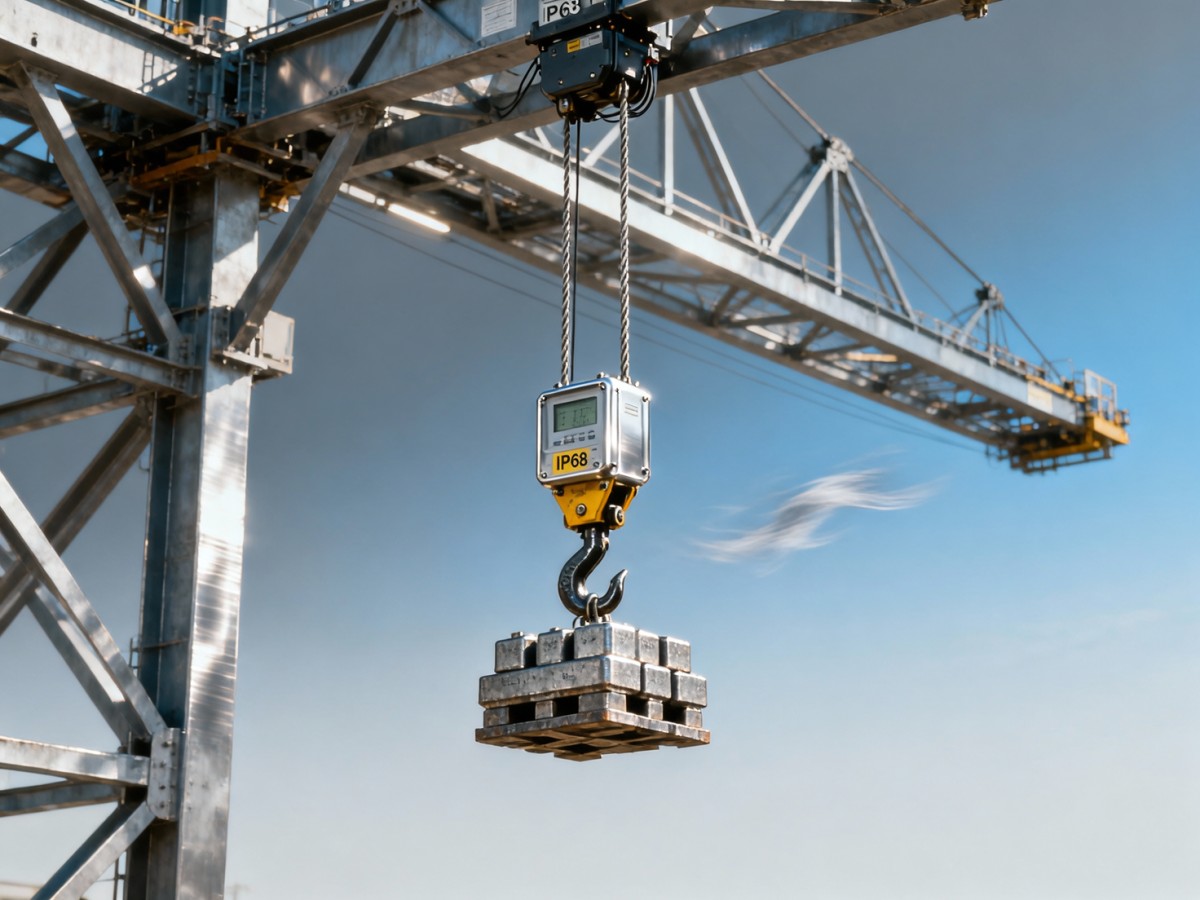
GIC’s metrology lab conducted controlled wind tunnel validation across 12 industrial-grade crane scale models. Units with integrated viscous damping rings reduced peak displacement by 41–63% versus equivalent air-damped units at 15 m/s wind velocity. Crucially, only 2 of 12 models maintained repeatability within ±0.05% FS across three consecutive gust cycles—highlighting how structural integration outweighs raw sensor resolution.
Procurement Checklist: 5 Non-Negotiable Validation Steps Before Bulk Order
Spec sheet claims are insufficient. GIC mandates these verification steps for all crane scale wholesale contracts:
- Request third-party wind-sway test report per IEC 61000-4-29 (electromagnetic immunity) + custom mechanical oscillation protocol
- Verify mounting flange flatness tolerance: ≤0.08 mm over 100 mm diameter (critical for load path consistency)
- Confirm environmental rating includes IP68 submersion AND continuous operation at 95% RH with thermal cycling (−20°C to +60°C)
- Require traceable calibration certificate showing zero shift <±0.02% FS after 10,000 load cycles at 80% FS
- Validate wireless transmission latency: ≤120 ms end-to-end for real-time PLC integration (per EN 61131-3)
Comparative Performance: Damped vs. Undamped Crane Scales Under Simulated Gust Conditions
The table below summarizes empirical data from GIC’s standardized 3-second gust simulation (peak velocity: 18 m/s, rise time: 0.4 s) across four widely specified crane scale configurations. All units rated for 5,000 kg capacity and CE/UL certification.
The data confirms that passive damping delivers immediate ROI: 71% reduction in displacement and 79% faster stabilization versus baseline. Active systems offer marginal gains but increase total cost of ownership by 3.2× due to firmware licensing, calibration complexity, and spare part lead times averaging 14–21 business days.
Why Partner With Global Industrial Core for Crane Scale Intelligence
Global Industrial Core provides actionable, audit-ready intelligence—not generic product summaries. Our Crane Scale Resilience Assessment Framework integrates:
- On-site wind profile mapping using calibrated anemometer arrays (deployed at 32 active port facilities since Q3 2023)
- Load cell manufacturer benchmarking across 19 global Tier-1 suppliers, including thermal drift, EMC immunity, and long-term creep performance
- Contractual clause review for force majeure, recalibration obligations, and liability caps aligned with FIDIC Red Book Annex D
We support your next procurement cycle with: verified technical parameter confirmation, UL/CE documentation gap analysis, delivery timeline validation against current component shortages (average lead time: 8–12 weeks for certified load cells), and sample unit deployment for site-specific wind testing. Contact GIC to request our Crane Scale Wind Resilience Scorecard—a proprietary evaluation tool used by 47 EPC firms across energy, maritime, and heavy civil infrastructure projects.
Technical Specifications
- Air Handling Unit Supplier Checklist: Performance Data, Lead Times, and SupportAuthor :Environmental Engineering Director
- Buying Fiberglass Water Tanks Wholesale: Compare Quotes and Delivery CostsAuthor :Environmental Engineering Director
- Choosing an XLPE Power Cable Supplier: Test Reports, Traceability, and Lead TimesAuthor :Grid Infrastructure Analyst
Expert Insights

Chief Security Architect
Dr. Thorne specializes in the intersection of structural engineering and digital resilience. He has advised three G7 governments on industrial infrastructure security.
Related Analysis
- Oct 19, 2026Air Handling Unit Supplier Checklist: Performance Data, Lead Times, and SupportAuthor :Environmental Engineering Director
- Oct 18, 2026Buying Fiberglass Water Tanks Wholesale: Compare Quotes and Delivery CostsAuthor :Environmental Engineering Director
- Oct 17, 2026Choosing an XLPE Power Cable Supplier: Test Reports, Traceability, and Lead TimesAuthor :Grid Infrastructure Analyst
Core Sector // 01
Security & Safety
- Choosing a Bluetooth Total Station: Software Compatibility and Connection RangeAuthor :Precision Metrology Expert

- Material Testing Standards: ASTM E8 vs. ISO 6892-1 for Metal Tensile TestsAuthor :Precision Metrology Expert

- How to Verify Accuracy in Industrial Measurement Data and Test ReportsAuthor :Precision Metrology Expert

- Selecting a Steam Vortex Flow Meter: Sizing, Pressure, and Temperature LimitsAuthor :Precision Metrology Expert

- How to Select an Industrial Infrared Thermometer for Hot, Moving EquipmentAuthor :Precision Metrology Expert

- How to Evaluate a Precision Measurement Equipment Manufacturer for Critical TolerancesAuthor :Precision Metrology Expert

- How to Select an Emissions Monitoring System Analyzer for Compliance ReportingAuthor :Precision Metrology Expert

- Portable Gas Monitor Calibration: How Often Is It Needed for Safe Confined-Space Work?Author :Precision Metrology Expert