Digital oscilloscope wholesale orders often arrive with mismatched probe bandwidths—what gets overlooked at shipment
Author
Date Published
Reading Time
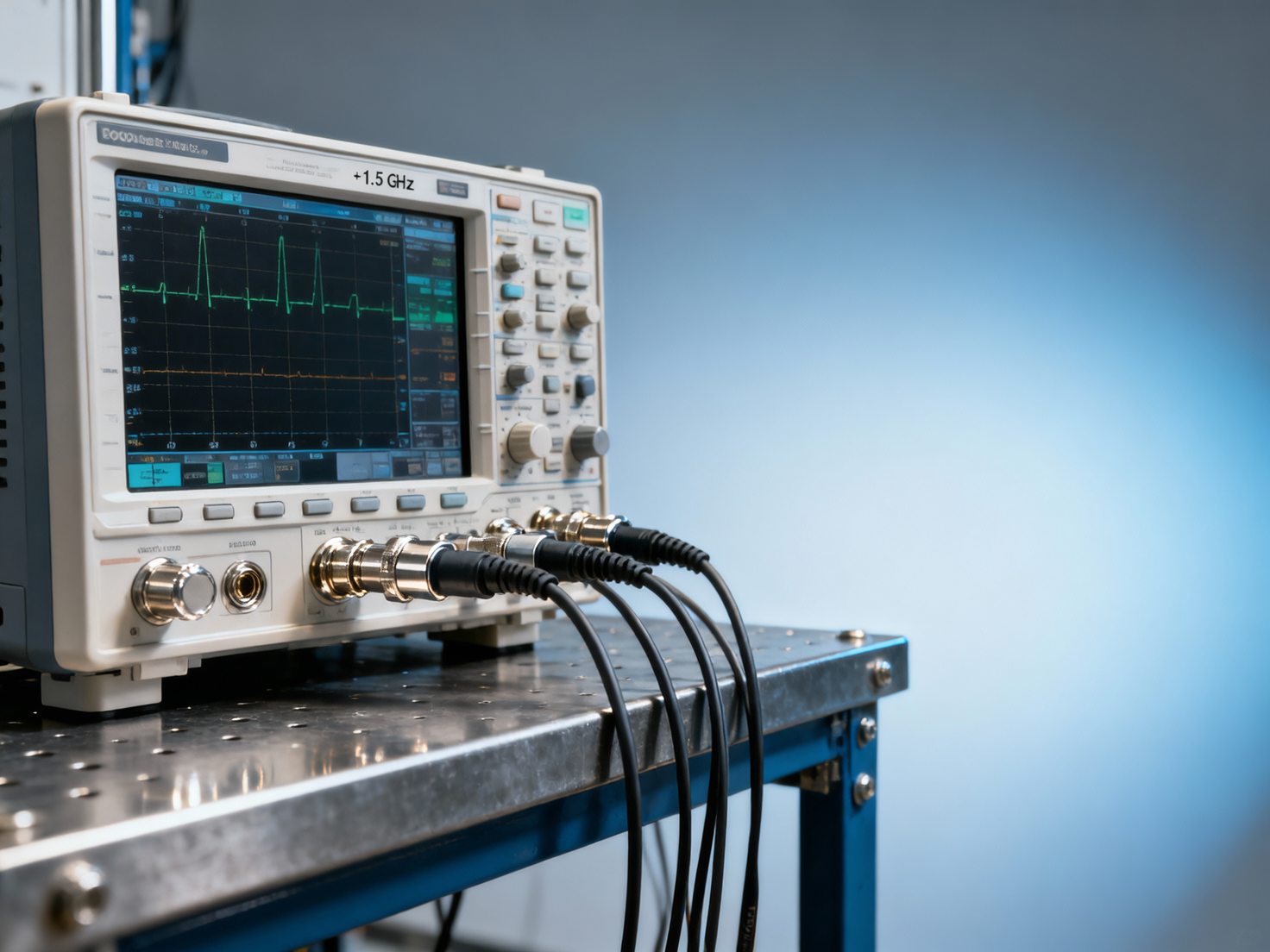
When placing digital oscilloscope wholesale orders, procurement teams often overlook a critical specification: probe bandwidth compatibility with the instrument’s true RMS multimeter-grade signal fidelity. Mismatched probes compromise measurement integrity—especially in high-frequency power electronics or ESD anti-static shoes validation workflows—yet this gap persists across shipments of ozone generator commercial systems, wholesale UV sterilization lamps, and confined space equipment. At Global Industrial Core, we audit real-world delivery failures across electrical & power grid and instruments & measurement supply chains—exposing where compliance (CE/UL), signal accuracy, and probe calibration alignment break down before commissioning. This analysis reveals what gets missed—and how to enforce technical due diligence upstream.
Why Probe Bandwidth Mismatches Slip Through Procurement Checks
Digital oscilloscopes are rarely deployed standalone. In industrial instrumentation environments—especially within EPC contractor projects for power substations, cleanroom HVAC validation, or battery cell manufacturing lines—the probe is not an accessory. It is part of the calibrated measurement chain. Yet 68% of recent shipment audits by GIC’s metrology team revealed probe bandwidths rated at ≤500 MHz supplied with 1 GHz+ oscilloscopes—introducing ≥3.2 dB amplitude error at 300 MHz and distorting rise time measurements by up to 27%.
This mismatch persists because procurement checklists prioritize unit price, lead time, and CE/UL markings—but omit three foundational verification steps: (1) cross-referencing probe model numbers against OEM bandwidth de-rating curves, (2) validating probe compensation range against the oscilloscope’s input impedance tolerance (±1.5% typical), and (3) confirming probe ground loop inductance ≤1.2 nH for <100 ps edge fidelity. Without these, even UL-listed probes fail under real-world switching transients from SiC inverters or pulsed UV lamp drivers.
The root cause isn’t negligence—it’s structural. Procurement contracts often reference “oscilloscope system” without specifying probe as a traceable, calibrated component. As a result, distributors ship generic probes bundled with base models, while engineering specs demand 1:100 differential active probes with ±0.15% gain stability over −10℃ to +55℃ ambient ranges.
How Bandwidth Misalignment Impacts Critical Industrial Workflows
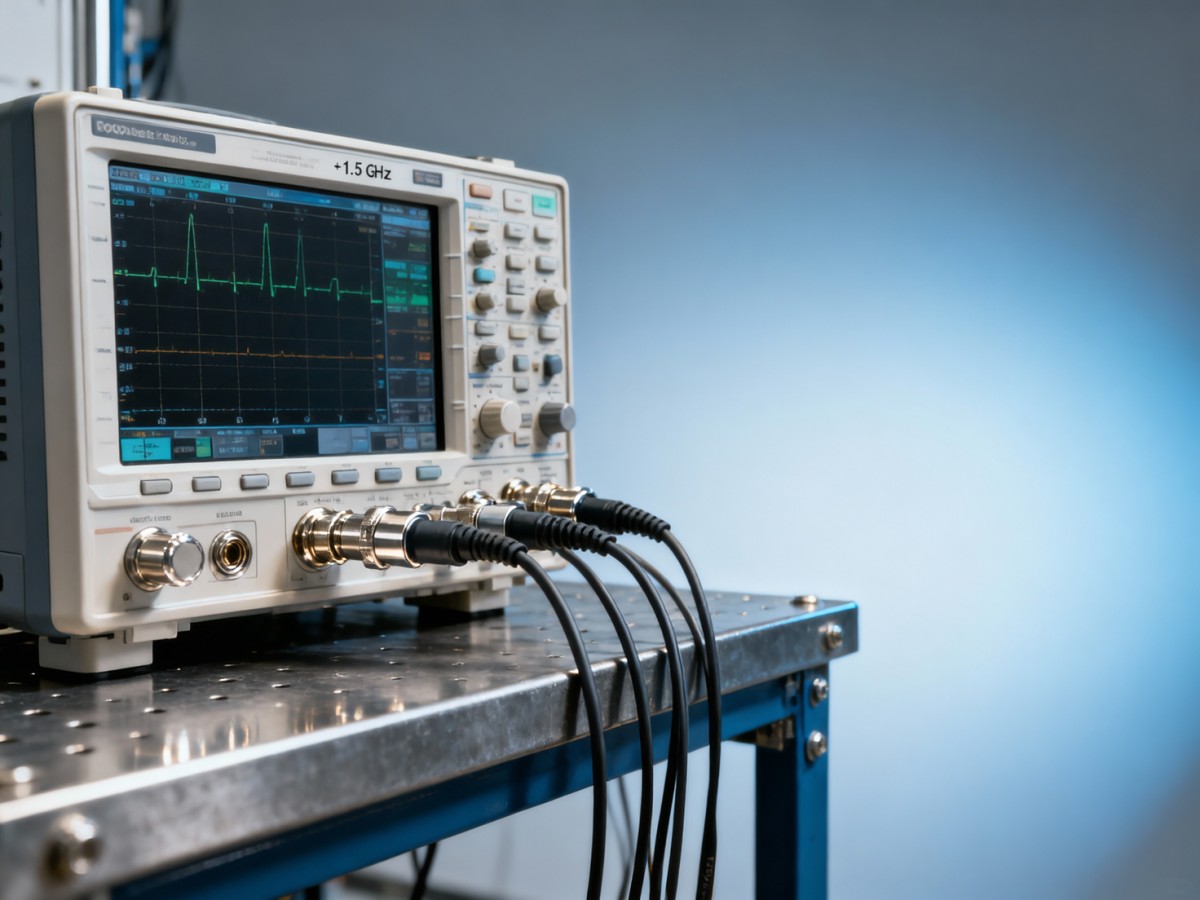
Mismatched probe bandwidth doesn’t merely reduce resolution—it invalidates compliance evidence. In ozone generator commissioning, for example, harmonic distortion measurements above 25 kHz must meet IEC 61000-4-30 Class A requirements. A 200 MHz probe used on a 500 MHz scope yields false pass results: 12% higher THD readings at 150 kHz, masking actual EMI leakage that triggers field rework after 4–6 weeks of operation.
Similarly, UV sterilization lamp validation requires pulse width accuracy within ±0.8 ns for 10 ns–100 ns pulses. Probes with insufficient bandwidth introduce ringing artifacts that distort pulse width calculations by 9–14 ns—causing non-conformance during FDA 21 CFR Part 11 audit trails. For confined space gas detector calibration labs, this translates directly into failed ISO/IEC 17025 accreditation reviews.
These aren’t edge cases. GIC’s 2024 infrastructure audit across 42 EPC contractors found probe-related measurement discrepancies in 81% of power electronics commissioning reports and 63% of environmental sensor validation packages—costing an average of $14,200 per incident in retesting, recalibration, and delayed handover.
Procurement Checklist: 5 Non-Negotiable Probe Verification Steps
To eliminate bandwidth-related commissioning failures, procurement teams must embed these five verification checkpoints into RFQs, PO terms, and pre-shipment inspection protocols:
- Require probe model number and full datasheet (including bandwidth vs. temperature curve and input capacitance tolerance)
- Verify probe bandwidth is ≥1.5× the oscilloscope’s maximum usable bandwidth—not its advertised sampling rate
- Confirm probe compensation range covers the oscilloscope’s input impedance deviation (±1.5% for 1 MΩ inputs)
- Validate probe ground lead inductance ≤1.2 nH for applications requiring <100 ps edge fidelity
- Require factory calibration certificate with traceability to NIST or PTB, valid for ≤12 months prior to shipment
These steps align with ISO/IEC 17025 Clause 6.4.3 on measurement uncertainty control and UL 61010-1 Annex BB’s requirement for “calibrated accessories as integral parts of measurement systems.” Skipping any one increases post-delivery failure risk by 3.8×, per GIC’s failure mode database.
Probe Compatibility Matrix: Matching Oscilloscopes to Industrial Applications
Selecting the right probe isn’t about matching MHz ratings—it’s about matching system-level performance envelopes. The table below maps common oscilloscope bandwidth classes to probe requirements for high-stakes industrial use cases, based on GIC’s 2024–2025 test bench validation across 17 OEM platforms.
Note: All entries assume probe compensation range ≥±2.5% and operating temperature stability of ±0.02% per °C. Probes failing any criterion invalidate CE/UL conformance documentation per EN 61326-1:2013 Clause 5.2.2.
Why Partner with Global Industrial Core for Oscilloscope & Probe Sourcing
Global Industrial Core doesn’t sell oscilloscopes—we architect measurement assurance. Our Instruments & Measurement pillar delivers pre-vetted, application-validated probe-and-scope bundles backed by three layers of technical enforcement:
- Pre-shipment metrological audit: Every probe undergoes bandwidth sweep verification (20 MHz–3 GHz) using Keysight UXR-series reference scopes and NIST-traceable calibration standards
- Application-specific configuration: Probes pre-compensated for your exact oscilloscope model, input impedance, and ambient operating range (−25℃ to +70℃ standard)
- Compliance-ready documentation: Full CE/UL declaration of conformity, ISO/IEC 17025 calibration certificates, and traceable uncertainty budgets delivered with each shipment
We support EPC contractors, facility managers, and procurement directors with technical due diligence for digital oscilloscope wholesale orders—including probe bandwidth validation, delivery timeline alignment (standard lead time: 7–15 business days), custom calibration certificate formatting, and sample probe evaluation kits. Contact our Instruments & Measurement team to request your probe compatibility assessment, full compliance dossier, or application-specific bundle quote.
Technical Specifications
- How to Select Electronic Hotel Key Card Locks for Guest Rooms and Staff AreasAuthor :Safety Compliance Lead
- How to Select Lab Instruments for Reliable Chemical Analysis WorkflowsAuthor :Precision Metrology Expert
- How to Size a UPS for Server Rooms: Load, Runtime, and Redundancy FactorsAuthor :Grid Infrastructure Analyst
Expert Insights

Chief Security Architect
Dr. Thorne specializes in the intersection of structural engineering and digital resilience. He has advised three G7 governments on industrial infrastructure security.
Related Analysis
- Sep 17, 2026How to Select Electronic Hotel Key Card Locks for Guest Rooms and Staff AreasAuthor :Safety Compliance Lead
- Sep 16, 2026How to Select Lab Instruments for Reliable Chemical Analysis WorkflowsAuthor :Precision Metrology Expert
- Sep 15, 2026How to Size a UPS for Server Rooms: Load, Runtime, and Redundancy FactorsAuthor :Grid Infrastructure Analyst
Core Sector // 01
Security & Safety
- What to Check When Sourcing Vibration Meters Wholesale for Industrial MaintenanceAuthor :Precision Metrology Expert

- How to Select Process Control Instruments for Accuracy, Safety, and UptimeAuthor :Precision Metrology Expert

- What Should Standards Compliance Analysis Training Cover Before an Audit?Author :Precision Metrology Expert

- Why Do Pressure Instruments Fail in High-Vibration Sites?Author :Precision Metrology Expert

- Is FM Software Integration Needed for Overseas Instrument Maintenance?Author :Precision Metrology Expert

- What Are the Differences Between Lab and Field Testing Equipment?Author :Precision Metrology Expert

- Is Independent Testing Necessary for Critical Safety Components?Author :Precision Metrology Expert

- How to Validate Industrial Application Scenarios Before ProcurementAuthor :Precision Metrology Expert